- News
- Reviews
- Travel & Adventure
- Interviews
- Inside Industry Players
- Community
Bikes
Reviews
Components
Reviews
Cycling
Apparel


[raw_mobile_menu]
[wpml_language_switcher_down]


Terminar una prueba de ultradistancia ya es un logro en sí, y poder ganar una de ellas es algo que de lo que muy pocos pueden presumir. Luego está Ulrich Bartholmoes, que se ha llevado la victoria en todas y cada una de las carreras en las que ha participado desde su debut en la disciplina.
Ulrich Bartholmoes es un ciclista de resistencia alemán que comenzó a participar en Gran Fondos en 2014, y después de competir semana tras semana durante un par de veranos, se dio cuenta de que cuanto más largas y duras eran las carreras, mejor rendía.

Esta progresión natural le llevó a participar en carreras como el Tour de Mont Blanc, una prueba con unos 350 km y 8.500 m de desnivel. Está claro que esta no es la típica cicloturista, pero aún así seguían siendo desafíos de un día de duración.
Quería volver a competir en esa carrera durante el verano de 2019, pero en ese momento estaba de vacaciones en España y no era factible ir hasta la línea de salida, situada en el este de Francia, por lo que comenzó a buscar alternativas. Descubrió la Transpyrenees, probó suerte, y no ha dejado de participar en eventos de autosuficienca de varios días de duración desde entonces, aunque todavía encuentra tiempo para dirigir su propia empresa, especializada en consultoría empresarial para proyectos de IT.
Invicto en carreras de ultradistancia
Como uno puede imaginar, las carreras de ultradistancia implican pasar la noche al aire libre y depender de lo que llevas en tu bicicleta. Unos meses antes de su debut en la disciplina compró su primer material de bikepacking, pero solo con la intención de llevar herramientas y repuestos. Comenzó a realizar aventuras de varios días, pero por aquel entonces aún dormía en hoteles, por lo que Transpyrenees fue su primera verdadera experiencia de bikepacking puro.
Dos años después, puede decir con orgullo que ha ganado todos y cada uno de los eventos de ultraracing que ha iniciado, siendo la Transibérica 2021 su último éxito. La racha ganadora actualmente es de ocho, y dado el dominio que muestra cada vez que se planta en la línea de salida de estos desafíos, probablemente lo veremos como el primer finalista de eventos similares durante mucho tiempo.
Si durante su primera victoria en Transibérica él y el resto de participantes tuvieron que afrontar una gran vuelta alrededor de la península ibérica, esta vez el recorrido estuvo más centrado en el norte y centro de España, lo que probablemente facilitó el trabajo de los organizadores del evento. Es cierto que algunos lugares destacados han sido protagonistas tanto de la edición de 2019 como la de 2021, como los Picos de Europa en Asturias, pero Ulrich descubrió nuevos lugares que le encantaron, viviendo momentos muy especiales en el camino. Llegar a la cima de una subida justo a tiempo para el amanecer, rodar por paisajes lunares, visitar pueblos pintorescos… Dada la distancia de la carrera y la diversidad de la península, Ulrich y el resto de corredores pudieron saborear lo que España tiene para ofrecer.


Una agitada victoria en la Transibérica
Como vencedor de la Transibérica, Ulrich Bartholmoes disfrutó de agradables momentos en el transcurso de los 6 días, 14 horas y 13 minutos que le llevó recorrer los 2.953 km de carrera, pero durante ese tiempo también tuvo que afrontar algunos momentos difíciles y estresantes. Sufrió un gran problema mecánico antes de llegar al Checkpoint 5 que le hizo detenerse durante más de 20 horas, pero la templanza y serenidad de sus acciones le permitieron resarcirse de sus problemas y ganar la carrera.
Ulrich nos contó que mientras estaba en el área de Girona entrenando en las semanas previas a la Transibérica, rompió el desviador trasero y dañó algunos radios y la pata de cambio. Se las arregló para arreglarlo a tiempo, pero eso fue claramente un estrés adicional antes de la carrera.
Ya en la carrera, durante una pequeña subida, el desviador volvió a romperse. “Supongo que fue causado por montar una pata doblada en el nuevo desviador”, cree él. Sucedió a las 21:00 en medio de la nada, por lo que ni siquiera tenía cobertura para ver dónde estaba. Desmontó el desviador por completo para poder al menos empujar la bicicleta, y tuvo que caminar unos dos kilómetros antes de poder saber a dónde ir. De camino al pueblo más cercano, un automóvil se detuvo y le ofreció llevarlo allí.
Se refugió en una de las casas rurales del pueblo, disfrutó de una agradable barbacoa y hasta tomó una cerveza.
“Durante esa noche realmente no estaba pensando en la bicicleta. Todo estaba cerrado, así que no había forma de que pudiera arreglarlo en ese momento. Preferí acostarme y descansar”
En ese momento informó a los organizadores de la carrera sobre su incidente. Ellos y varios dotwatchers habían comenzado a preocuparse después de ver que su tracker no estaba en la ruta, por lo que les envió un breve mensaje diciendo que tenía una problema mecánico serio pero que no estaba en problemas.
A la mañana siguiente tomó un taxi hasta Guadalajara, la ciudad más cercana. Su principal objetivo era encontrar un nuevo desviador, y si no, una nueva bicicleta para llegar a Bilbao de alguna forma. Rendirse y regresar en tren nunca se le pasó por la cabeza. No había repuestos en la tienda local, pero convirtieron su bici en single-speed, para que al menos pudiera comenzar a pedalear. Después su idea era conseguir un billete de tren a Madrid para arreglarlo allí, pero perdió el tren por un minuto.


Parecía que el mundo estaba en su contra, pero mantuvo la calma y se dirigió al café más cercano para comer algo. Cuando estaba poniendo su bicicleta contra la pared, el tipo de la tienda de bicicletas llegó con su coche y le dijo a Ulrich que había logrado encontrar un reemplazo para su desviador. Regresaron a la tienda y media hora después él estaba de vuelta dándole a los pedales.
Después de caer al octavo lugar en la clasificación, Ulrich comenzó su impresionante remontada, volviendo a la cabeza de la carrera tras el Checkpoint 5. Solo se cruzó con un par de corredores a los que adelantó, ya sea porque siguió una ruta diferente o porque los demás descansaban mientras él pedaleaba sin cesar. Se alegró al ver a Pawel Pulawski, quien en ese momento lideraba la carrera y estaba al tanto de lo sucedido. Habían planeado una ruta similar y rodaron juntos toda la noche, separándose después del amanecer. En la línea de meta, Ulrich ganó con un margen de 12 horas.


Su talento físico se complementa con una notable fortaleza mental. A diferencia de la mayoría de los atletas, Ulrich prefiere no depender de la cafeína cuando busca un impulso de energía durante las carreras. “Creo que la cafeína cambia la forma en que el cuerpo reacciona a sus necesidades. Si estás cansado, no debes tomar estas sustancias para evitar el cansancio porque puede ser peligroso”, argumenta. El alemán también limita el tiempo para escuchar música o podcasts, guardándolo para momentos puntuales, como una larga recta en medio de la noche.
El horrible accidente de una amiga
Desafortunadamente, hubo un gran accidente durante la carrera que involucró a Ana Orenz, una buena amiga de Ulrich. Chocó con un jabalí durante la primera noche de carrera y sufrió lesiones con secuelas para toda la vida. Estuvo inconsciente tras el accidente y no fue hasta que otros dos participantes la encontraron que pudo ser trasladada al hospital de Pamplona. La esposa de Ulrich le dijo que su tracker se había detenido durante la noche, por lo que preguntó a los organizadores qué había sucedido. En ese momento todavía no estaba claro, pero Ulrich no creía que sufriera heridas graves.
Durante el tiempo que se detuvo debido a su problema mecánico, incluso le envió un mensaje de texto a Anna, y dado que ella respondió alentándolo a ganar la carrera, estaba seguro de que todo estaba bien. No fue hasta después de la línea de meta que le dijeron lo que realmente sucedió.
“La mayoría de nosotros también hicimos ese descenso. Era en una carretera muy ancha con buen asfalto. Además, ella no estaba falta de sueño ni nada similar, por lo que fue realmente mala suerte. Eso demuestra que nos puede pasar cualquier cosa, y eso da miedo”
Próximos desafíos
Ulrich Bartholmoes se centra actualmente exclusivamente en carreras de carretera, pero eso cambiará pronto. Ya ha realizado carreras de distancia sprint como la Two Volcano Sprint, eventos que rondan los 2.000 km de longitud como la Three Peaks Bike Race, y otros más largos con Transibérica, como ejemplo. “He visto muchas cosas en las diferentes zonas por las que he pasado, pero ahora es el momento de buscar nuevos retos y explorar regiones más remotas”, dice.
Ulrich tenía previsto realizar varias aventuras off-road por su cuenta antes de considerar tomar la partida en una carrera de ultradistancia de gravel o mountain bike. Sin embargo, podemos confirmar que estará este fin de semana en la salida de la Badlands, que cuenta con participantes como Sofiane Sehili, Alistair Brownlee, y Freya Rawlins.


Los amigos de Ana Orenz han creado una página de donaciones para ayudarla durante el largo camino por recorrer que implica meses de fisioterapia y otros gastos imprevistos. Su hija Ruby ahora está a cargo de su cuenta de Instagram y publicará actualizaciones del progreso de Ana.

Javi es nuestro corresponsal en Bélgica, y trata de contrarrestar su obsesiva pasión por el análisis de datos con la relajante acción (o eso es lo que dice) de crear contenido para la revista. Javi is based in Belgium and tries to compensate for his obsessive passion for data analytics with the relaxing action (that's what he says) of creating content for the magazine. View all posts by Javi Angulo
To finish an ultracycling event is already an achievement, and being able to win one of them is something that only a few can say. Then there is Ulrich Bartholmoes, who has claimed the victory in every single race he has participated in since his debut in the discipline.
Ulrich Bartholmoes is a German ultracyclist that started taking part in Gran Fondo’s back in 2014, and after racing week in, week out for a couple of summers, he realized that the longer and tougher the races, the better he performed.
This natural progression led him to take part in races like the Tour de Mont Blanc, an event with around 350 km and 8.500 m of elevation gain. That was of course not a regular sportive, but it was still a one-day challenge.
He wanted to compete in that race again during the summer of 2019, but at that moment he was on holiday in Spain and it was not practical to go all the way to the start line in Eastern France, so he started looking for race alternatives. He discovered the Transpyrenees, gave it a try, and did not stop taking part in unsupported multi-day events since then, although he still finds time to run his own company, specializing in business consulting for IT projects.
Unbeaten in ultracycling races
As you can imagine, ultracycling races involve spending the night outside and relying on what you carry on your bike. A few months before his debut in the discipline he bought his first bikepacking gear, but only with the intention of carrying cycling tools and spare parts. He started going on multi-day adventures but was still sleeping in hotels, so the Transpyrenees was his first proper bikepacking experience.
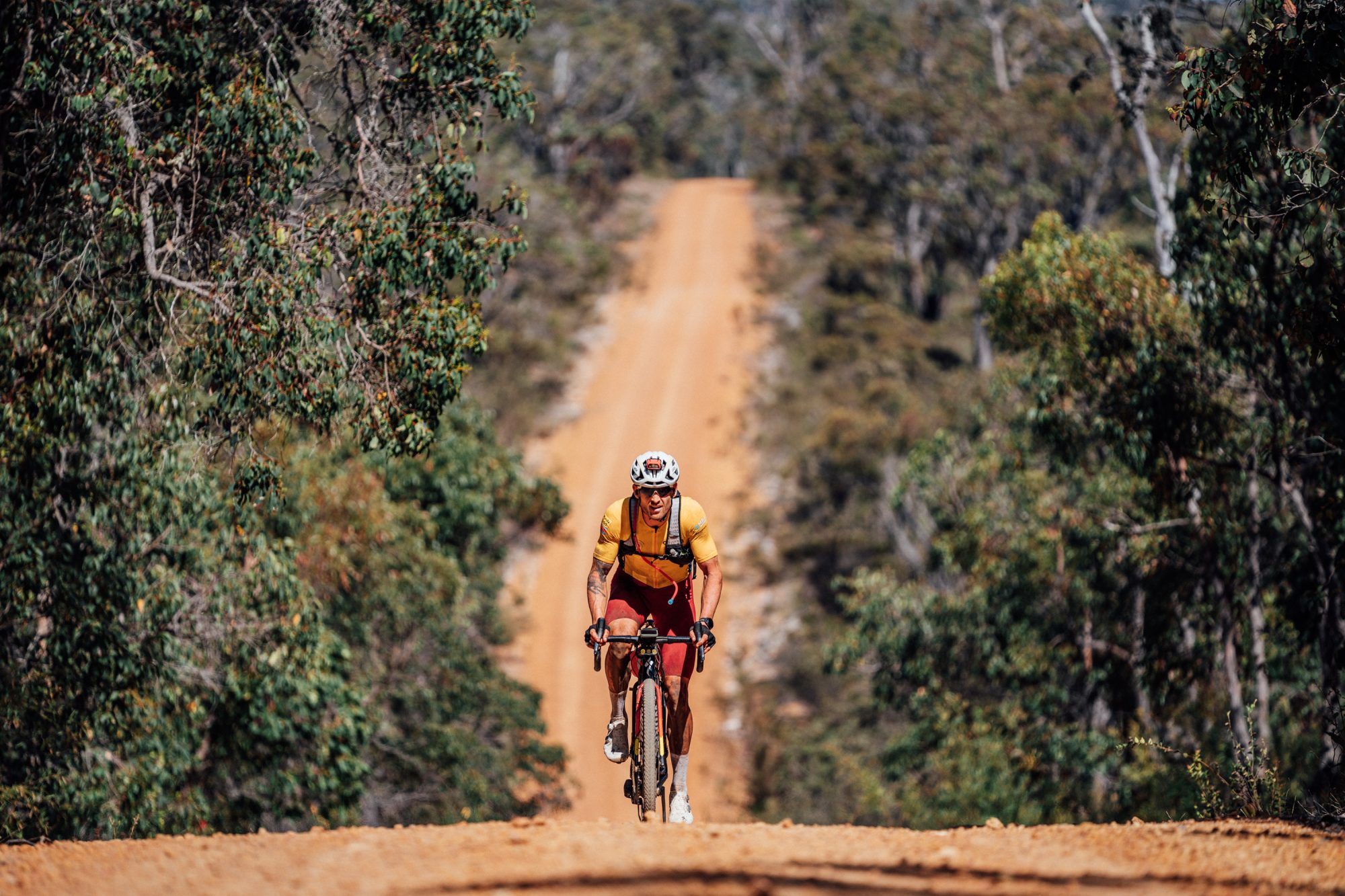
Two years later, he can proudly say he has won every single ultracycling event he has started, with the 2021 Transibérica being his latest success. The winning streak currently sits at eight, and given the domination he shows every time he lines up for such challenges, we will probably see him as the first finisher of these events for a long time.
An eventful win in the Transibérica
If during his first win in the Transibérica he and the other participants had to tackle a big loop of the Iberian peninsula, this time the route was more focused on the north and center of Spain, which probably facilitated the job of the race organizers. There were certain highlights that featured in both the 2019 and 2021 editions like the Picos de Europa in Asturias, but Ulrich discovered new places that delighted him, collecting very special moments along the way. Reaching the top of a climb just in time for sunrise, passing by lunar landscapes, visiting picturesque villages… Given the distance of the race and the diversity of the peninsula, Ulrich and the rest of the participants could taste what Spain has to offer.
As the winner of the race, Ulrich Bartholmoes enjoyed some beautiful moments in the course of the 6 days, 14 hours, and 13 minutes that took him to cover the 2.953 km of the race, but during that time he had to face some difficult and stressful moments too. He suffered a big mechanical problem before reaching Checkpoint 5 that made him stop for more than 20 hours, but the temperance and serenity of his actions allowed him to get back on track and win the race.
Ulrich told us that while he was in the Girona area training in the weeks leading up to Transibérica, he broke the rear derailleur and damaged some spokes and the pulley wheel cage. He managed to fix it in time but that was clearly an added stress before the race.
Already in the race, during a small climb, the derailleur snapped again. “I guess it was caused by mounting a bent cage in the new derailleur”, he argues. It happened at 21:00 in the middle of nowhere, so he didn’t even have cellphone signal to check where he was. He dismounted the derailleur completely to be able to at least push the bike, and he had to walk around two kilometers before being able to know where to go. On his way to the nearest village, a car stopped and offered to take him there.
He took shelter in one of the rural houses of the village, enjoyed a nice barbeque, and even had a beer.
“During that evening I was not really thinking about the bike. Everything was closed so there was no way I could get it fixed then. I preferred to lay down and rest.”
At that time he informed the race organizers about his incident. They and several dotwatchers had started to worry after seeing that his tracker was not in the route, so he sent them a short message saying that he had a serious mechanical but that he wasn’t in trouble.
The next morning he took a taxi to Guadalajara, the closest city. His main goal was to find a new derailleur, and if not, a new bike to get to Bilbao in some way. Returning by train never crossed his mind. There were no spare parts in the local shop, but they cut the chain to single-speed, so he could at least start moving. Then his idea was to get a train ticket to Madrid to get it fixed there, but missed the train by a minute.
It seemed that the world was against him, but he remained calm and headed to the closest cafe to have some food. When he was putting his bike against the wall, the guy from the bike shop arrived with his car and told Ulrich that he had managed to find a replacement for his derailleur. They went back to the shop and half an hour later he was back on the bike.
After falling to 8th place in the classification, Ulrich started his impressive comeback, getting back to the front of the race after Checkpoint 5. He only came across a couple of the riders he overtook, whether because he followed a different route or because the others were resting while he was pushing the pedals. He was happy to see Pawel Pulawski, who was at that moment leading the race and was aware of what happened. They had a similar planned route and rode together all night, parting ways after sunrise. At the finish line, Ulrich won by a margin of 12 hours.
His physical talent is complemented by a remarkable mental strength. Unlike most athletes, Ulrich prefers not to rely on caffeine when looking for a boost of energy during races. “I believe caffeine changes how your body reacts to its needs. If you are tired, you should not take these substances to avoid fatigue because it can be dangerous”, he argues. The German also limits the time to listen to music or podcasts, saving it for specific moments, like a long straight in the middle of the night.
The horrific crash of a friend
Unfortunately, there was a big accident during the event involving Ana Orenz, a good friend of Ulrich. She collided with a wild boar during the first night of racing and sustained life-changing injuries. She was unconscious after the crash and it wasn’t until two other participants found her that she could be transferred to the hospital in Pamplona. Ulrich’s wife told him that her tracker had stopped during the night, so he asked the organizers what had happened. At that moment it was still not clear, but Ulrich did not think she suffered any serious injuries.
During the time he stopped due to his mechanical issue, he even texted Anna, and given that she replied back encouraging him to win the race, he was confident that everything was fine. It wasn’t until after the finish line that he was told what really happened.
“Most of us also took that descent. It was on a very wide road with good tarmac. She wasn’t sleep-deprived whatsoever, so it was really bad luck. That shows that anything can happen to us, and that is scary.”
Next challenges
Ulrich Bartholmoes is currently focused exclusively on road races, but that will change soon. He has already done sprint distance races like the Two Volcano Sprint, events that are around 2.000km long like the Three Peaks Bike Race, and longer ones with Transiberica as an example. Now it is time to spice things up and give a try to different types of ultradistance races. “I have seen a lot of things on the different roads I have passed by, but now it is time to explore more remote regions”, he says.
Ulrich was planning on going on some off-road adventures on his own and only then consider lining up in a gravel or mountain bike ultracycling race. Nonetheless, we can reveal that he will take part in Badlands, which starts this weekend with riders like Sofiane Sehili, Alistair Brownlee, and Freya Rawlins.
Friends of Ana Orenz have set up a donation page to help her during the long road ahead involving months of physical therapy and other unforeseen costs. Her daughter Ruby is now in charge of her Instagram account and will post updates of Ana’s progress.
Javi es nuestro corresponsal en Bélgica, y trata de contrarrestar su obsesiva pasión por el análisis de datos con la relajante acción (o eso es lo que dice) de crear contenido para la revista. Javi is based in Belgium and tries to compensate for his obsessive passion for data analytics with the relaxing action (that's what he says) of creating content for the magazine. View all posts by Javi Angulo
 Javi Angulo
 Javi Angulo

 Pavel Novotný
 Javi Angulo
 Javi Angulo
 Javi Angulo

 Pol Sopeña
 Javi Angulo
 Pol Sopeña
 Pol Sopeña
 Javi Angulo
 Pol Sopeña
Receive our monthly selection of the best articles, news, exclusive content and giveaways only for subscribers, subscribe to OUR NEWSLETTER
Receive our monthly selection of the best articles, news, exclusive content and giveaways only for subscribers, subscribe to OUR NEWSLETTER
Receive our monthly selection of the best articles, news, exclusive content and giveaways only for subscribers, subscribe to OUR NEWSLETTER
Receive our monthly selection of the best articles, news, exclusive content and giveaways only for subscribers, subscribe to OUR NEWSLETTER