- News
- Reviews
- Travel & Adventure
- Interviews
- Inside Industry Players
- Community
Bikes
Reviews
Components
Reviews
Cycling
Apparel


[raw_mobile_menu]
[wpml_language_switcher_down]

A principios de febrero, muchos corredores del pelotón profesional inician oficialmente su temporada competitiva. Puede que ese no sea el caso de los ciclistas de ciclocross, que apenas están terminando su temporada otoño-invierno, con su punto culminante los Mundiales en Tábor hace dos semanas. Sin embargo, los ciclistas de ruta aprovechan esta época para mejorar su forma después de la preparación invernal participando en pequeñas carreras de un día o de varias etapas, lo que les mete de nuevo en mentalidad de carrera.
Puede que sea invierno, pero todavía podemos encontrar lugares en el sur de Europa donde el clima es lo suficientemente suave como para vestirse con pantalones y maillots cortos. Un claro ejemplo es el sur de España, donde muchos equipos centran sus concentraciones en la región de Calpe, donde los ciclistas pueden encontrar trazados variados y conductores respetuosos, y los equipos pueden alojar todo su material en alguno de los muchos hoteles que se encuentran vacíos durante esta parte del año. Una cosa es segura: allí se espera buen tiempo y un terreno variado con subidas largas y sostenidas.
Pese a ello, un poco más al norte bordeando el mar Mediterráneo, también podemos encontrar buenas zonas para preparar la temporada, como la Costa Azul en Francia, con muchos ciclistas profesionales viviendo ya en la zona de Niza-Mónaco. Muy cerca de la costa, y viendo el potencial de la región del interior en la Provenza, en 2016 tuvo lugar el Tour de la Provence inaugural, que ese año ganó Thomas Voeckler y recientemente se convirtió en el portavoz de la carrera de cuatro etapas.
Este año, entre el 8 y el 11 de febrero, se celebró la octava edición de la carrera, consolidándose así en el calendario UCI. Estuvimos por allí y, atraídos por la lista de salida y la contrarreloj inicial, fuimos a ver cómo se desarrollaba todo.
Aparte del excelente emplazamiento y recorrido, la carrera está bien adaptada al calendario, con carreras de un día como el Grand Prix de La Marseillaise (28 de enero) o de varias etapas como la Étoile de Bessèges (31 de enero – 4 de febrero) que tienen lugar en la región y con fechas cercanas. A uno se le pueden mezclar todas esas carreras, pero cada una tiene su propia identidad.
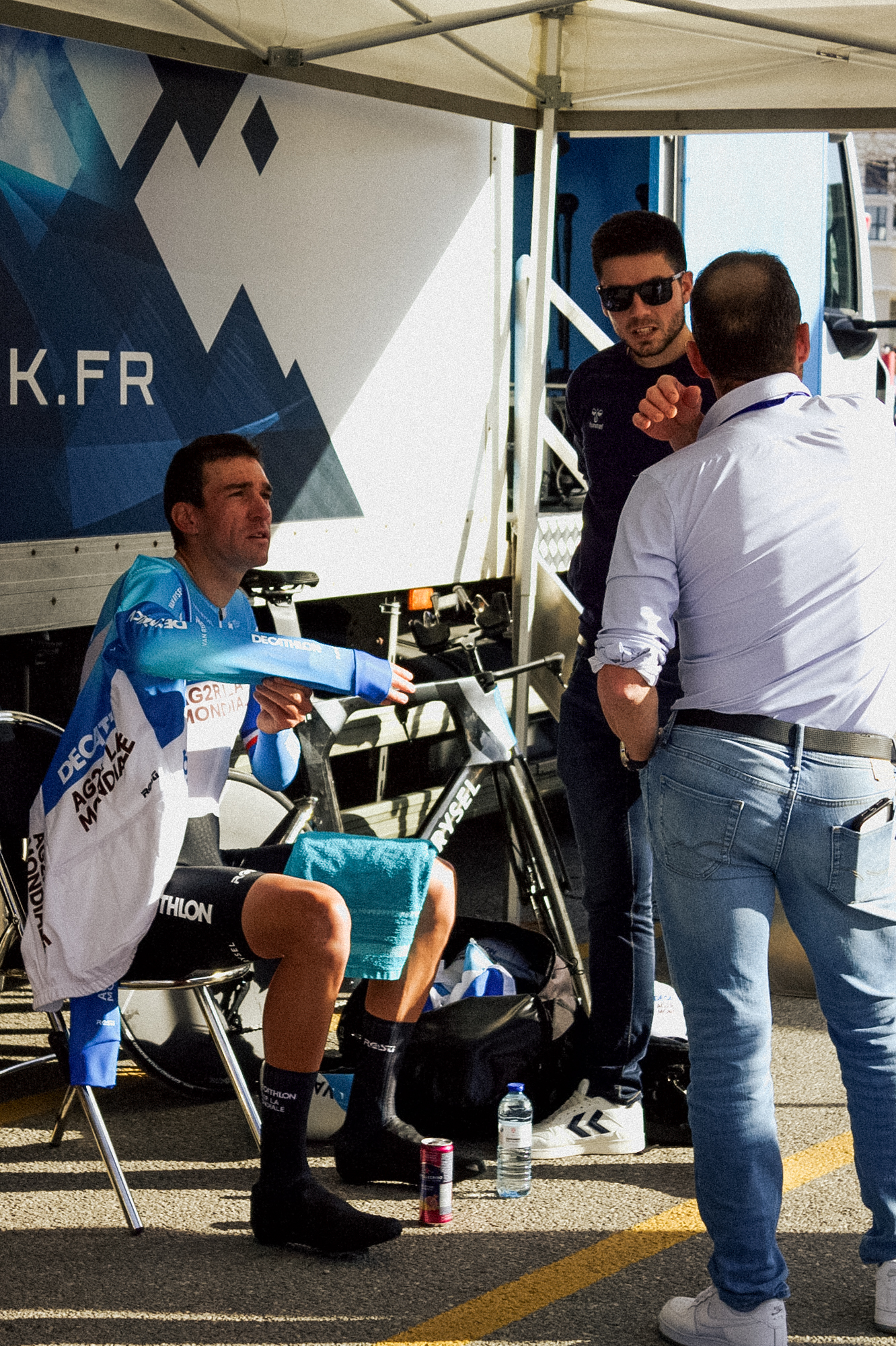
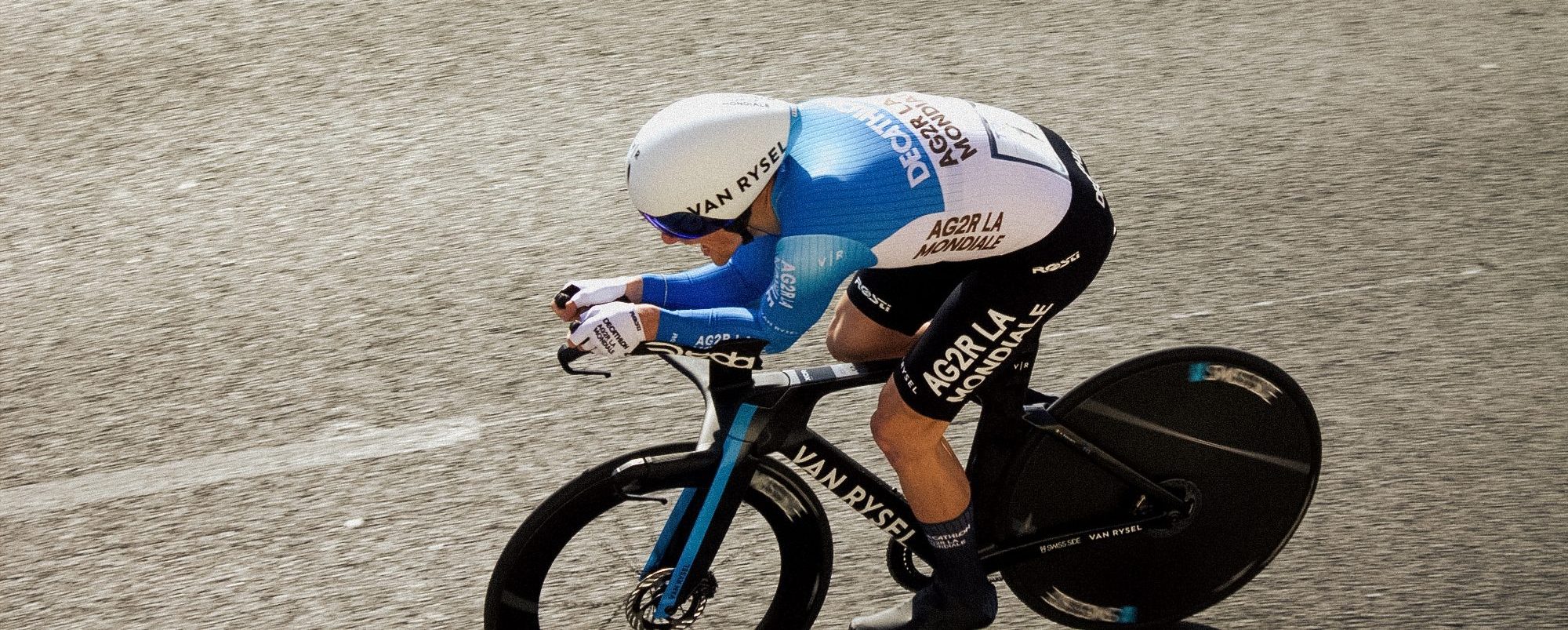
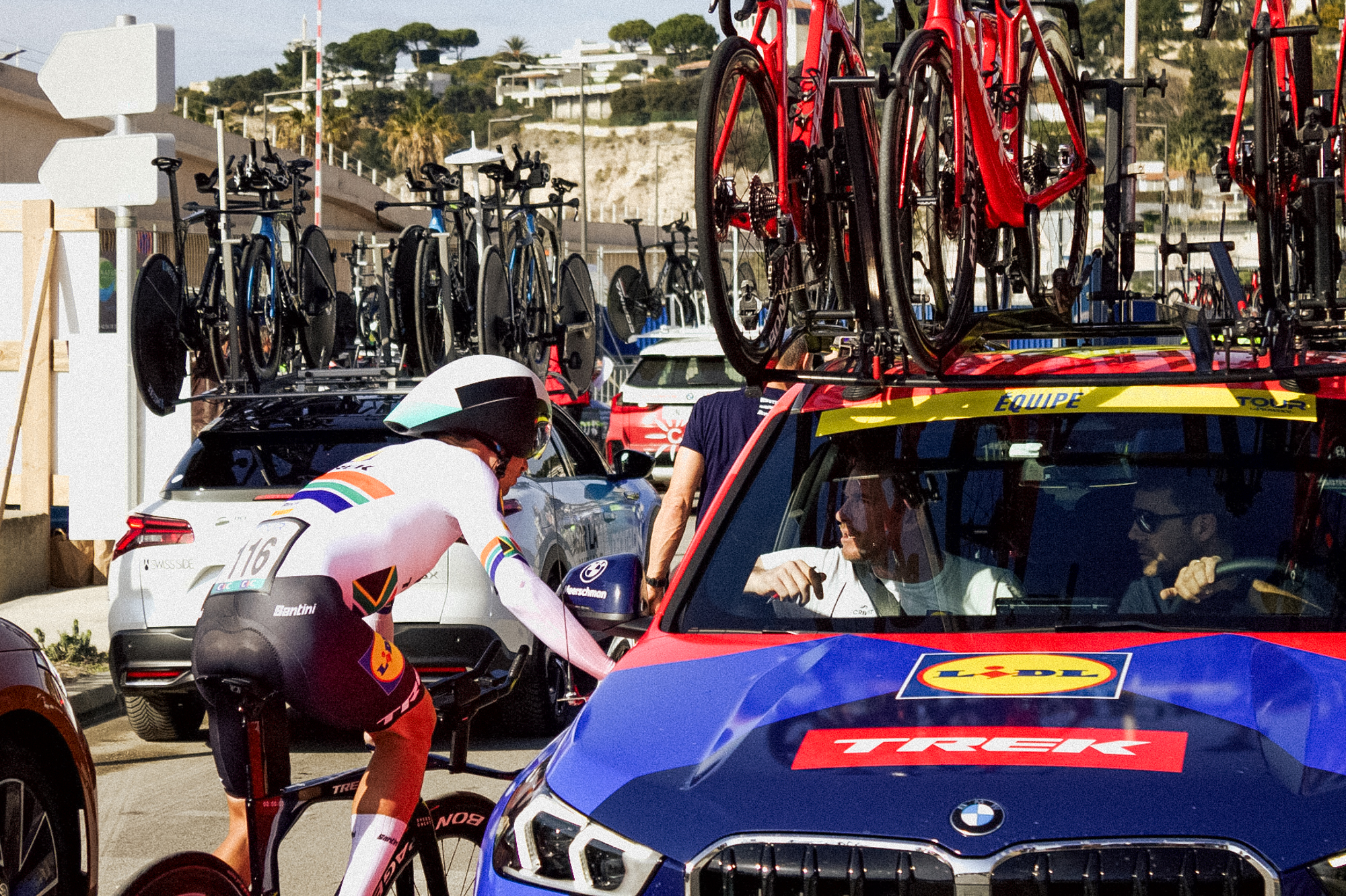
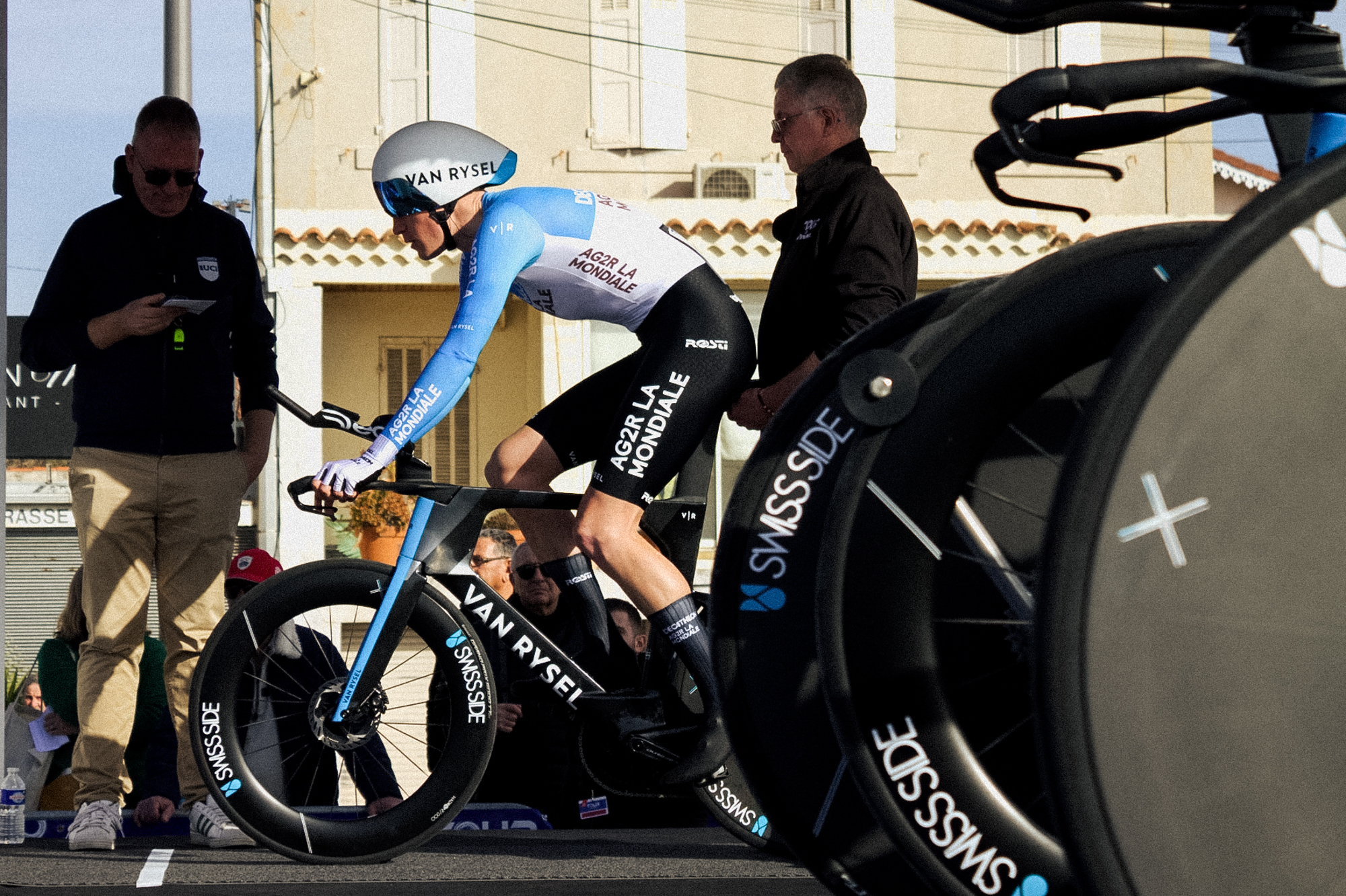
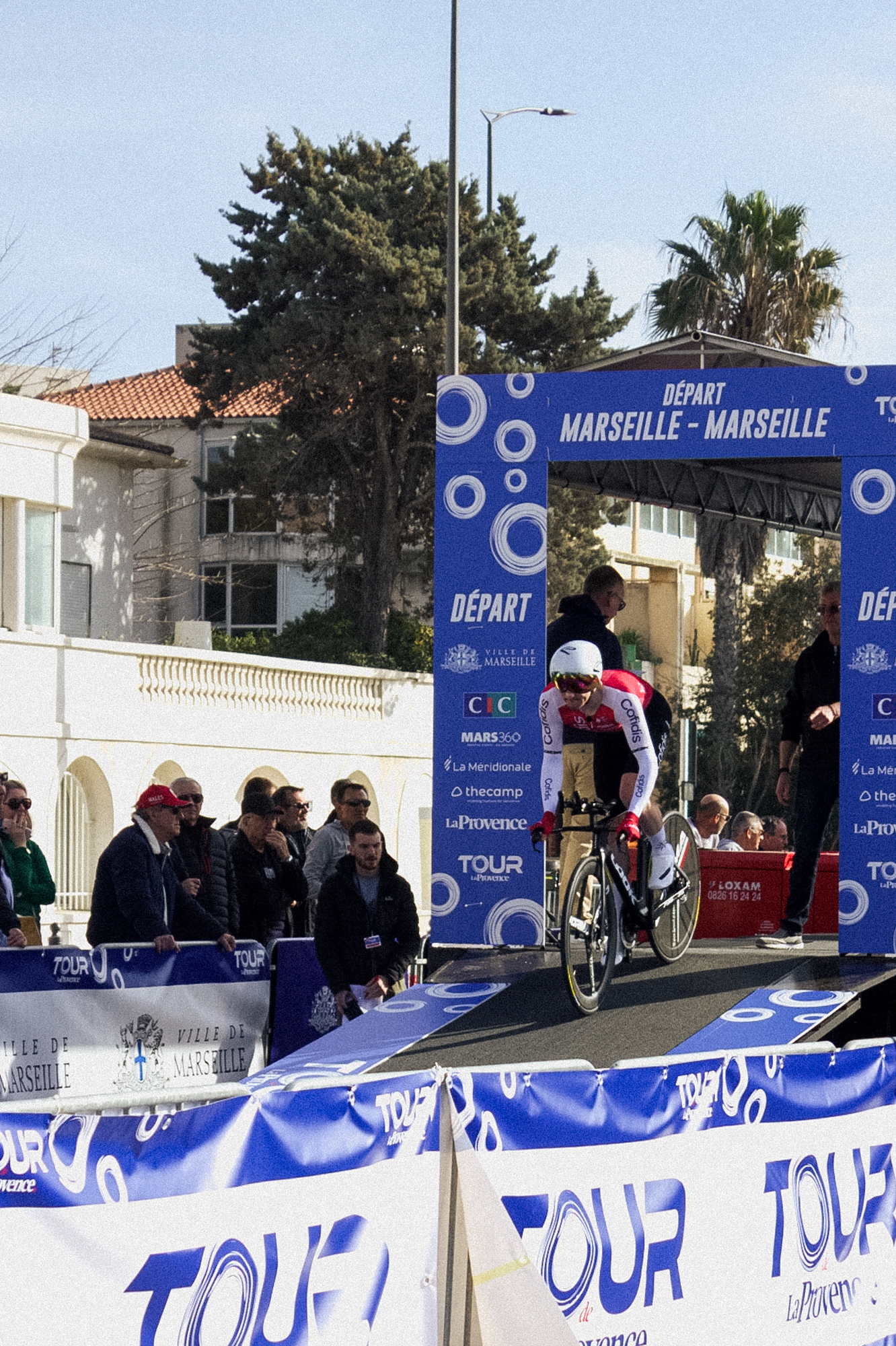
Una prólogo contrarreloj individual en la ciudad costera de Marsella marcaría el punto de partida de la carrera. Con equipos UCI World Tour entre otros equipos Pro y Continentales, todas las miradas estaban puestas en el ex campeón mundial Mads Pedersen. Acababa de ganar la Étoile de Bessèges la semana anterior lo que demostraba su gran forma. Sin embargo, calentando en la zona de equipos, vimos otros grandes nombres como Sam Bennett o Bruno Armirail.
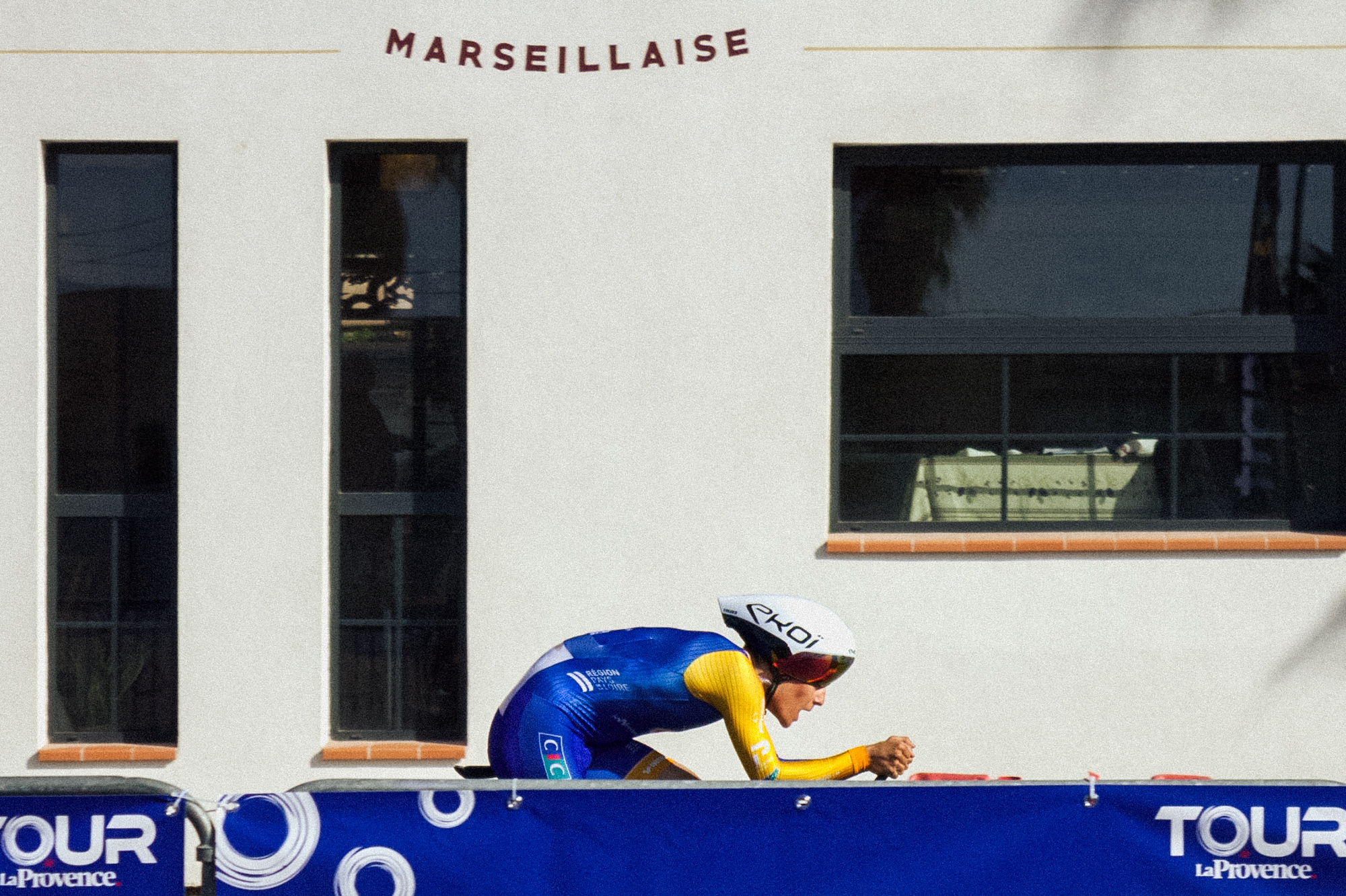
El ciclista danés tiende a seguir un enfoque alternativo a la temporada de clásicas, ya que prefiere correr temprano en la temporada y luego saltarse el fin de semana de apertura flamenco Openingsweekend para agregar un campo de entrenamiento adicional antes de que tengan lugar las clásicas de adoquín. Eso lo coloca en una situación extraña como el hombre a vencer en carreras donde las tres cuartas partes de los participantes son franceses.
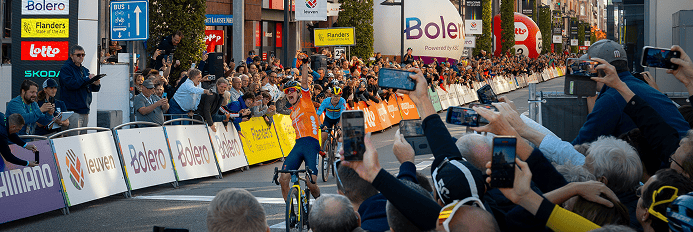
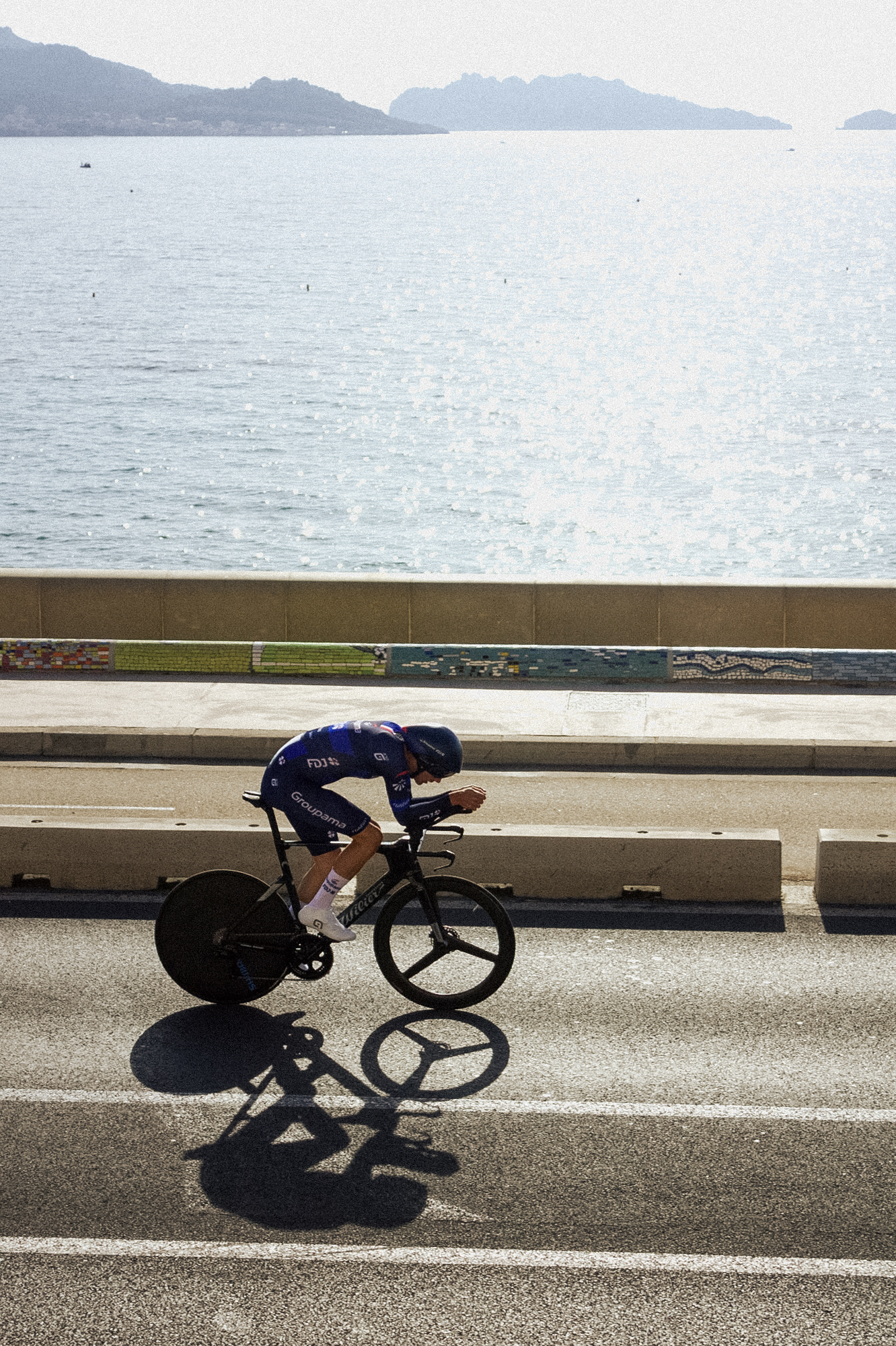
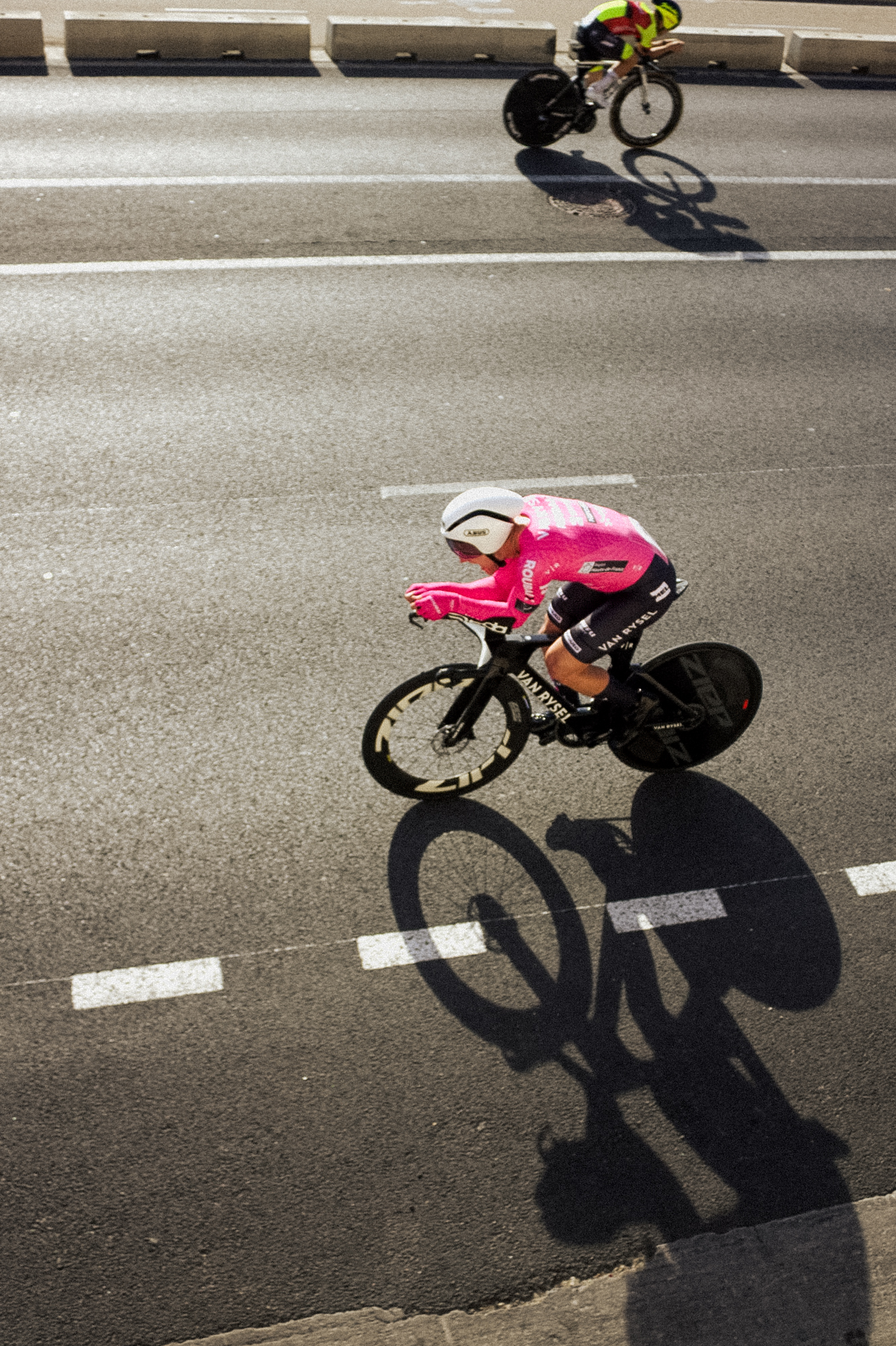
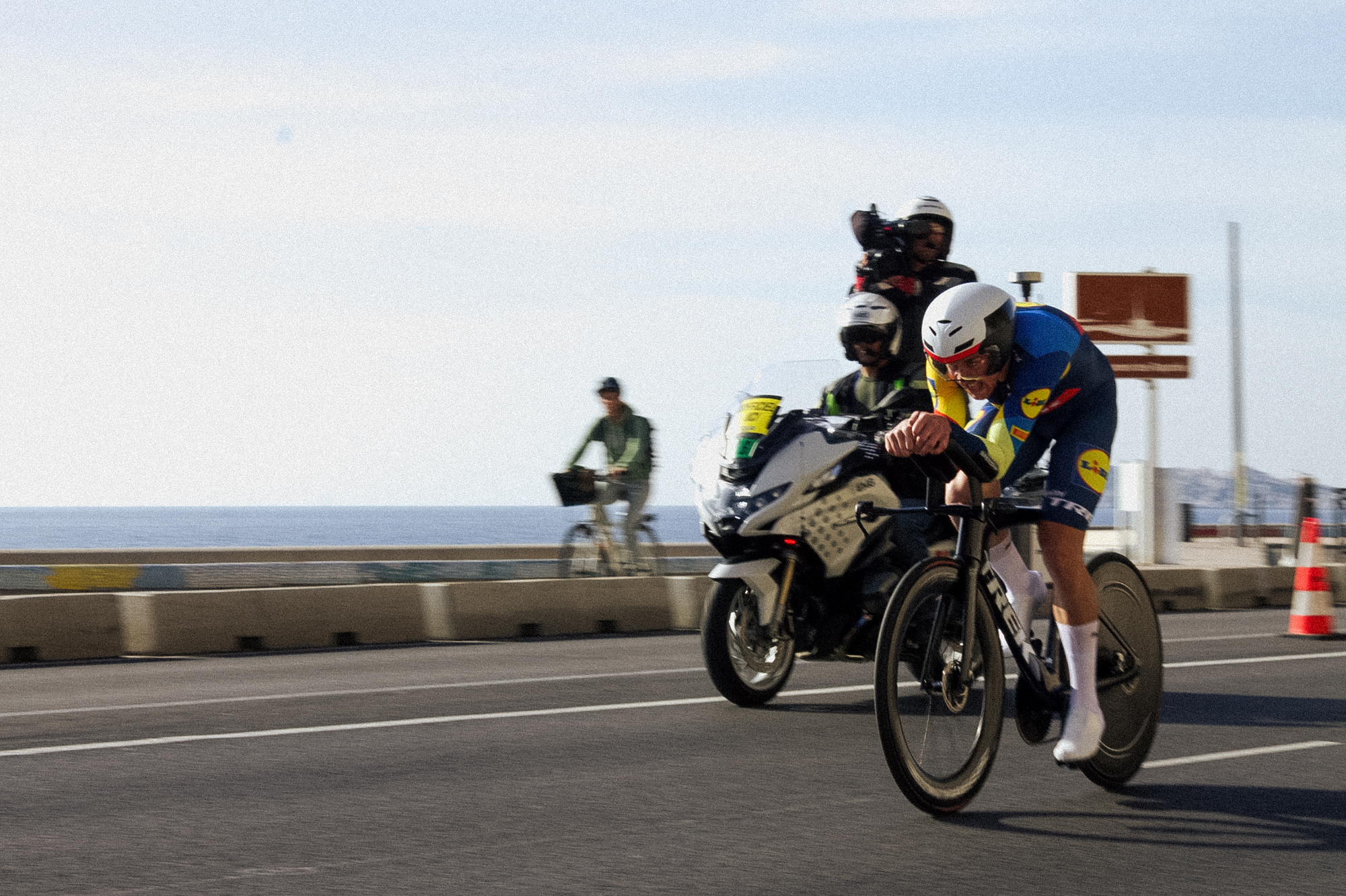
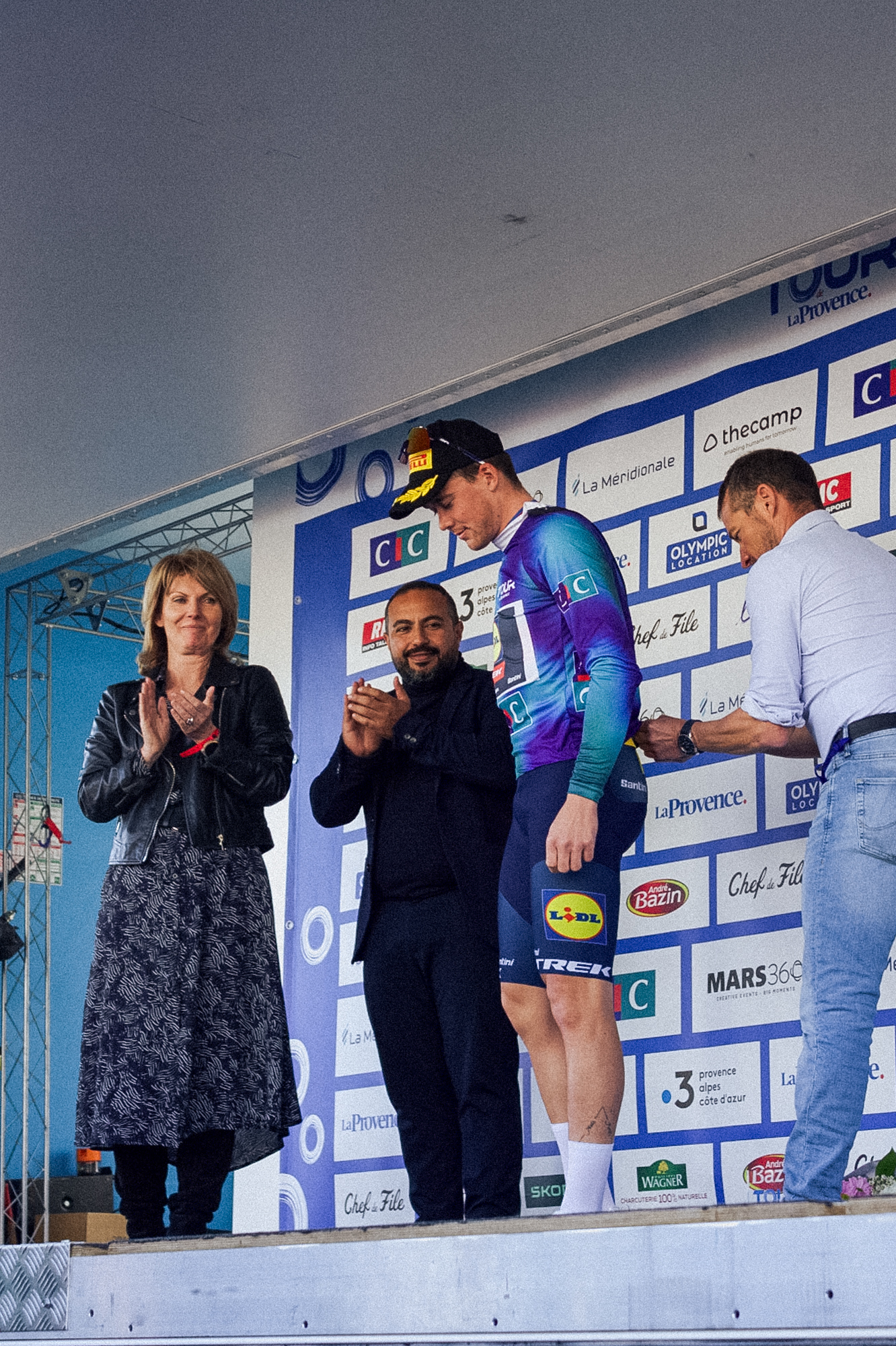
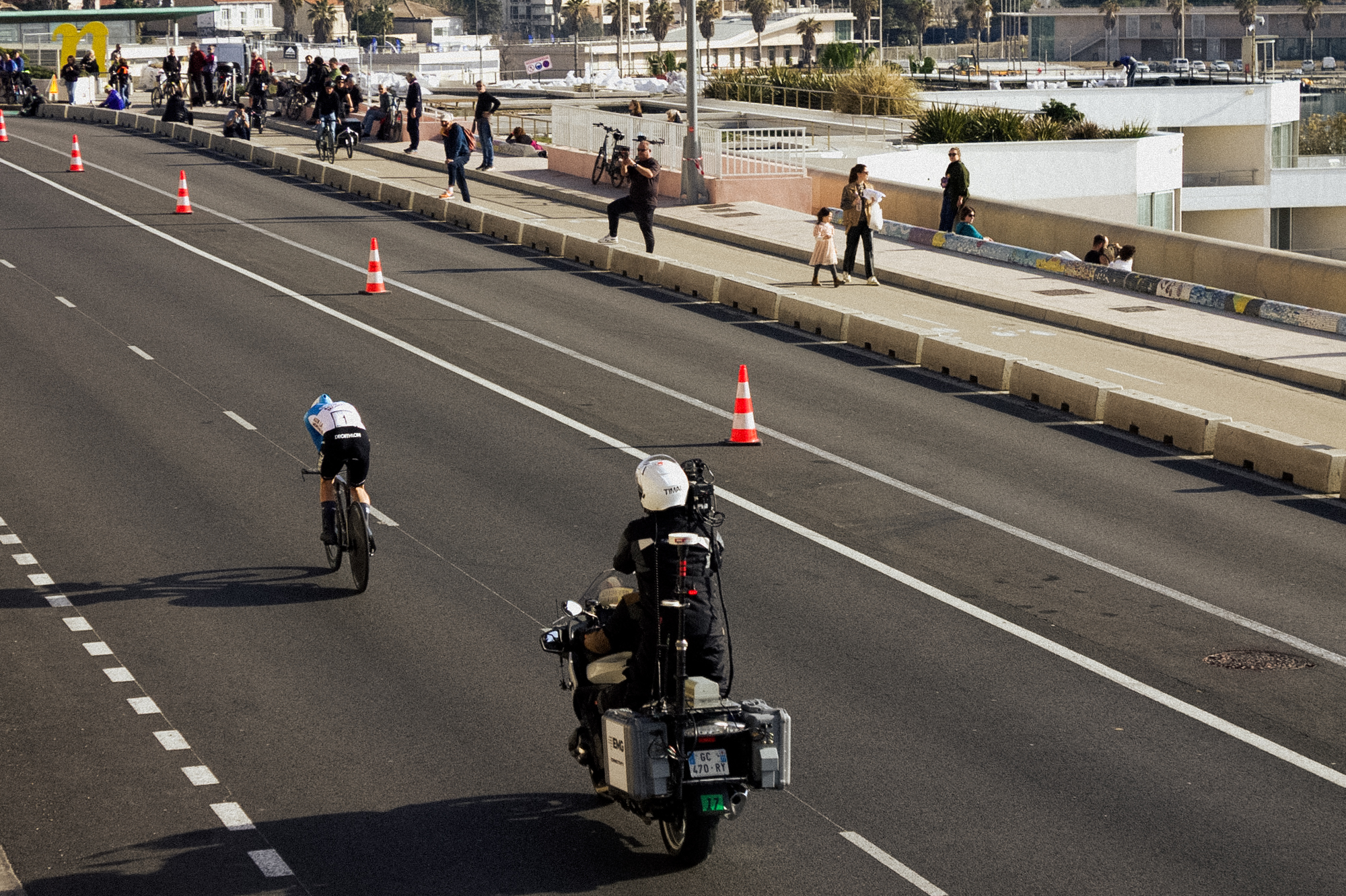
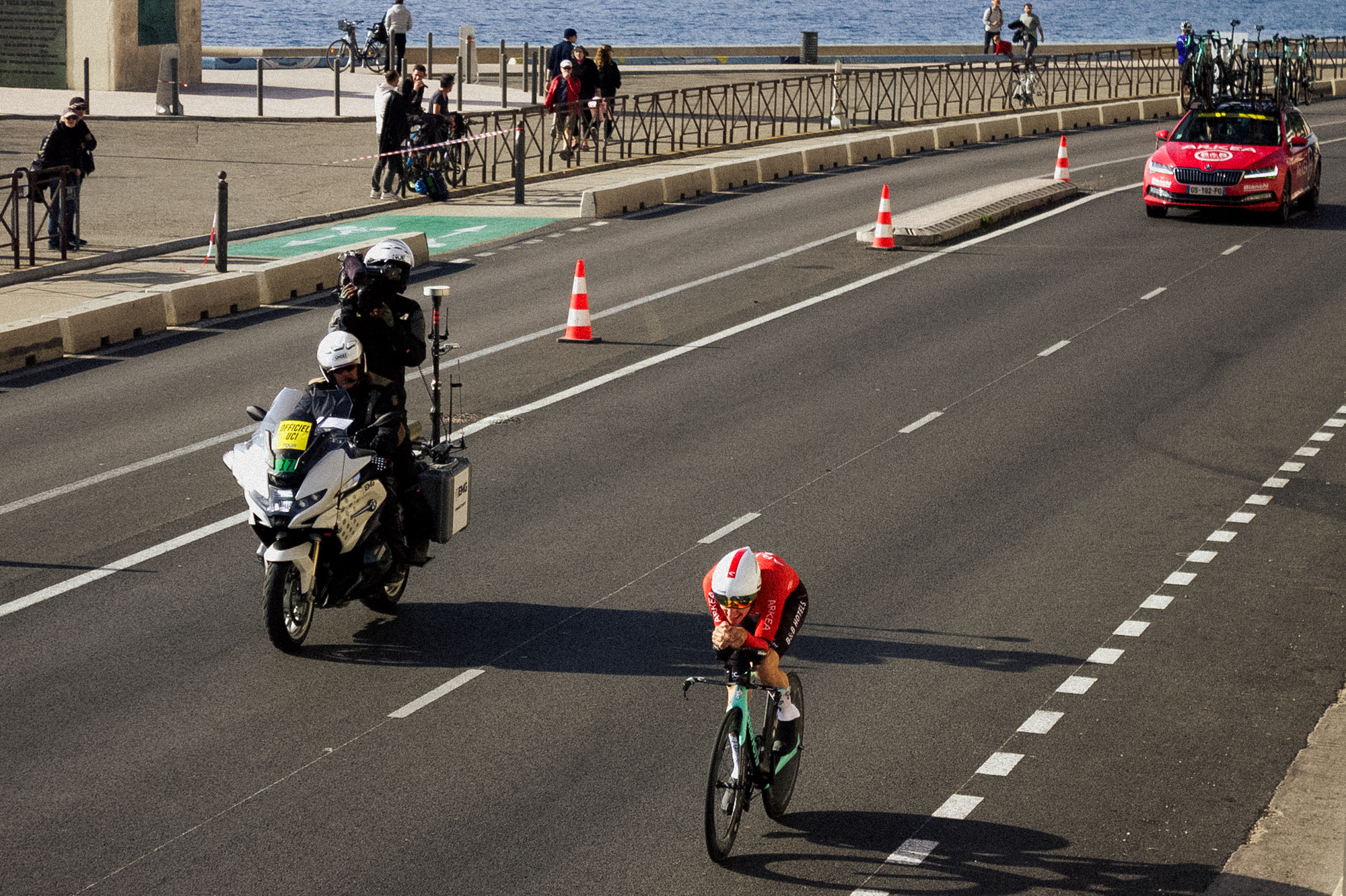
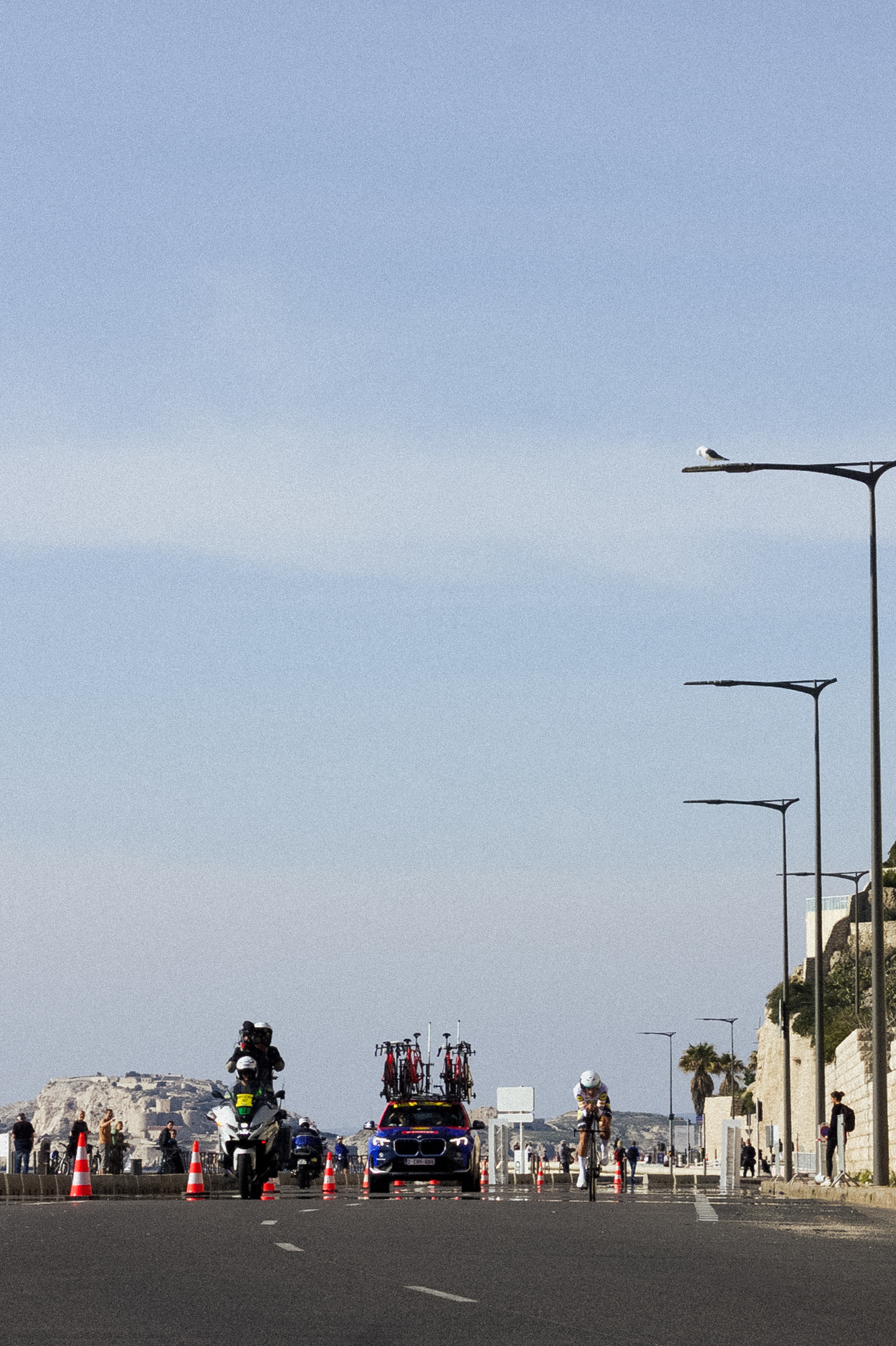
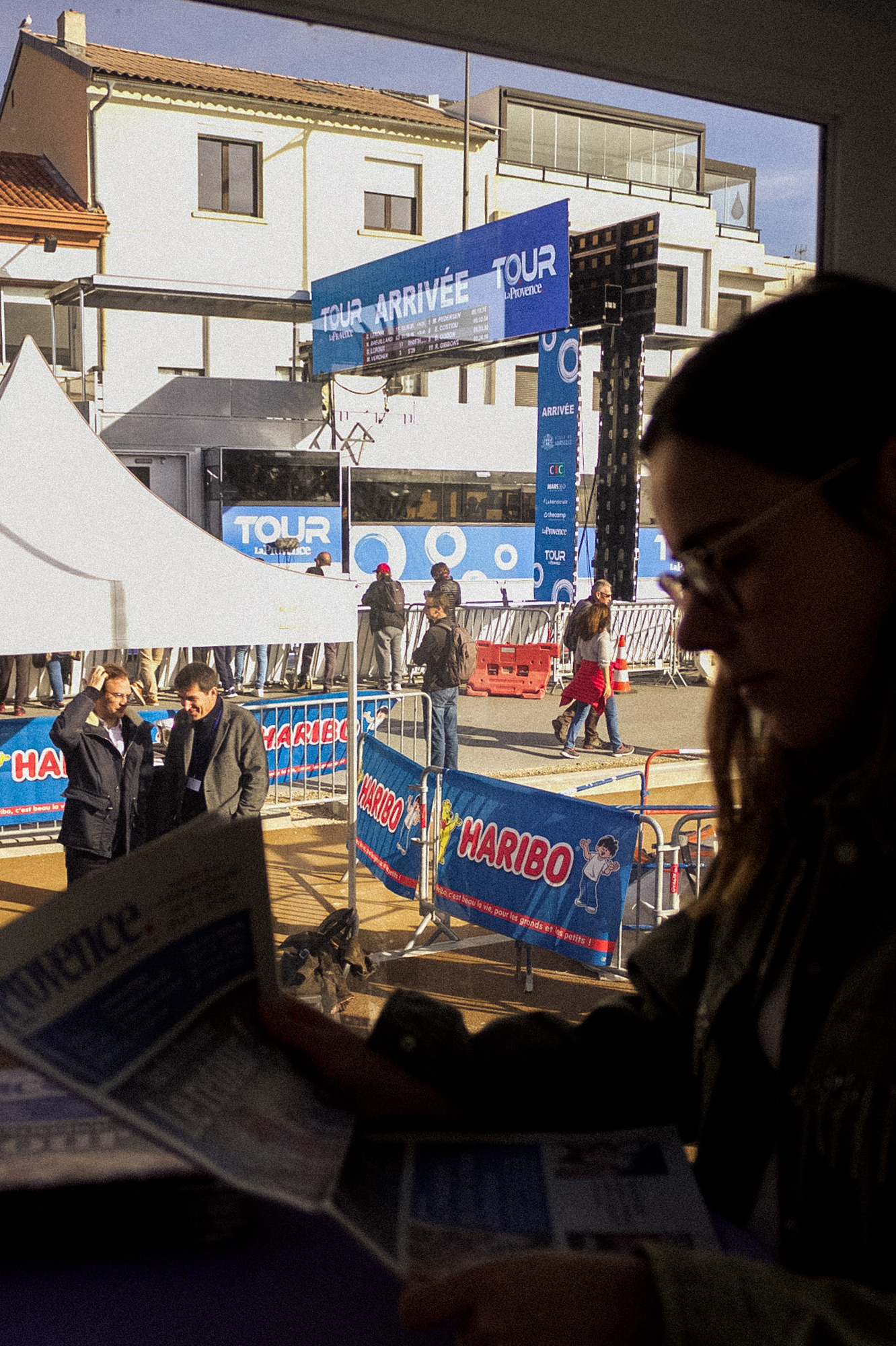
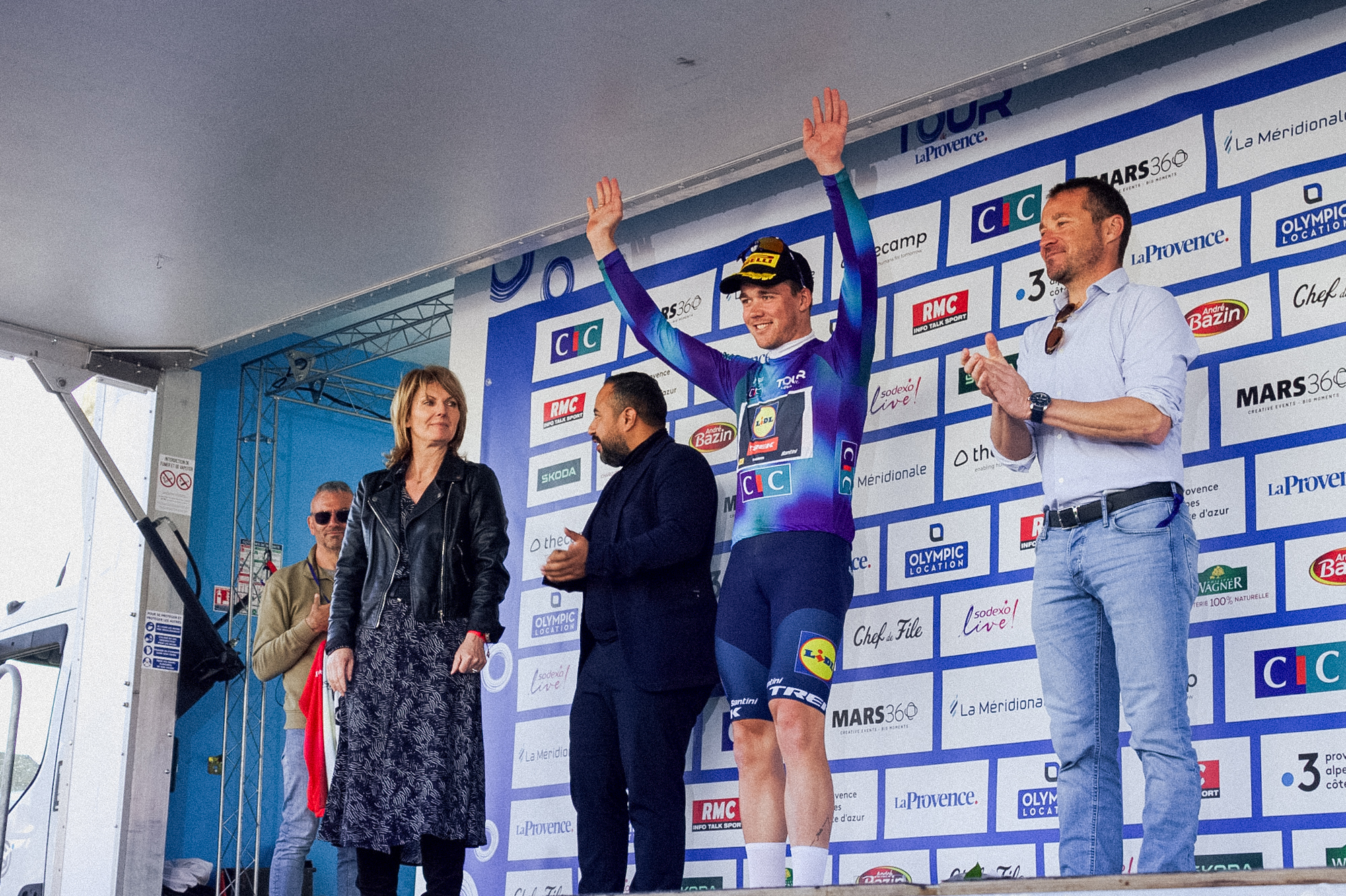
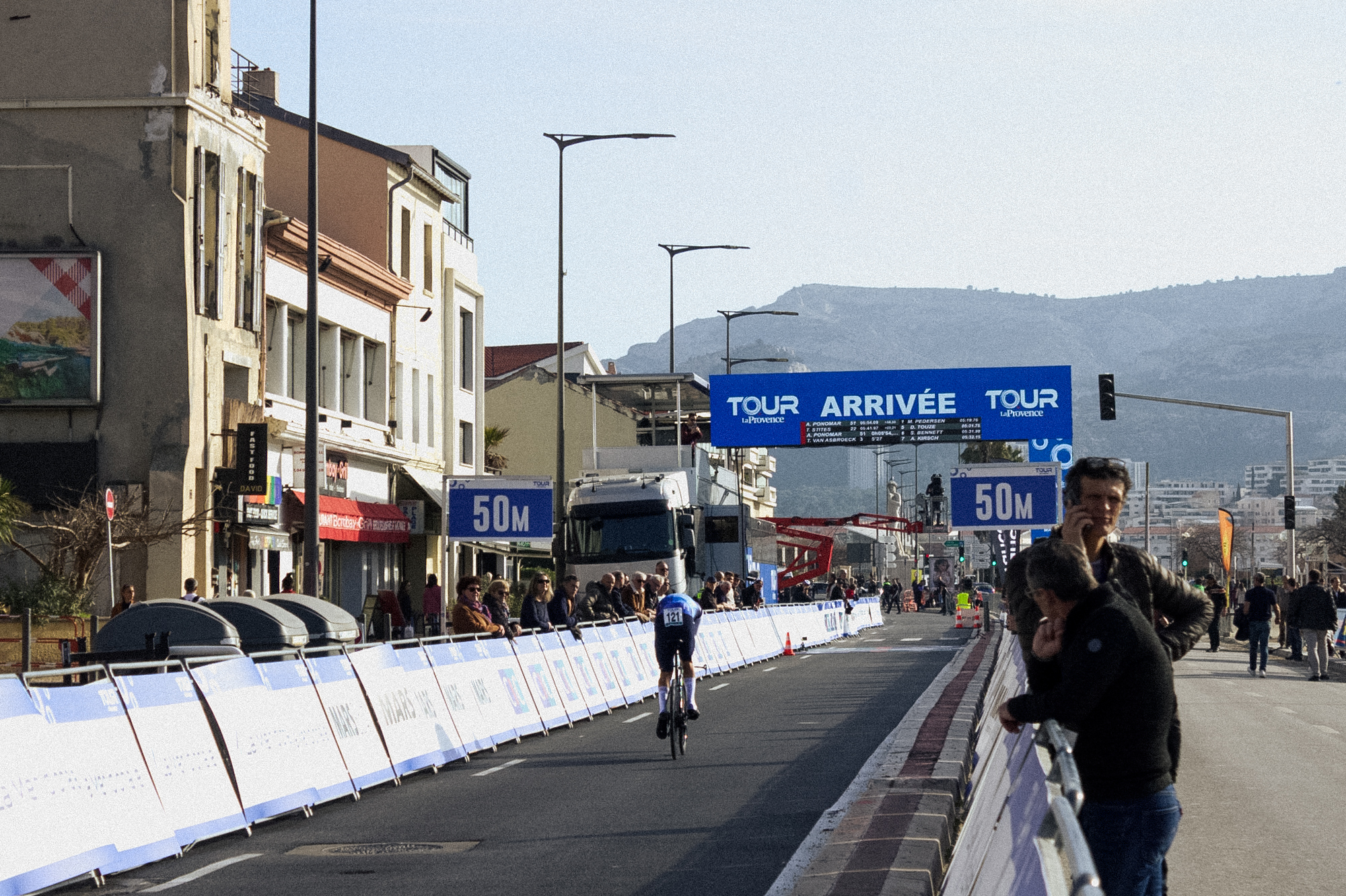
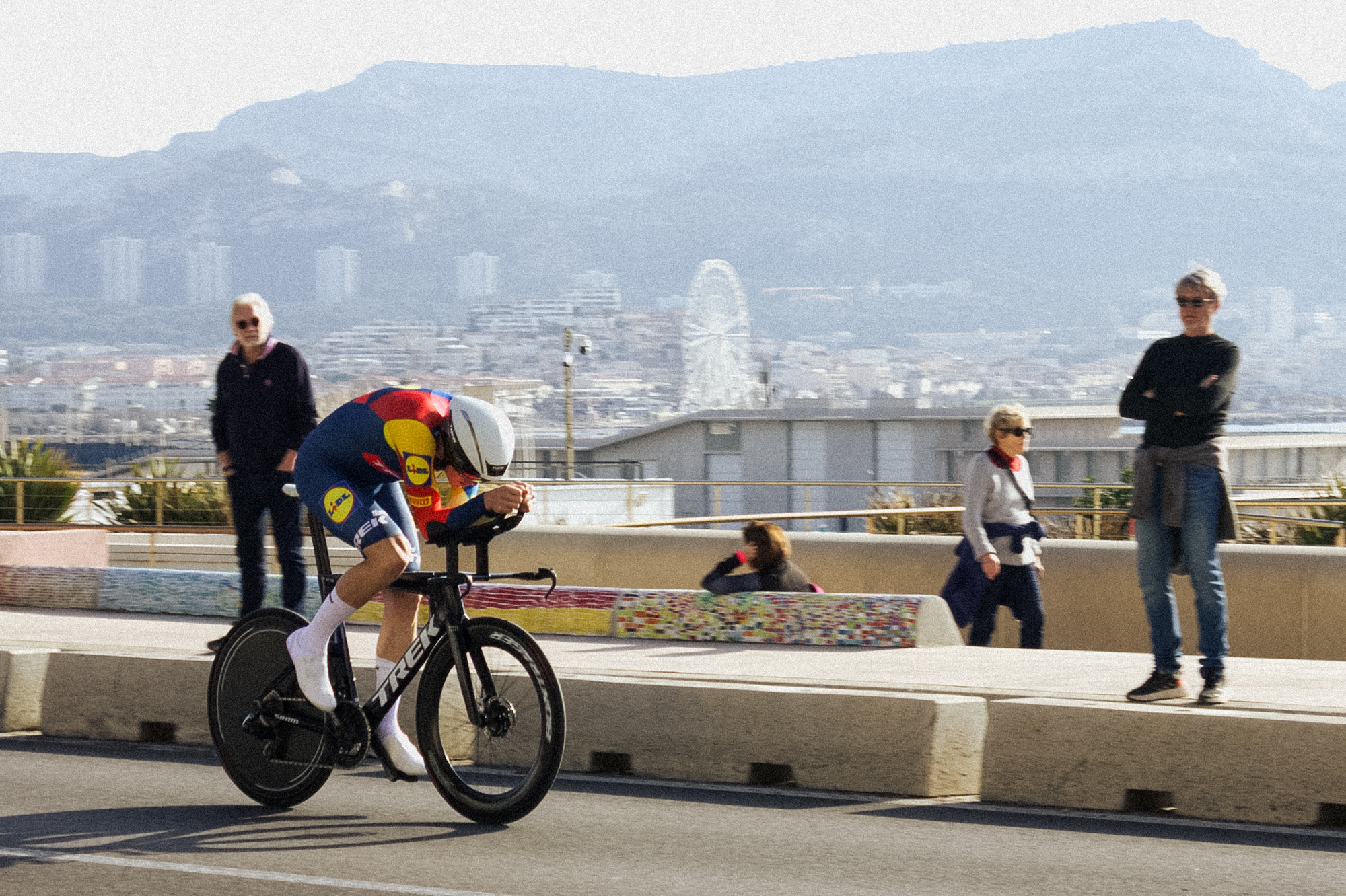
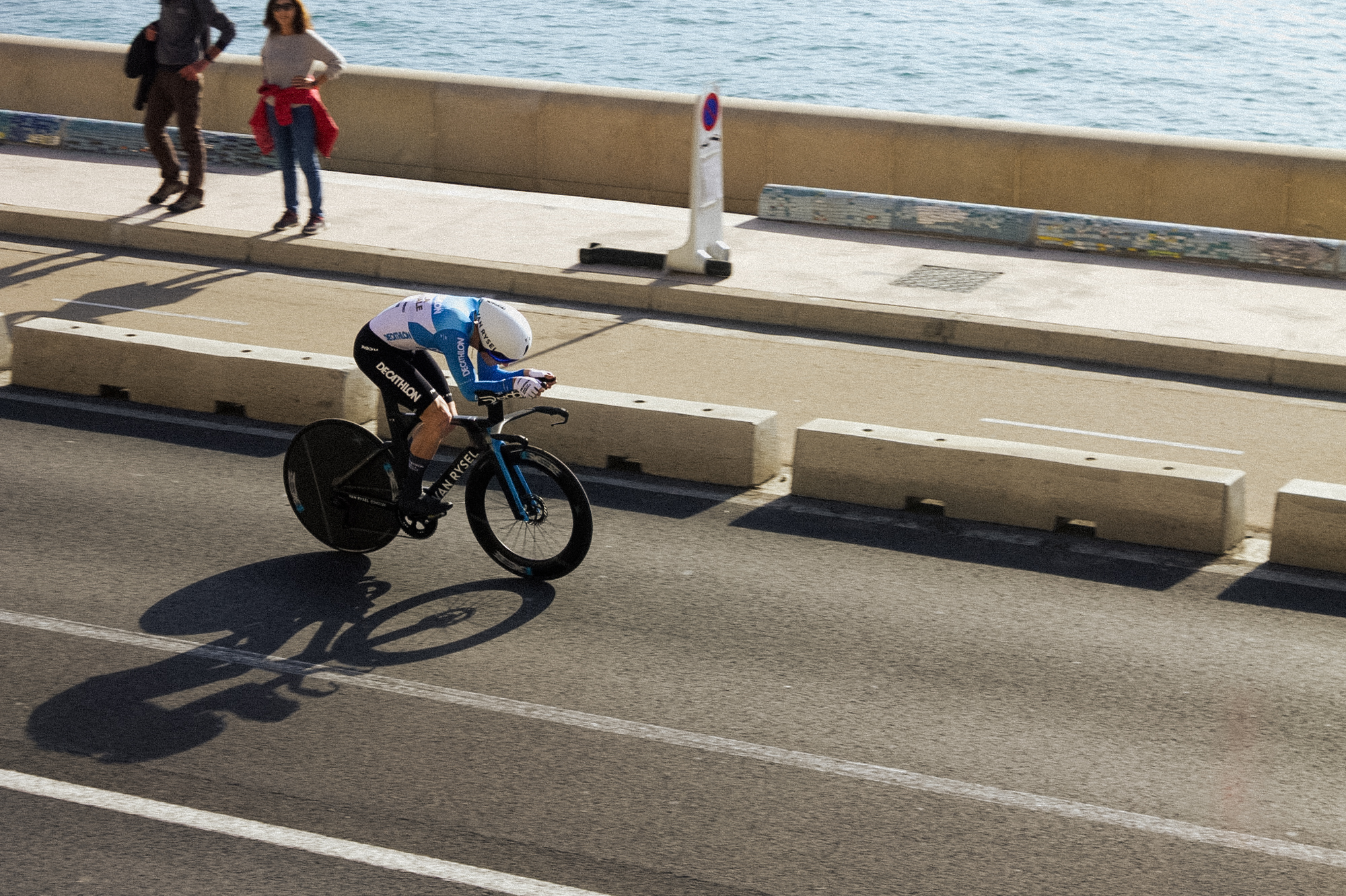
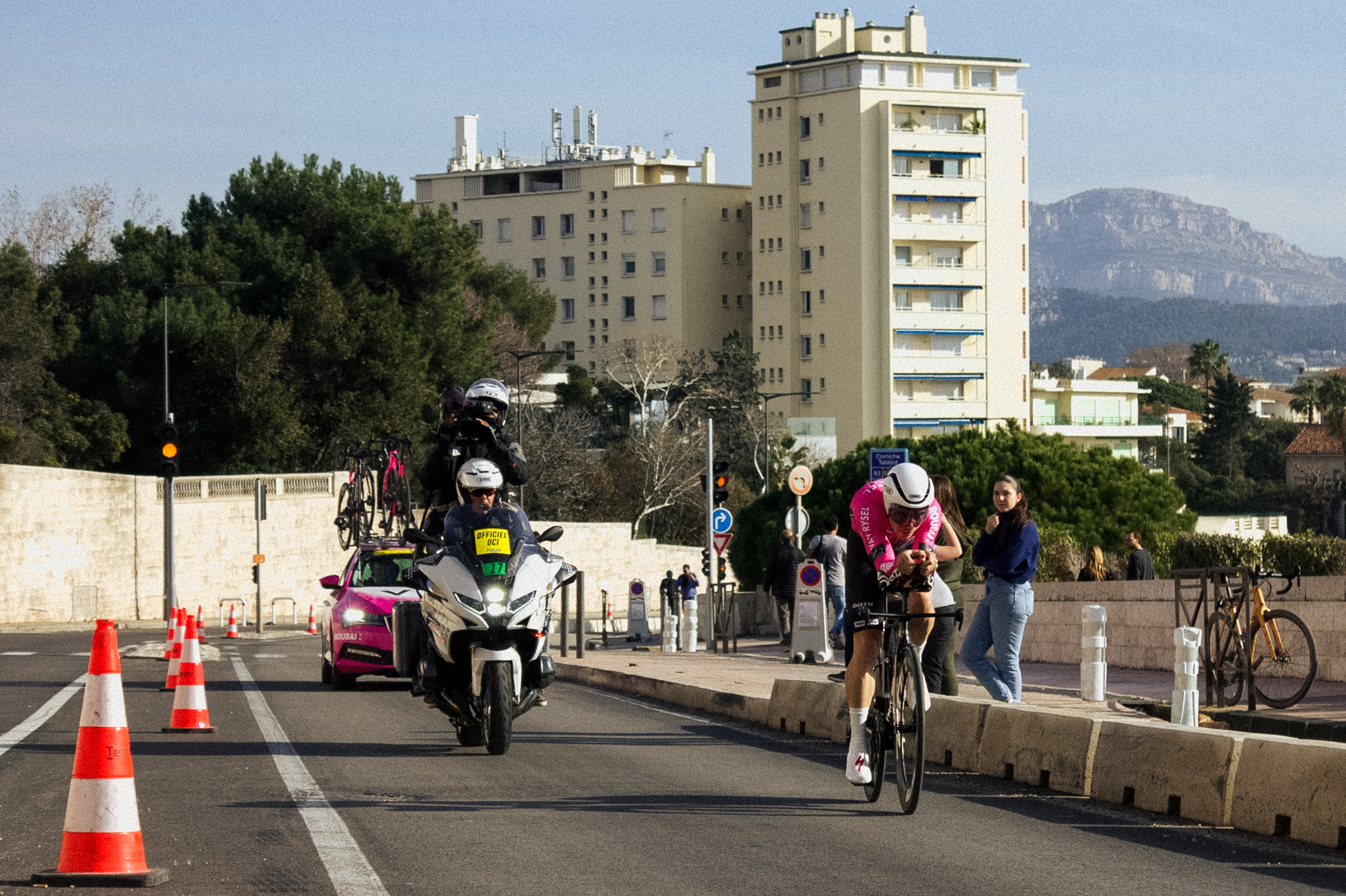
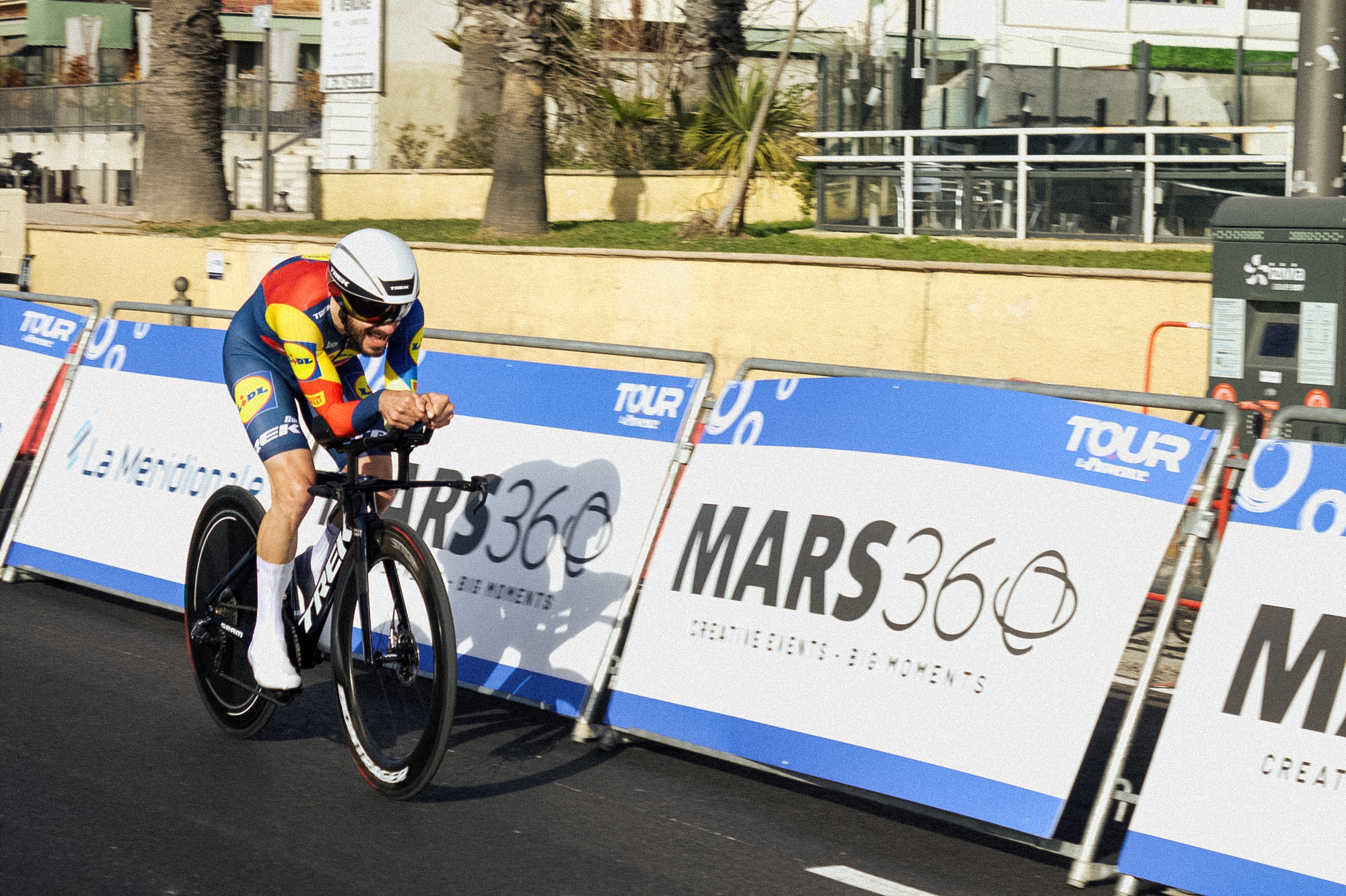
La primera carrera fue rápida, y el circuito vio los participantes correr los cinco kilómetros por la carretera de la Corniche que darían como resultado imágenes increíbles de los corredores con el sol radiante y el mar Mediterráneo al fondo. Sin sorpresas, el corredor danés del Lidl-Trek marcó el mejor tiempo y luego se limitó a esperar a que el resto de contendientes finalizaran su vuelta rápida. Una etapa prólogo pretende dar una primera clasificación inicial pero nada definitivo. Aun así, Pedersen se hizo con la victoria y el maillot de líder, que seguramente intentaría conservar a toda costa.
La segunda etapa contaría con el clima opuesto. Se anunciaron nubes, viento y fuertes lluvias durante todo el día desde Aix en Provence hasta Martigues. Con sólo una subida de segunda y tercera categoría, la etapa terminaría en un sprint masivo dominado por la formación Lidl-Trek y ganado por Pedersen. El tiempo le fue favorable y así lo demostró. Ganó el Campeonato Mundial en 2019 en condiciones climáticas adversas, por lo que se esperaba que se comportara como pez en el agua. La tercera etapa de Forcalquier a Manosque fue más dura y el tiempo lluvioso obligó a todos a ponerse una capa extra. Tras la última subida de primera categoría, descendieron a la ciudad y el final fue un sprint cuesta arriba que volvió a ser dominado por el corredor danés, tras recortar distancias con el líder en solitario y conseguir mantener a todos detrás con un potente sprint.
Como era de esperar en el sur de Francia, el tiempo pasó a ser soleado pero ventoso en la última etapa. A pesar de ser una etapa llana con salida desde Rognac y llegada a Arles con un sprint masivo, esta vez la victoria fue para el belga Tom Van Asbroeck del Israel-Premier Tech. Sin embargo, Pedersen no se quedó atrás y se hizo con la clasificación general seguido de Axel Zingle (Cofidis) y Raúl García Pierna (Arkéa-B&B Hotels).
A medida que avance el año, el clima seguirá mejorando en Europa y los equipos profesionales se trasladarán gradualmente al norte, al territorio de los clásicos. Oficialmente, el calendario de las Clásicas de Primavera comenzará con el Omloop Het Nieuwsblad en Bélgica el 24 de febrero, con Kuurne-Brussel-Kuurne al día siguiente. Ese fin de semana precederá a muchas otras carreras de un día en Europa como la Strade Bianche (4 de marzo) o la Milán-Sanremo (16 de marzo) en Italia.
Carreras como el Tour de la Provence sirven como carreras de “calentamiento” para carreras más importantes como la París-Niza (5-12 de marzo), que junto con la Tirreno Adriático (4-10 de marzo) son claramente las carreras para poner a prueba la Corredores del WorldTeam antes de las Grandes Vueltas. En particular, las carreras francesas de múltiples etapas París-Niza y el Critérium du Dauphiné (2-9 de junio) son especialmente interesantes porque transcurren en carreteras similares al Tour de Francia (29 de junio-21 de julio), que finalizará este año en Niza por primera vez con una contrarreloj. Sin embargo, podremos ver a los corredores profesionales en París, ya que los Juegos Olímpicos de este año tendrán lugar en la capital francesa el 3 de agosto.
Para terminar, tiene sentido que la intensa temporada de ciclocross llegue a su fin ya que se vuelve imposible hacer frente a tantas carreras en marcha. Con días más largos y cálidos, las Clásicas de Primavera y otras carreras cortas de múltiples etapas abrirán el camino hacia las tres Grandes Vueltas principales de 2024, las cuales estamos ansiosos por ver disputar.

Apasionado de la bici y de la competición, Pol, siempre está preparado para una nueva aventura. Le encanta la sensación de ponerse un dorsal y es un auténtico adicto al ciclocros. Passionate about bikes and racing, Pol is always ready for a new adventure. He loves the feeling of pinning a number and he is truly addicted to cyclocross. View all posts by Pol Sopeña
Around the beginning of February, many riders from the professional peloton officially start their competitive season. That might not be the case for cyclocross riders, as they are just finishing their fall-winter season, with the culminating point with the Worlds in Tábor two weeks ago. However, road-focused cyclists take the opportunity to improve their form after the winter preparation by taking part in small one-day or short multiple-stage races, which puts them back in the racing mindset.
It might be winter, but we can still find places in Southern Europe where the climate is gentle enough to ride in short bibs and jerseys. A clear example is the south of Spain, with many teams focusing their training camps in the Calpe region, where cyclists can find varied roads and respectful car drivers, and teams can accommodate all their material in one of the many hotels that are empty during this part of the year. One thing is sure, good weather and ever-changing terrain with long and sustained climbs are expected there.
Despite that, a little bit further north around the Mediterranean Sea, we can also find good areas to prepare for the season, like the Côte d’Azur in France, with many pro-cyclists already living in the Nice-Monaco area. Very close to the coast, and seeing the potential of the inland region in Provence, in 2016 took place the inaugural Tour de la Provence, which was won by Thomas Voeckler, who recently became the spokesperson of the four-stage race.
This year, between the 8-11th February, the 8th edition of the race took place, establishing itself in the UCI calendar. We were around and, attracted by the start list and the initial time trial went to see how it all unfolded.
Aside from the excellent emplacement and parcours, the race is well-fitted within the calendar, with one-day races like the Grand Prix de La Marseillaise (28th January) or multiple-stage ones like the Étoile de Bessèges (31st January – 4th February) taking place close by on similar dates. One may get all those races mixed up, but each of them has its own identity.
An individual prologue time trial in the coastal city of Marseille would mark the starting point of the race. With UCI WorldTeams among other minor ProTeams and Continental ones, all eyes were fixed on the former world champion Mads Pedersen. He had just won the Étoile de Bessèges the week before and he surely was in great shape. Nonetheless, warming up in the teams’ area, we saw other big names like Sam Bennett or Bruno Armirail.
The Danish rider tends to follow an alternative approach to the classics season, as he prefers to race early in the season and then skip the Flemish Openingsweekend to add an extra training camp before the proper cobbled classics take place. That puts him in an odd situation as the man to beat in races where three-quarters of the participants are French.
The first race was fast, and the parcours saw the starters ride a handful of kilometers along the Corniche road, which would result in incredible images of the riders with the shining sun and the Mediterranean Sea at the back. With no surprises, the Danish rider from Lidl-Trek set the fastest time and then he just waited for the other contendants to finish their ‘hot lap’. A prologue stage is intended to give a first initial classification but nothing decisive. Nonetheless, Pedersen took the victory and the leader jersey, which he would surely try to keep at all costs.
The second stage would feature the opposite weather. Clouds, wind, and heavy rain were announced for the whole day from Aix en Provence to Martigues. With only a second and a third category climb, the stage would finish in a massive sprint dominated by Lidl-Trek and won by Pedersen. The weather was favorable to him and he surely proved it. He won the World Championships in 2019 under inclement weather so he was expected to behave like a fish in water. The third stage from Forcalquier to Manosque was harder, and the rainy weather forced everyone to put on an extra layer. After the last first-category climb, they descended into the city and the final was a short hill that was again dominated by the Danish rider, after closing the gap to the solo leader and managing to keep everyone behind him with a powerful sprint.
As one would expect of Southern France, the weather was sunny but windy for the last stage. Despite being a flat stage departing from Rognac and arriving at Arles with a massive sprint, this time the victory was for the Belgian Tom Van Asbroeck from Israel-Premier Tech. However, Pedersen had no problems keeping his lead in the general classification, followed by Axel Zingle (Cofidis) and Raúl García Pierna (Arkéa-B&B Hotels).
As the year advances, the weather will only keep improving in Europe and professional teams will gradually move north to the classics territory. Officially, the Spring Classics calendar will start with the Omloop Het Nieuwsblad in Belgium on February 24th, with Kuurne-Brussel-Kuurne the following day. That weekend will precede many other one-day races around Europe like Strade Bianche (4th March) or Milan-Sanremo (16th March) in Italy.
At the same time, races like the Tour de la Provence serve as ‘warm-up’ races for larger ones like Paris-Nice (5 – 12th March), which alongside Tirreno Adriatico (4 – 10th March) are clearly the races to test the WorldTeam riders before the Grand Tours. In particular, the French multiple-stage races Paris-Nice and the Critérium du Dauphiné (2 -9 th June) are especially interesting because they happen on similar roads to the Tour de France (29th June – 21st July), which will finish in Nice for the first time with a time trial. However, we will surely see the pro riders passing through Paris as this year’s Olympic Games will take place in the French capital on the 3rd of August.
Wrapping up, it only makes sense that the intense cyclocross season comes to an end, as it is becoming impossible to cope with so much racing going on. With the longer and warmer days, the Spring Classics and other short multiple-stage races will lead the way to the three major Grand Tours of 2024, and we cannot wait to see how they unfold.
Apasionado de la bici y de la competición, Pol, siempre está preparado para una nueva aventura. Le encanta la sensación de ponerse un dorsal y es un auténtico adicto al ciclocros. Passionate about bikes and racing, Pol is always ready for a new adventure. He loves the feeling of pinning a number and he is truly addicted to cyclocross. View all posts by Pol Sopeña
 Pavel Novotný
 Javi Angulo
 Toni de la Torre
 Juliana Reis
 Pol Sopeña
 Pol Sopeña
 Toni de la Torre

 Carlos Serra
 Pol Sopeña
 Pavel Novotný
 Pol Sopeña
 Pol Sopeña
Receive our monthly selection of the best articles, news, exclusive content and giveaways only for subscribers, subscribe to OUR NEWSLETTER
Receive our monthly selection of the best articles, news, exclusive content and giveaways only for subscribers, subscribe to OUR NEWSLETTER
Receive our monthly selection of the best articles, news, exclusive content and giveaways only for subscribers, subscribe to OUR NEWSLETTER
Receive our monthly selection of the best articles, news, exclusive content and giveaways only for subscribers, subscribe to OUR NEWSLETTER