- News
- Reviews
- Travel & Adventure
- Interviews
- Inside Industry Players
- Community
Bikes
Reviews
Components
Reviews
Cycling
Apparel


[raw_mobile_menu]
[wpml_language_switcher_down]


Un año más, no había puestos de patatas, ni música belga a todo volumen. Los equipos llegaban al emplazamiento de la carrera, los corredores salían a hacer su trabajo, y los fotógrafos podían pasear libremente por todo el recorrido en busca del mejor ángulo sin tener que lidiar con hileras de aficionados detrás de las vallas.


Los ciclistas que competían por primera vez en Bélgica acababan con una sonrisa de oreja a oreja porque, a pesar de la falta de gente animando, ya de por sí los circuitos eran espectaculares y el nivel de competición muy alto. “Verás cuando compitas delante de miles de aficionados”, decían algunos a los novatos. No estaba siendo una temporada representativa del verdadero ciclocross, pero estaban haciendo lo que siempre habían deseado.
Ya que Año Nuevo caía en mitad de una semana en la que se concentraban varias carreras, todos aquellos que cambiaban de proveedor de material las pasaban canutas para tenerlo todo preparado para el 1 de enero en Baal. “Si en la última carrera del año ves alguna camper totalmente blanca, sin rotulación, es porque en ese equipo van a cambiar de patrocinador” nos dijeron. El hecho de que los contratos esten basados en año natural es un problema tanto para los equipos de carretera como sobre todo los de ciclocross, pero a día de hoy no hay otra que adaptarse y minimizar los efectos de un cambio de material tan precipitado.


Varios eventos eran exclusivos para la categoría élite, así que muchos jóvenes se vieron precipitados a competir contra gente mucho más experimentada. Ciclistas procedentes de países tan lejanos como Estados Unidos apenas completaban un tercio de la carrera antes de ser cortados. Ante esta situación uno se podría preguntar si el esfuerzo, tanto económico como físico, vale la pena, pero sin necesidad de hablar con ellos sabíamos que sí. ¿Cuánta gente tiene la oportunidad de presenciar en primera persona la época dorada del CX neerlandés? ¿Quién no querría ser cortado por Van Aert?

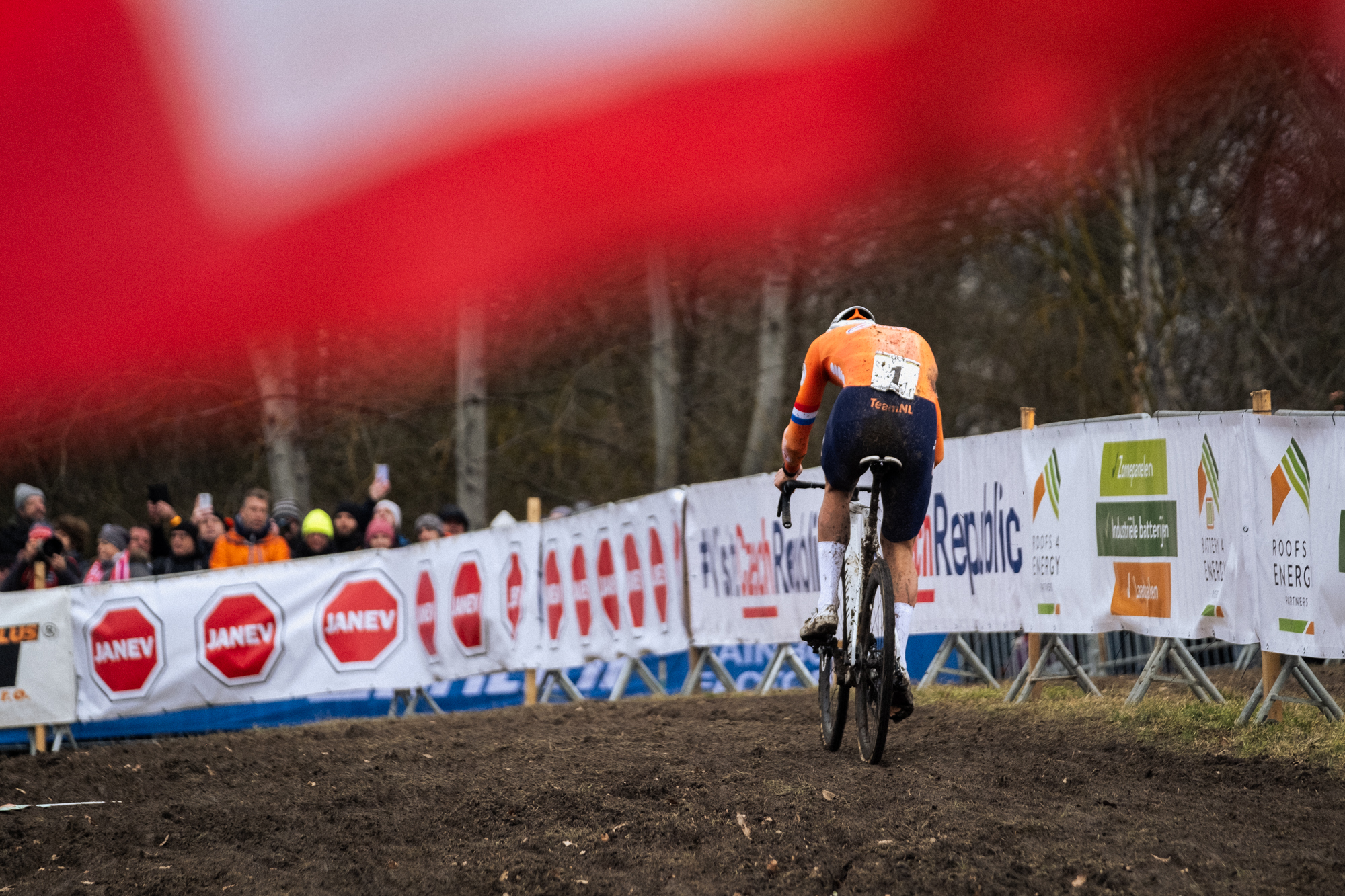
Los fotógrafos estaban expectantes de vivir al pie del cañón varios enfrentamientos entre el belga y Van der Poel, pero se tuvieron que conformar con verles competir juntos una carrera y media. El maillot arcoíris abortó su temporada por problemas de espalda, pero aún así había motivos más que suficientes para sacar partido al pase de fotógrafo día sí y día también. El dominio de Lucinda Brand en la categoría femenina, las aventuras del carretero Heinrich Haussler, los buenos y malos momentos de Thibau Nys… Cada carrera tenía su propia narrativa.


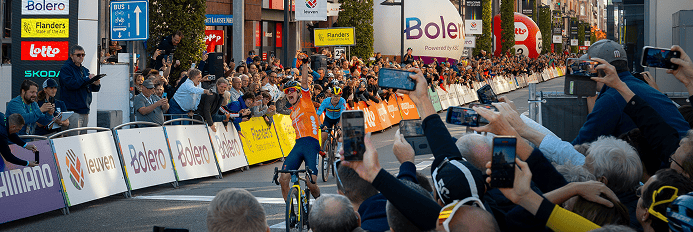
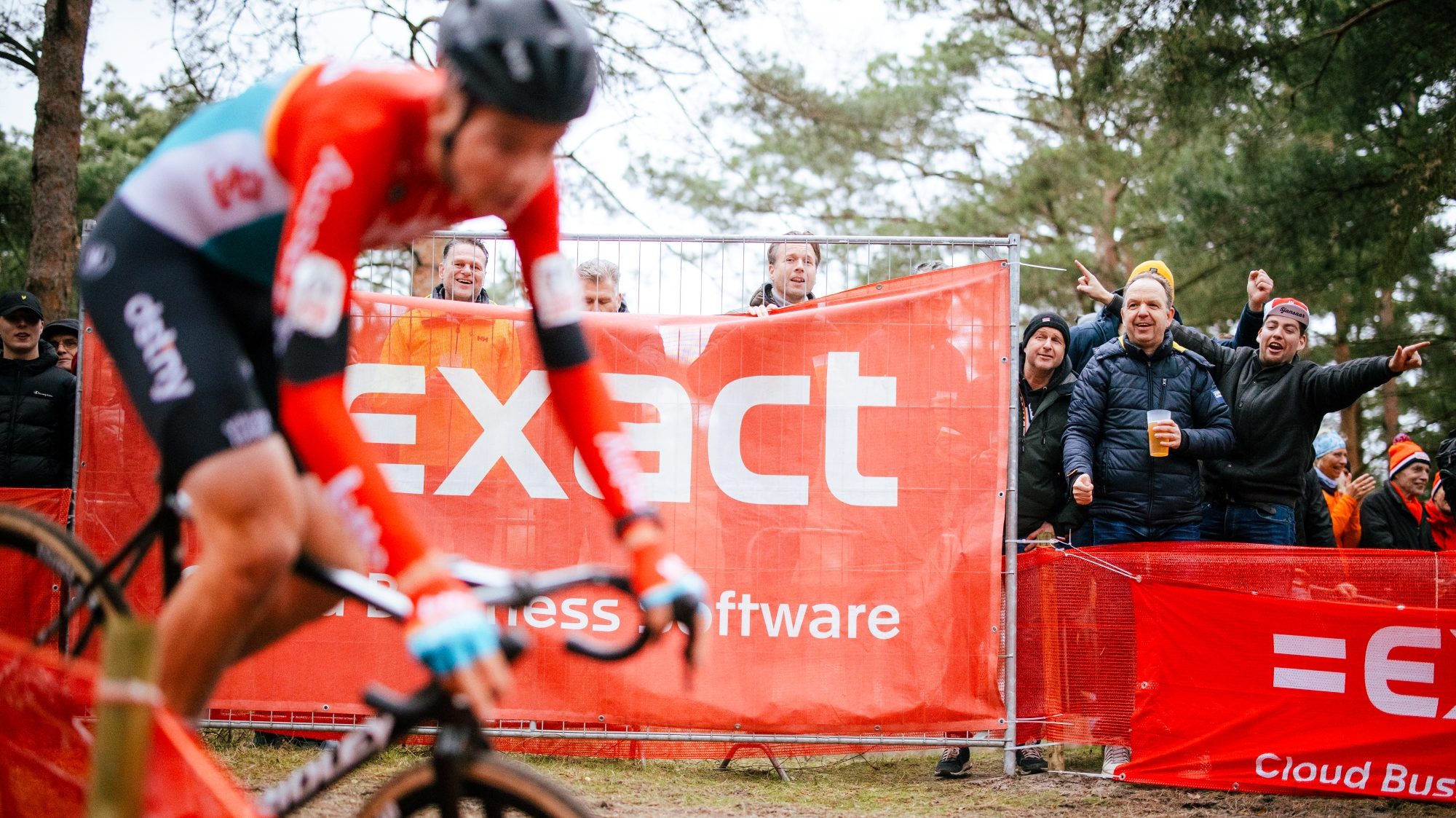
Por mucho que las carreras fueran oficialmente sin público, era difícil evitar que los aficionados encontraran un hueco en el que ver la carrera y a la vez cumplir las normas. Las terrazas de las viviendas que se encontraban adjuntas a los circuitos se convertían en improvisados palcos VIP. En el circuito de Heusden-Zolder hay un restaurante cuya terraza comunica directamente con el trazado de F1, así que todos los comensales pudieron ver la carrera desde ahí tras el postre. En otros casos, había gente que cruzaba bosques enteros para colocarse en el único hueco no tapado por las vallas.


La mayoría de equipos no andaban cortos de material, con campers y coches en los que dar cabida a los ciclistas, equipo de apoyo, bicicletas, material de repuesto, y demás. Aún así, su chiringuito no era nada en comparación con el despliegue de poderío de Jumbo-Visma e INEOS Grenadiers, que trajeron camiones y autobuses para ofrecer el máximo confort a Van Aert y Pidcock, respectivamente. Los mayores damnificados de su opulencia fueron los responsables de los aparcamientos, que sudaron la gota gorda para conseguir que todos los equipos tuvieran un hueco lo más cercano posible al circuito.

Se respiraba un ambiente distendido allá por donde fuéramos. Comentarios como “vaya diferencia con el circuito de ayer” o “ aquí se come mejor” eran frecuentes al encontrarnos con miembros de equipos, prensa, o fotógrafos. Varios ciclistas pasaban a saludar a compañeros de fatigas, mecánicos de diferentes equipos compartiendo desayuno, y el sonido de los rodillos se hacía notar aún más ante la falta de aficionados que en otros momentos se acercaban a ver a los ciclistas calentar.
Una vez las diferentes carreras se daban por iniciadas, la voz lejana del comentarista in situ nos guiaba para saber cuánto faltaba para que los corredores llegaran al punto en el que nos encontrábamos en ese momento. Al pasar por nuestro lado, su profundo respirar iba en sintonía con sus gestos de esfuerzo, y el obturador de las cámaras no paraba de sonar hasta que les perdíamos de vista.


Las carreras de febrero en Bélgica volverán a abrir las puertas para los aficionados, y aunque tras el Campeonato del Mundo en los Estados Unidos muchos darán su temporada por finalizada, aquellos que continúen compitiendo podrán sentir el calor del público que tantas ganas tenía de volver a vivir una carrera en directo.

Javi es nuestro corresponsal en Bélgica, y trata de contrarrestar su obsesiva pasión por el análisis de datos con la relajante acción (o eso es lo que dice) de crear contenido para la revista. Javi is based in Belgium and tries to compensate for his obsessive passion for data analytics with the relaxing action (that's what he says) of creating content for the magazine. View all posts by Javi Angulo
Once again there were no fries stands, nor Belgian music playing out loud. The teams arrived at the place where the race was taking place, the riders did their job, and the photographers could freely go from one place to another looking for the best angle, without having to deal with multiple rows of fans behind the fences.
Cyclists that were racing for the first time in Belgium finished each race with an open-mouth smile because, despite the lack of people cheering for them, the circuits were super enjoyable and the level of competition very high. “Wait until you race in front of thousands of fans”, said some riders to the rookies. It wasn’t a representative season of what cyclocross truly is, but they were doing what they had always strived for.
Because New Year was in the middle of a busy week with races, all those that had to change their cycling equipment for the following year struggled to have everything ready on January 1st in Baal. “If in the last race of the year you see a completely white camper, with no labeling, it is because in that team they will change sponsors”, we were told. The fact that contracts are based on natural years raises different issues both for road teams and mostly cyclocross, but nowadays there is no other option than to minimize the effects of a sudden change in equipment.
Several events were exclusively for the elite category, so many young riders had to race against much more experienced people. Riders coming from far distant countries like the United States barely covered one third of the race before being cut. Knowing this, one could question if this is worth the physical and financial effort, but without the need of asking them, we knew it was. How many people have the opportunity to live in the first person the golden age of the female Dutch cyclocross? Who would not like to be cut by no other than Van Aert?
The photographers were eager to cover multiple clashes between the Belgian rider and Van der Poel, but they had to be satisfied with seeing them racing together only one race and a half. The wearer of the rainbow jersey aborted his season due to back problems, but there were still many reasons to make the most of the press pass day after day. The domination of Lucinda Brand in the female races, the adventures of the roadie Heinrich Haussler, the good and bad moments of Thibau Nys… Each race had a different narrative.
Despite the races being officially behind closed doors, it was difficult to prevent fans from finding a spot while complying with the rules. The rooftops of the houses adjacent to the circuits became fake VIP tribunes. In Heusden-Zolder there is a restaurant whose terrace connects with the F1 track, so every diner was able to watch the race from there after eating the desert. In other cases, people crossed a big forest to locate themselves in the only spot not covered by the high fences.
Most teams were not short of equipment, with campers and team cars that accommodated the riders, the support team, bikes, and other gear. Still, theirs was nothing compared to the power display from Jumbo-Visma and INEOS Grenadiers, which brought trucks and buses to make sure that Van Aert and Pidcock, respectively, were as comfortable as possible. The ones who suffered to most from this were the responsibles of organizing the parking, as they struggled like no other to make sure that all teams had a spot near the track.
One could sense a relaxed vibe in the parking of the teams. Comments like “what a difference compared to yesterday’s circuit” or “the food here is better” were quite common when coming across team members, press, and photographers. Some went to say hi to fellow riders, mechanics of different teams had lunch together, and the sound of the rollers stood out even more because of the lack of people that on other occasions would be around the riders while they warm up.
Once the different races started, the distant voice of the commentaries on-site guided us to know how long it would take for the riders to get to the point in which we were at that moment. Passing by our side, their heavy breathing was in sync with their facial gesture, and the shutter of the cameras did not stop until we lost sight of them.
The races in February in Belgium will open the doors again to fans and, although many riders will finish their season after the World Championships in the United States, those that keep on racing will be able to feel the support of the public that had to wait several months to watch a race live again.
Javi es nuestro corresponsal en Bélgica, y trata de contrarrestar su obsesiva pasión por el análisis de datos con la relajante acción (o eso es lo que dice) de crear contenido para la revista. Javi is based in Belgium and tries to compensate for his obsessive passion for data analytics with the relaxing action (that's what he says) of creating content for the magazine. View all posts by Javi Angulo
 Javi Angulo
 Pavel Novotný
 Javi Angulo
 Javi Angulo
 Javi Angulo
 Javi Angulo

 Toni de la Torre
 Javi Angulo
 Javi Angulo
 Javi Angulo
 Javi Angulo

 Pol Sopeña
Receive our monthly selection of the best articles, news, exclusive content and giveaways only for subscribers, subscribe to OUR NEWSLETTER
Receive our monthly selection of the best articles, news, exclusive content and giveaways only for subscribers, subscribe to OUR NEWSLETTER
Receive our monthly selection of the best articles, news, exclusive content and giveaways only for subscribers, subscribe to OUR NEWSLETTER
Receive our monthly selection of the best articles, news, exclusive content and giveaways only for subscribers, subscribe to OUR NEWSLETTER