- News
- Reviews
- Travel & Adventure
- Interviews
- Inside Industry Players
- Community
Bikes
Reviews
Components
Reviews
Cycling
Apparel

[raw_mobile_menu]
[wpml_language_switcher_down]

En el pasado, solo unos pocos ciclistas, en su mayor parte profesionales, podían beneficiarse de la ventaja de usar piezas de bicicleta hechas a medida. Para el resto de aficionados no quedaba más opción que iniciar un proceso de prueba y error hasta encontrar la pieza que fuese óptima para tu fisonomía. En el caso de los sillines, podías acabar invirtiendo grandes cantidades de dinero hasta dar con el adecuado.
Recientemente, tuvimos la oportunidad de entrevistar a Jiri y Martin, los cofundadores de Posedla. Es una startup con sede en la región de Bohemia del Norte de la República Checa cuyo objetivo principal es producir sillines de bicicleta personalizados. Con su actual producto estrella, Joyseat, su visión se centra en eliminar la anteriormente mencionada experiencia negativa, ofreciendo productos personalizables para el amplio espectro de ciclistas y mejorar su comodidad en la bicicleta o prevenir lesiones.
Durante el tiempo que pasamos juntos en la visita a la fábrica, aprendimos sobre el proceso de personalización del sillín y la historia subyacente detrás de su marca, que os presentamos en este artículo.
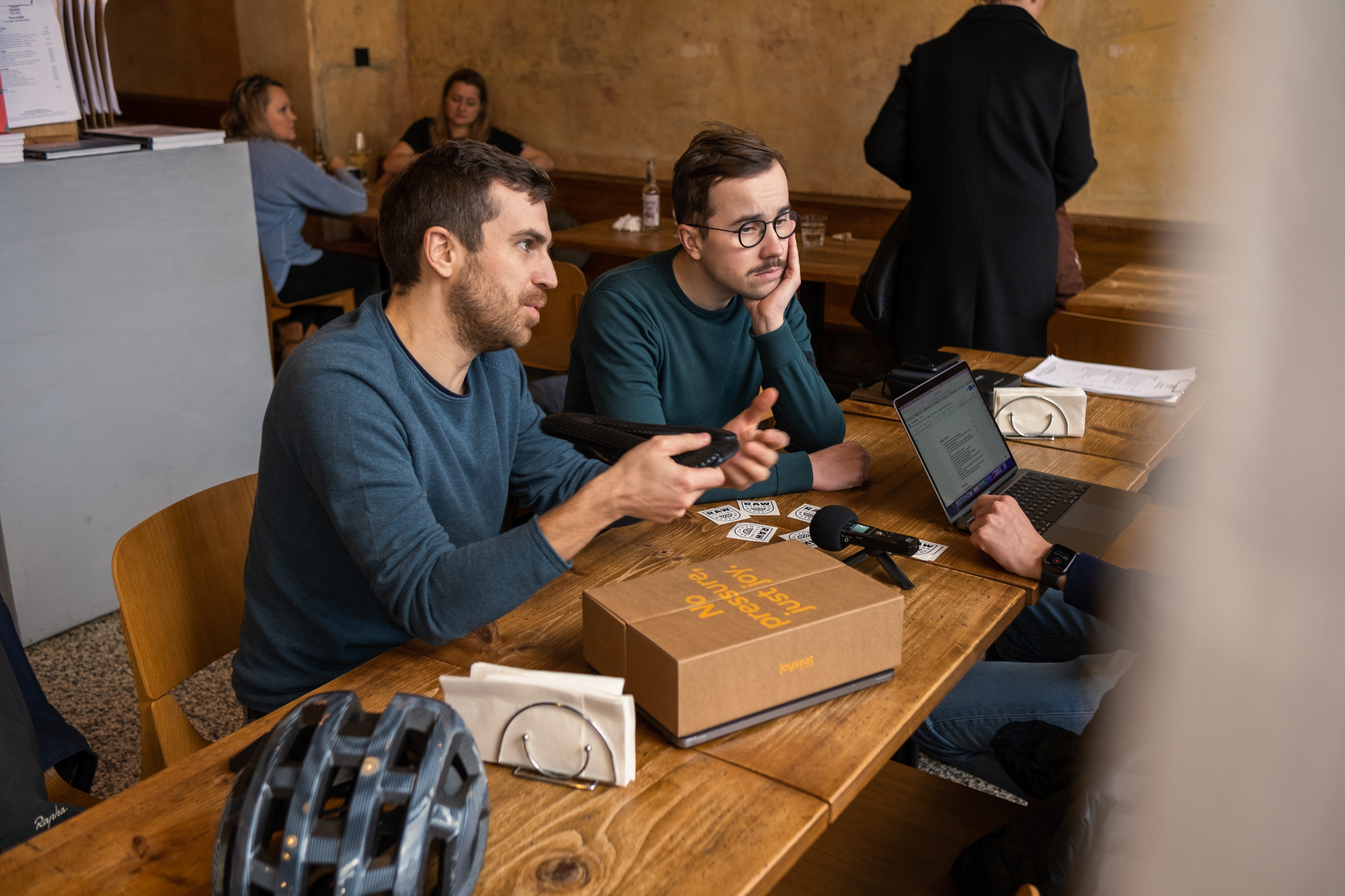
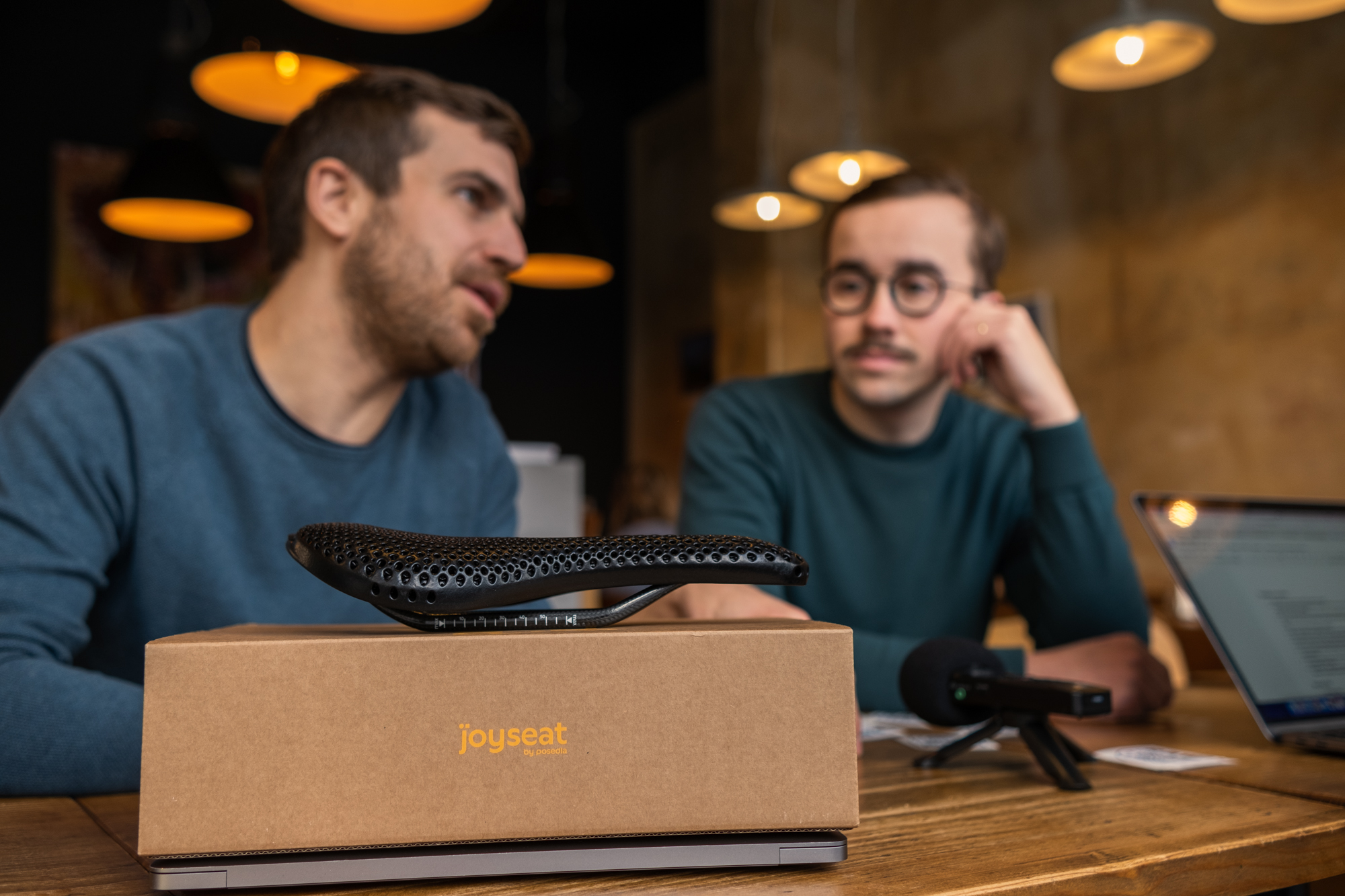
Jiri y Martin se conocen desde hace 20 años. Sin embargo, la historia inicial de su empresa no fue del todo sencilla, ya que ninguno de ellos trabajaba en la industria del ciclismo.
Antes de fundar su empresa hace dos años, Jiri trabajaba como experto en marketing en la industria de viajes en Nueva York, mientras que Martin trabajaba en una empresa de investigación de mercado. Sus trabajos implicaban muchos viajes y ambos comenzaron a sentirse sobrecargados de trabajo en sus profesiones.
Jiri decidió tomar el viaje de regreso desde los EE.UU. y cuando llegó la pandemia de Covid-19, comenzaron a hacer largos recorrido en bicicleta juntos, ya que era una de las pocas cosas que se podían hacer en ese momento. Para esas fechas, Martin sufría mucho con el sillín que utilizaba, y es ahí donde surgió la idea de producir sus propios sillines.
Ninguno de ellos tenía los conocimientos que requiere la construcción de un sillín. No obstante, sabían cómo querían construir su negocio y comenzaron a cooperar con personas capacitadas de su círuclo mientras dirigían la producción en un garaje.
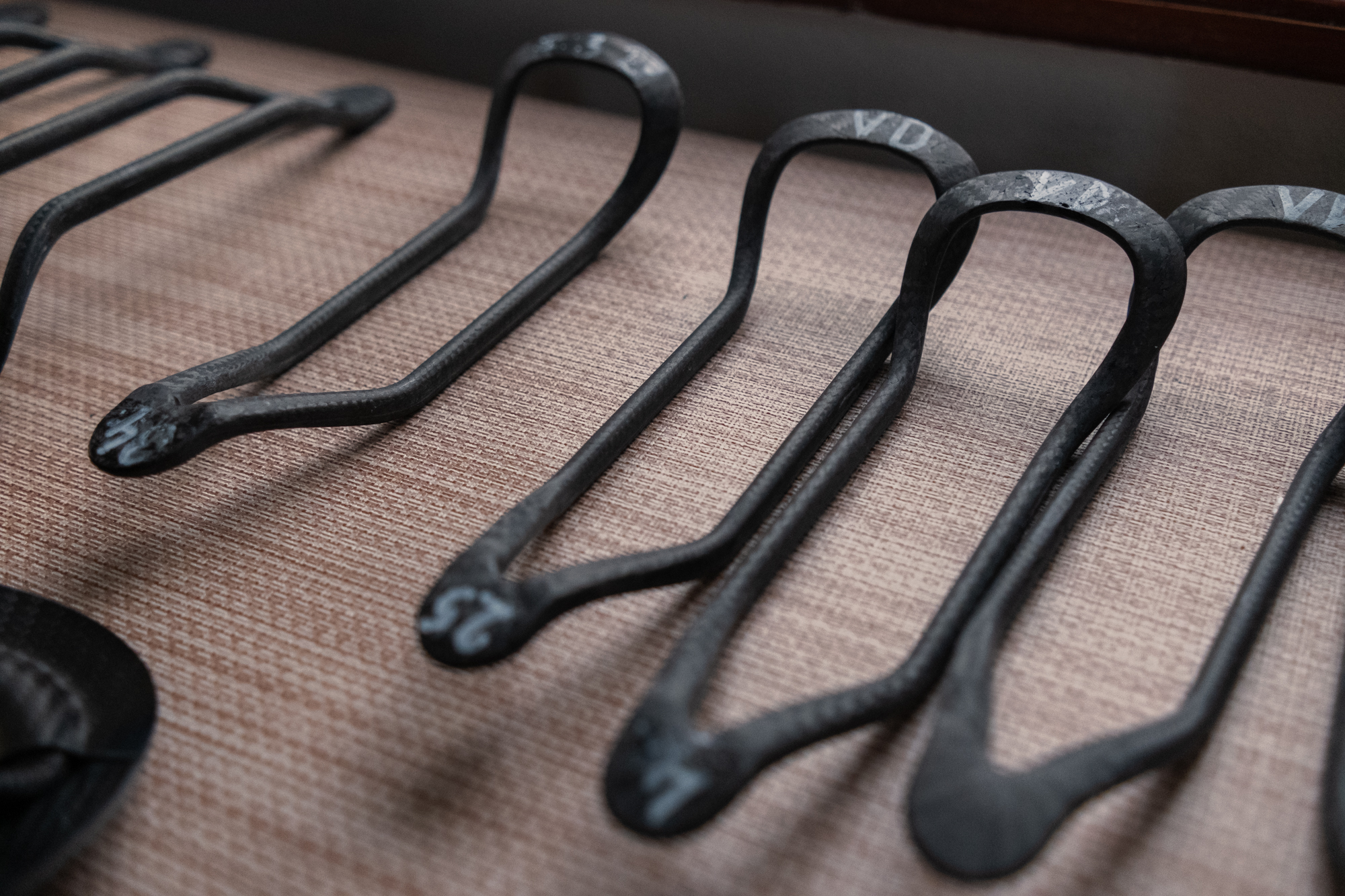
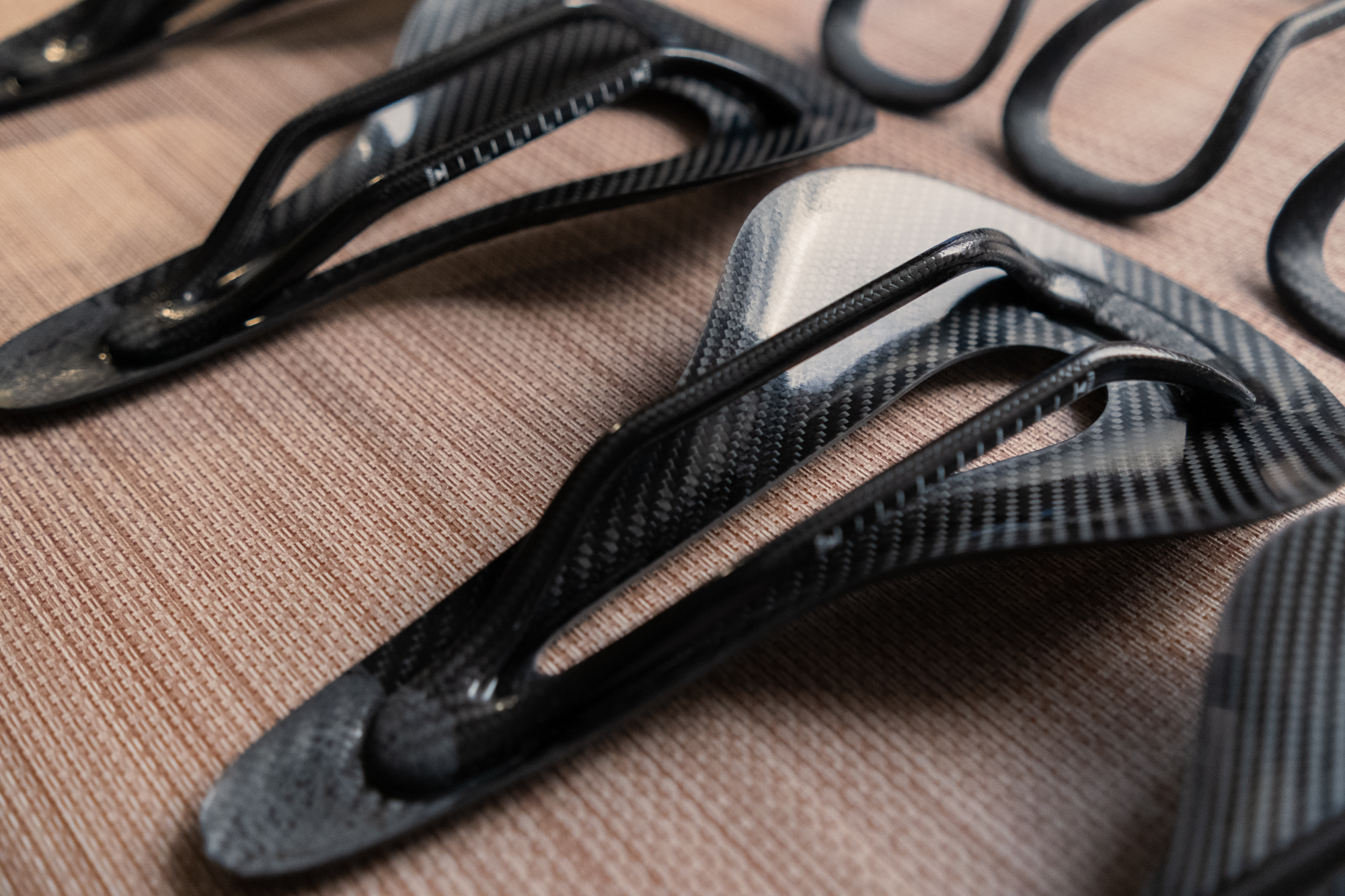
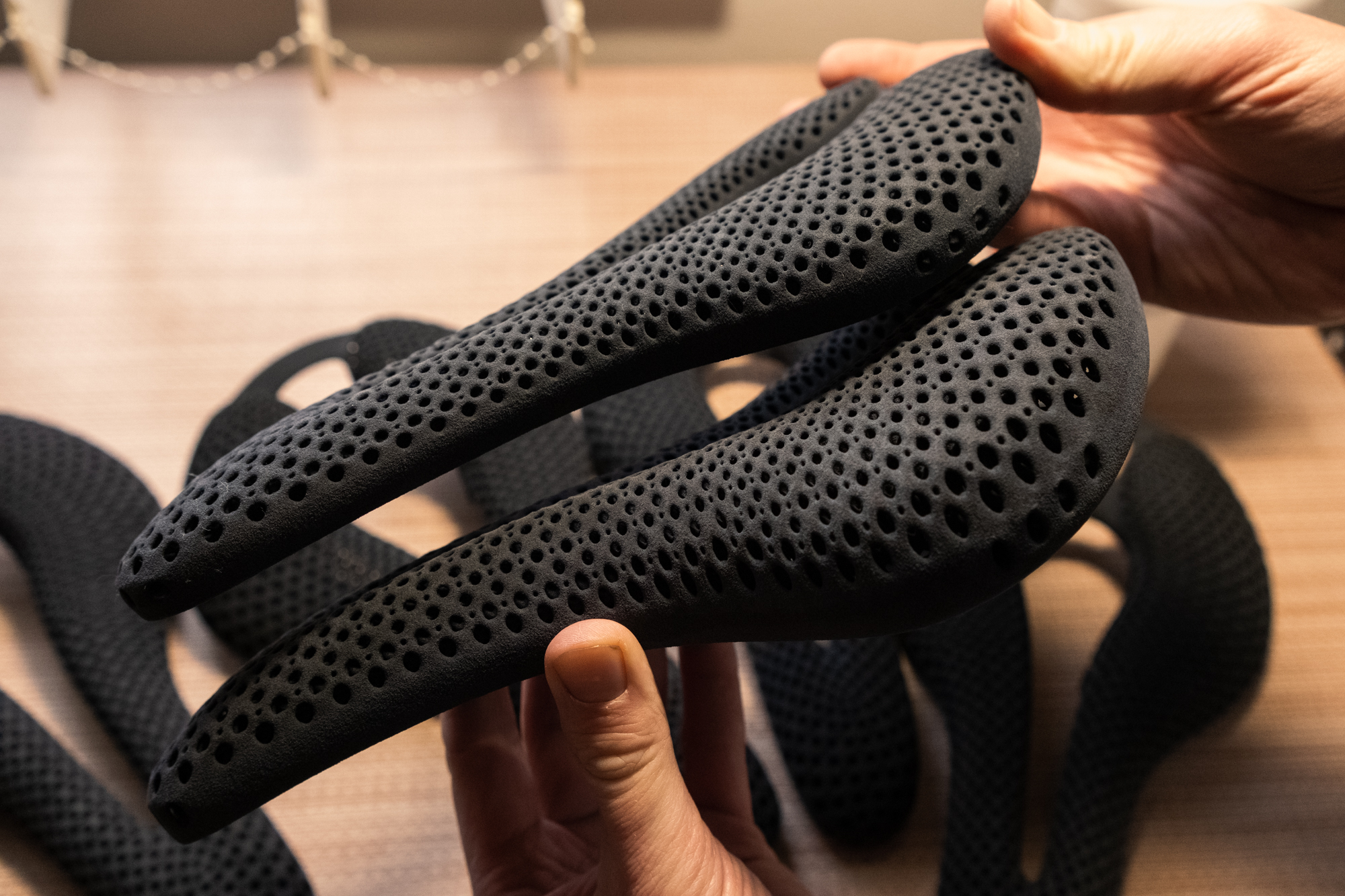
Más tarde, el reconocimiento de la PrusaLab’s Hardware Accelerator impulsó su negocio con financiamiento, y las cosas comenzaron a ponerse serias. A medida que profundizaron en el núcleo de su negocio, aprendieron que el proceso de ingeniería es un oficio bastante complejo, que involucra profesiones de modelado 3D, diseño paramétrico, diseño CAD o programación. Ciertamente son muchas las habilidades necesarias para construir un sillín personalizado, pero desde nuestro punto de vista, eso es lo que hace que el producto final sea valioso y apreciado.
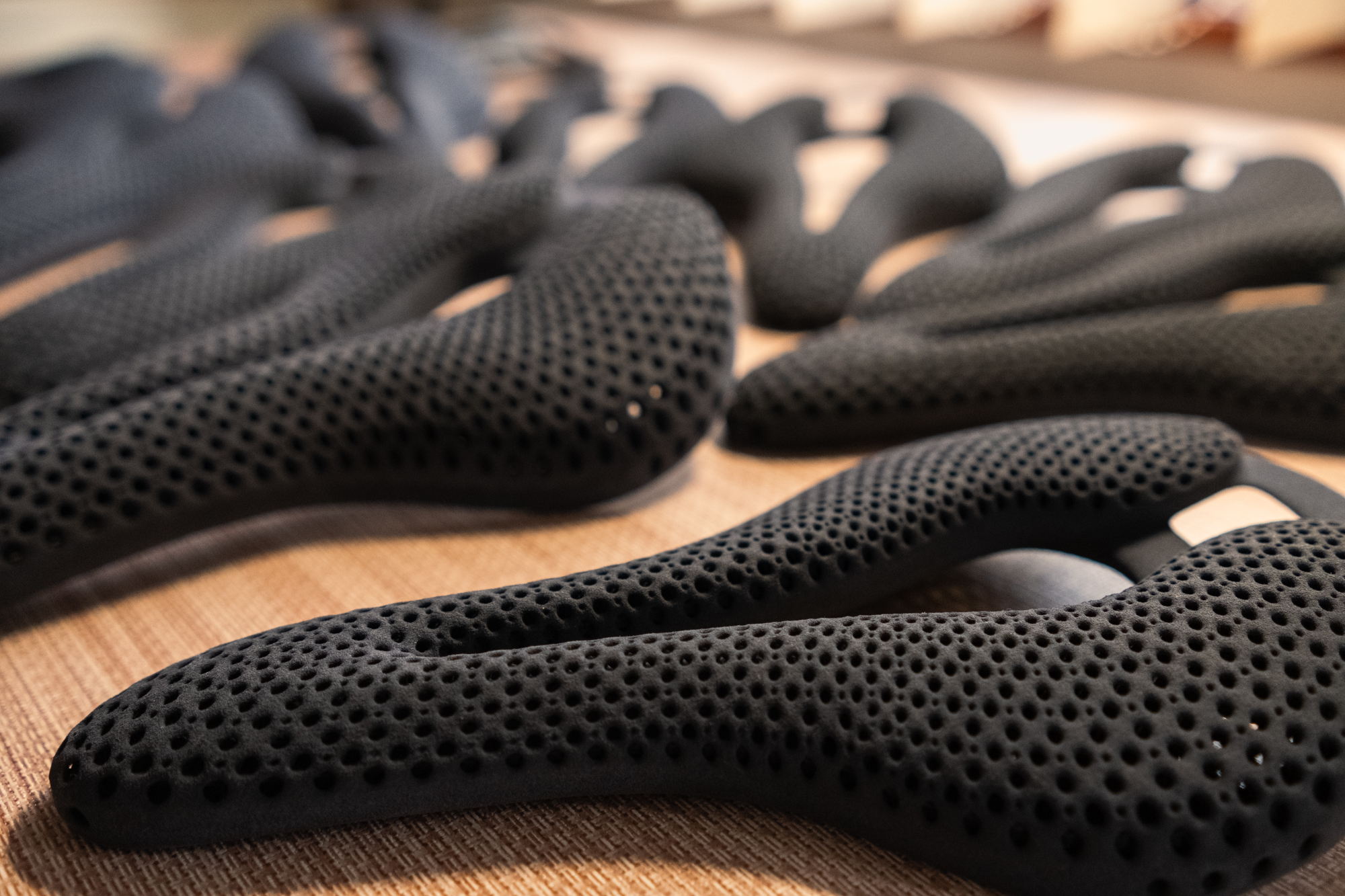
Como muchas empresas emergentes, Posedla pasó por muchos errores en su camino. Aún así, la creación de prototipos fue un factor clave y un enfoque que les permitió diseñar iterativamente su modelo Joyseat a su forma actual.
Más de un año de duro trabajo supuso la creación de docenas o cientos de diseños de sillines prototipo, que luego fueron probados por ciclistas reales. También han estado trabajando en estrecha colaboración con fisioterapeutas y ciclistas profesionales que, combinado con el feedback recopilado de sus pruebas, les proporcionó mucha información valiosa.
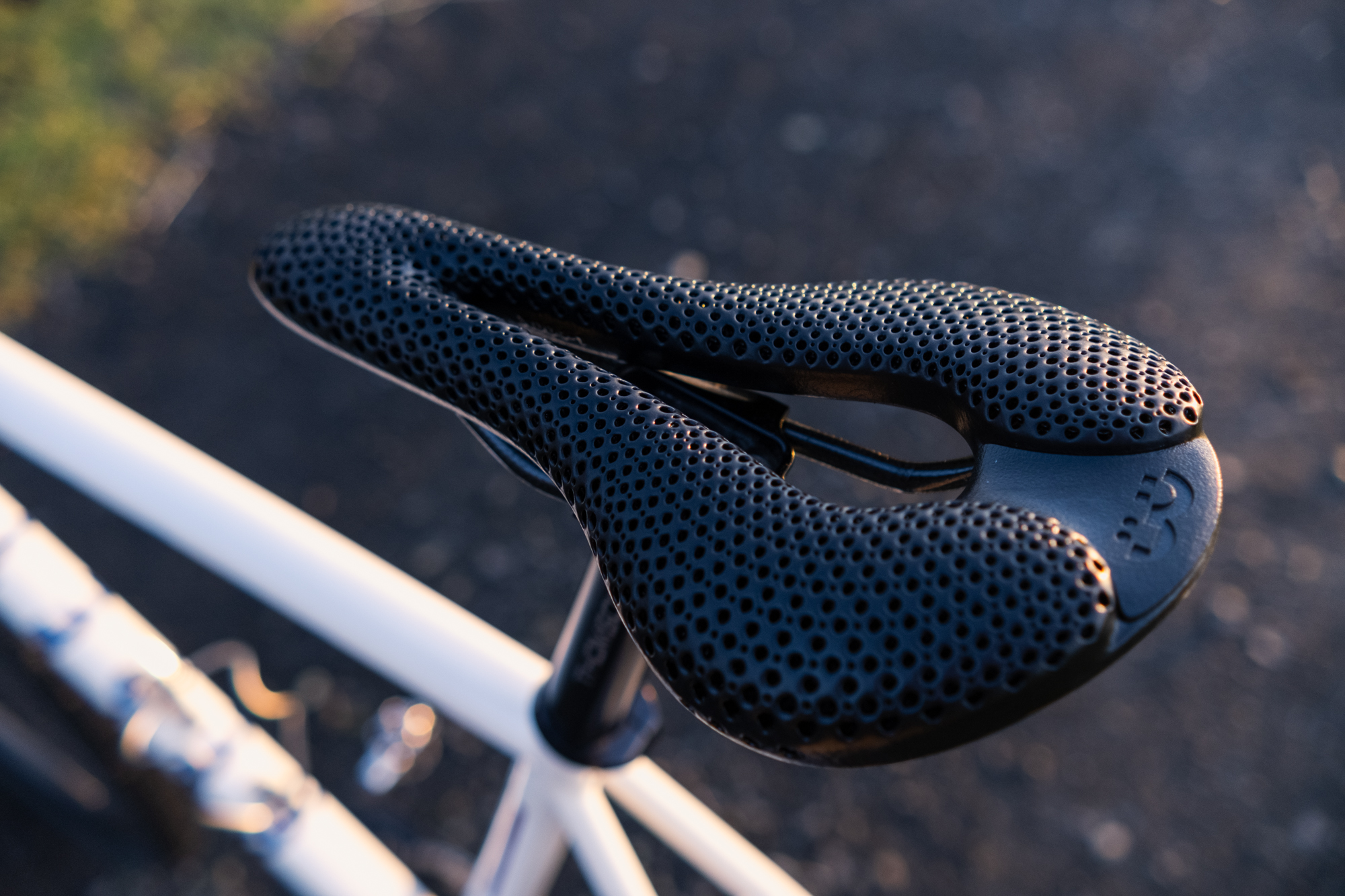
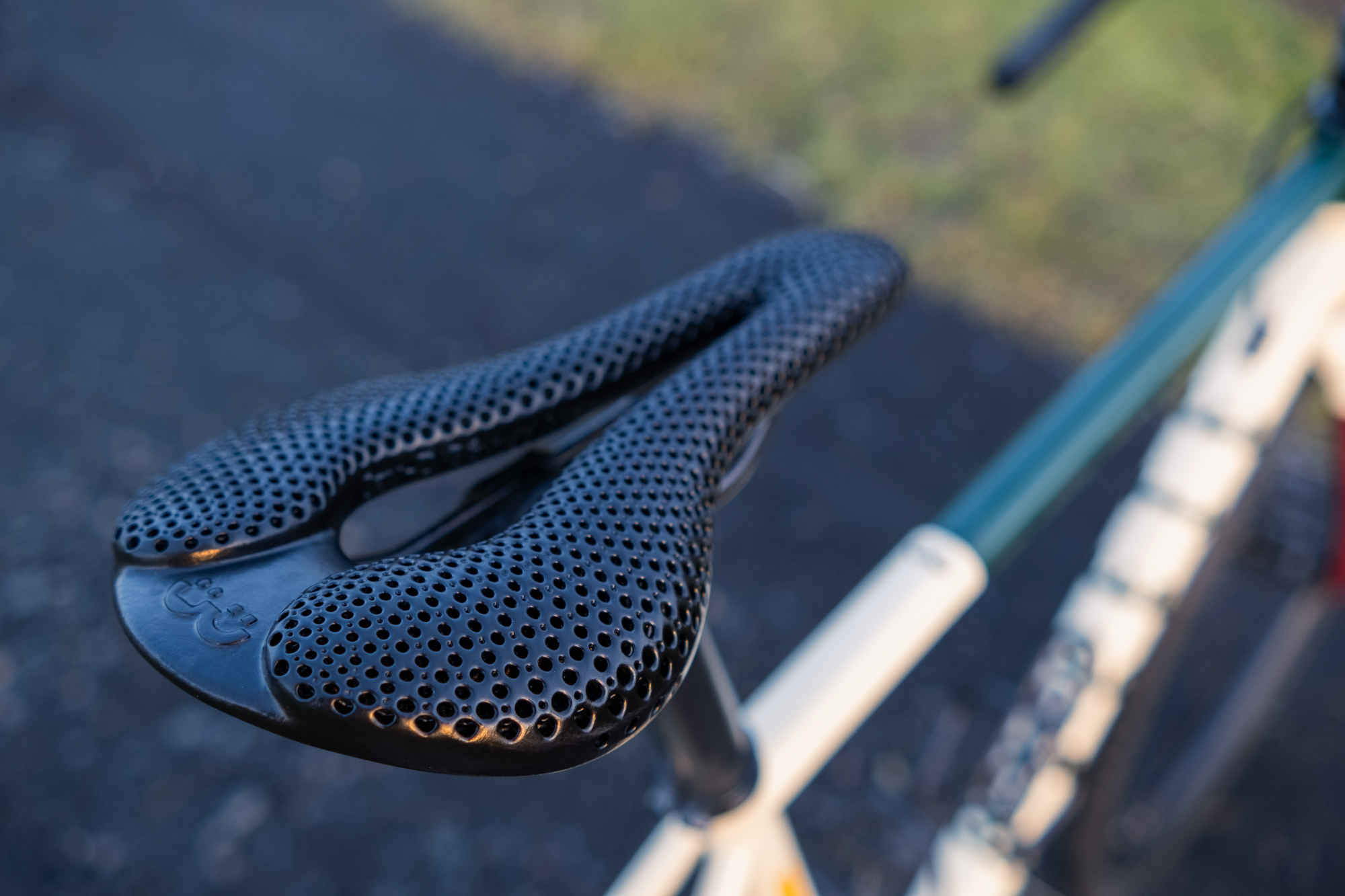
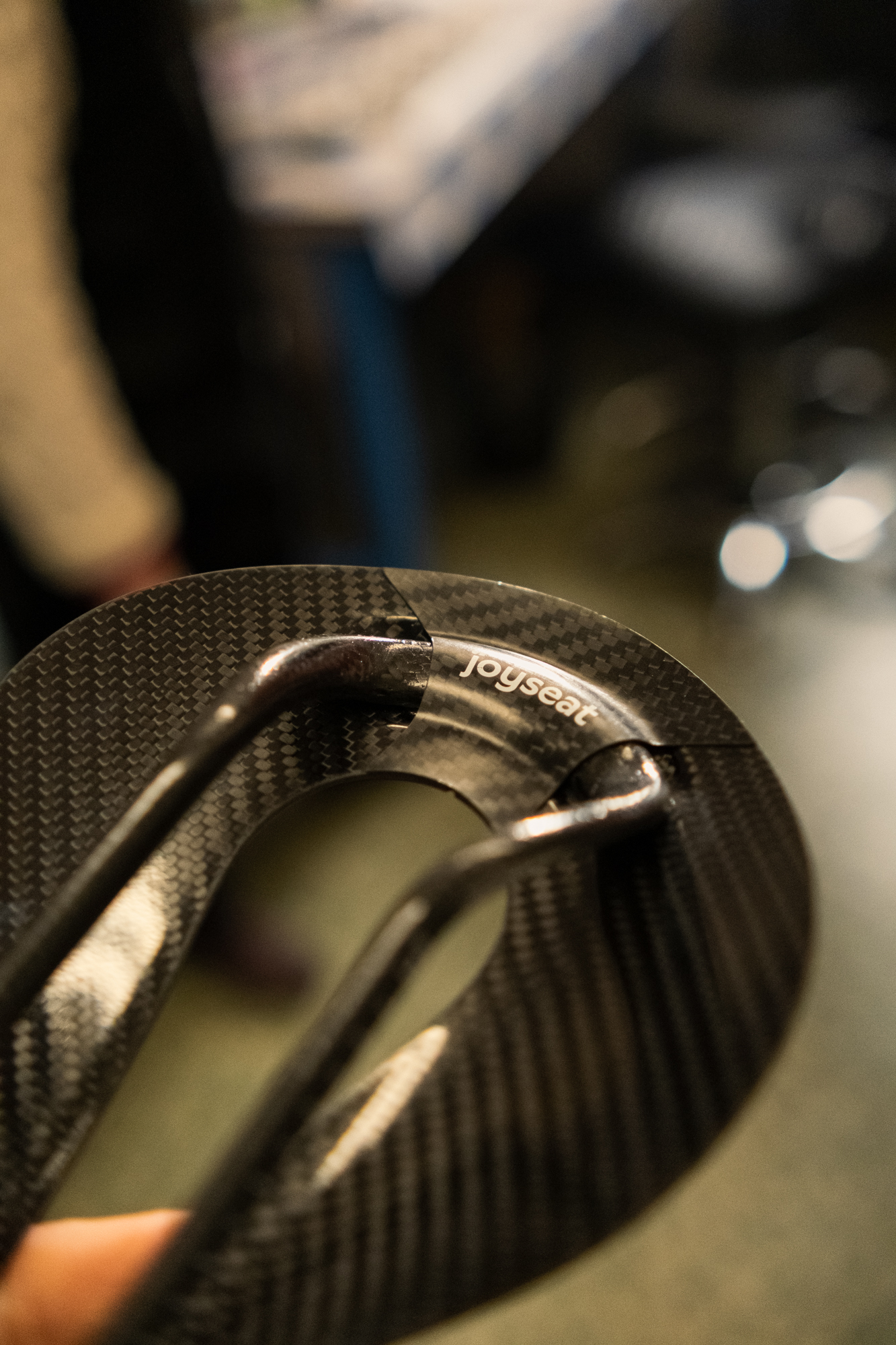
Echemos un vistazo detallado al propio sillín Joyseat. Se compone de raíles de carbono y una superficie del mismo material. La ventaja es claramente su peso reducido, entre 170 y 210 g dependiendo de la forma que tome.
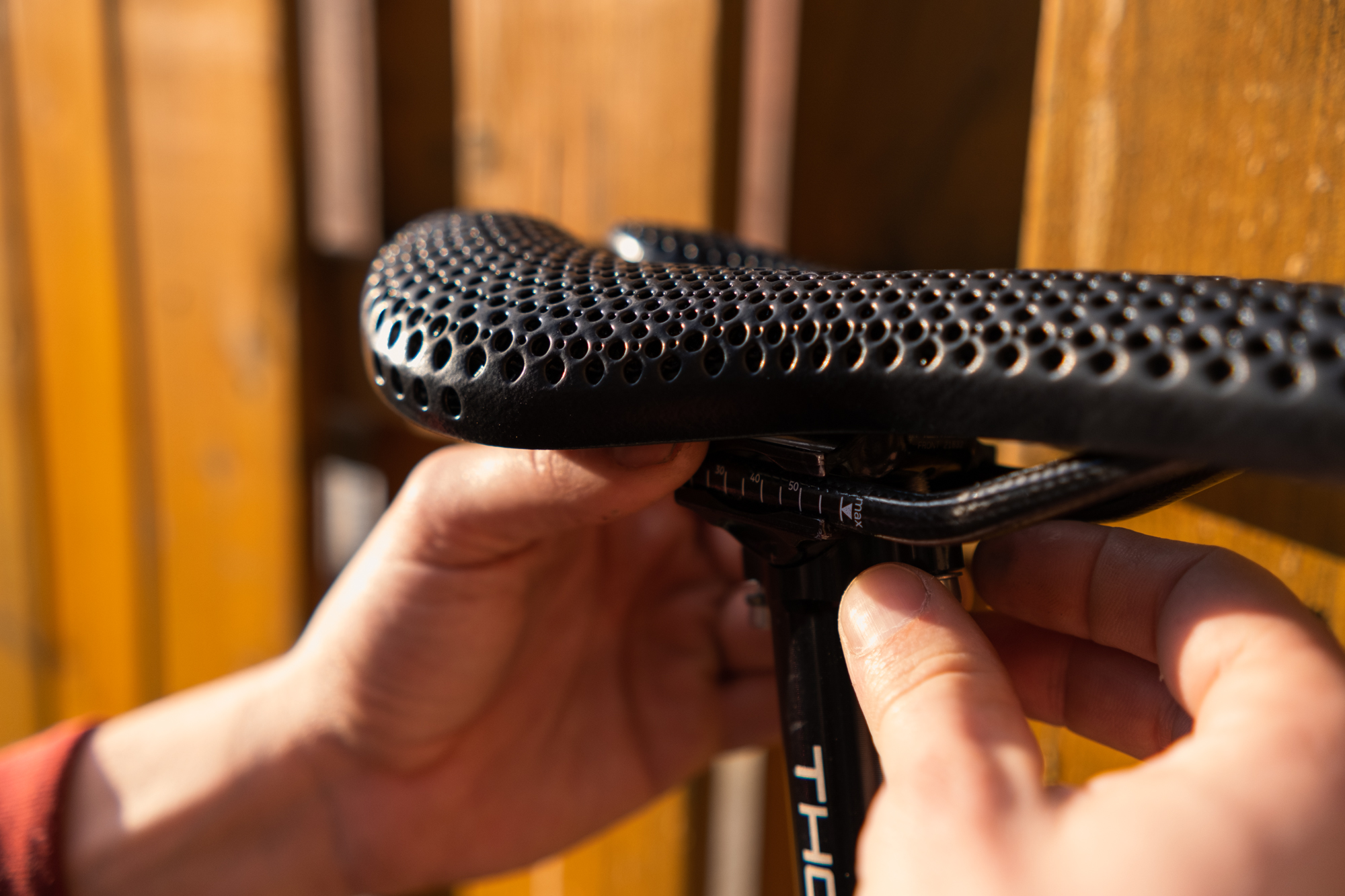
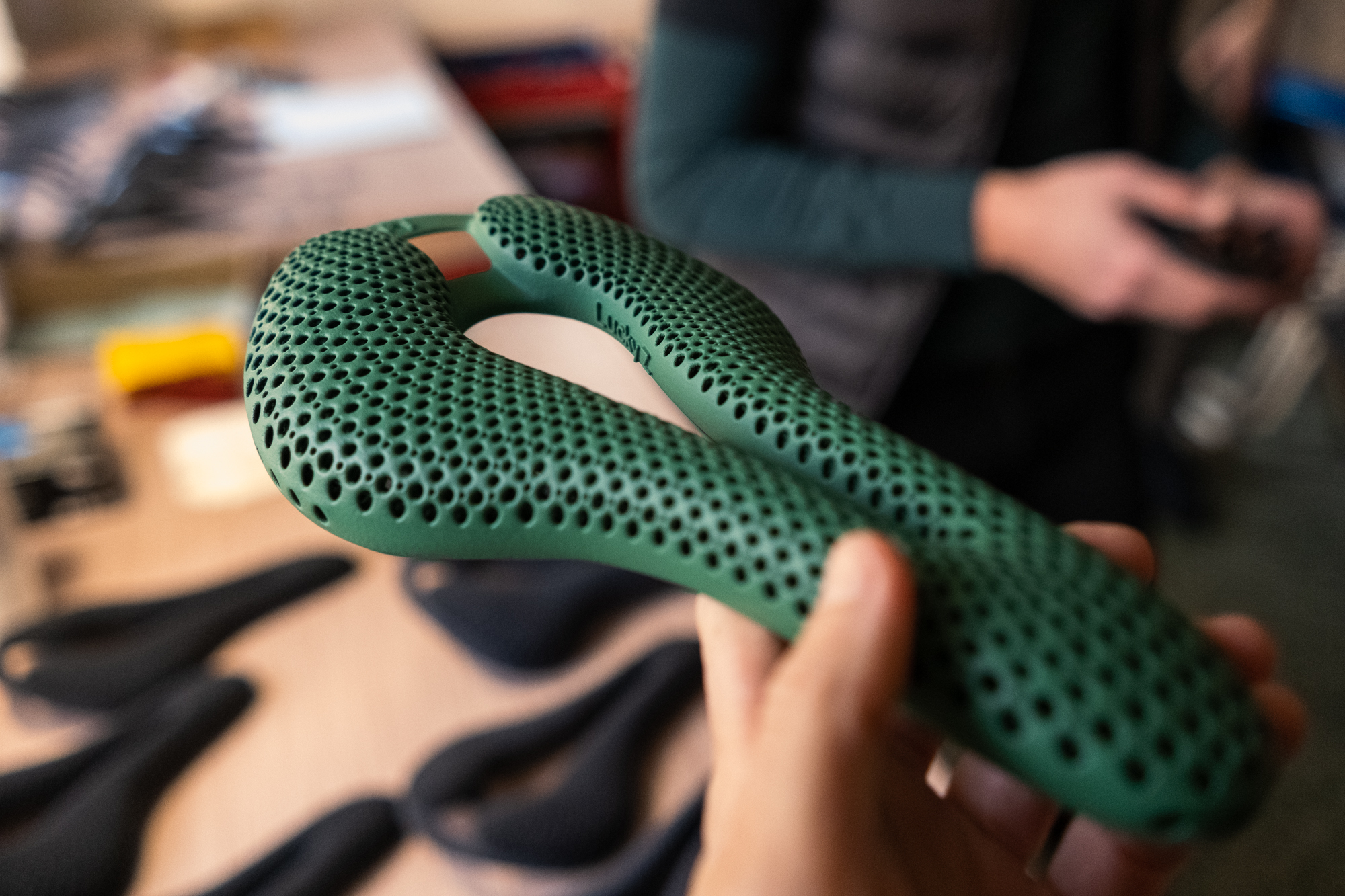
La superficie se moldea en función de los parámetros personalizados. El sillín tiene un corte cómodamente grande para una ergonomía óptima. Probablemente la parte más interesante del sillín sea el acolchado impreso en 3D, la estructura de entramado Joyseat. Está fabricado en poliuretano termoplástico (TPU), un material innovador que lleva poco más de un año en el mercado.
Una de las mejores características del sillín es que tiene diferentes zonas de rigidez. Por ejemplo, la zona de los isquiones del acolchado es la más rígida, ya que proporciona el mayor apoyo al ciclista, mientras que la parte delantera se suaviza gradualmente a través de la zona de los raíles hasta el morro. Para finalizar el proceso de personalización, existe la posibilidad de agregar un texto breve, tu nombre por ejemplo, en la parte interior y elegir un color para la parte trasera buscando una combinación ideal con el diseño del cuadro. Sin duda un buen toque custom.
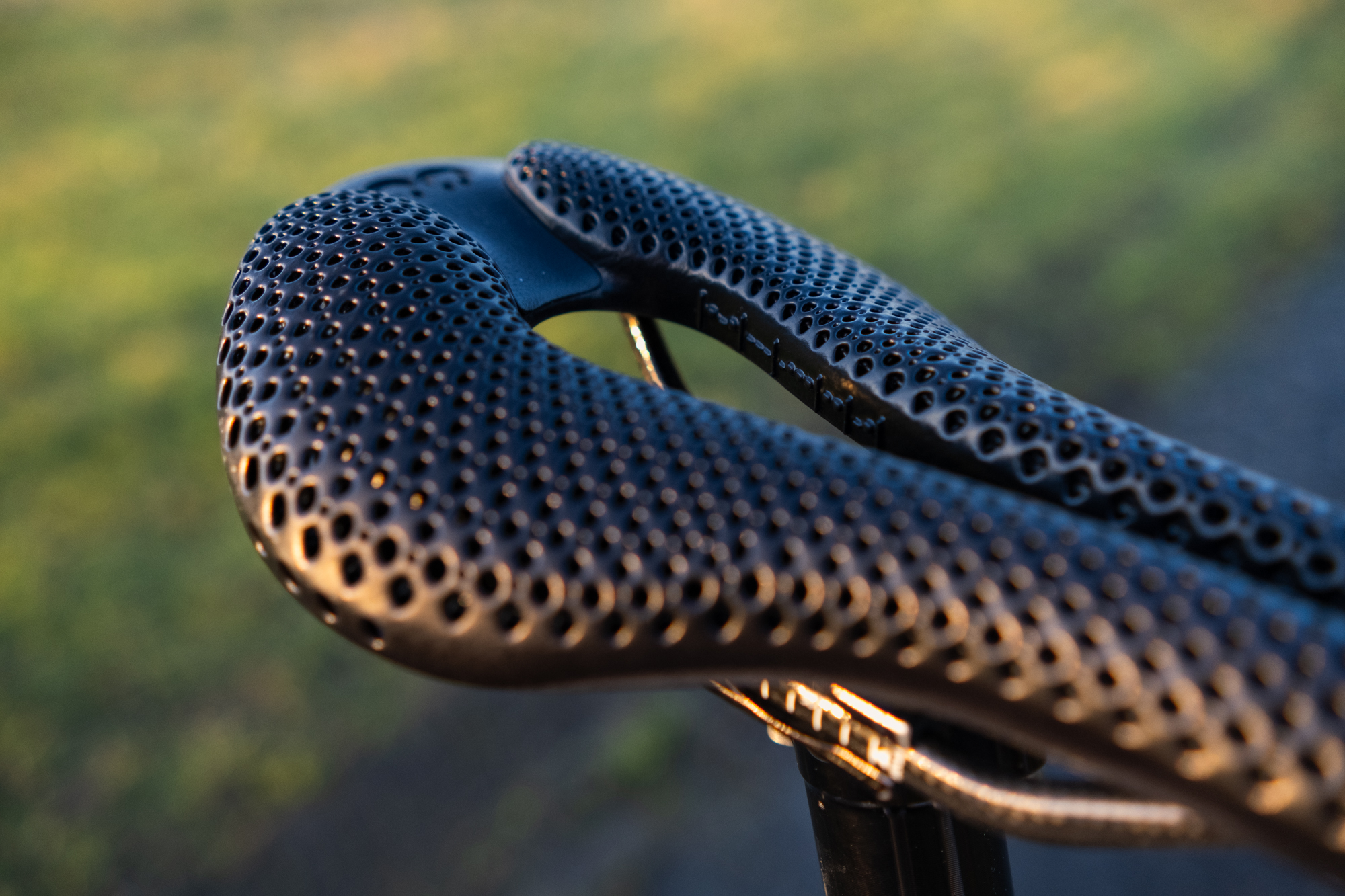
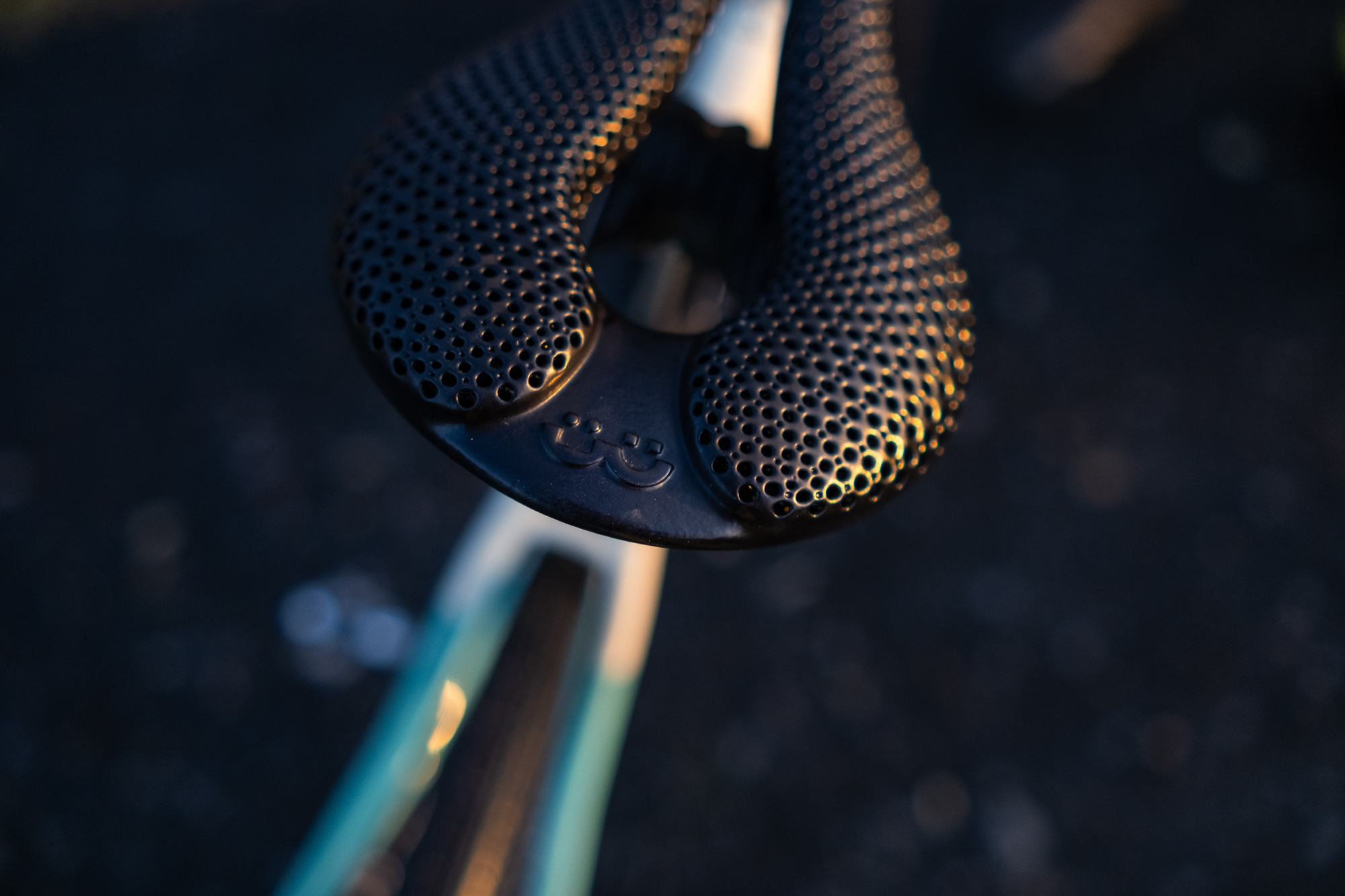

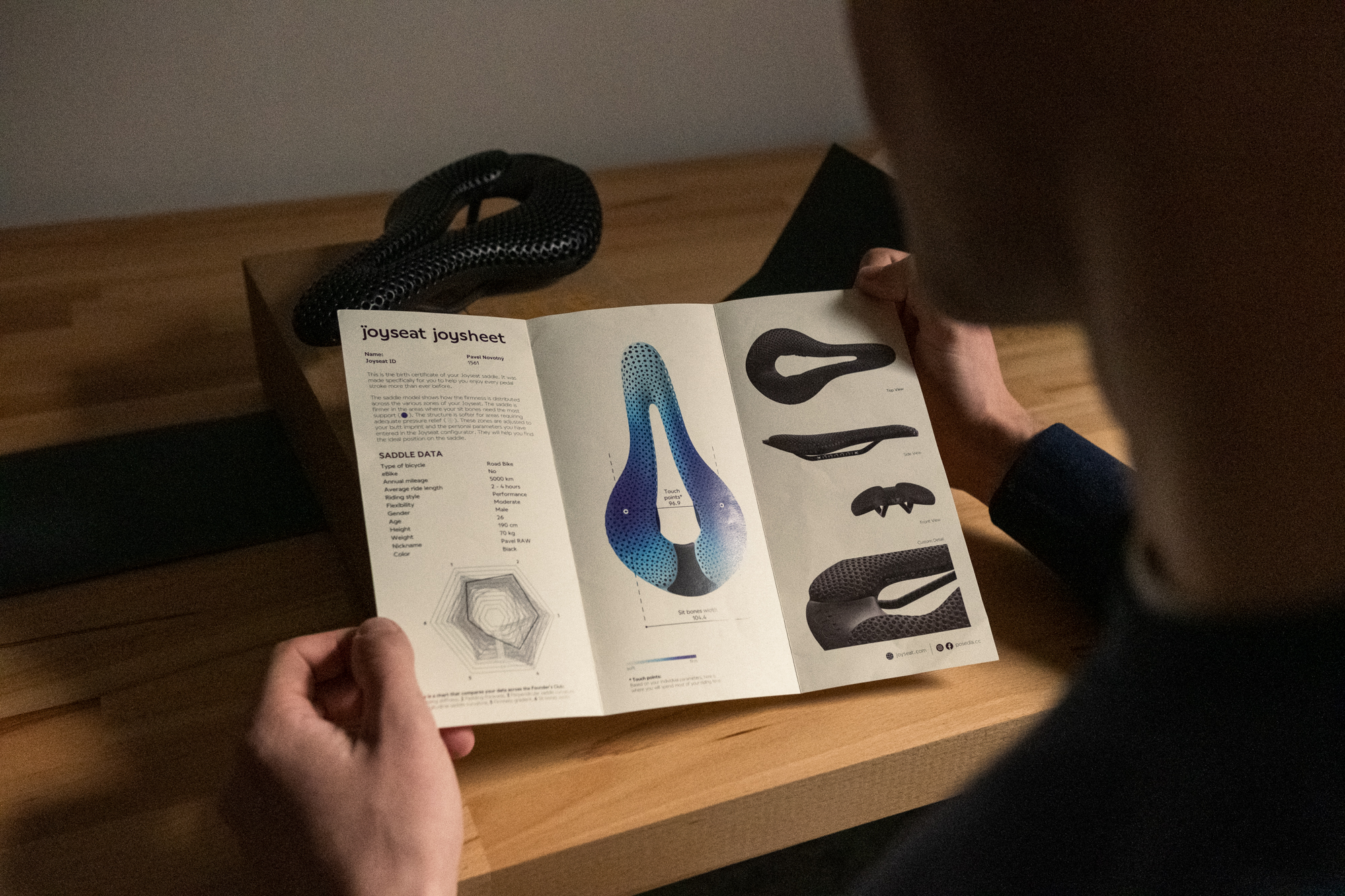
El proceso de personalización se divide en dos pasos: el configurador y la impresión fisionómica. En nuestro caso, primero completamos los parámetros requeridos en el configurador disponible en la web oficial de Posedla. Estos parámetros incluyen información sobre el tipo de bicicleta (carretera, gravel, XC, etc.) y datos fisiológicos como el género, el peso, la altura, pero también la rotación pélvica, el estilo de pilotaje, el kilometraje anual o la duración media de las rutas que sueles hacer. Todos estos valores van a ser determinantes para conseguir la impresión más adecuada para cada cliente.
El segundo paso del proceso fue la impresión utilizando el Smiling Butt Kit, que recibimos poco después de rellenar el configurador. El proceso es bastante curioso y sencillo. El ciclista solo tiene que sentarse en la espuma del kit para imprimir sus isquiones y luego fotografíar el resultado desde diferentes ángulos.
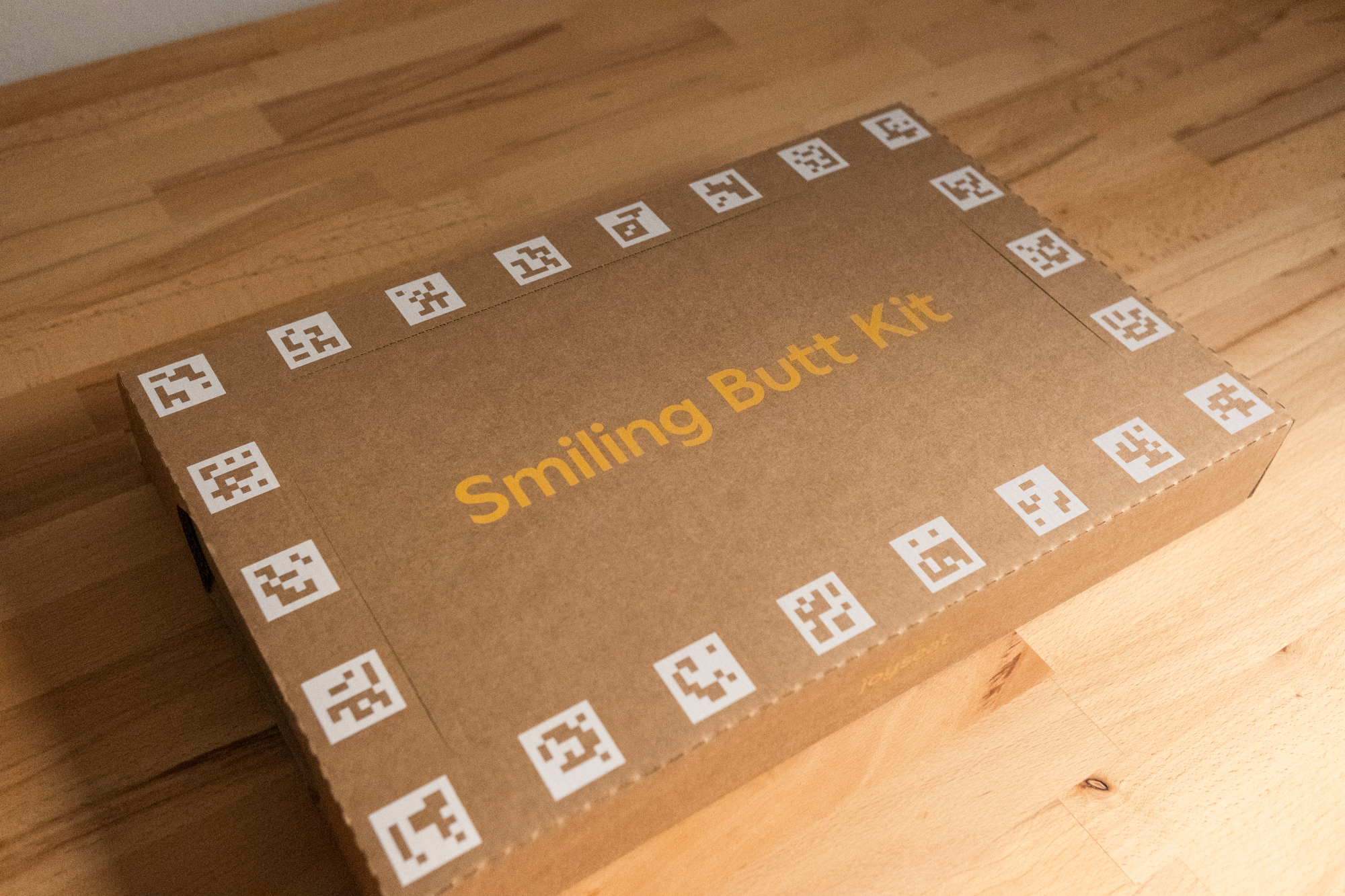
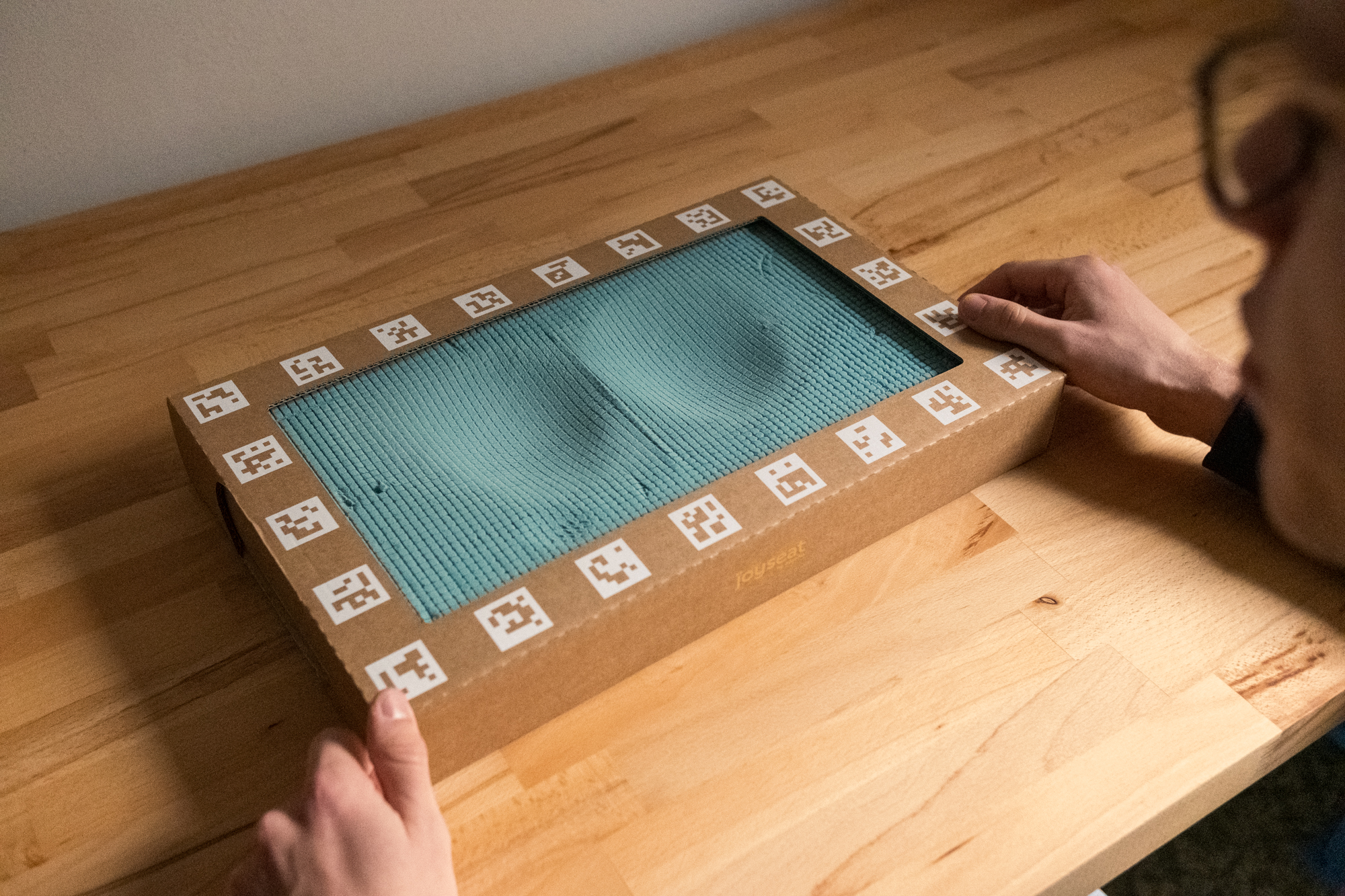
Una vez subidas al configurador, las fotos se utilizan para generar el modelo 3D del ancho de los isquiones de los ciclistas y también del sillín, junto con los parámetros anteriormente introducidos. Debemos reconocer que la experiencia de usuario durante todo el proceso es realmente positiva. Los pasos son muy intuitivos y están respaldados por videos con instrucciones, dado que una impresión correcta es crucial para la medición.
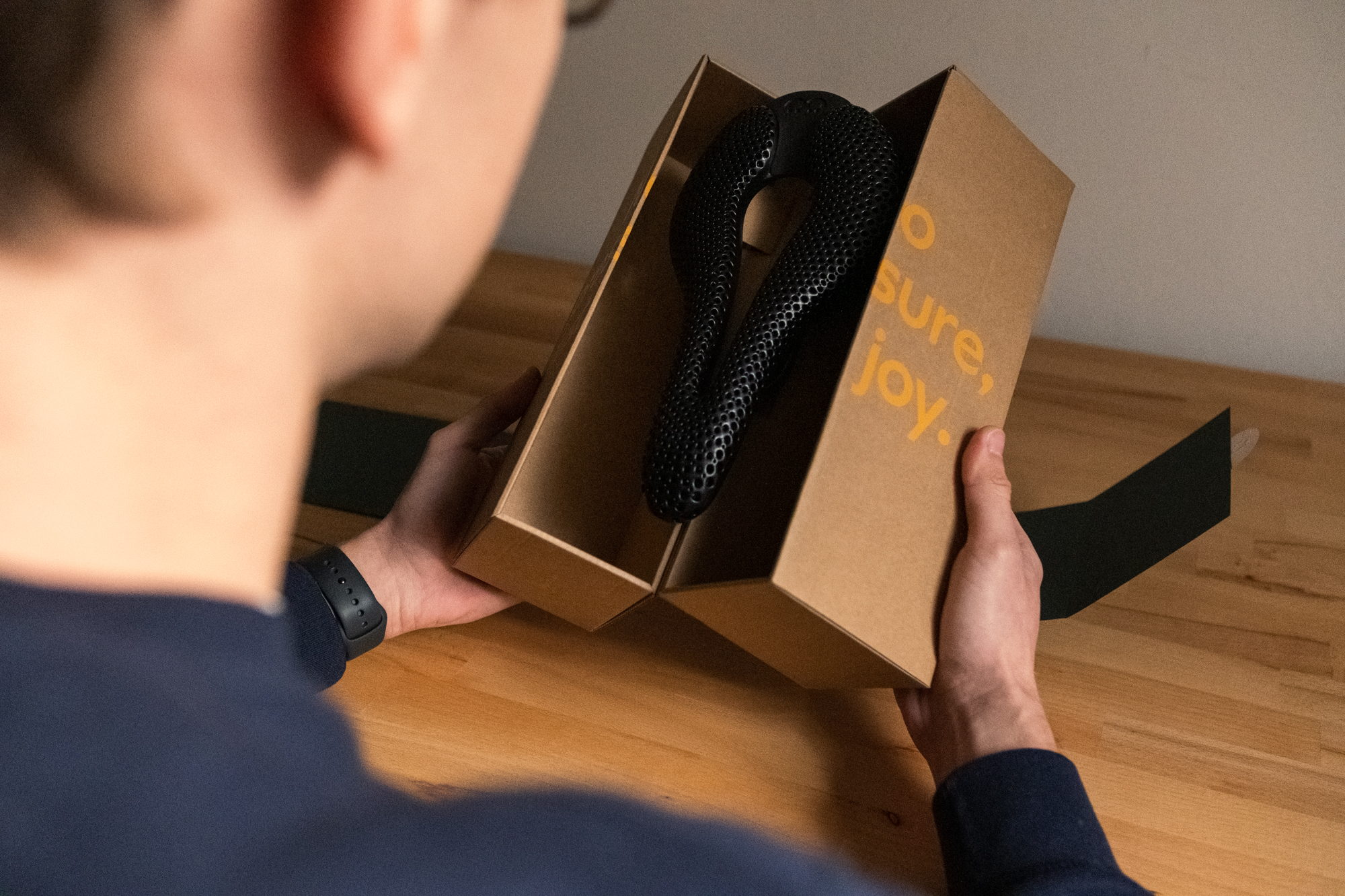
Uno de los puntos diferenciadores en la visión de la empresa es la sostenibilidad. En Posedla se centran en la producción local dentro de la región en lugar de proveerse de piezas y materiales de otras partes del mundo. La ventaja de la impresión 3D es que no requiere moldes y los materiales restantes se pueden utilizar en la fabricación del siguiente sillín. Además, tanto el producto como el Smiling Butt Kit están empaquetados en cajas de cartón reciclado, sin plásticos innecesarios. Por otra lado, la producción personalizada en lugar de un enfoque de fabricación a gran escala genera menos costos para la empresa.
La región de Bohemia del Norte limita con Sajonia, Alemania, que alberga varias empresas de fabricación de bicicletas e instituciones de investigación, ven en esto una oportunidad para colaborar con Jiri y Martinon en el futuro. Al mismo tiempo, a los dos les enorgullece y motiva traer tecnologías innovadoras y nuevas oportunidades de trabajo a su región de origen, cuyo poder de producción ha disminuido bastante en las últimas décadas.
Los jóvenes fundadores remarcaron que el proceso de desarrollo de productos no tiene fin. Aunque su Joyseat puede parecer un producto completamente terminado a primera vista, continuan limando detalles y evolucionando el producto. Una próxima generación de su sillín podría lanzarse en un futuro no muy lejano, pero el catálogo de la empresa no se limitará exclusivamente a sillines. Hace unos días, Posedla presentó su primer prototipo de puños personalizados e impresos en 3D para bicicleta de montaña que tuvimos la oportunidad de ver en persona al detalle, y prometen mucho. Se espera que el producto se lance a finales de este año.


Cayó en la trampa del ciclismo durante su época de estudiante en Bélgica, y ahora no hay carrera o evento del que no esté al tanto. Desde la República Checa, Pavel está expandiendo las fronteras de RAW Cycling Magazine y aportando un punto de vista diferente a nuestra comunidad. He fell into the trap of cycling during his time as a student in Belgium, and now there is no race or event that he is not aware of. From the Czech Republic, Pavel is expanding the borders of RAW Cycling Magazine and bringing a different point of view to our community. View all posts by Pavel Novotný
In the past, mostly only pro cyclists could benefit from the advantage of custom-built bike parts. When it came to bike saddles, most recreational cyclists had to rely on a trial and error process of finding their optimal saddle, during which they might purchase a couple of saddles until finding the fitting one.
Recently, we’ve had the opportunity to interview Jiri and Martin, the co-founders of Posedla. It is a startup based in the North Bohemia region of the Czech Republic whose primary focus is on producing custom bike saddles. With their current flagship product Joyseat, their vision focuses on eliminating this negative experience by offering customizable products to the wide spectrum of riders and to improve their comfort on the bike or to prevent injuries.
During our time together at the factory visit, we learned about the process of saddle customization and the underlying story behind their brand, which we will present to you in this article.
Jiri and Martin have known each other for twenty years. However, the story of starting their company was not quite straightforward as neither of them worked in the cycling industry.
Before founding their company two years ago, Jiri used to work as a marketer in the travel industry in New York, while Martin worked in a market research company, opening a branch in southeast Asia. Their jobs involved lots of traveling and both started to find themselves overworked in their professions.
Jiri decided to return from the US and as the Covid-19 pandemic came, they started going for long bikepacking trips together as that was one of the few adventurous things to do at the time. At that point, Martin repeatedly suffered from saddle sore, so that sparked the idea of producing their own saddles.
Neither of them had the engineering knowledge that building a saddle requires. Nonetheless, they knew how they wanted to build their business and started cooperating with skilled people from their network while running the production in a garage.
Later on, winning a PrusaLab’s Hardware Accelerator competition boosted their business with funding and things started to get serious. As they dived deeper to the core of their business, they learned that the engineering process is quite a complex craft, which involves professions of 3D modeling, parametric design, CAD design or programming. Certainly quite a lot of skills to build a custom saddle one might think, but from our point of view, that is what makes the final product and the company valuable and appreciated.
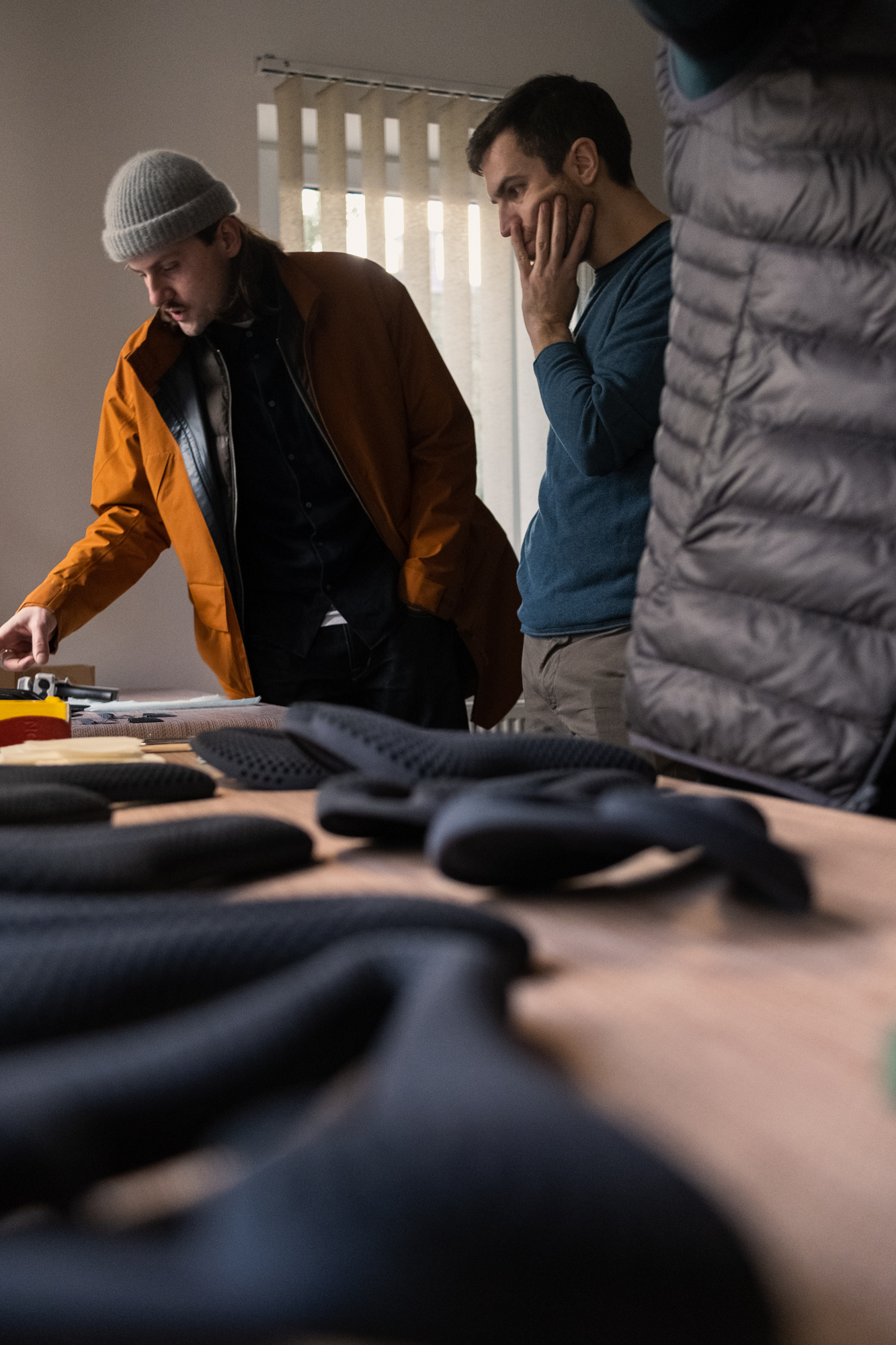
As probably with every startup, even Posedla experienced plenty of mistakes on their way. Still, prototyping was a key factor and approach that allowed them to iteratively design their Joyseat saddle to its current form.
Over a year of hard work included prototyping of dozens or hundreds of saddle designs, which were then tested by their test riders. They’ve also been working closely with physiotherapists and bikefitters, which combined with the collected feedback from their test riders, gave them lots of valuable information.
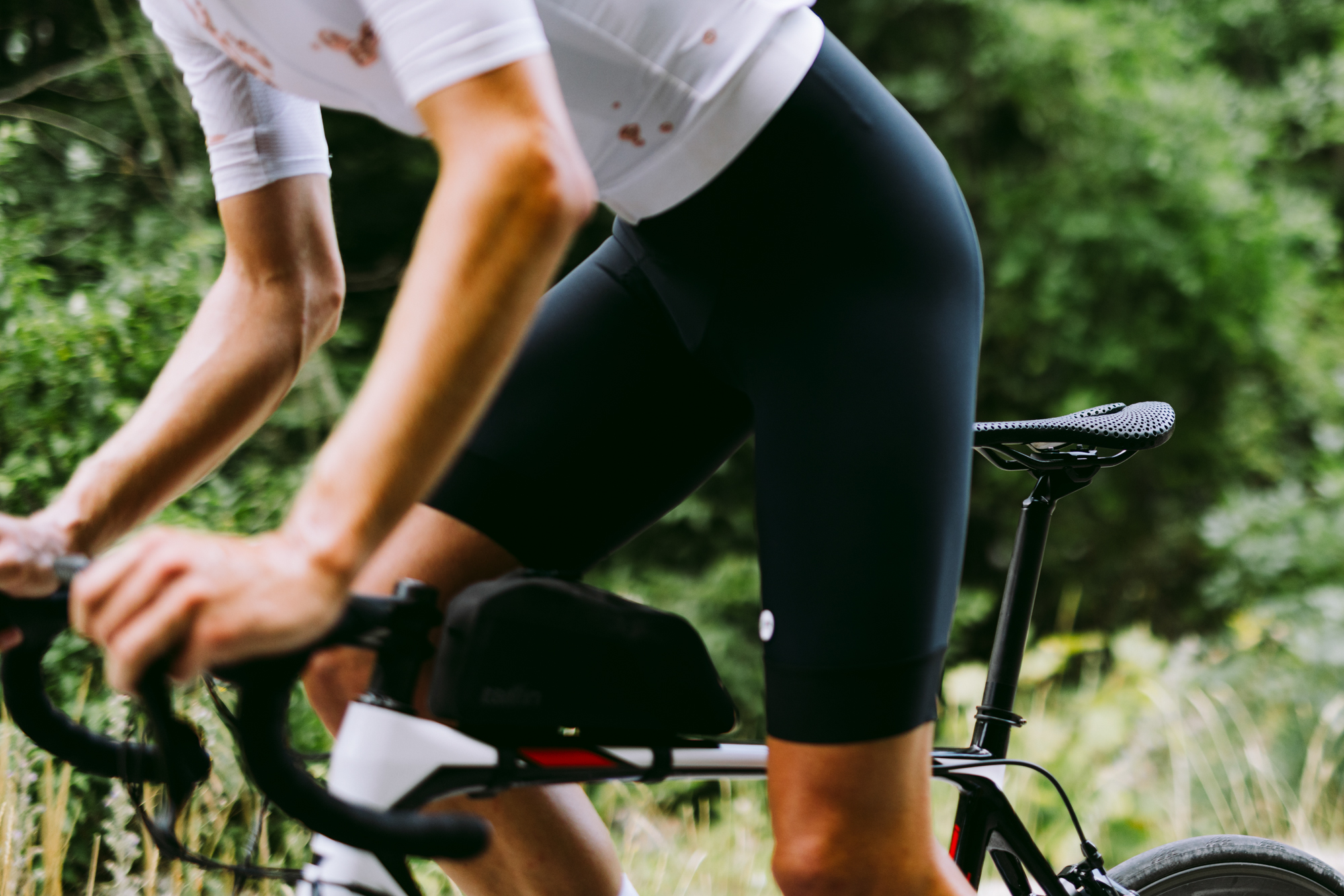
Let’s take a detailed look at the Joyseat saddle itself. It consists of carbon rails and a carbon shell. The advantage is clearly its low weight, between 170 g and 210 g depending on the custom shape.
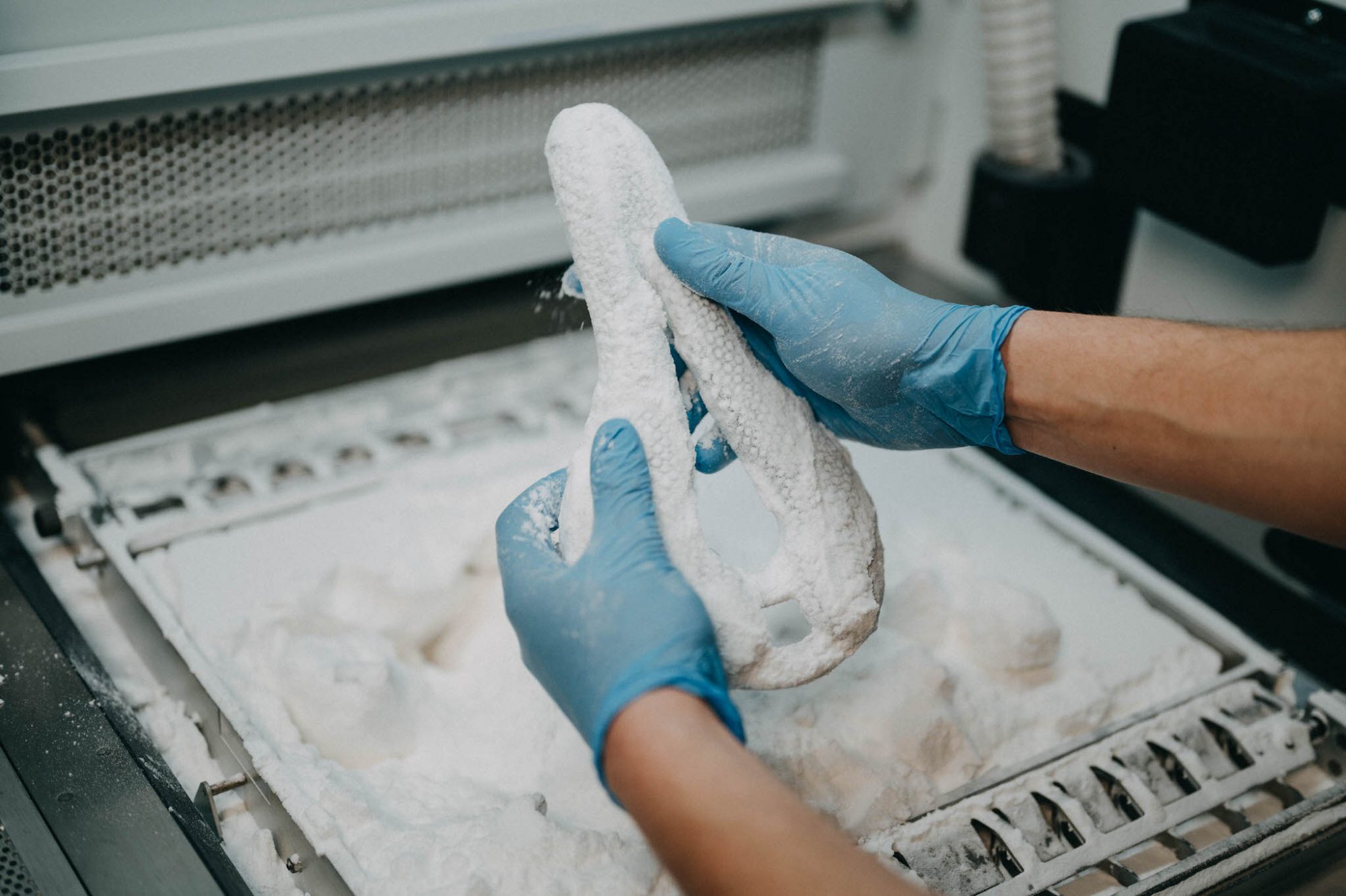
The shell is chosen based on the input parameters of customization. The saddle has a comfortably large cutout for optimal ergonomy. Probably the most interesting part of the saddle is the 3D printed padding, the Joyseat Lattice Structure. It is made of thermoplastic polyurethane (TPU), an innovative material that has been on the market for just over a year.
One of the coolest features of the saddle is that it has different stiffness zones. For example the sit bones area of the padding is the stiffest as it provides the greatest support to the rider, while the front part gradually softens through the rail zone to the nose. This is what really caught our attention.
To finish up the customization process, you can also add a short text such as your name on the inside of the cutout and choose a color of the rear part to e.g. match your frame. Surely a nice touch of personalization.
The customization process is divided into two steps: configurator and a butt imprint. First, we filled out parameters into the configurator on the Posedla website. These parameters include information about the type of bicycle (road, gravel, XC etc.) and rider’s physiology such as gender, weight, height but also pelvic rotation, riding style, annual mileage or usual ride length. All of these parameters are taken into account in combination with the imprint to create the unique saddle for the customer.
The second step of the process was the imprint. This is done using the Smiling Butt Kit, which we received shortly after filling in the configurator. The process is quite fun and simple. The rider just has to sit into the foam of the kit to imprint his or her sit bones and then collect pictures of the imprint from different angles.
Once uploaded to the configurator, the photos are used to generate the 3D model of the riders’ sit bones width and also the saddle, together with the previous parameters. We must admit that the customer experience throughout the configuration process was very positive. The steps are very intuitive and supported by instruction videos, given that a correct imprint is crucial for the measurement.
One of the points of the company’s vision includes sustainability. The focus is on local production within the region rather than excessively shipping parts and materials from around the globe. The advantage of 3D printing is that it does not require molds and the remaining materials can be used in the making of the next saddle. Also, both the product and the Smiling Butt Kitt are packed in recycled cardboard boxes without unnecessary plastics. Additionally, the sole aspect of custom production instead of a make to stock approach creates less overhead.
The region of North Bohemia borders Saxony, Germany, which is home to several cycling manufacturing companies and research institutions, and both Jiri and Martin see this as an opportunity for collaboration in the future. At the same time, it makes the two of them really proud and motivated to bring innovative technologies and new job opportunities to their home region, which has been rather declining over the past decades.
Both Martin and Jiri emphasized that the product development process never ends. Although their Joyseat might look as a completely finished product at first glance, they are still continuously improving its details. However, a brand new generation of their saddle might launch in the future. Anyway, the company’s focus won’t remain only with saddles. A couple of days ago, Posedla introduced its first prototype of a custom mountain bike handlebar grips which we had the chance to see in detail. The product is expected to launch later this year.
Cayó en la trampa del ciclismo durante su época de estudiante en Bélgica, y ahora no hay carrera o evento del que no esté al tanto. Desde la República Checa, Pavel está expandiendo las fronteras de RAW Cycling Magazine y aportando un punto de vista diferente a nuestra comunidad. He fell into the trap of cycling during his time as a student in Belgium, and now there is no race or event that he is not aware of. From the Czech Republic, Pavel is expanding the borders of RAW Cycling Magazine and bringing a different point of view to our community. View all posts by Pavel Novotný
 Pavel Novotný
 Pavel Novotný
 Toni de la Torre
 Pavel Novotný
 Toni de la Torre
 Pavel Novotný
 Pavel Novotný

 Pol Sopeña
 Pavel Novotný
 Pol Sopeña
 Pol Sopeña
 Pol Sopeña
Receive our monthly selection of the best articles, news, exclusive content and giveaways only for subscribers, subscribe to OUR NEWSLETTER
Receive our monthly selection of the best articles, news, exclusive content and giveaways only for subscribers, subscribe to OUR NEWSLETTER
Receive our monthly selection of the best articles, news, exclusive content and giveaways only for subscribers, subscribe to OUR NEWSLETTER
Receive our monthly selection of the best articles, news, exclusive content and giveaways only for subscribers, subscribe to OUR NEWSLETTER