- News
- Reviews
- Travel & Adventure
- Interviews
- Inside Industry Players
- Community
Bikes
Reviews
Components
Reviews
Cycling
Apparel


[raw_mobile_menu]
[wpml_language_switcher_down]

When an event is sold out within 24 hours, it shows the interest of gravel enthusiasts to tackle the challenge. When a big share of those who got an entry are repeating riders, it additionally reveals the quality of the work done by the organizers, as the lucky ones participating return home eager to experience similar moments year after year.
This is the case of Le Pilgrimage, and the 2024 edition has been one for the books. We can consider ourselves privileged for the moments we shared with a group of pilgrims coming from all over Europe and beyond, with varied backgrounds and fitness levels. We were ready to embark on a gravel journey in the Western Alps, bringing us to magic places via challenging terrain.
On the first evening together in Chalet AlpeLune, located in Puy Saint Vincent the co-organizers Simon Rosmolen and Cyril Chemin explained the mission, vision and values of Le Pilgrimage. They have participated in many cycling events throughout the years and realized that what they enjoyed the most were the social moments. Based on that, they set their eyes on organizing an event focusing on adventure, community and comfort.
All that was materialized in a successful first edition, which together with attractive artwork and teasing photos showing what the 2023 participants went through, triggered even more people to sign up, reaching the full capacity of the basecamp. As mentioned by co-organiser Cyril Chermin during the opening dinner, Le Pilgrimage was “1 route, 40 different stories”, and although we are here to explain the experience from our point of view, every participant returned home with an eye-opening adventure in the bag.
All the controllables were taken care of by the organizers, and even things like the weather were on our side. After an extra challenging maiden edition truncated by the rain and cold, we can count on one hand the clouds we saw in the sky during the riding days.
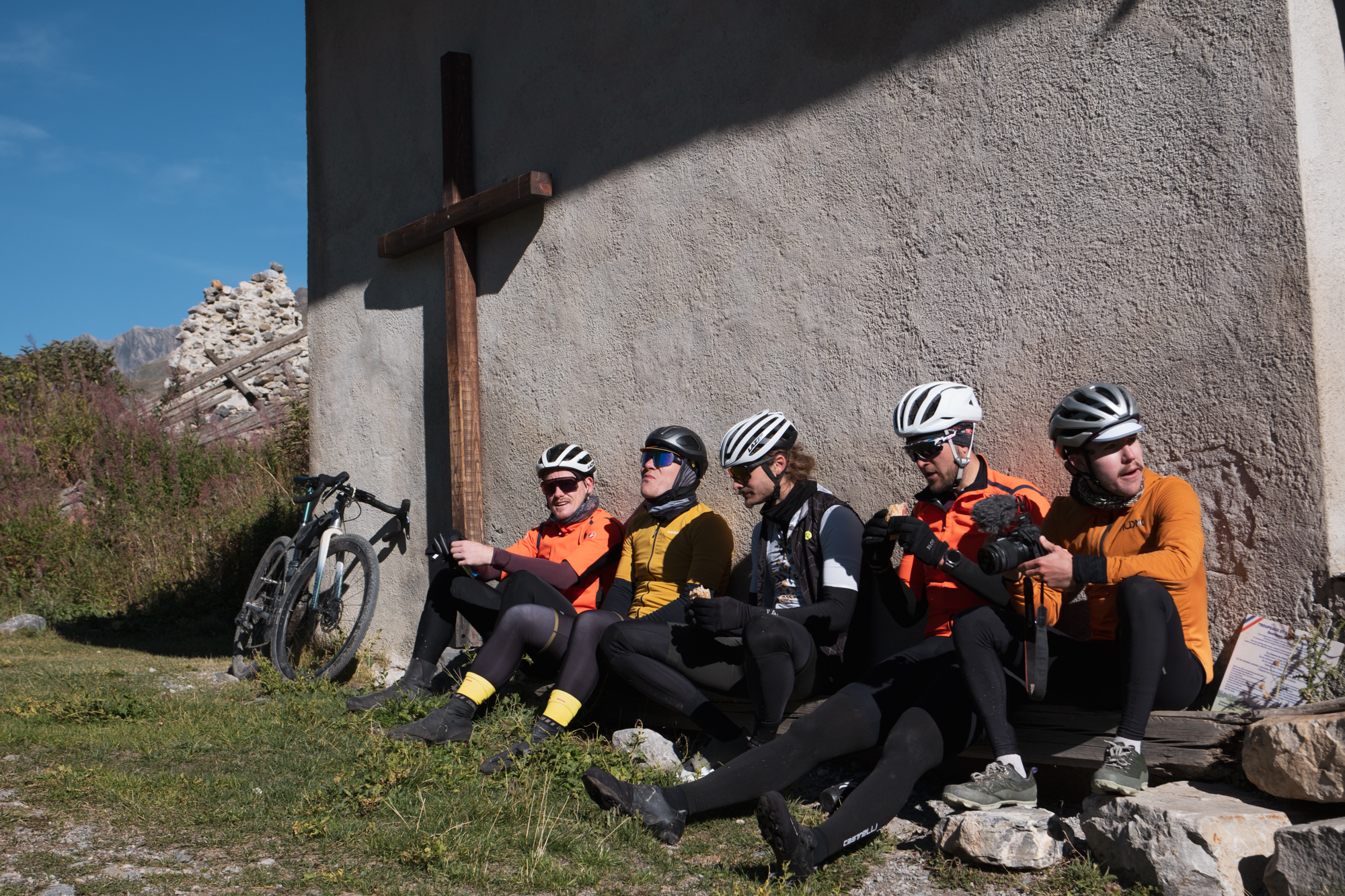
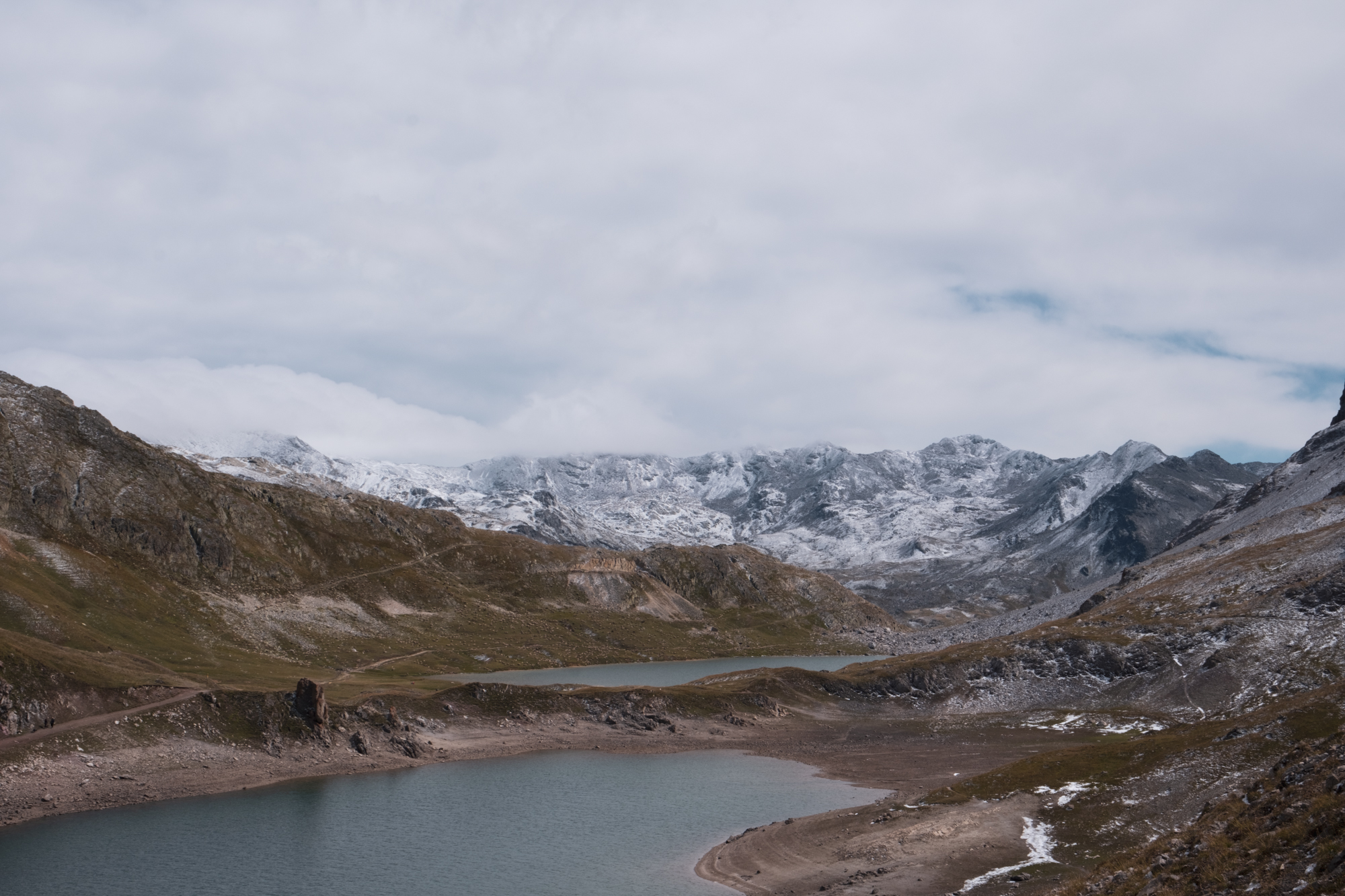
The event took place from September 12th to 17th. It was the end of summer and we were based at 1.500 meters of elevation, reaching higher altitudes on the bike each day, so the weather was unpredictable. During the days leading to the start, a cold storm hit the Alps but luckily for us, the most severe consequences were in the eastern side. Still, it snowed above 2.500 m near the chalet and the temperatures for the next few days would be very low. Based on that, we took off our bag all the summer kit and put on some thick layers instead. We are so glad we did.
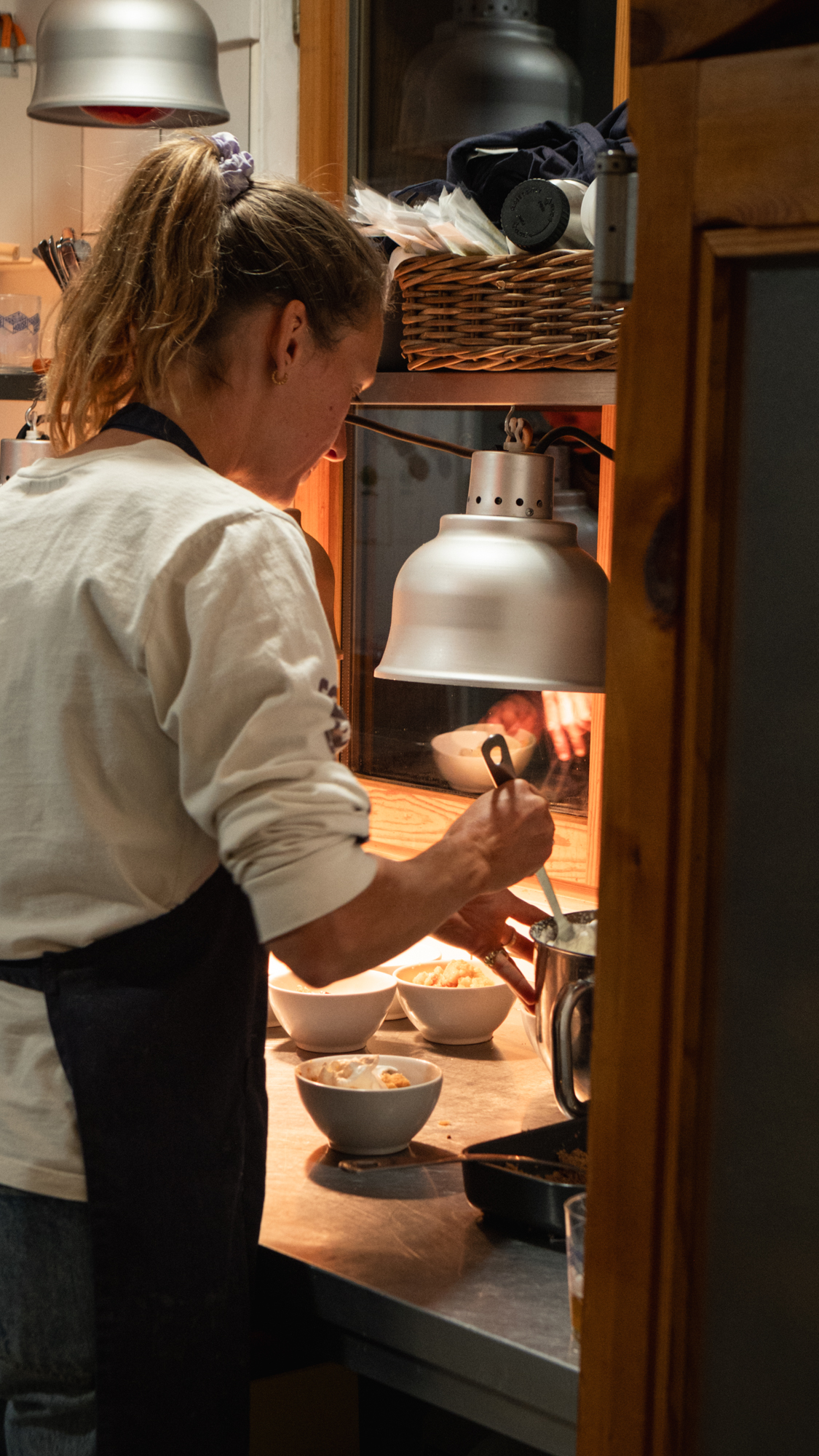
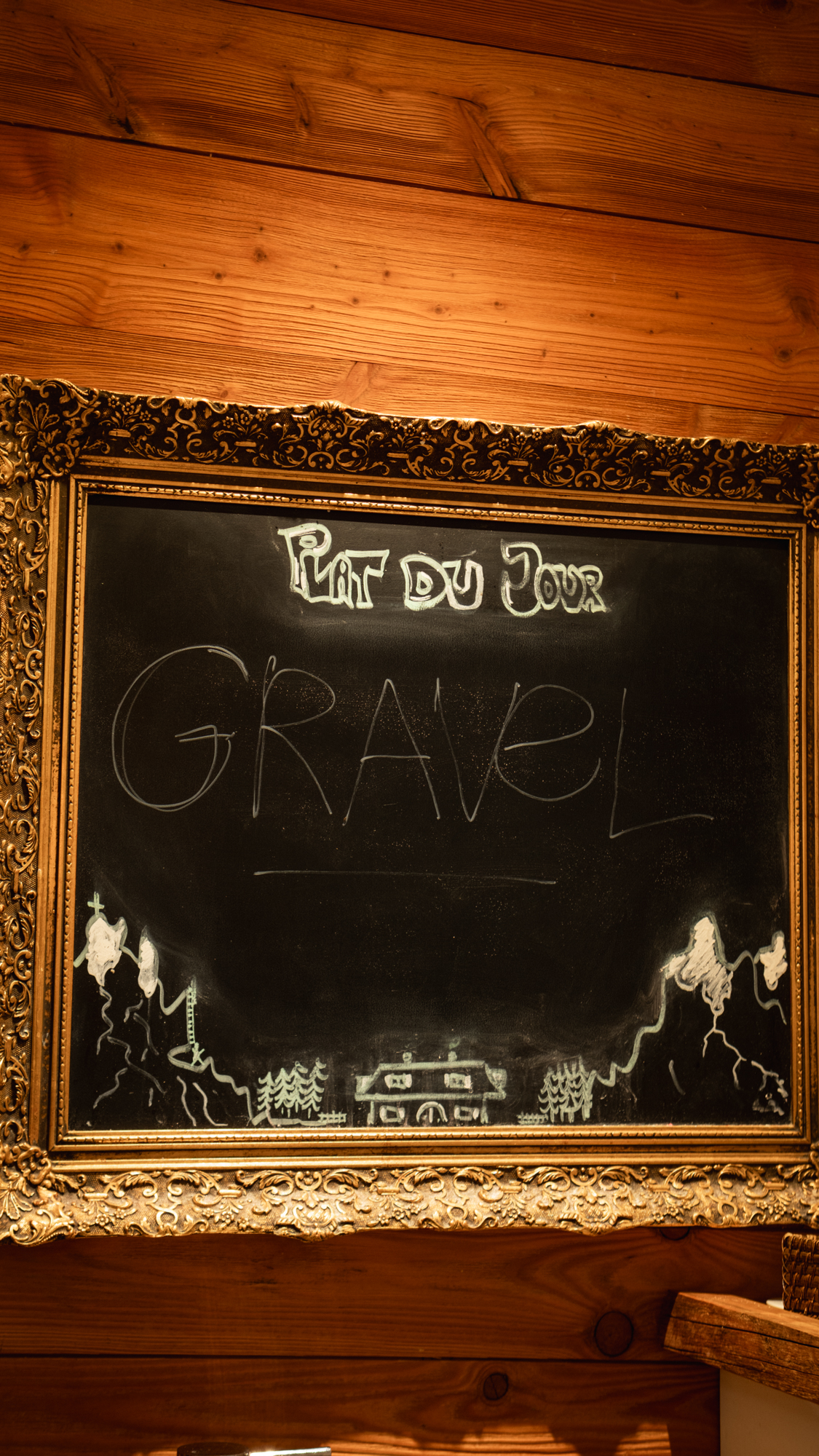
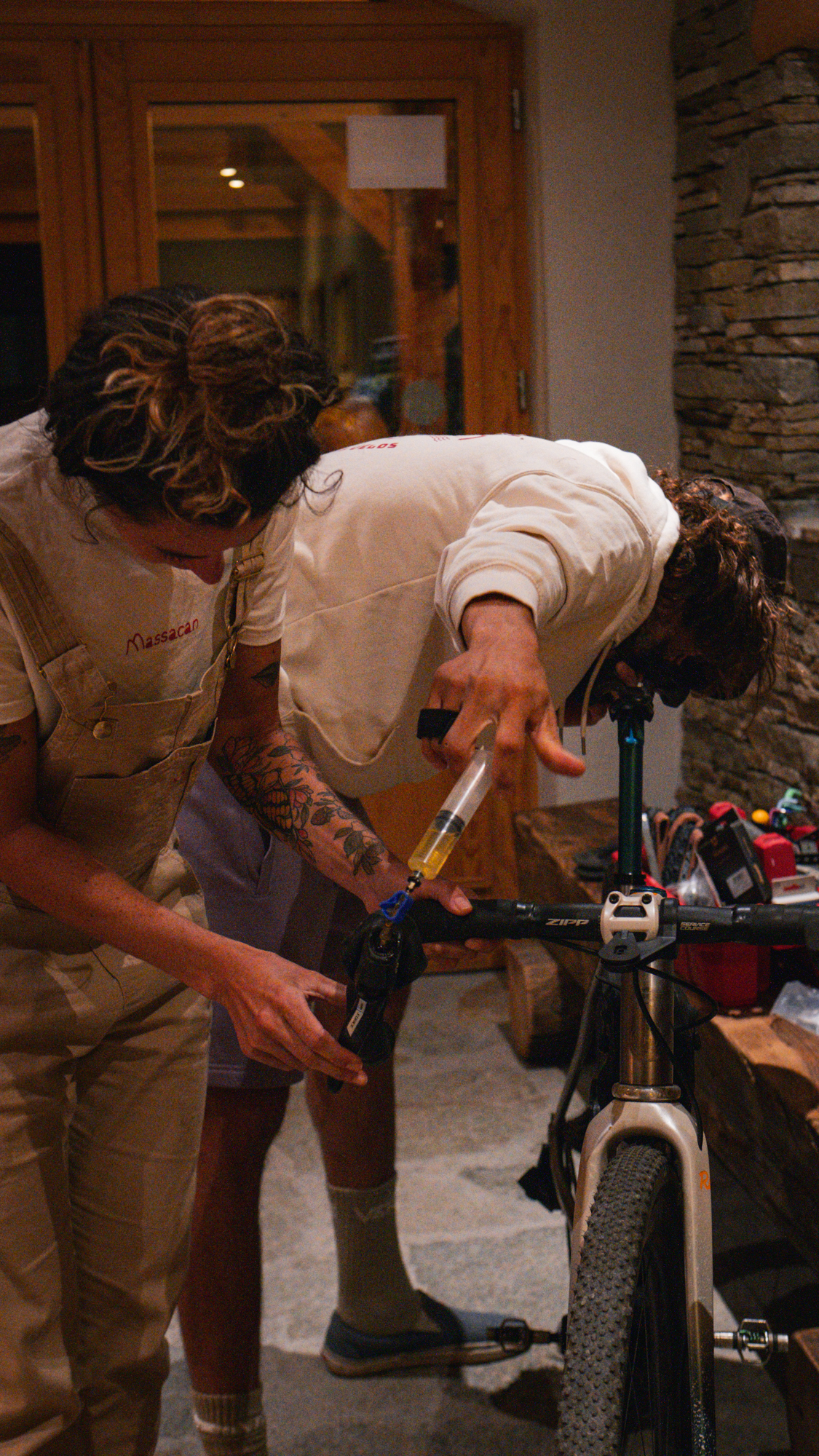
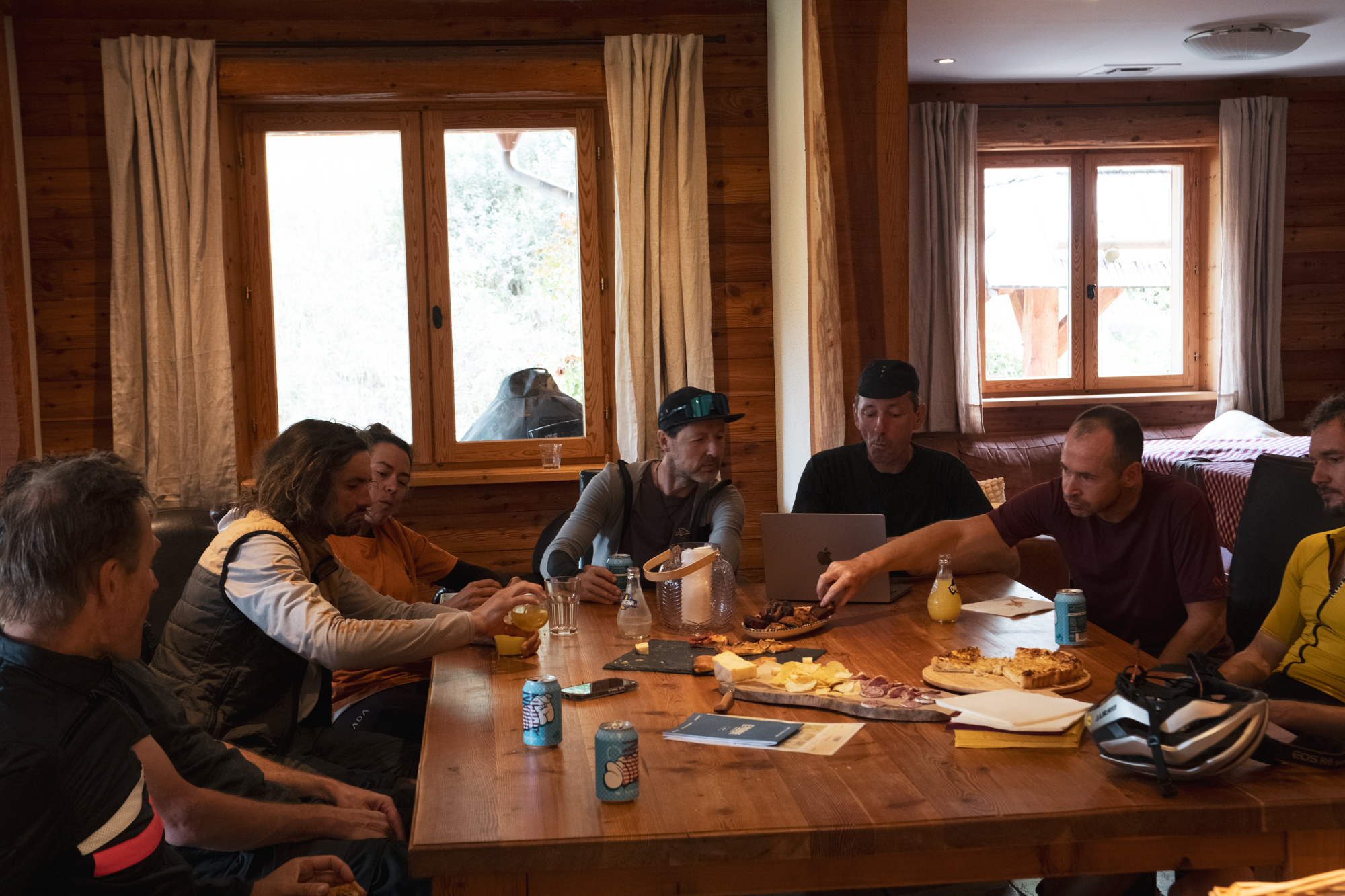
The stages were self-supported, but as soon as we arrived back at Chalet AlpeLune, we were treated like queens and kings. We all had a serving of pasta waiting for us, and those arriving at a reasonable time could enjoy the hot tub and clean the bike with all the tools at our disposal before dinner. We gathered every evening at 19:30 in the dining room to devour what chef Anne Pekelharing had prepared for us, share the stories of the day, and prepare for what was coming the following day.
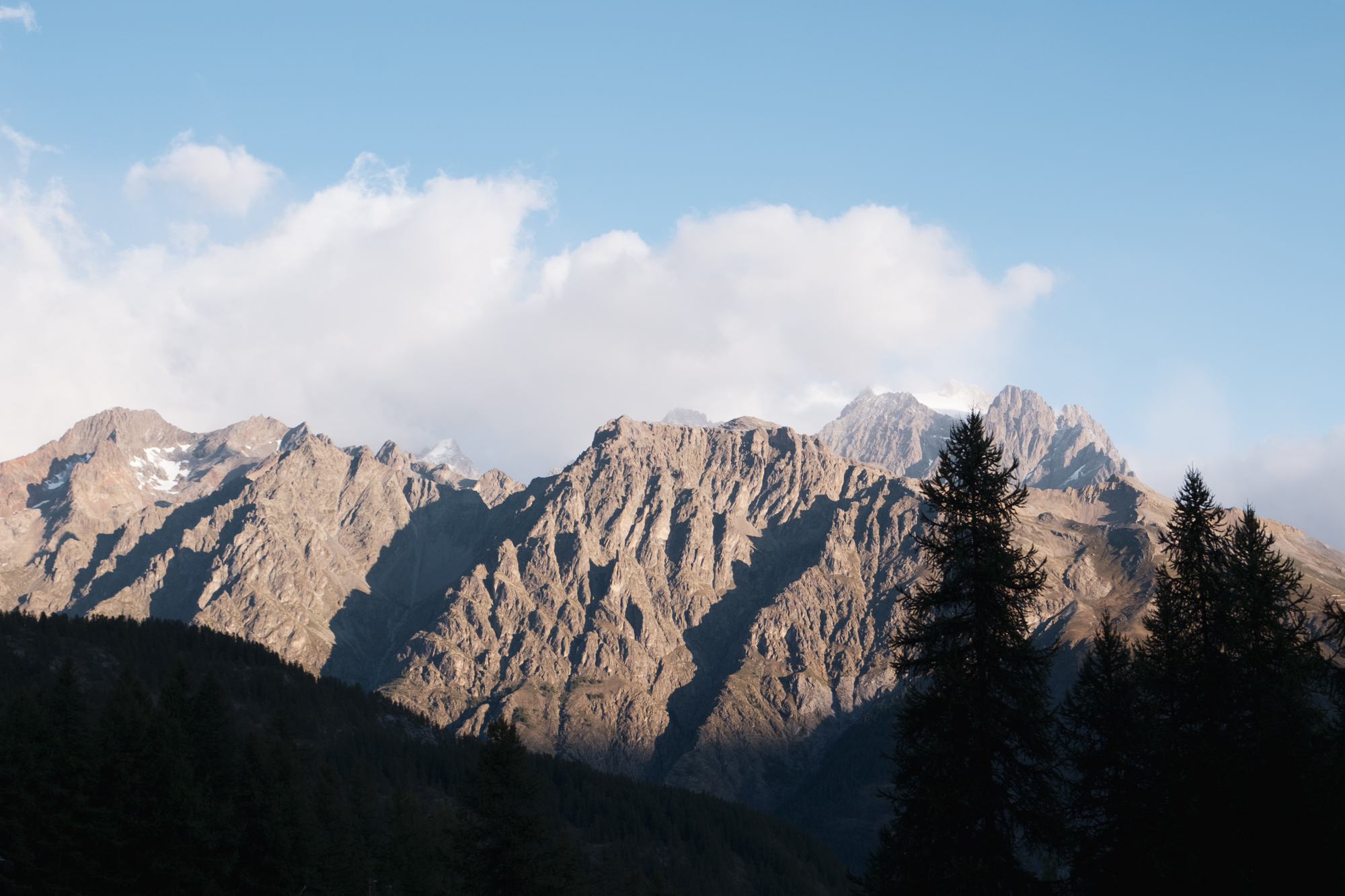
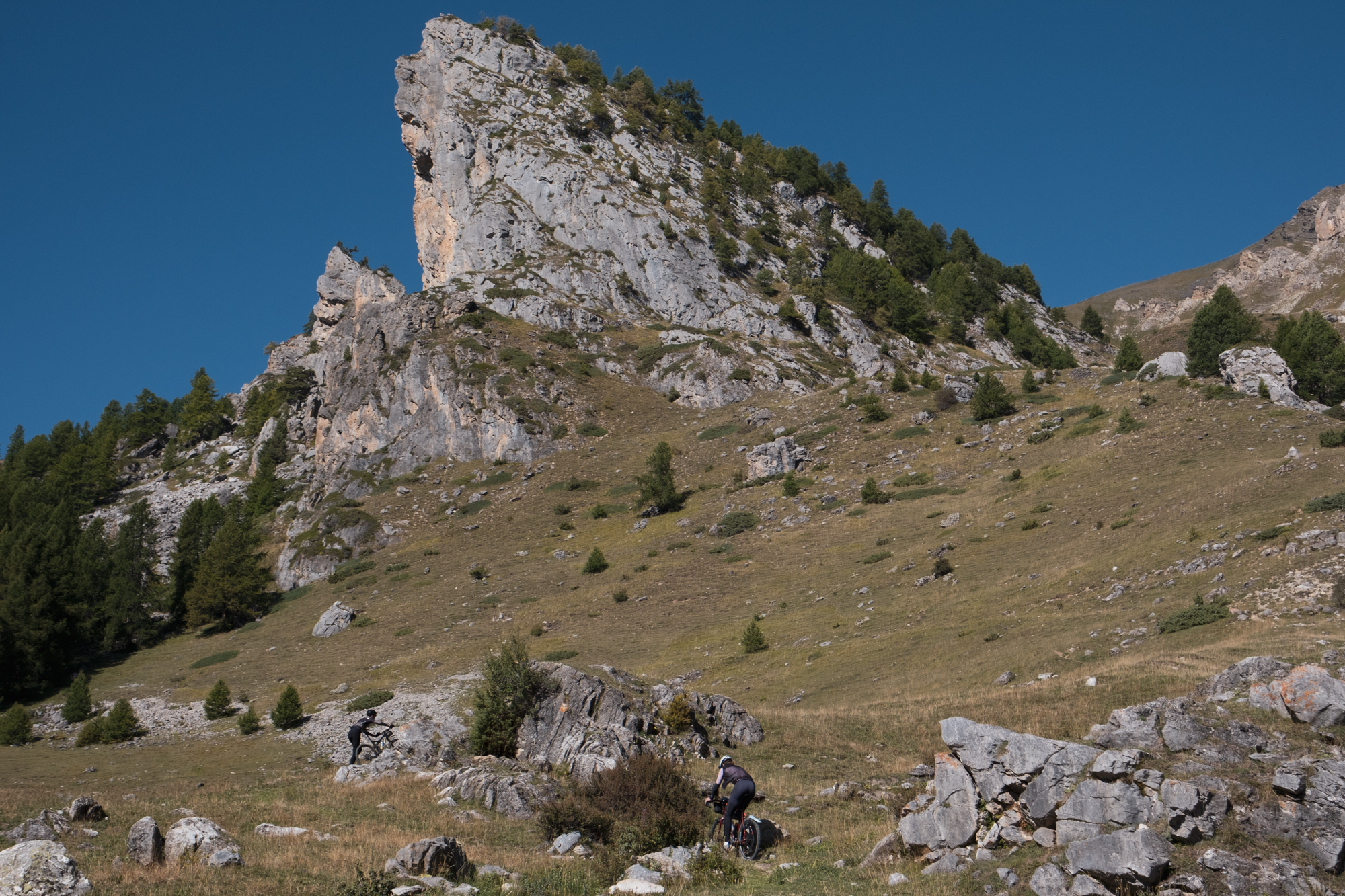
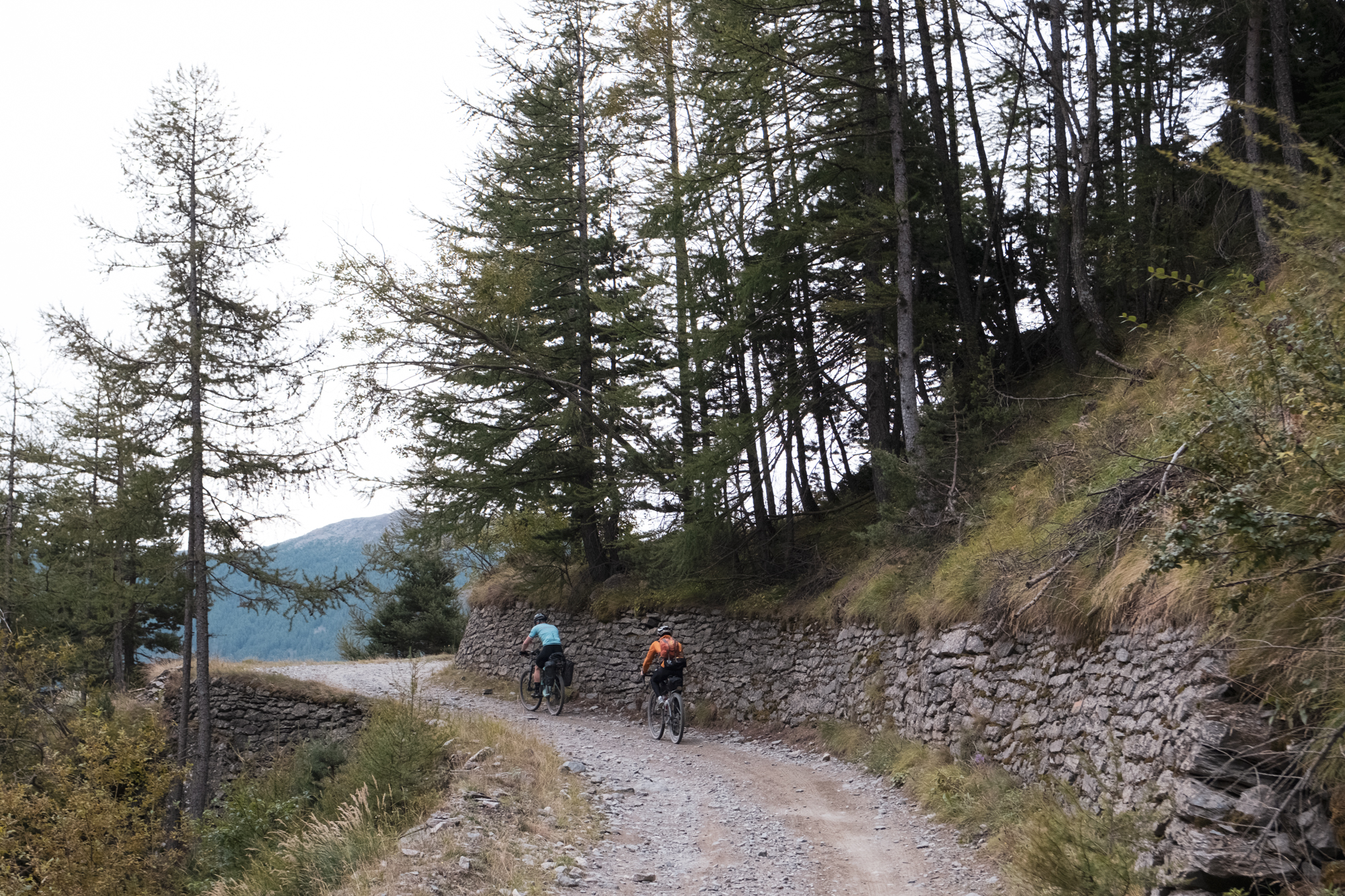
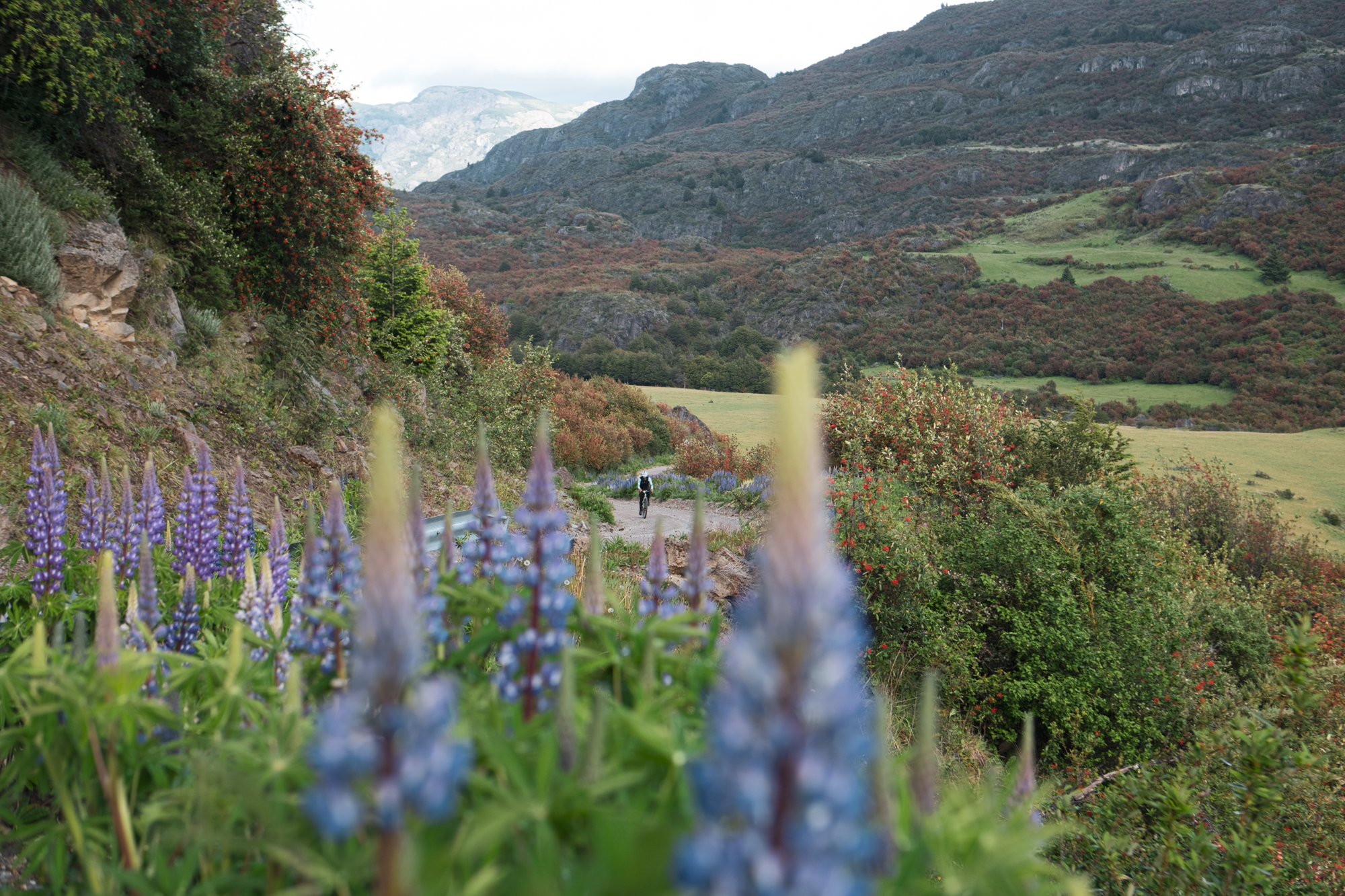
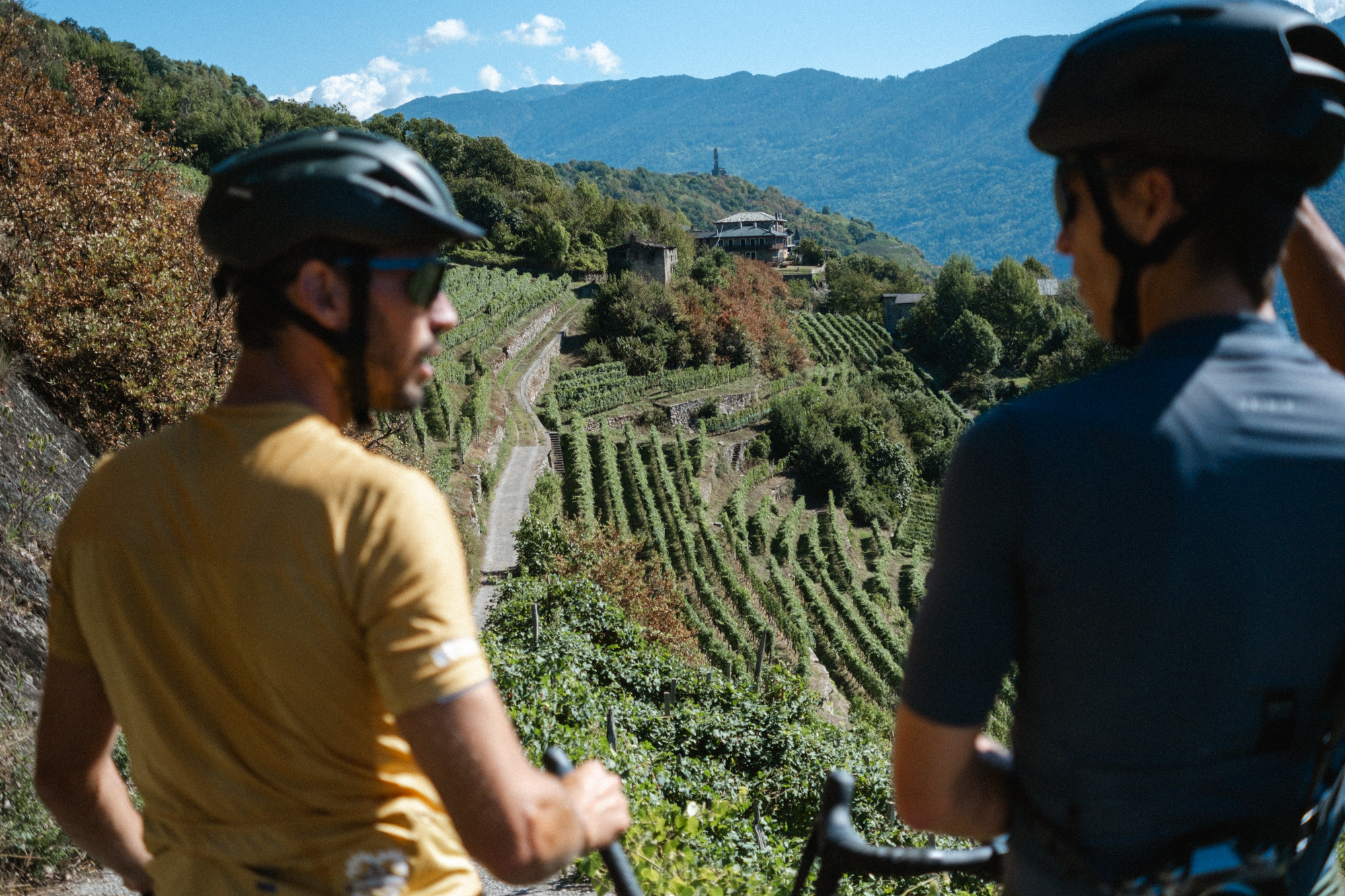
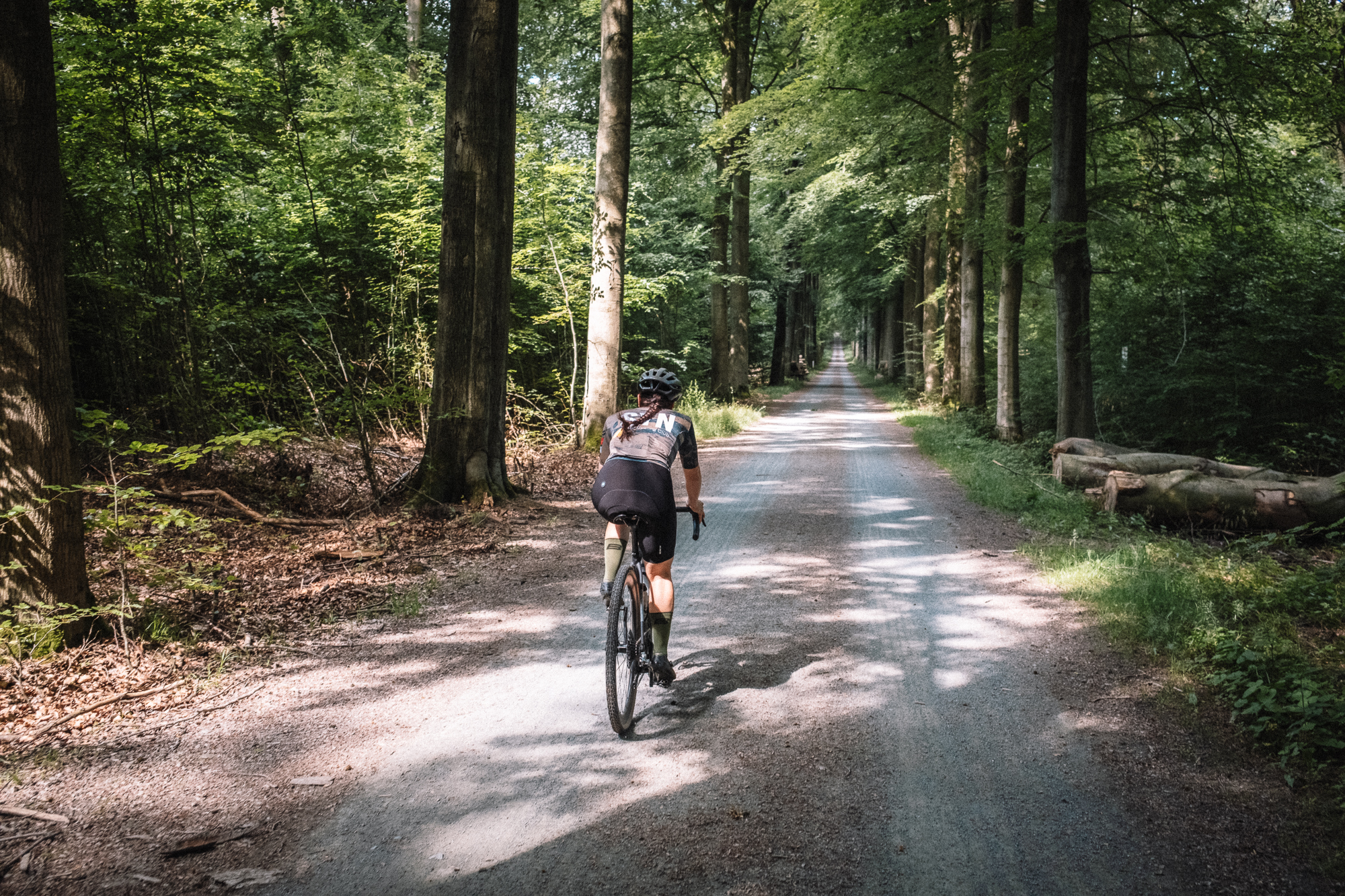
Every time we think of the initial stage, our lower back screams in pain remembering the steep gradients we had to tackle. Looking at the profile of the stage, it didn’t look like a tough route as there was no peak standing over the rest. However, we accumulated 2.500 meters of elevation in the first 50 kilometers by linking several climbs of moderate length but high gradients, always within the Parc National des Écrins. The dense forest with high trees only allowed us to contemplate the high peaks around us from time to time, but it also covered us from the strong wind hitting the region.
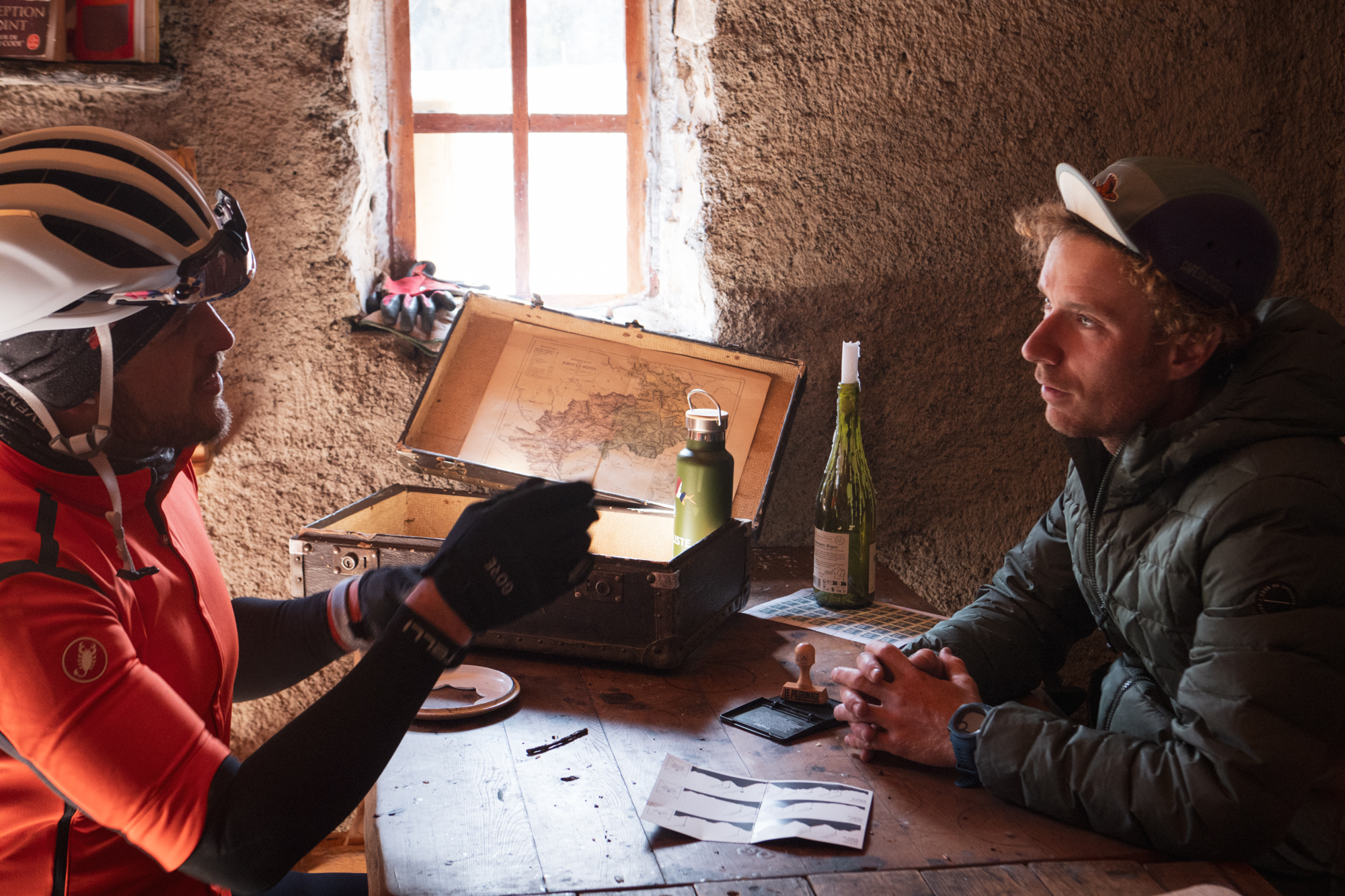
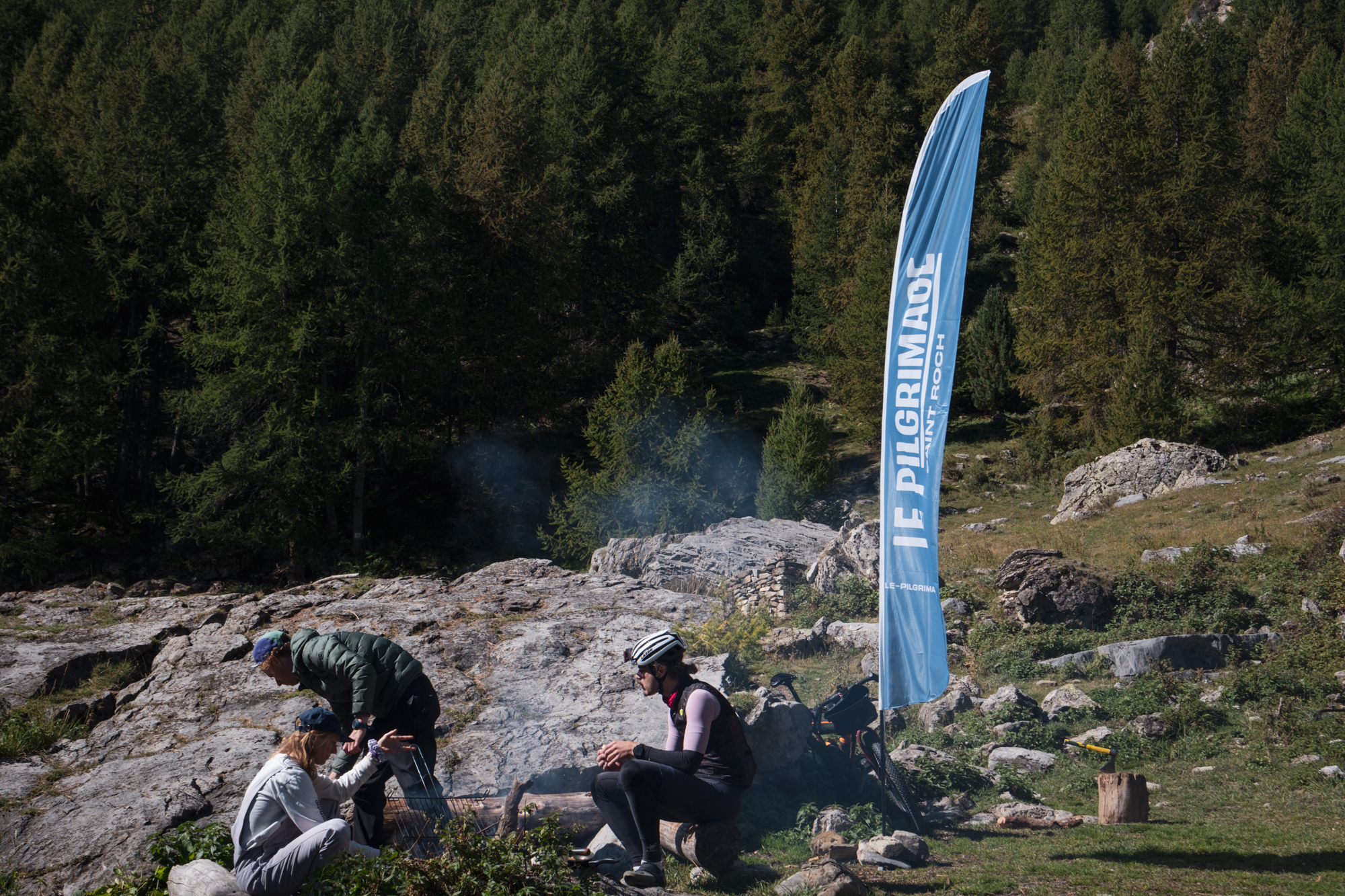
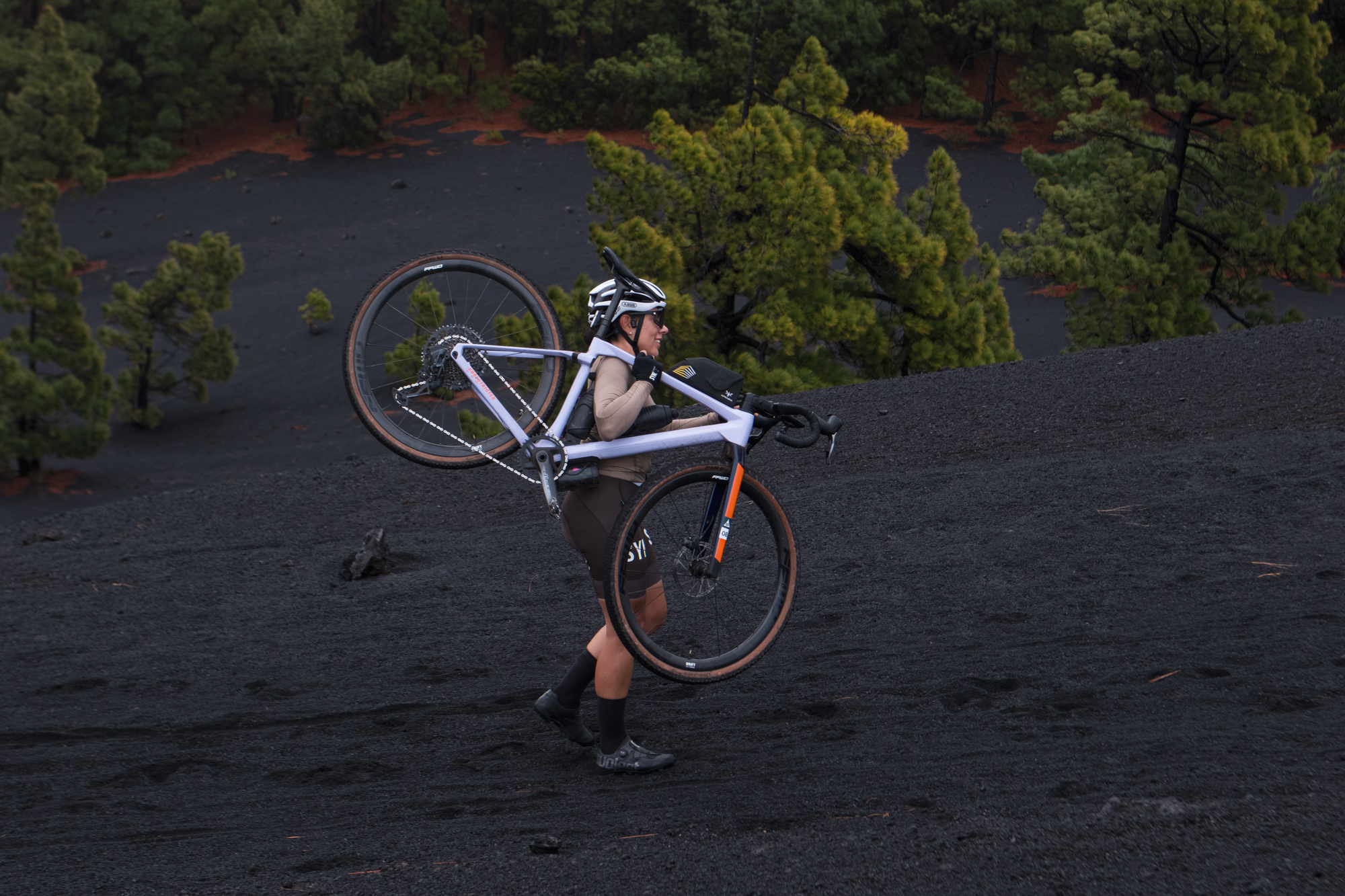
It was at the end of the last of those climbs where the stage’s checkpoint was located. Some hike-a-bike was needed to get to Cabane St. Jean, a mountain shelter for shepherds and trekkers, but we were rewarded with cheese fondue and grilled sausages. We tackled the long descent with a full stomach and the first stamp on our brevet card.
The last third of the ride was mainly on tarmac, and this time there was no way to hide from the wind. Those riding in a group could minimize the impact of it, another reason to approach this event as an opportunity to get to know people while riding as a bunch rather than an individual effort.
If the temperatures on day 1 were already low, the forecast for stage 2 wasn’t encouraging at all. The road to the top of the Galibier had been closed the previous two days due to ice, and although the route we had to tackle would bring us to the summit via the off-road side, the high chances of encountering unrideable terrain prompted the organizers to facilitate different alternatives to get to the Refuge des Drayeres.
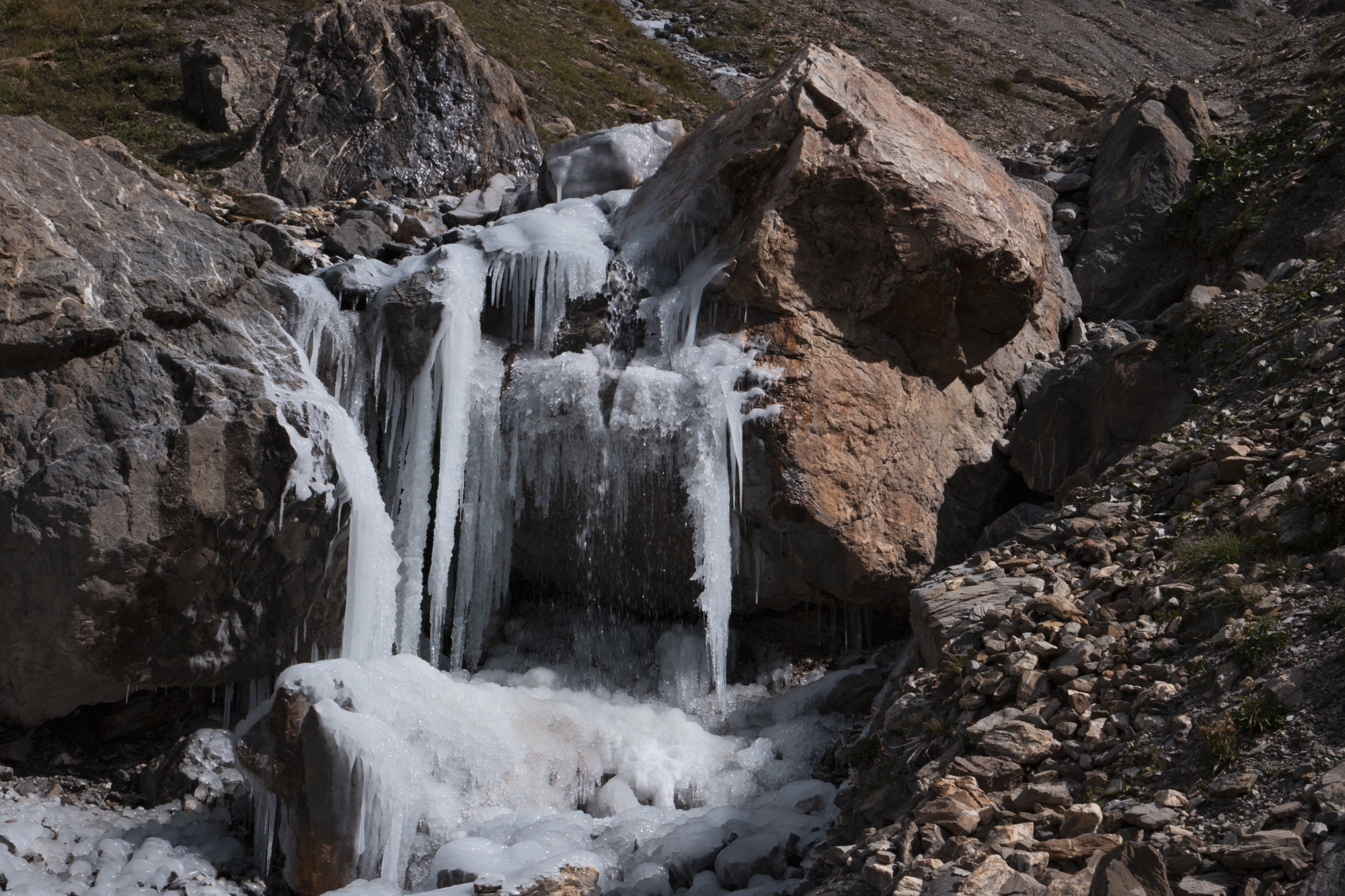
The sky was clear, so we tackled the original plan hoping that the sun would melt the remaining ice on the trails. The default approach to the Galibier from Briancon is via the main road, but thanks to Le Pilgrimage we discovered an alternative path, mainly gravel, parallel to it.
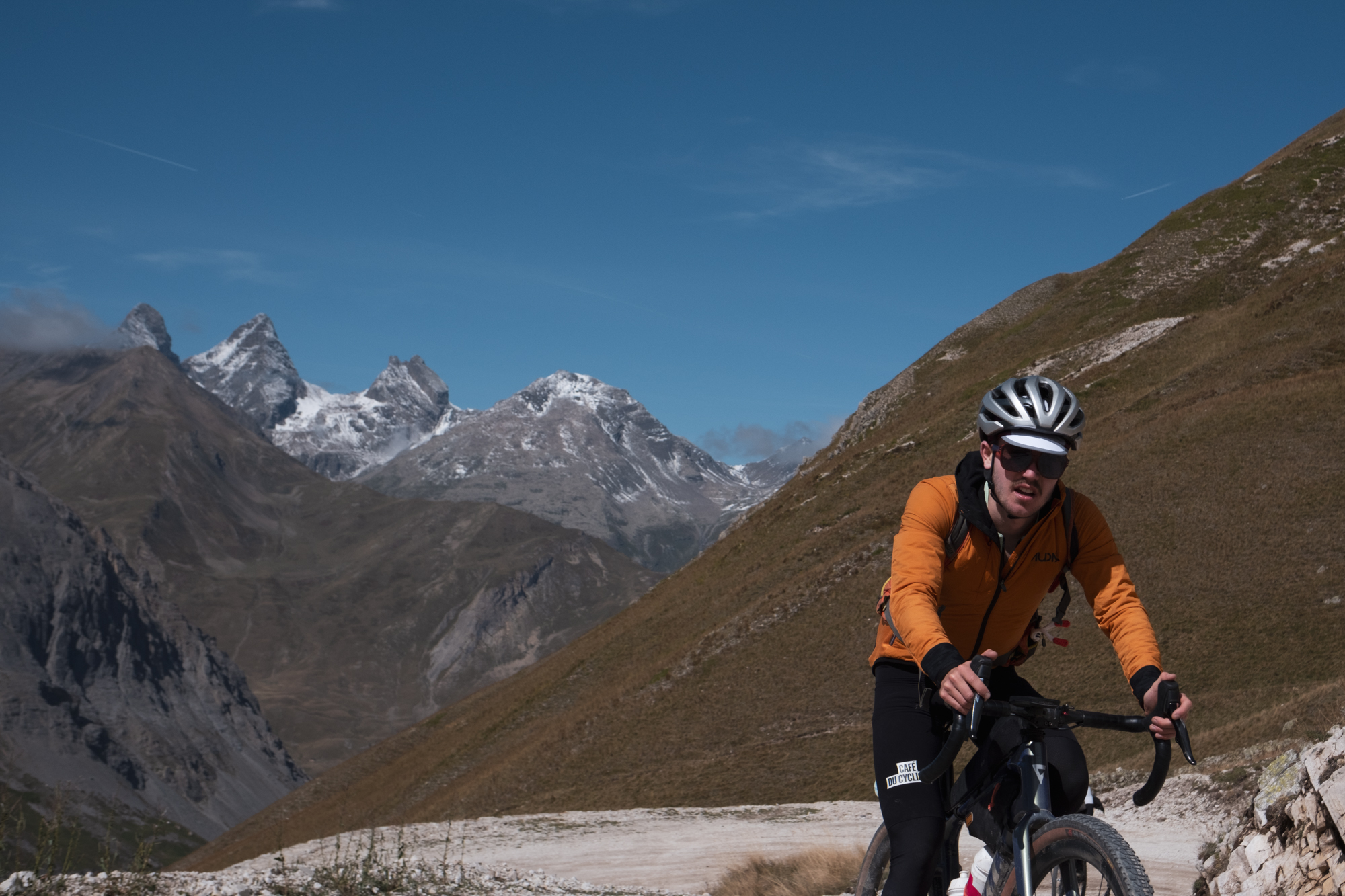
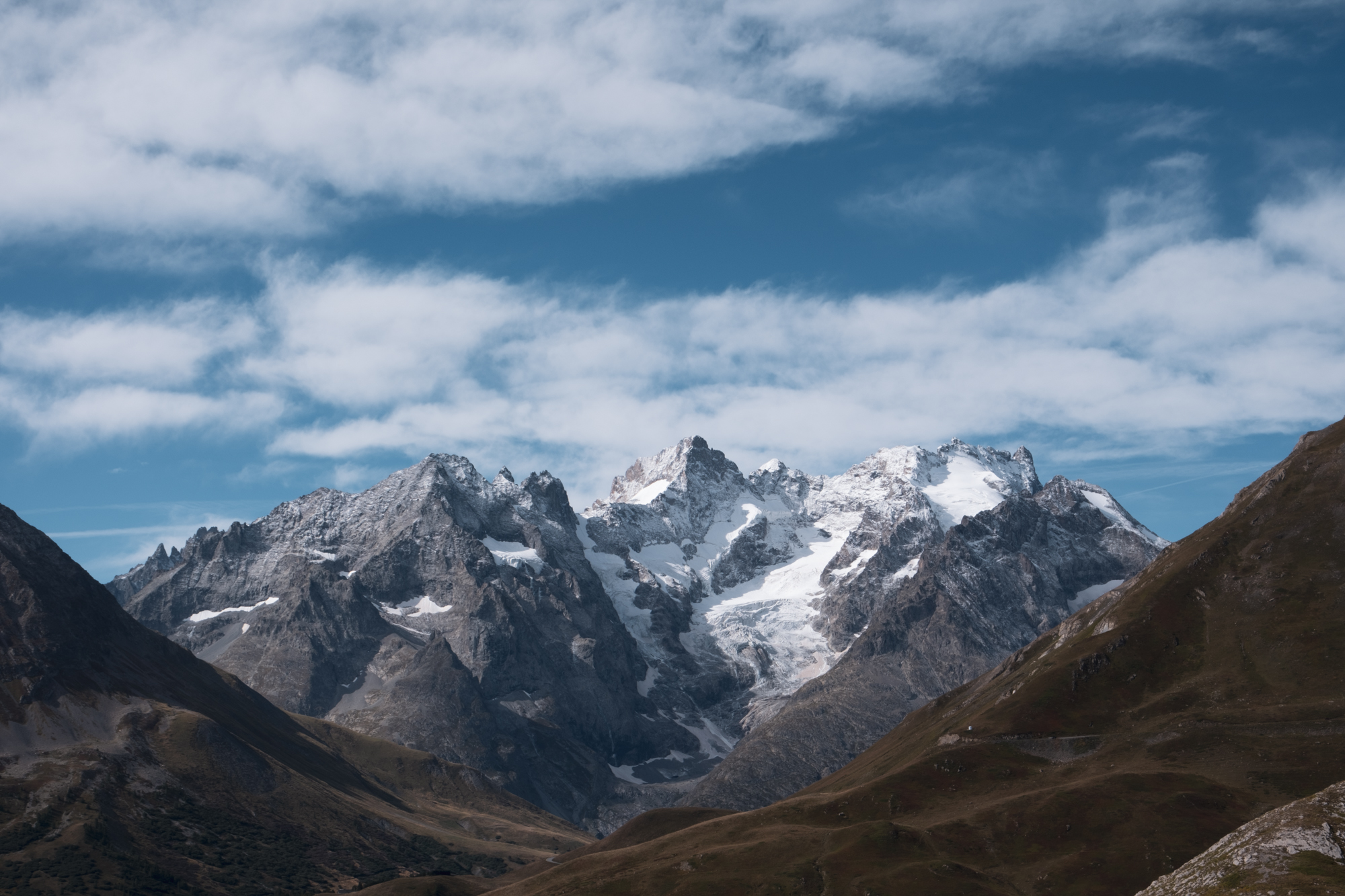
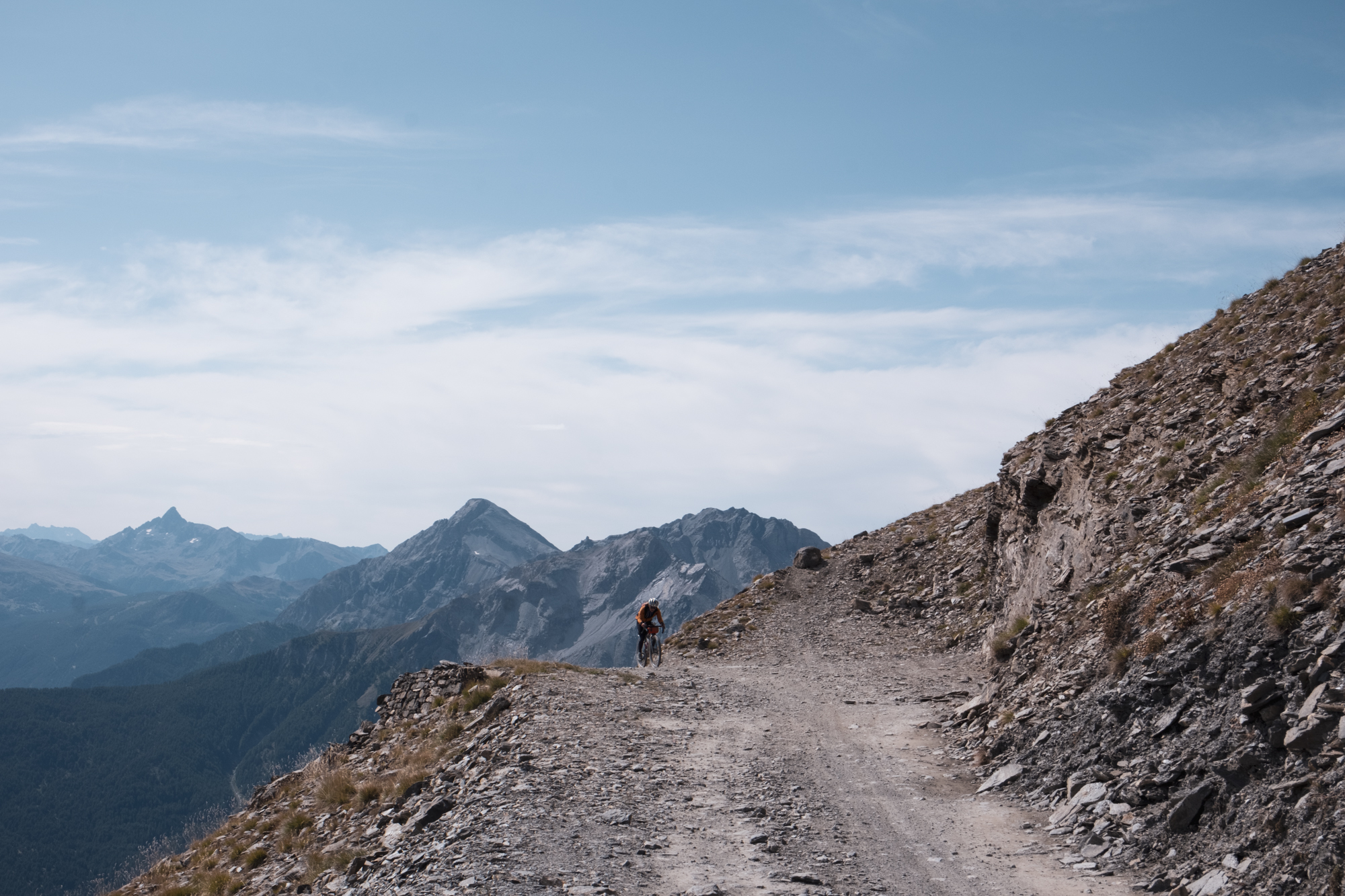
After three hours of riding, we reached the start of the old road to the top of Galibier. We had already accumulated over 1.000 meters of elevation, but the gradients would drastically increase in the last stretch. The surface was also very rough and not all the ice was melted, so it took us a full hour to cover the remaining 7,5 kilometres. The views of the glacier behind us compensated for it.
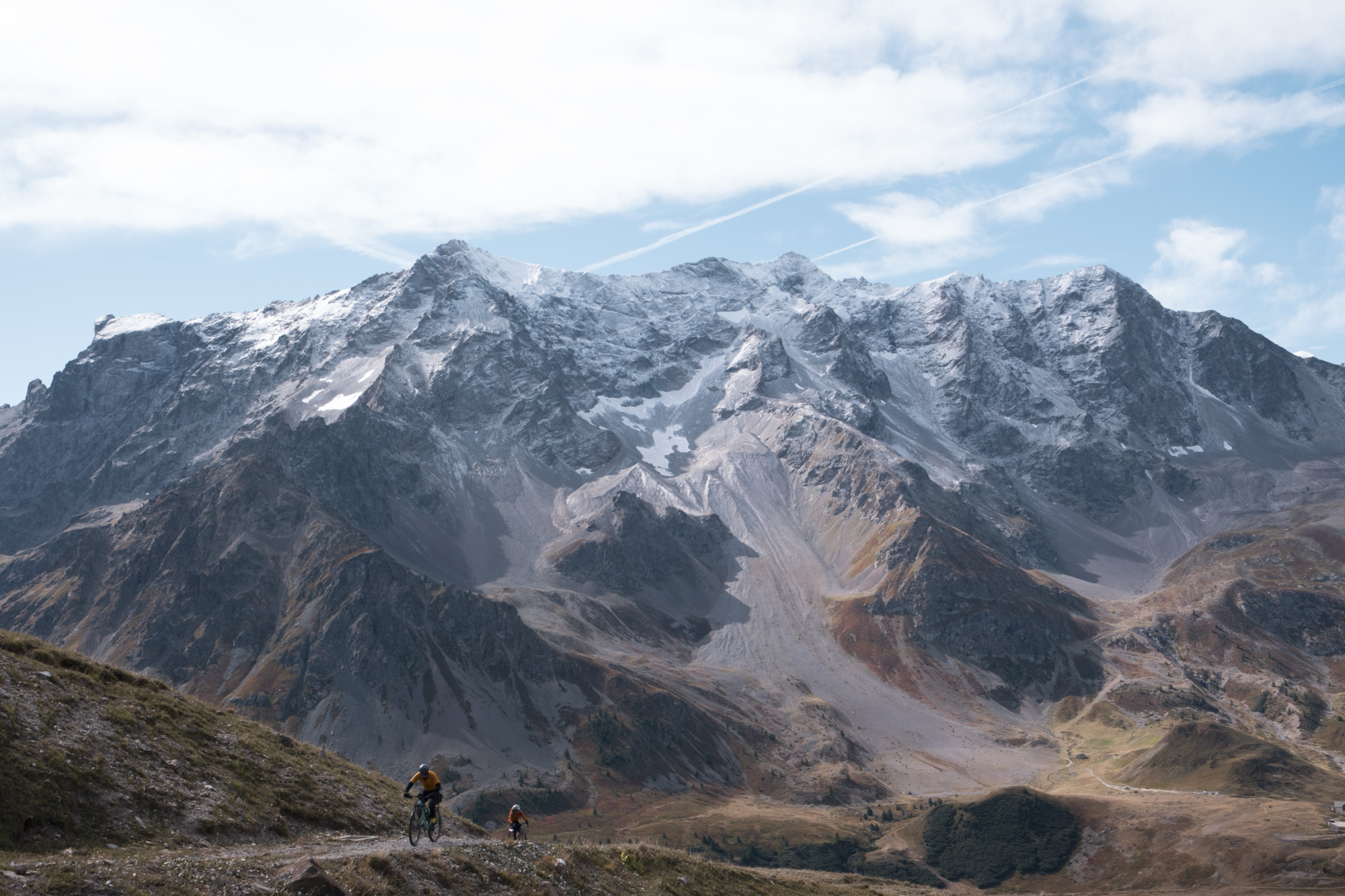
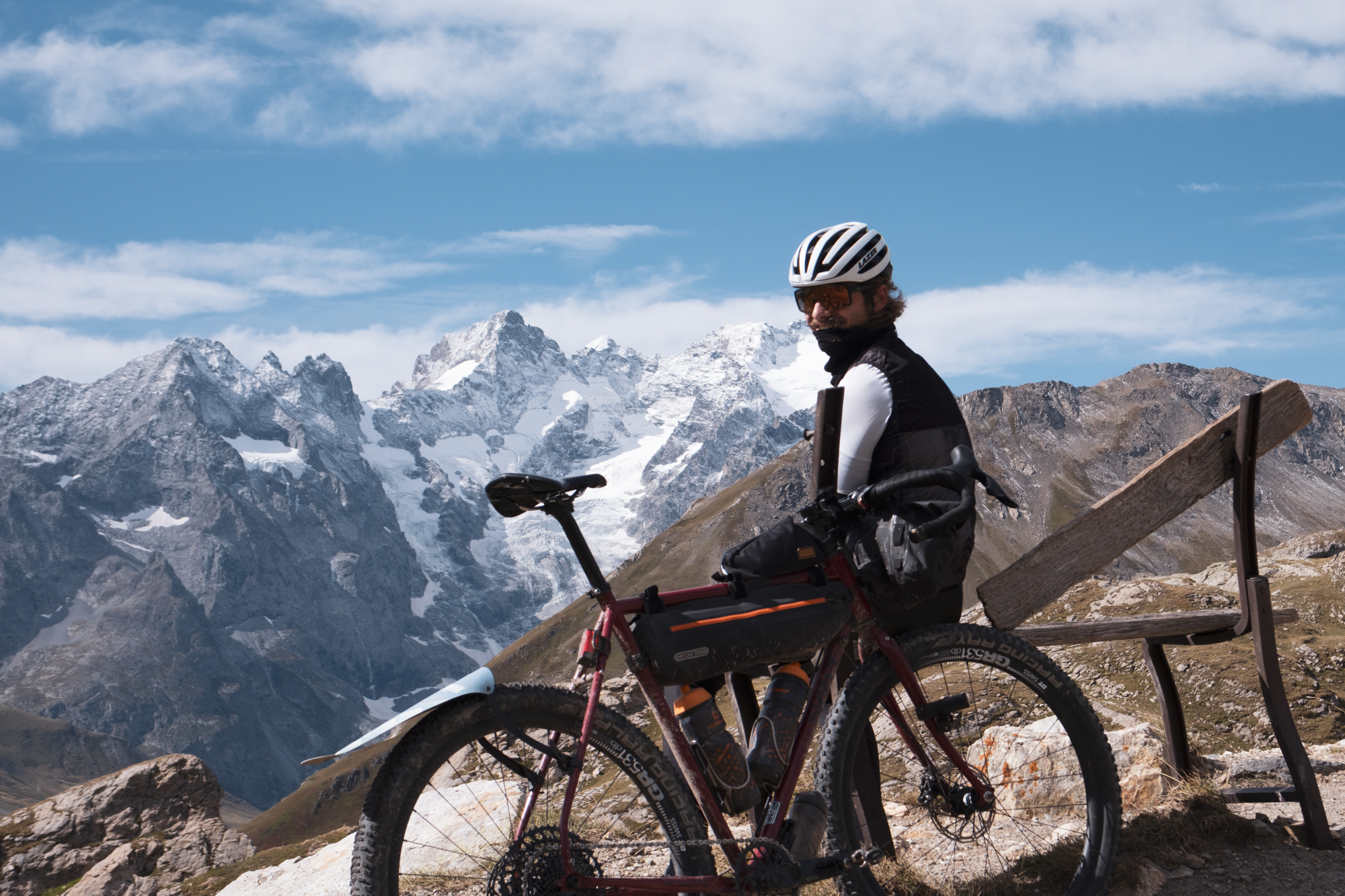
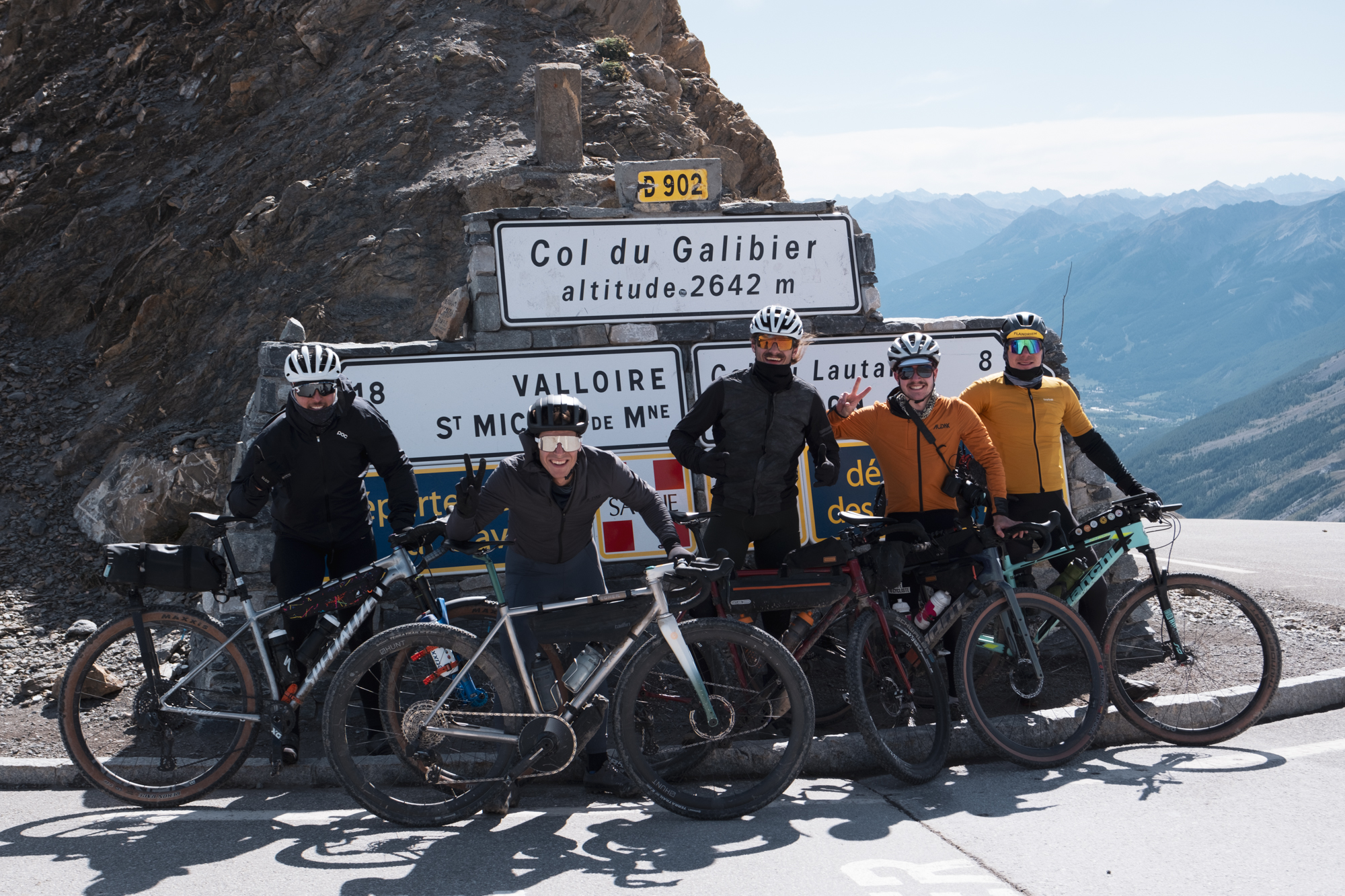
We were full of adrenaline at the top of the infamous mountain. It was all for us as no cars could access the road to the top, and at that moment no other cyclists were challenging the adverse weather. Our Hammerhead was displaying an air temperature of -4°C, and we could barely stay upright given the strong gusts of wind. The descent to Plan Lachat was short but extremely cold, so the off-road climb into the Haute Vallée de la Clarée was helpful to warm up again.
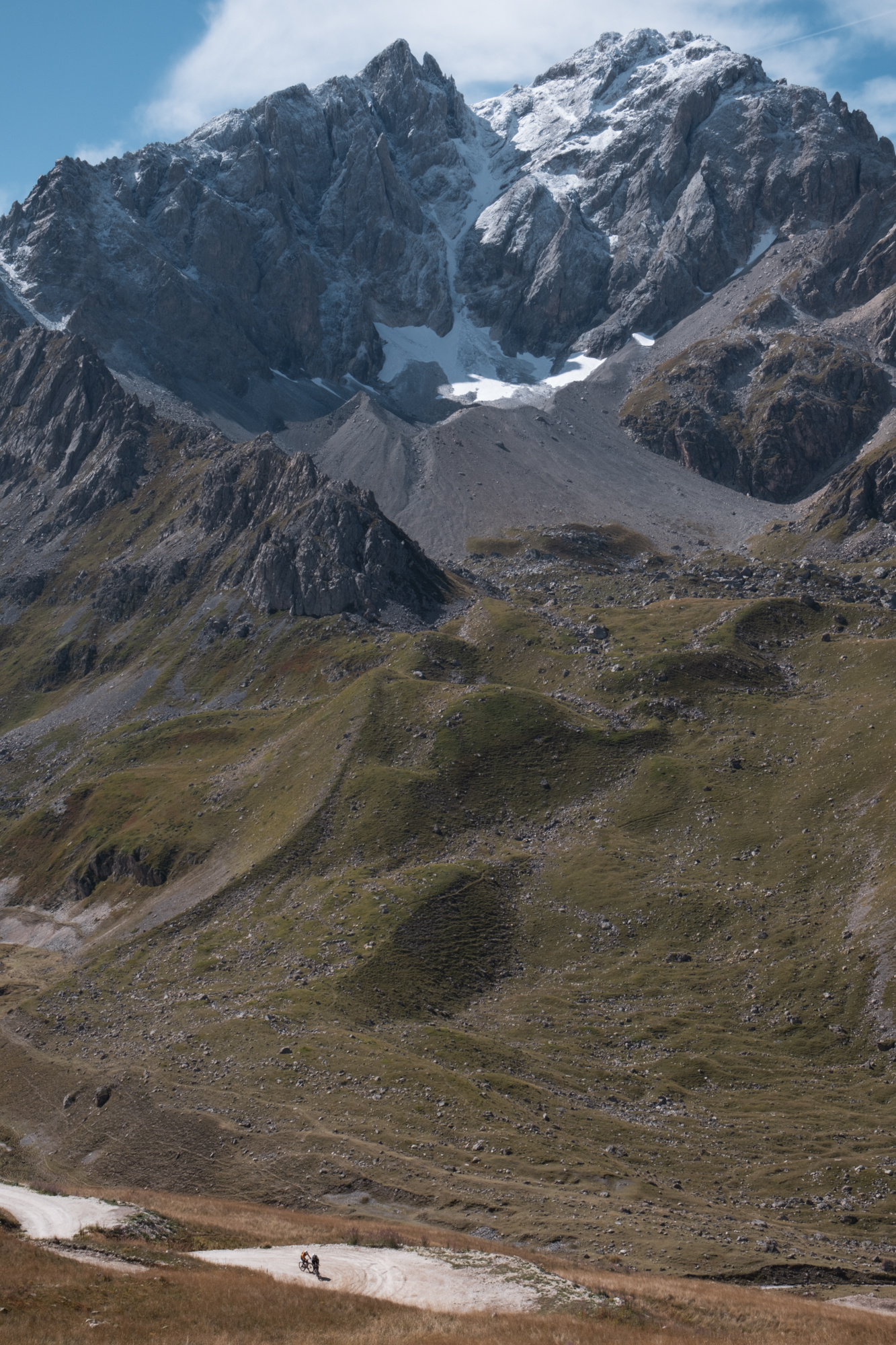
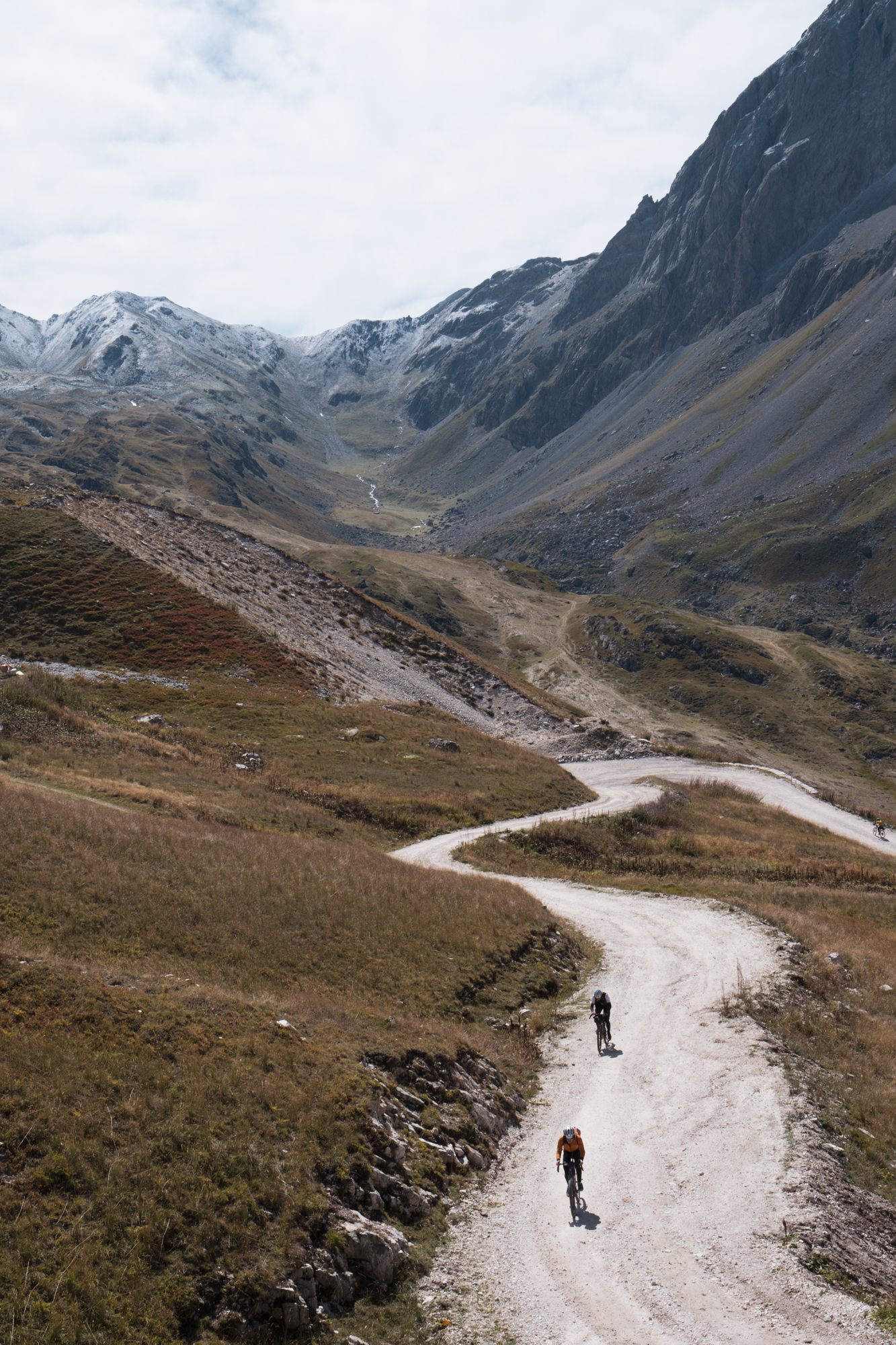
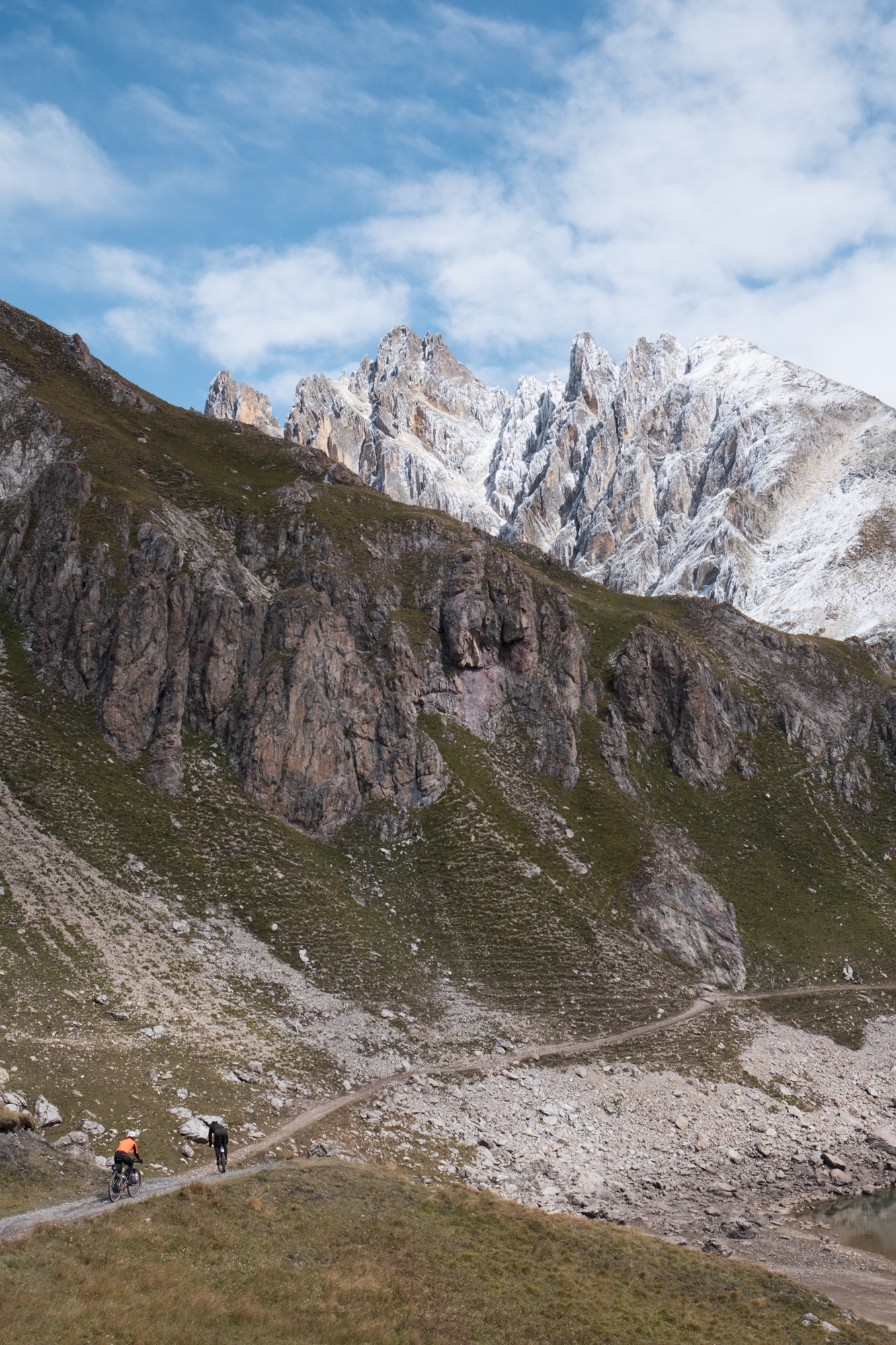
At some point, we had to put our feet on the ground as the smooth gravel turned into a rocky section with no clear path. Some pilgrims came well-prepared with trekking shoes to minimize the risk of slipping, but still, the hike-a-bike was long and slow. We finally arrived at the Refuge des Drayeres, where some of the participants who opted to skip the Galibier were already enjoying the nice catering prepared for us.
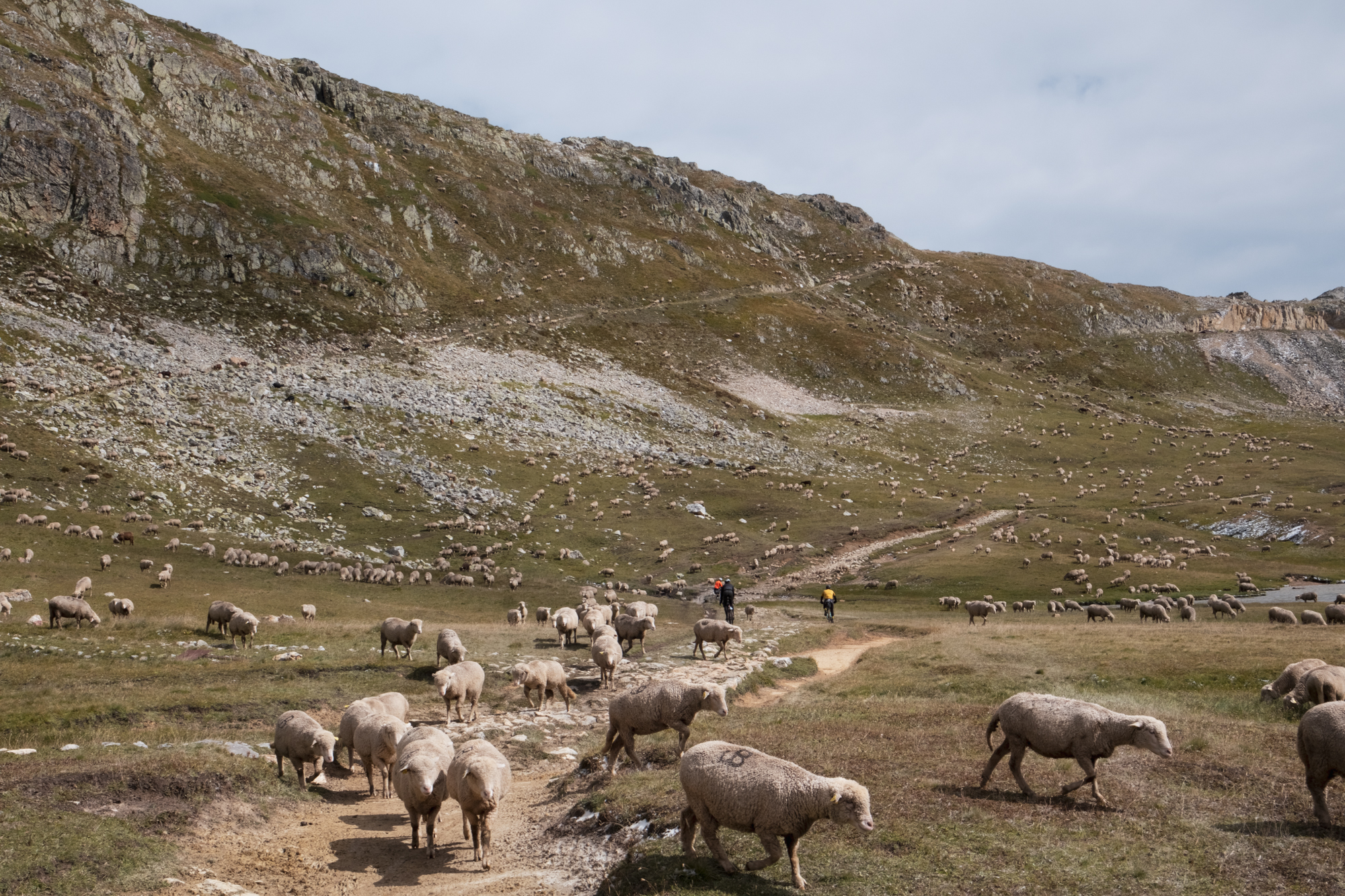
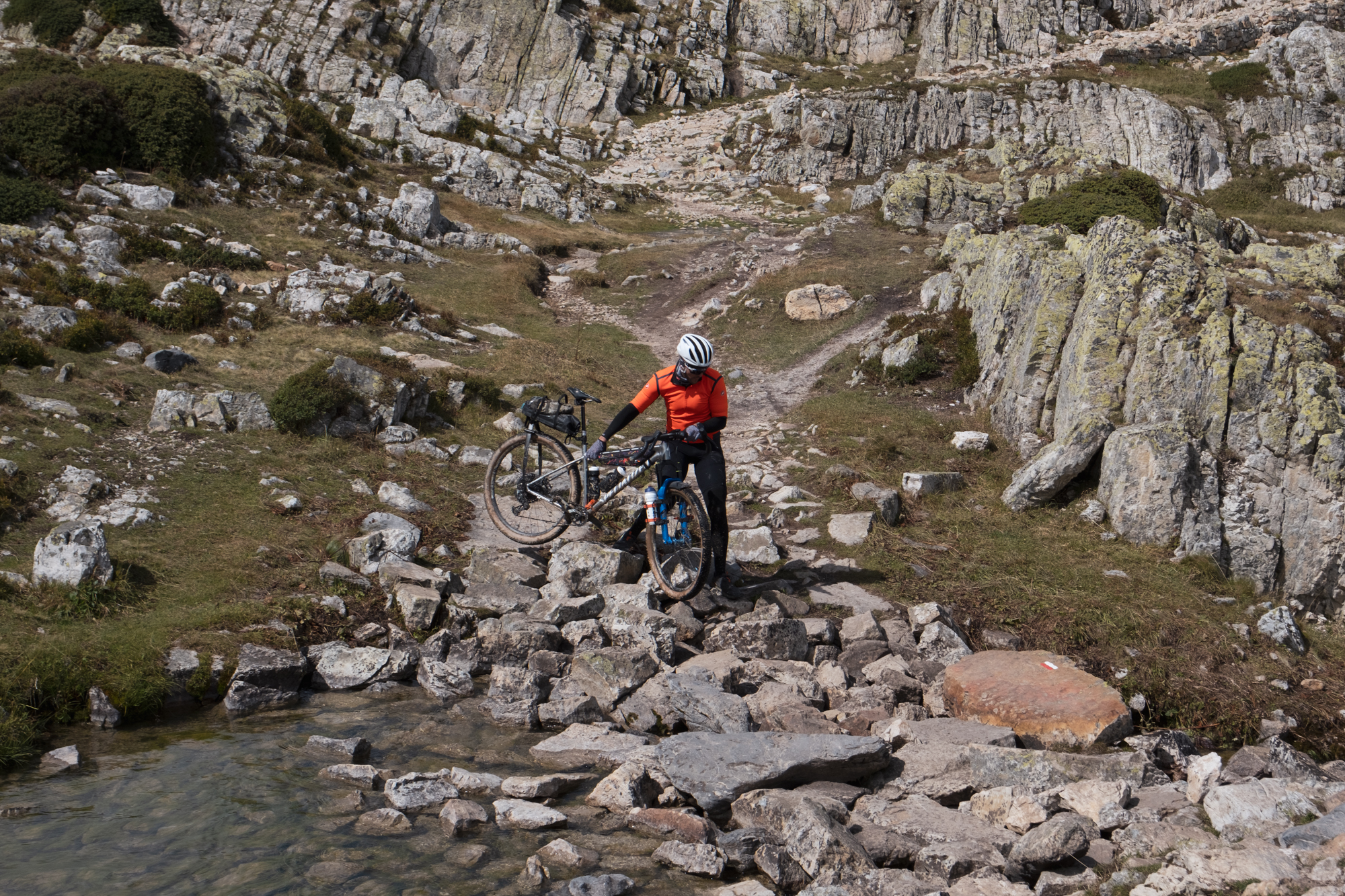
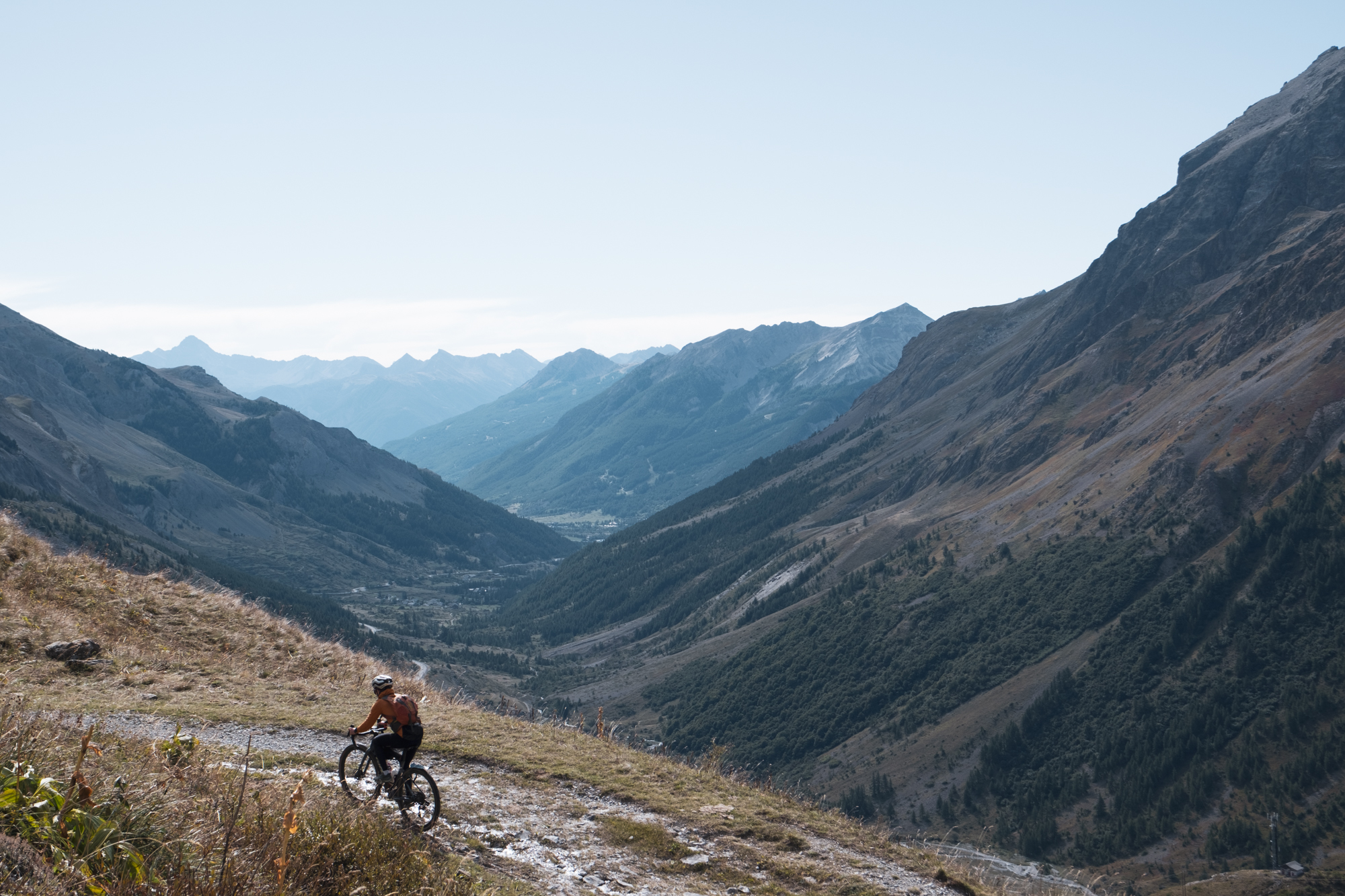
The average speed increased considerably on the descent to Briancon through the Vallée de Clarée, with some nice trails that kept us entertained. It was during the last climb before reaching the base camp that we realized the magnitude of the challenge we had accomplished, but what was coming over the next two days would be even more mind-blowing.
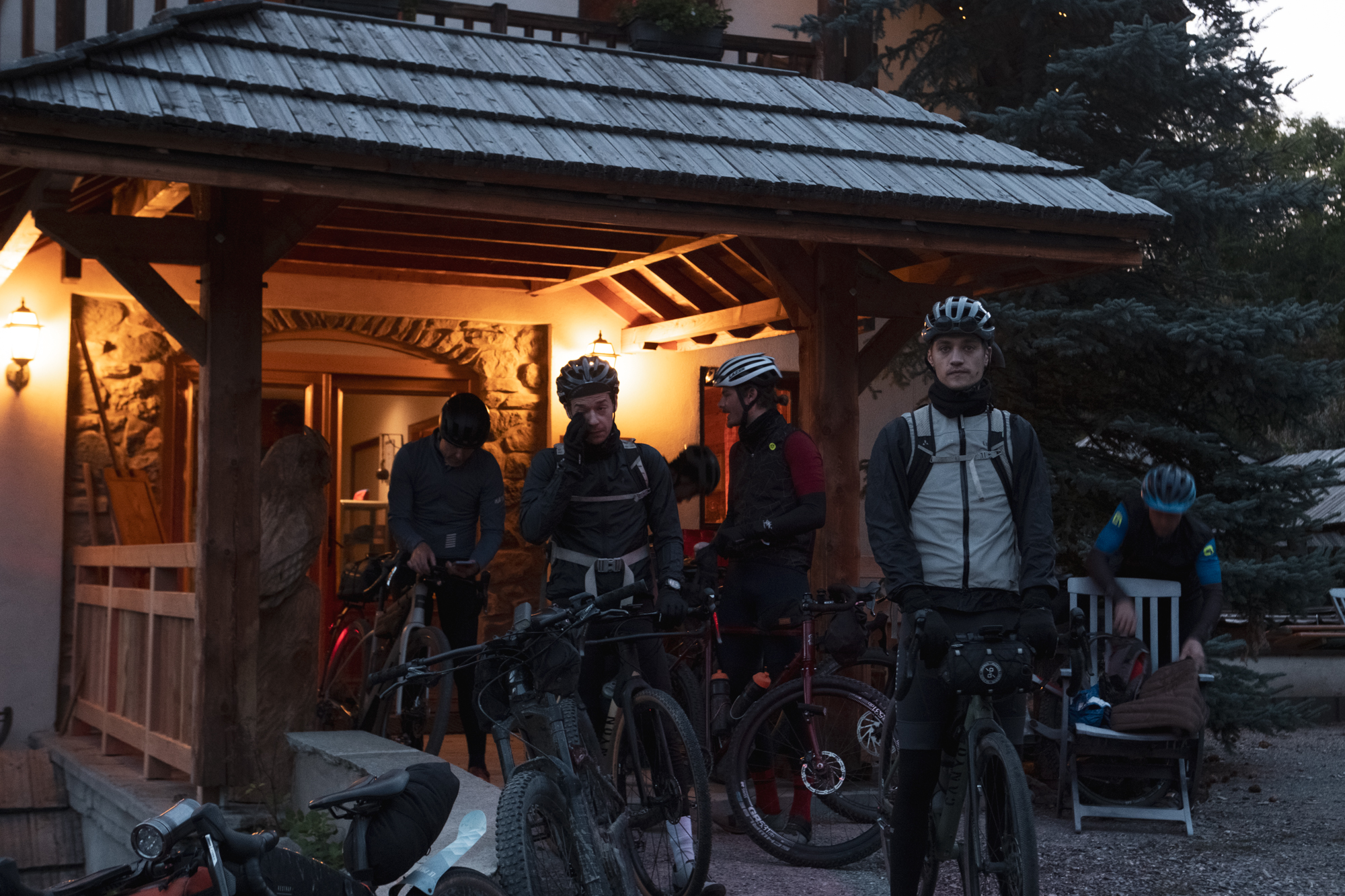
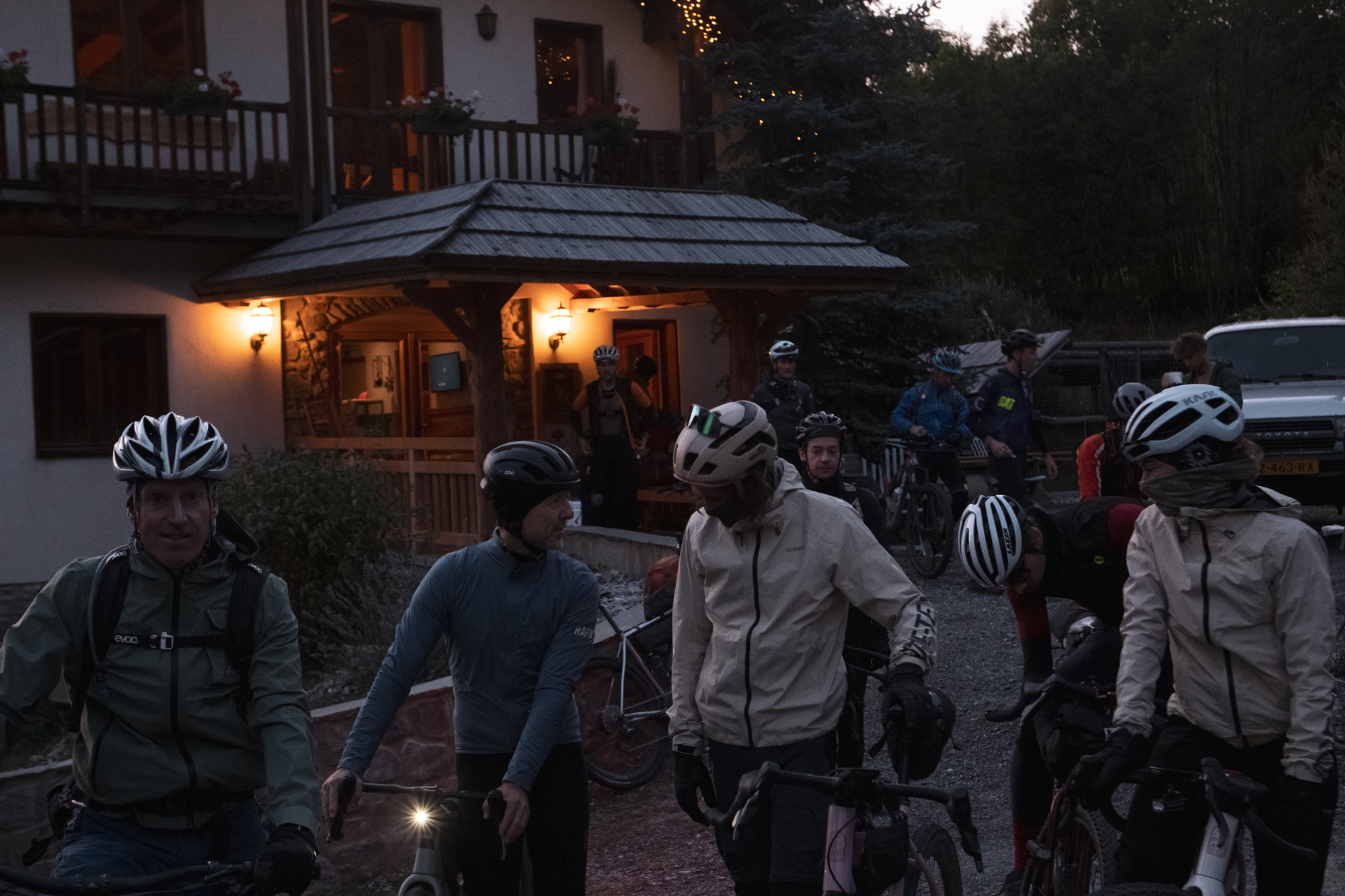
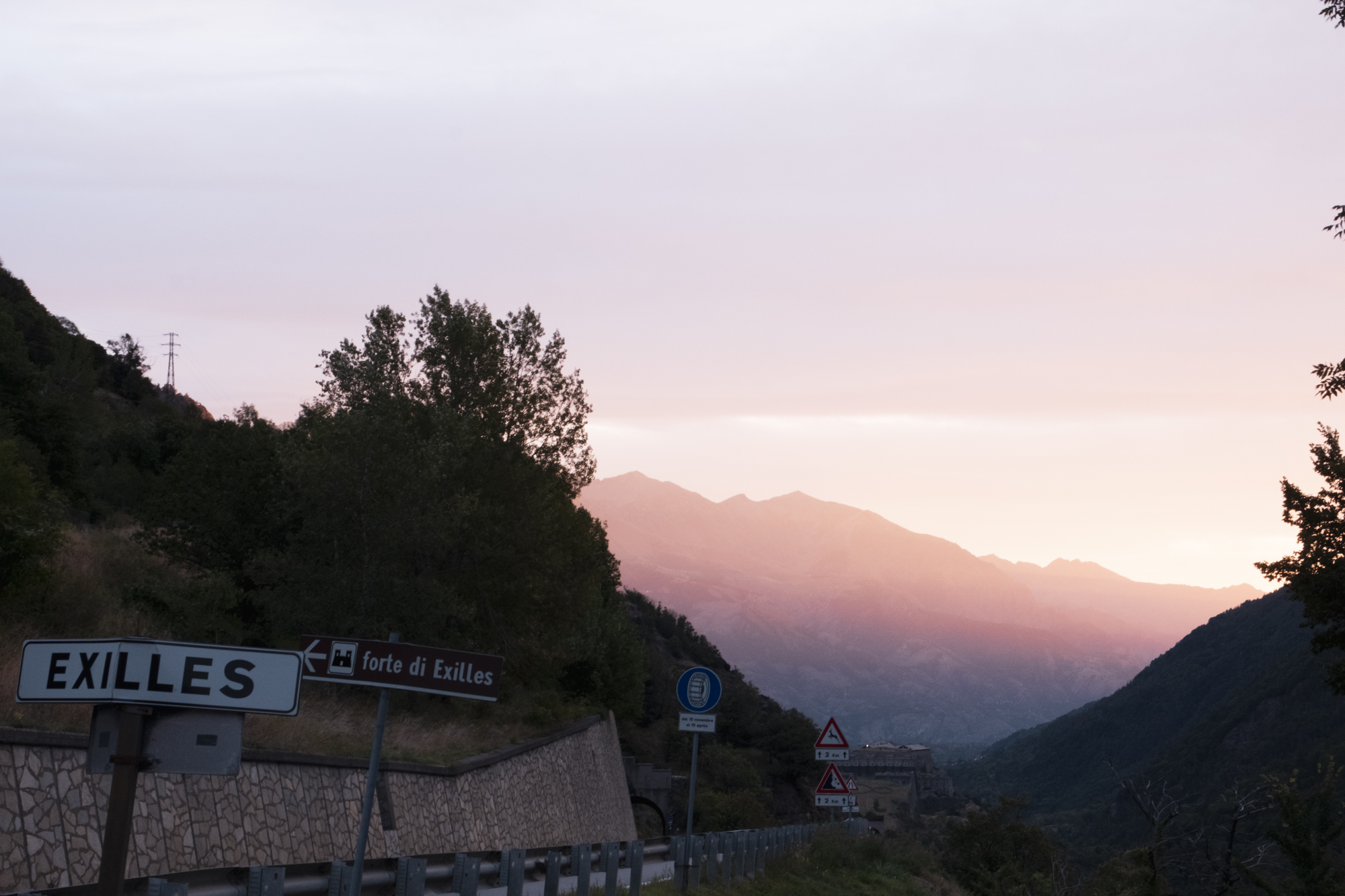
Same as last year, the last stage was a two-day route, with each pilgrim deciding where to sleep before tackling the remainder of it. This time we would foray into Italy, with the Strada dell’Assietta and the Monte Jafferau – although this location was still a secret before starting the stage – as the main highlights. The bike setups at the startline revealed who was planning on bivvying and who was staying at a B&B, and based on what we heard, most would sleep in Susa. We booked a night further up the road to start with a bit of advantage on the treasure quest. Even in a social event like the Le Pilgrimage, our competitive side shows up in one way or another.
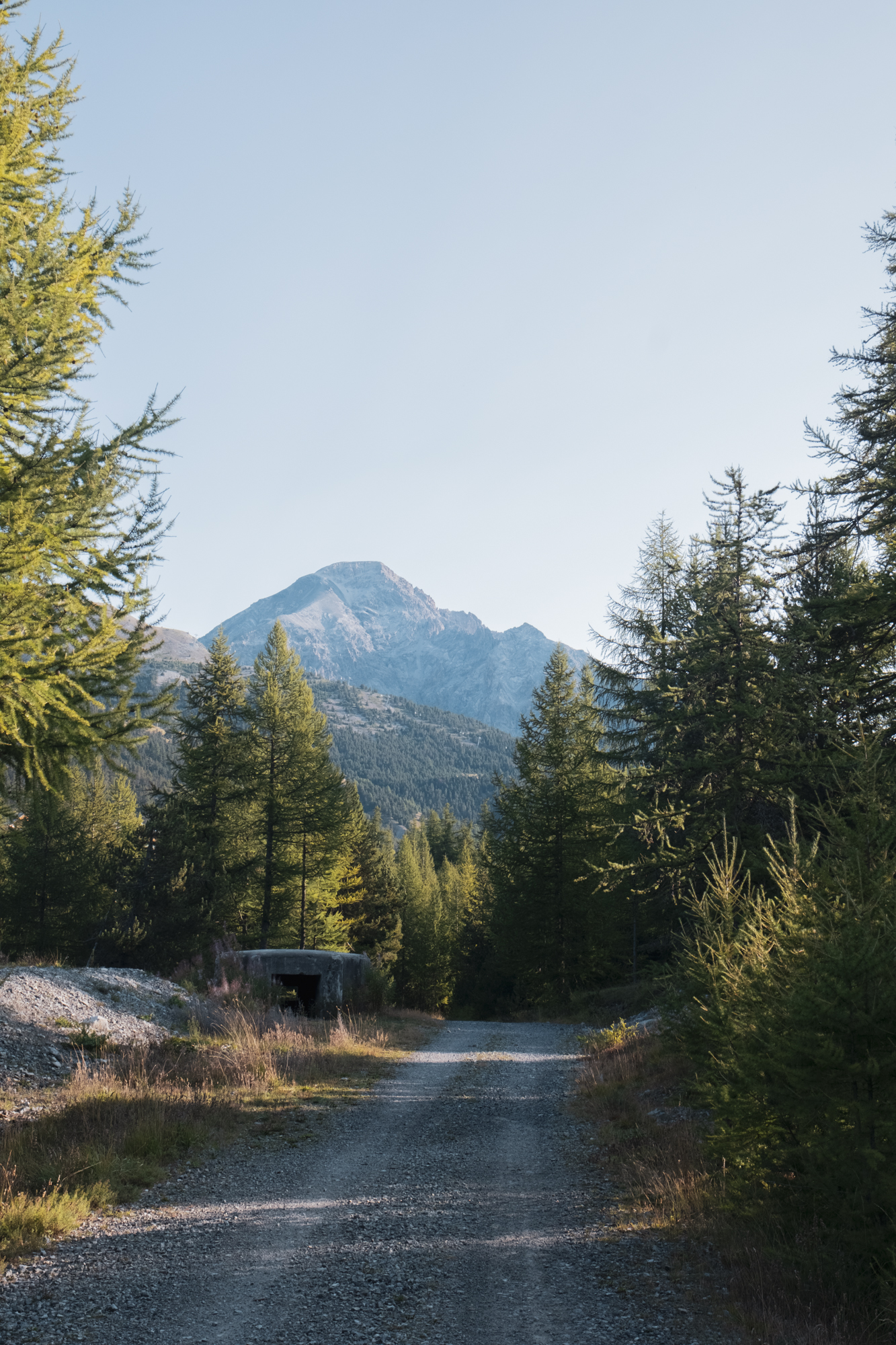
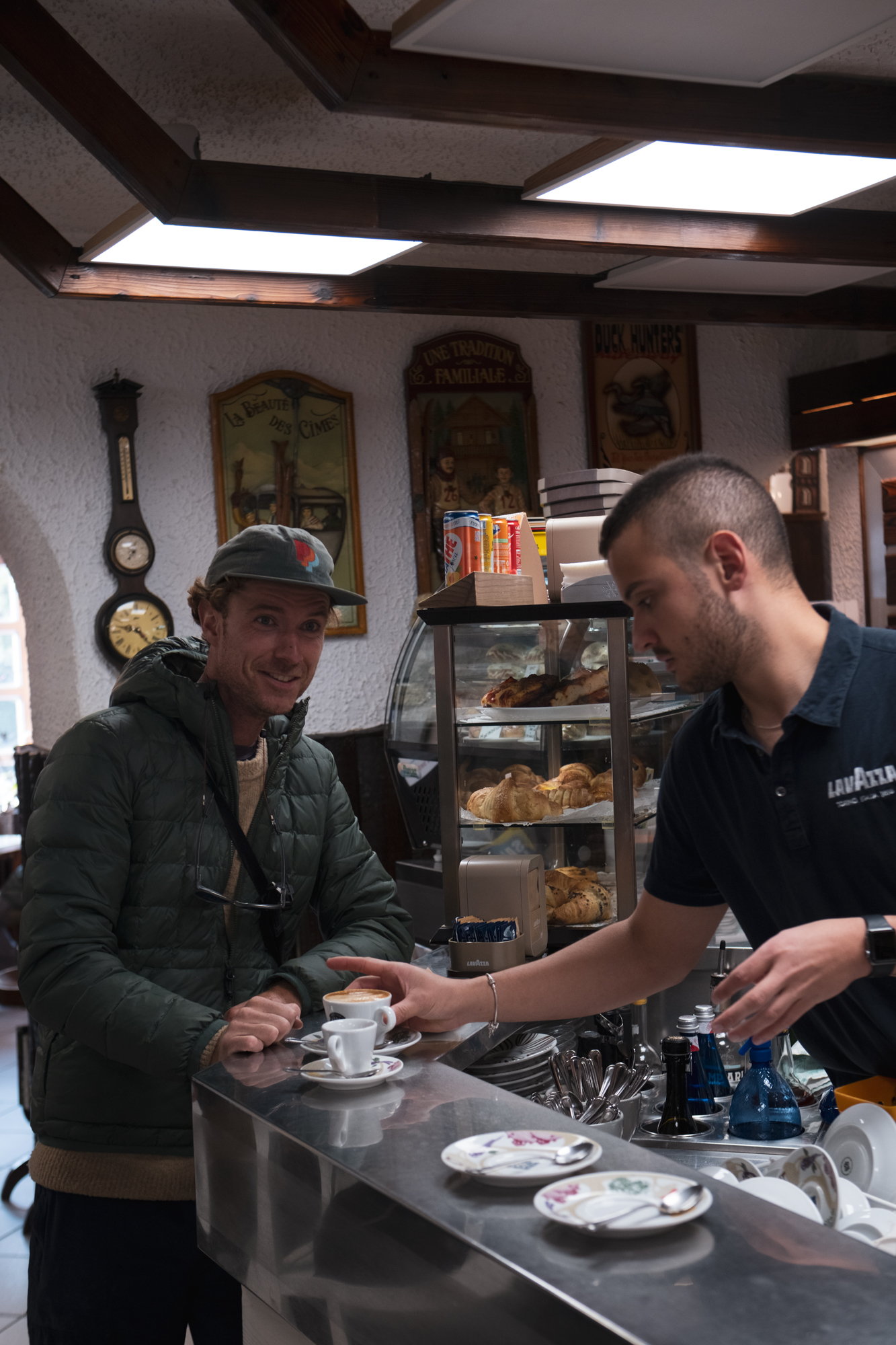
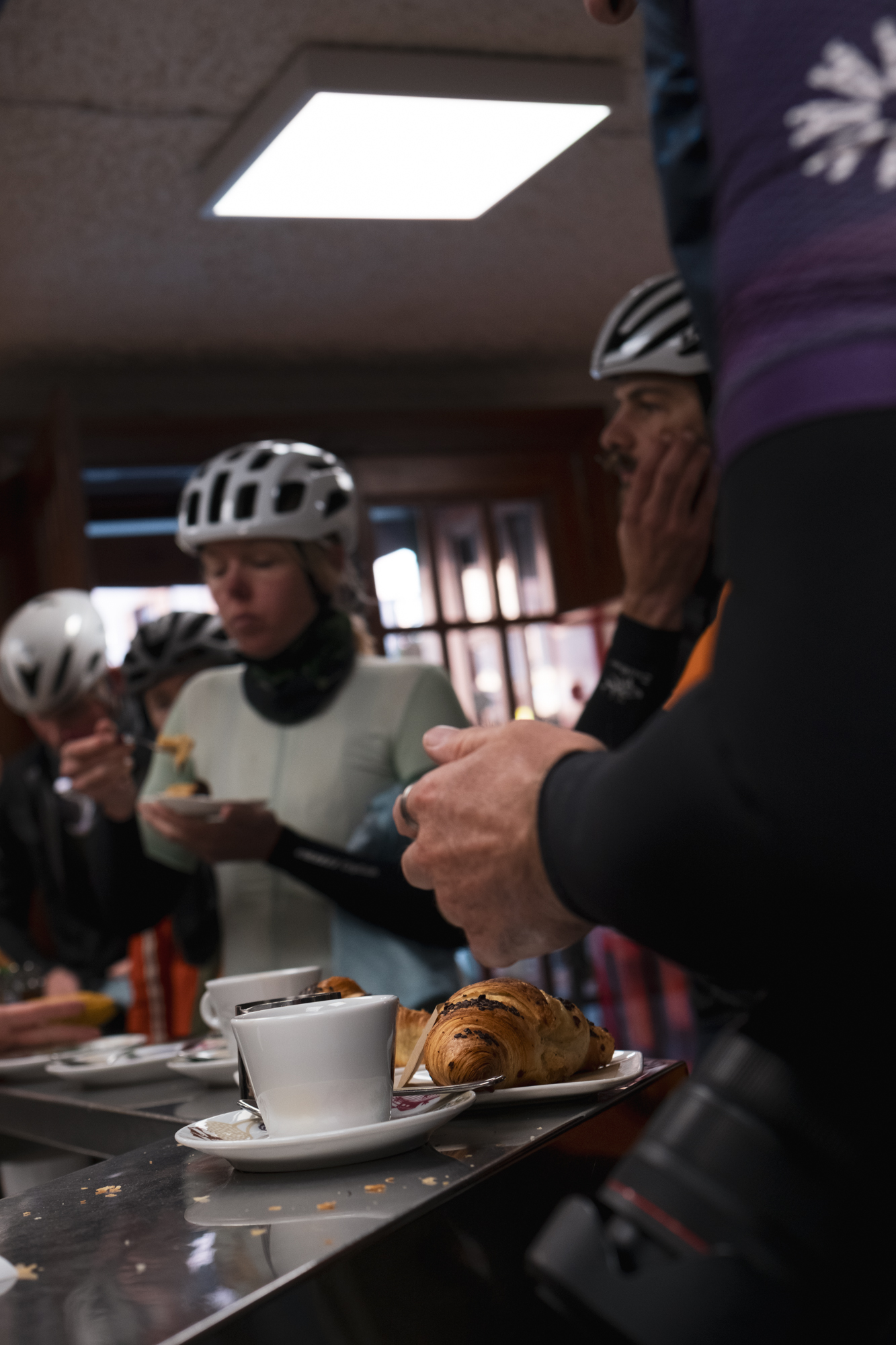
We caught the first sunrays on our way to the border. A quiet gravel path led us to Claviere, where we ordered a cappuccino because that is the first thing everyone should do when crossing to Italy. A regrouping took place, and Cyril went ahead saying “I don’t want to miss this part”, so we were expecting something interesting up next.
A few minutes later our Hammerhead warned us of the gradients that we would have to overcome, and things got even more difficult when the recently tarmacked path turned into a mix of Paris-Roubaix cobblestones and potato field. As the saying goes, “the harder the climb, the better the view”, and we took off the clothing layers we didn’t need anymore while contemplating the landscape we were rewarded with. The temperatures finally rose above 15°C, and the suncream that everyone neglected during the first two stages suddenly turned into a precious item.
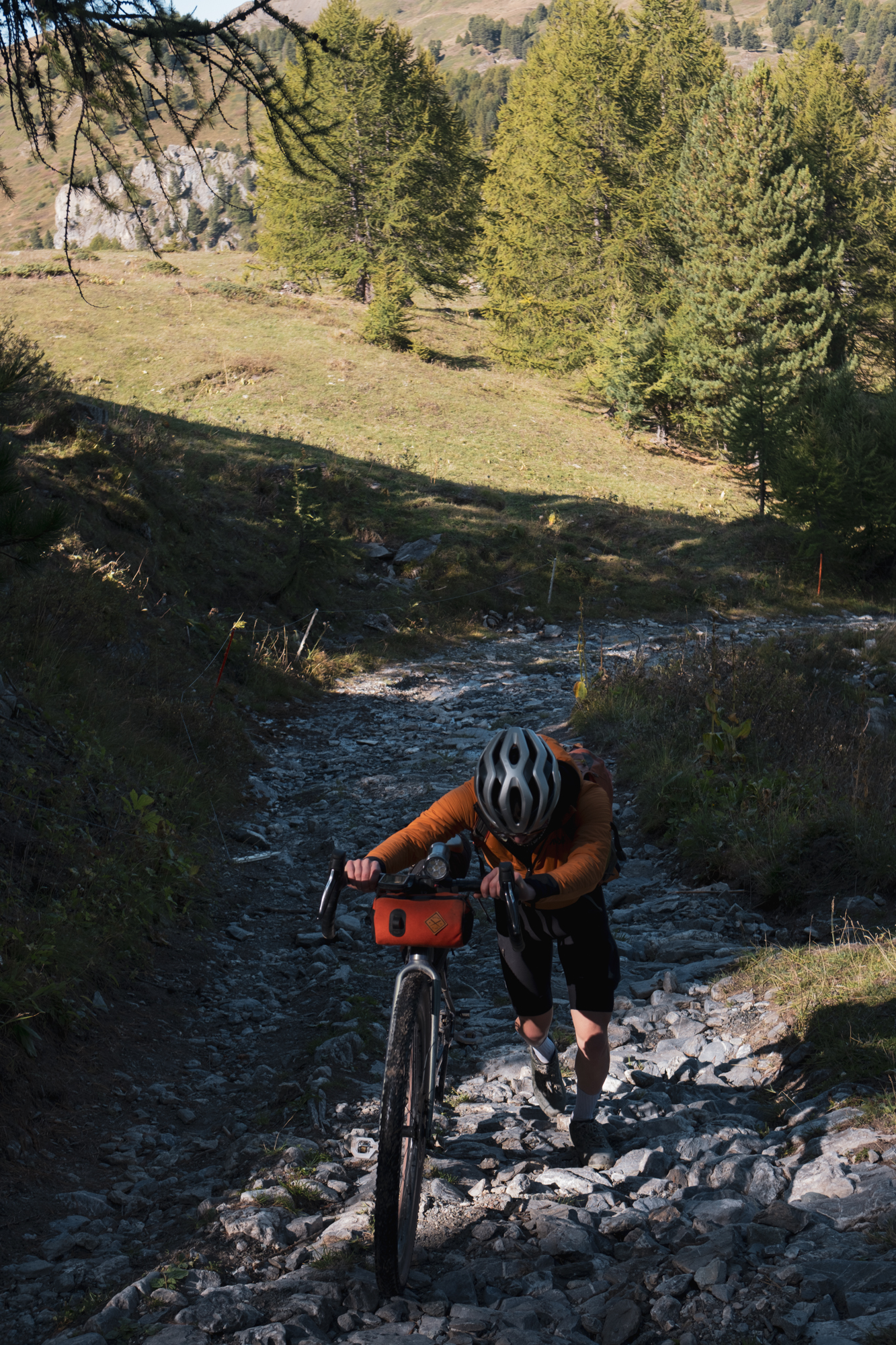
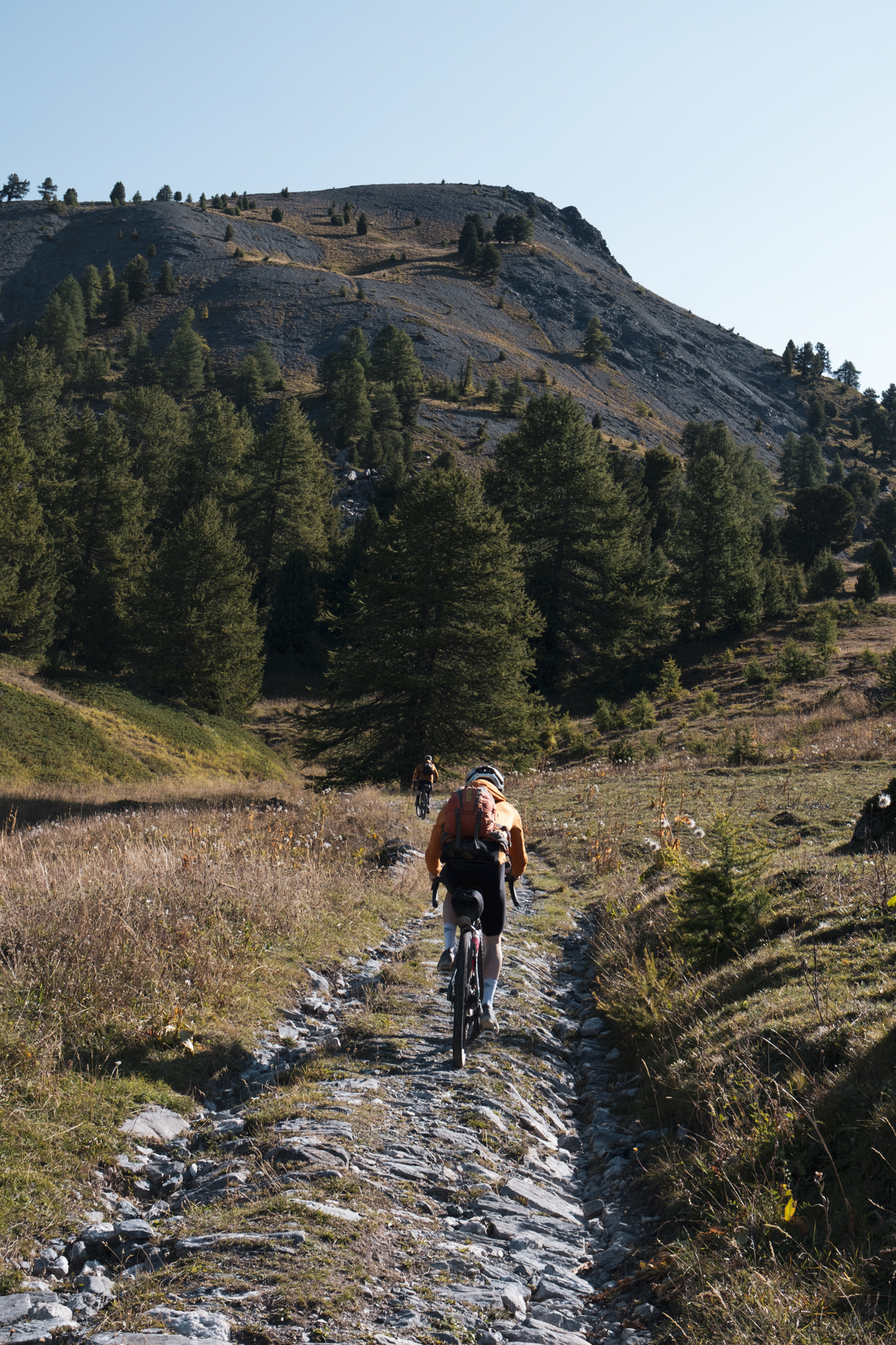
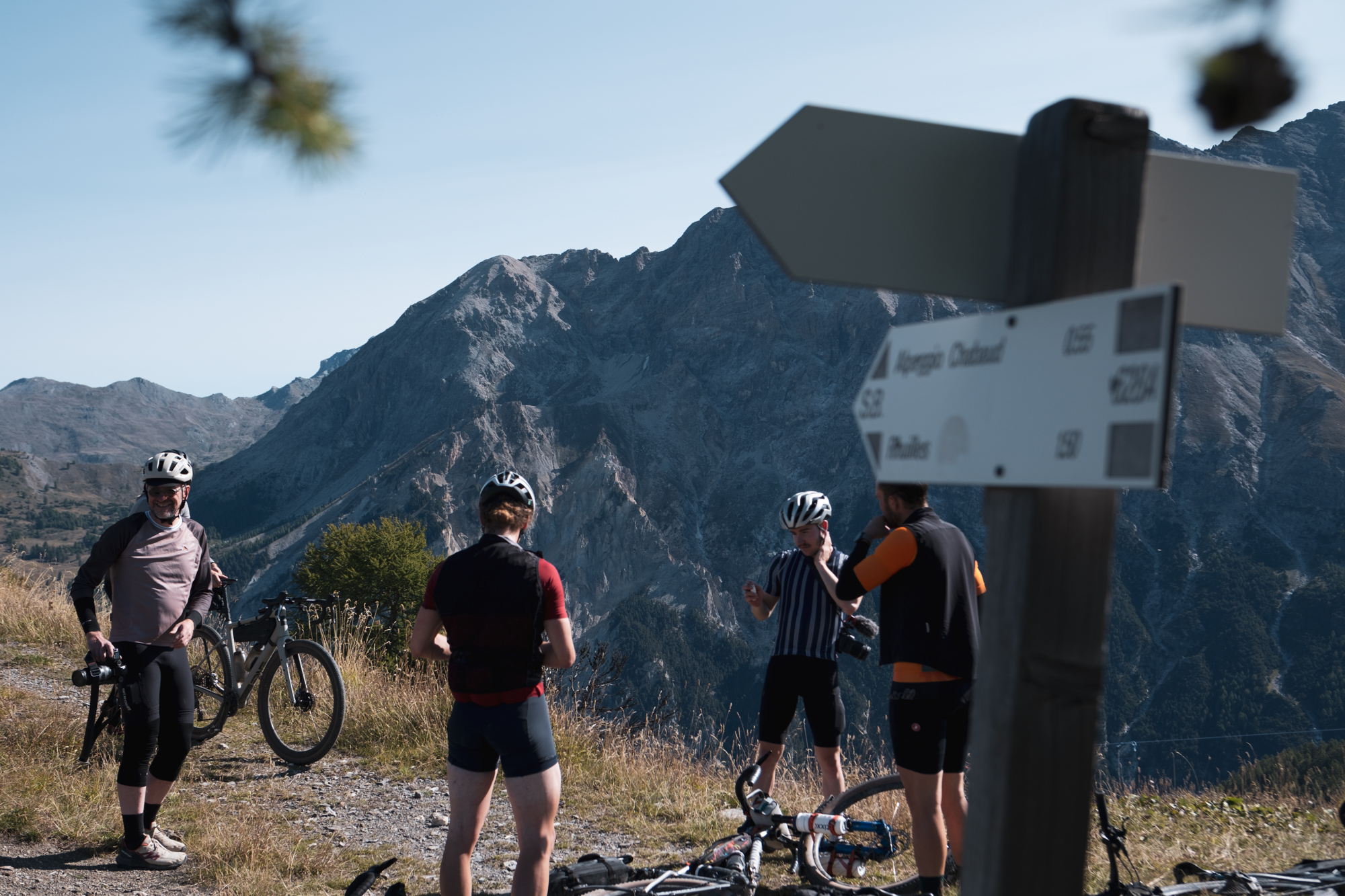
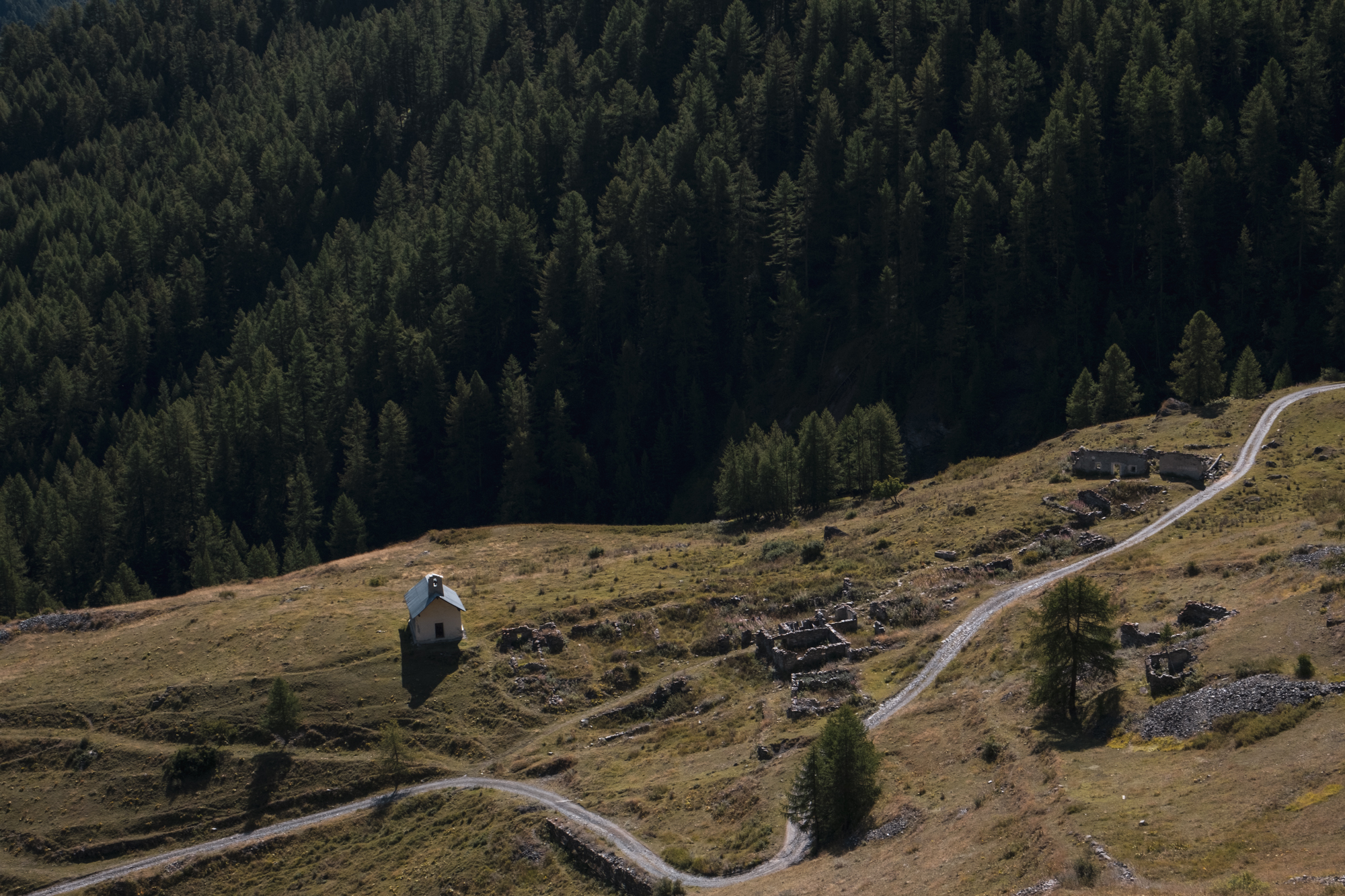
Before reaching Strada dell’Assieta, a technical and rocky descent was followed by a long climb, which was paved up to Sestriere and then off-road until the 2.400 meters elevation mark. Multiple slices of pizza ingested in the ski resort gave us the energy needed to reach the top, and we also made sure we carried enough extra food and water, as for the next 40 kilometers we would be riding on a plateau at over 2.000 meters, isolated from civilization.
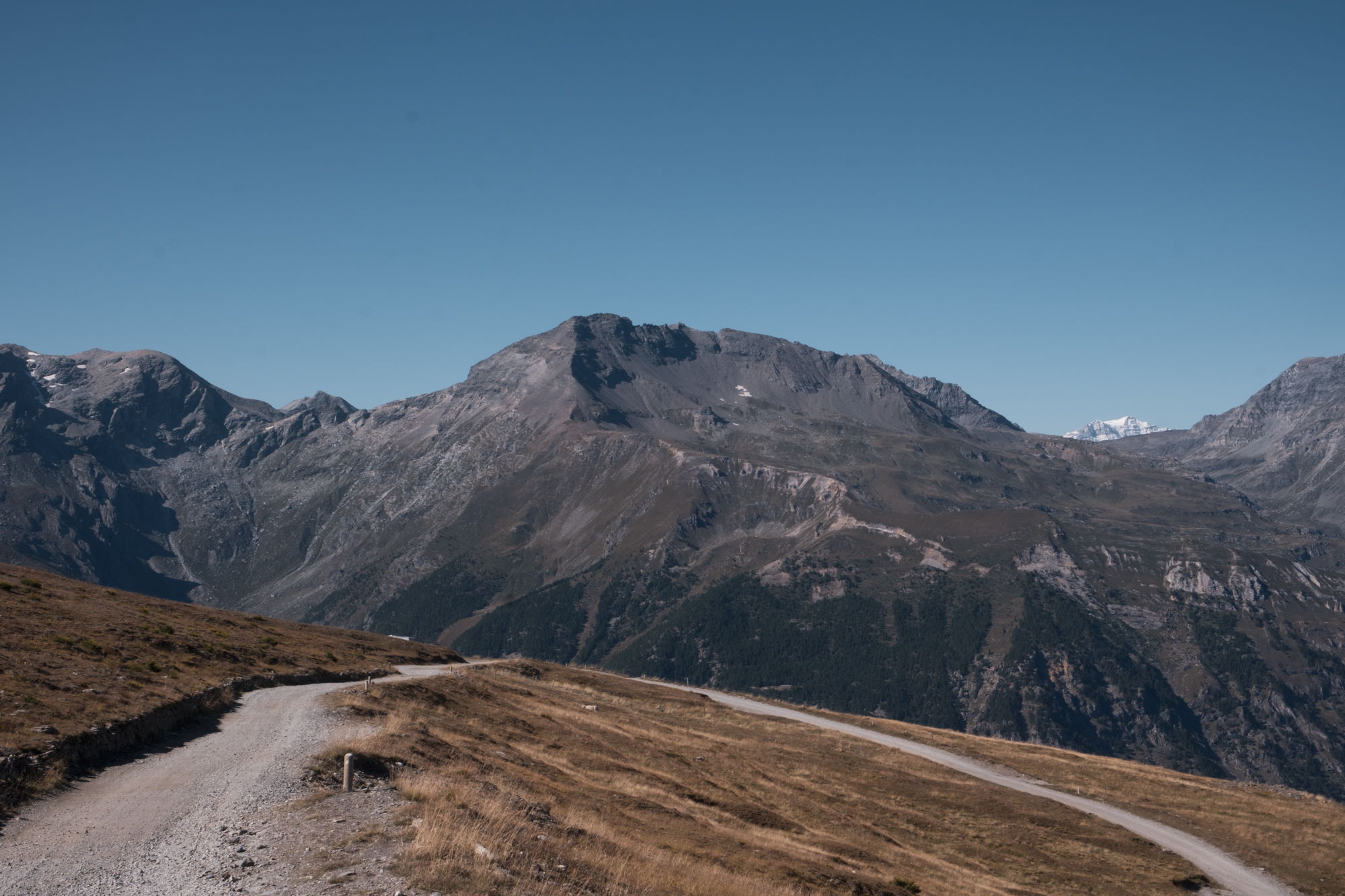
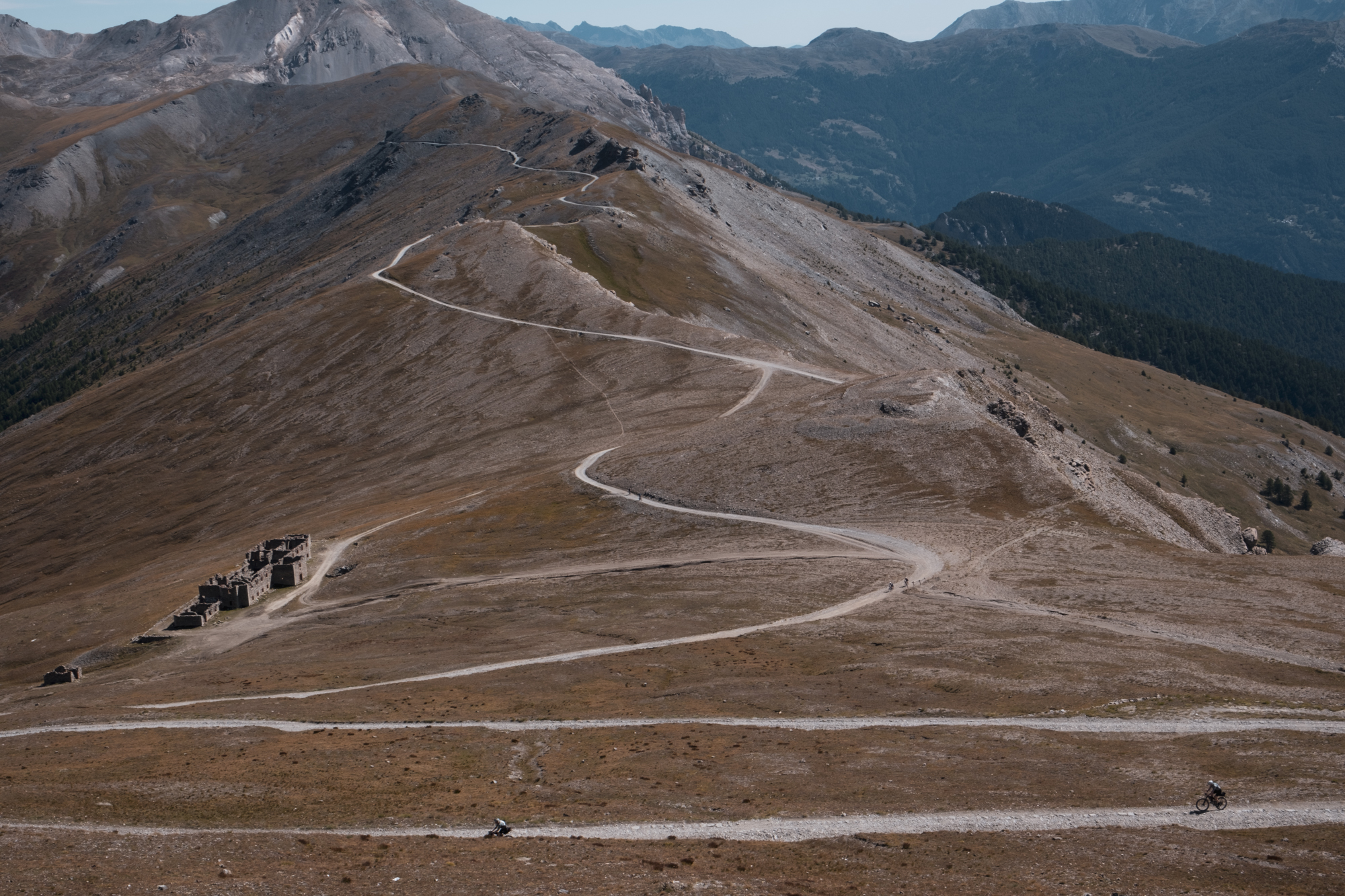
Strada dell’Assieta was definitely one of the highlights not only of Le Pilgrimage but our entire summer. It was like a ridge trail on steroids, with jaw-dropping views of the Susa and Chisone valleys. We had built a good time buffer versus sunset, so we could afford to stop several times, look around us, and realize how privileged we were to be there. It was a mindfulness session.
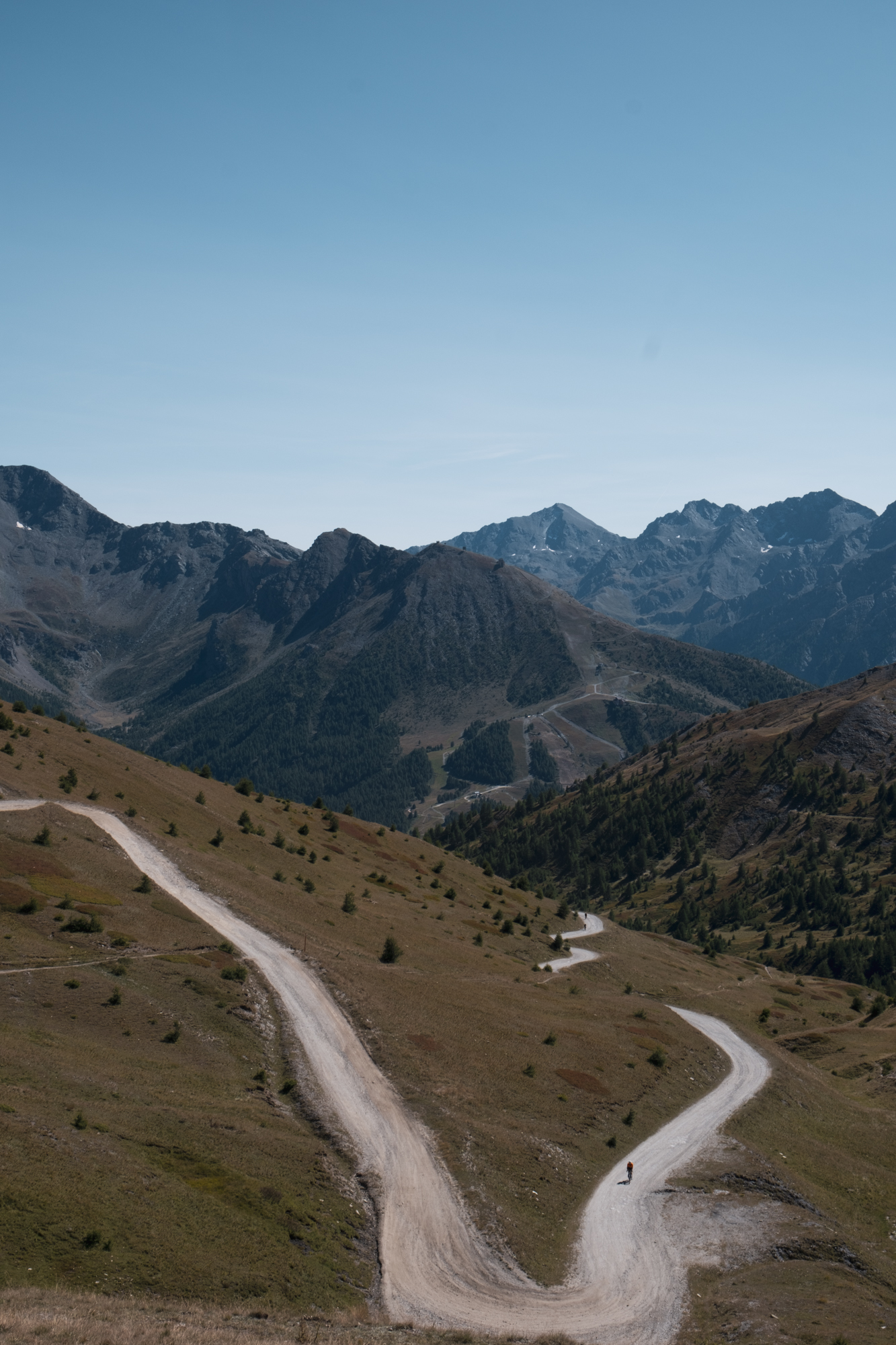
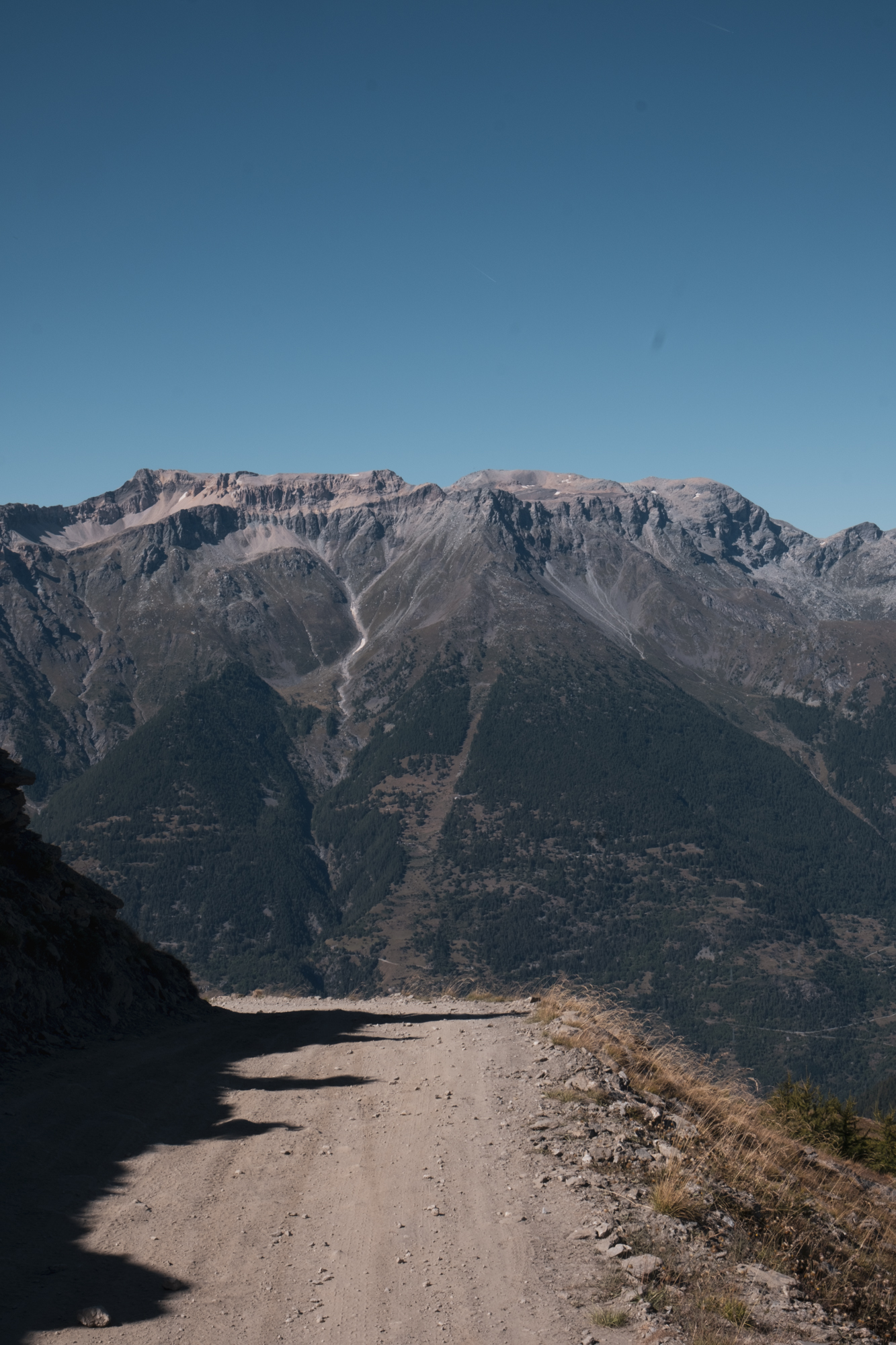
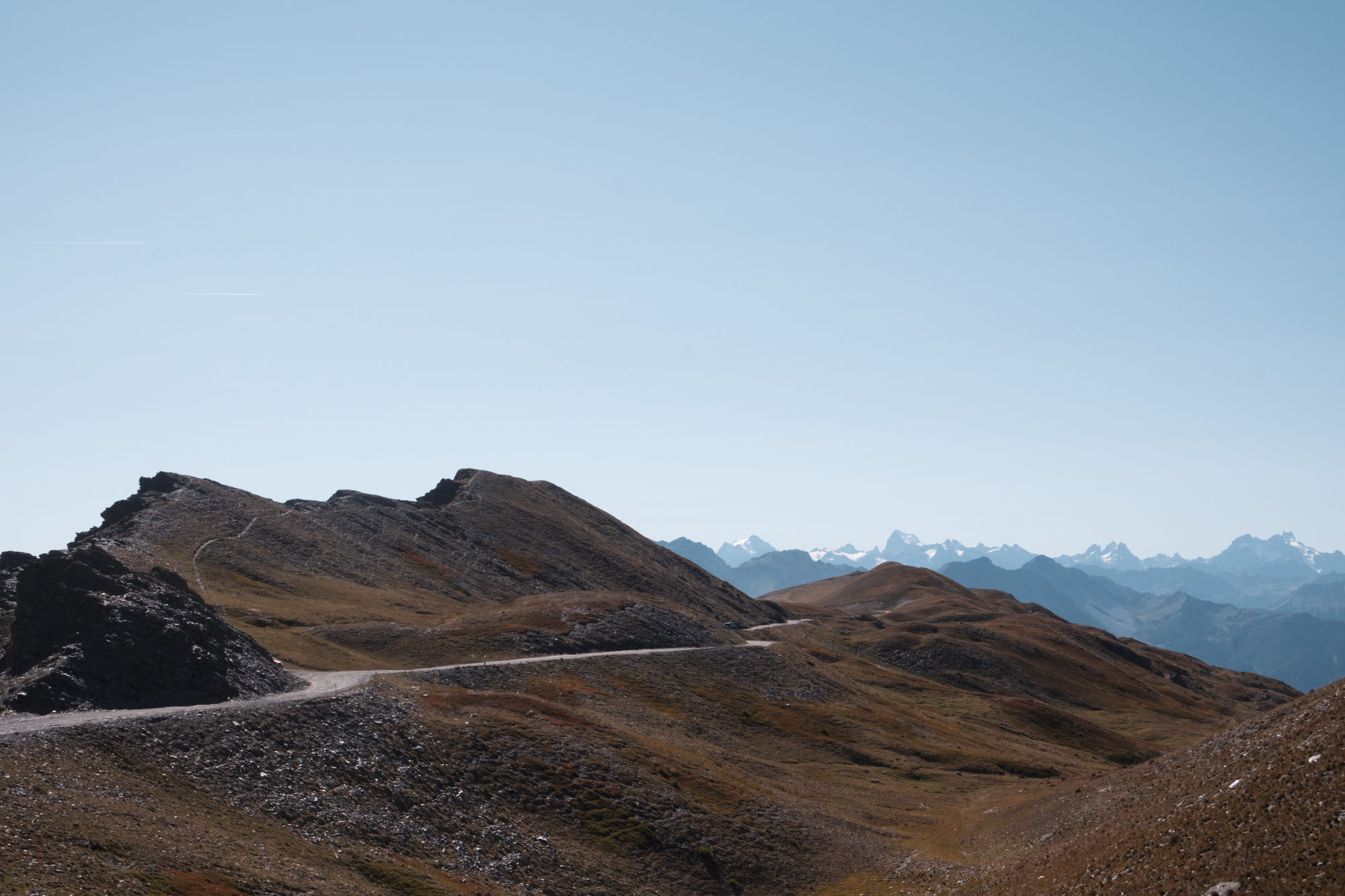
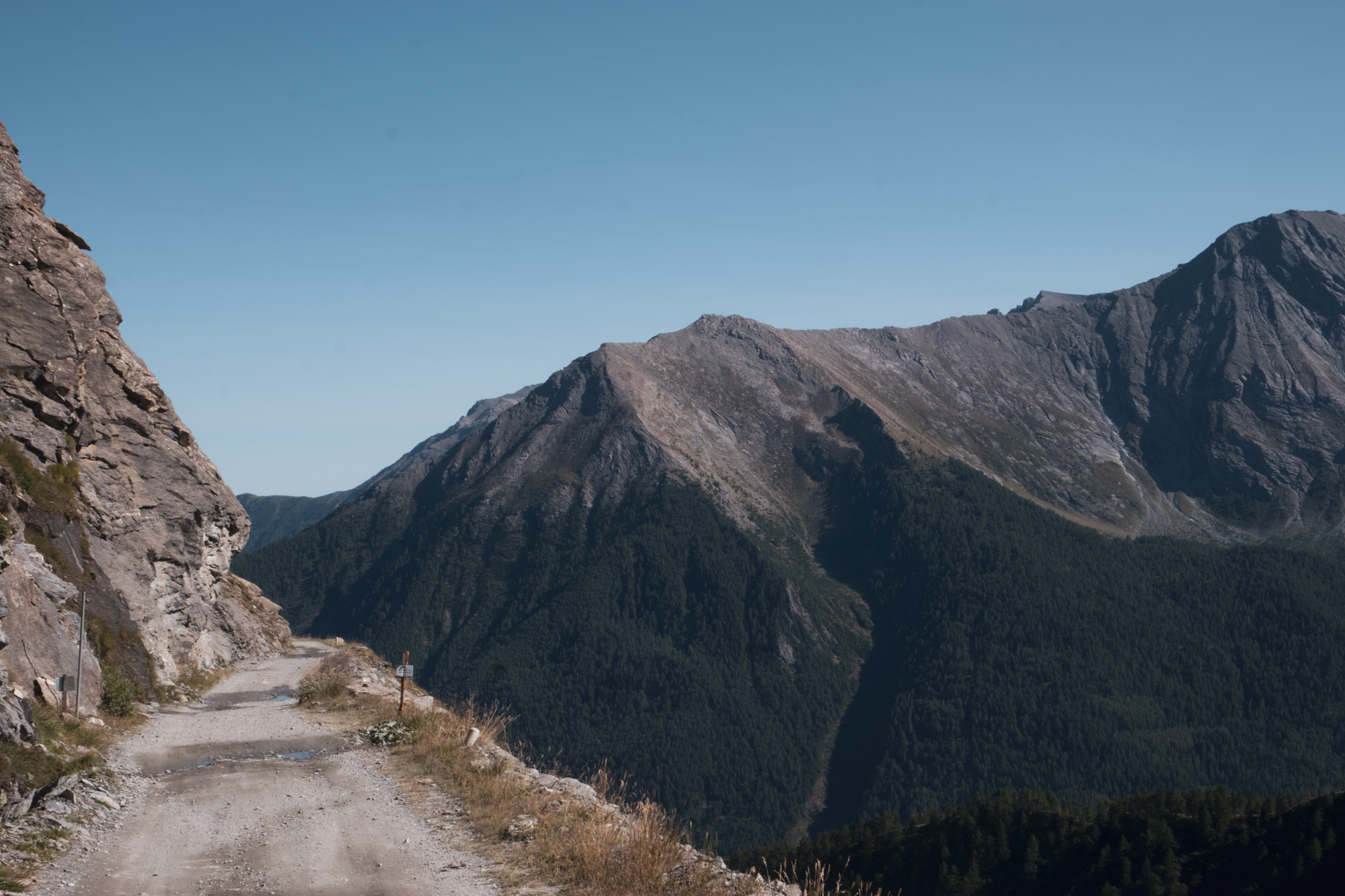
The endpoint of the old military road was near the top of the Colle delle Finestre, another magic place and one of the highlights of the fifth edition of Among the Giants. The descent was more uneven than what we remember, with washboards making things difficult even on a gravel bike. That was the last unpaved segment of the day, as the remainder of the descent to Susa and the 15 additional kilometers until our accommodation were on tarmac.
We woke up and the first thing we did was open Dotwatcher to check where each of our fellow participants had spent the night and whether any of them had already started the long climb to the third and last checkpoint of this edition, the Caserma Grotte del Seguret.
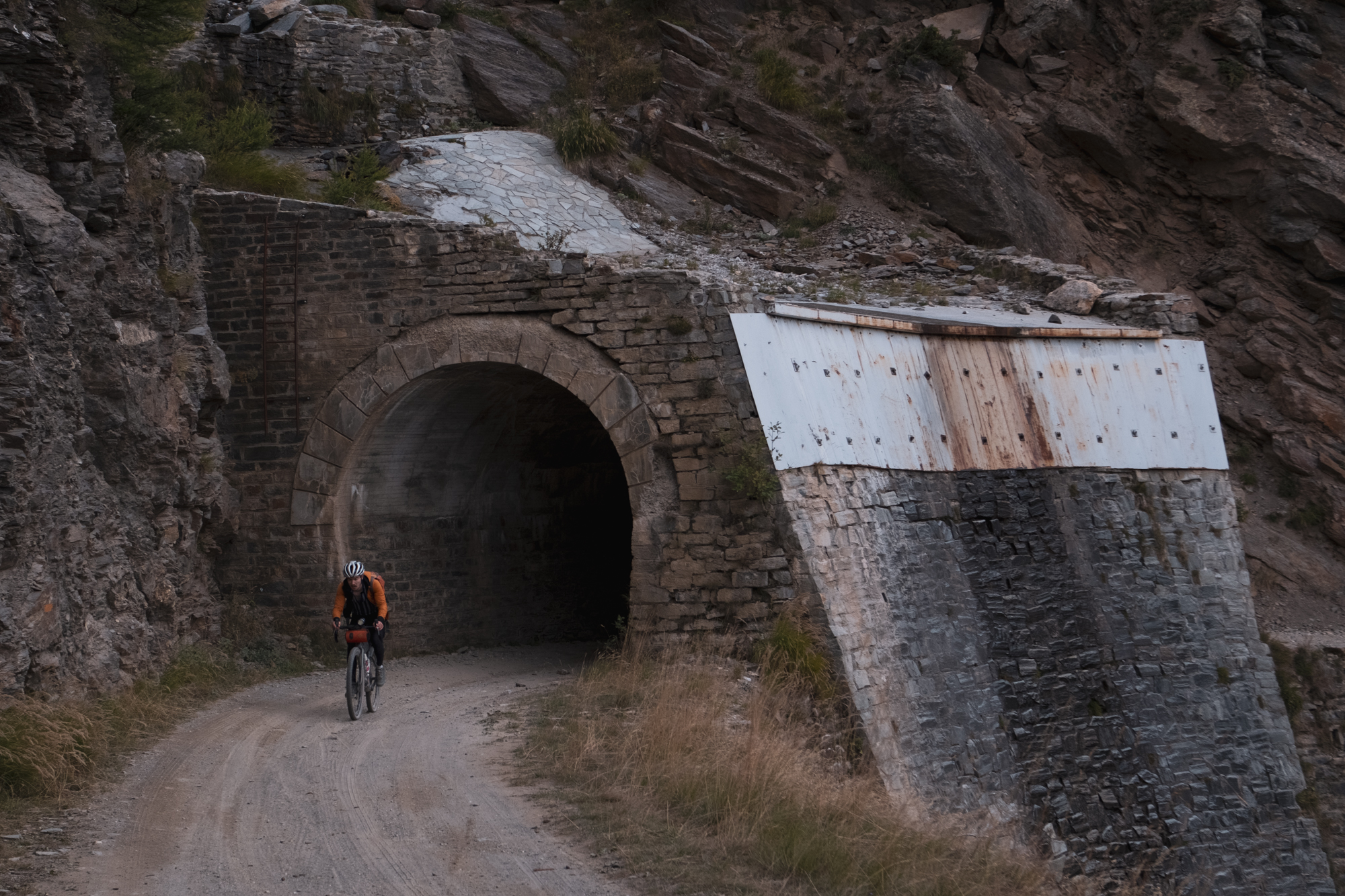
When we resumed our treasure quest, two fellow pilgrims were ahead of us. Both had kept riding until late at night and laid their bivvy on the side of the military road. We teamed up and did most of the climb together, crossing the pitch-black tunnel, stopping at the checkpoint to get the last stamp, and continuing to the location of the treasure, which was unveiled the previous night.
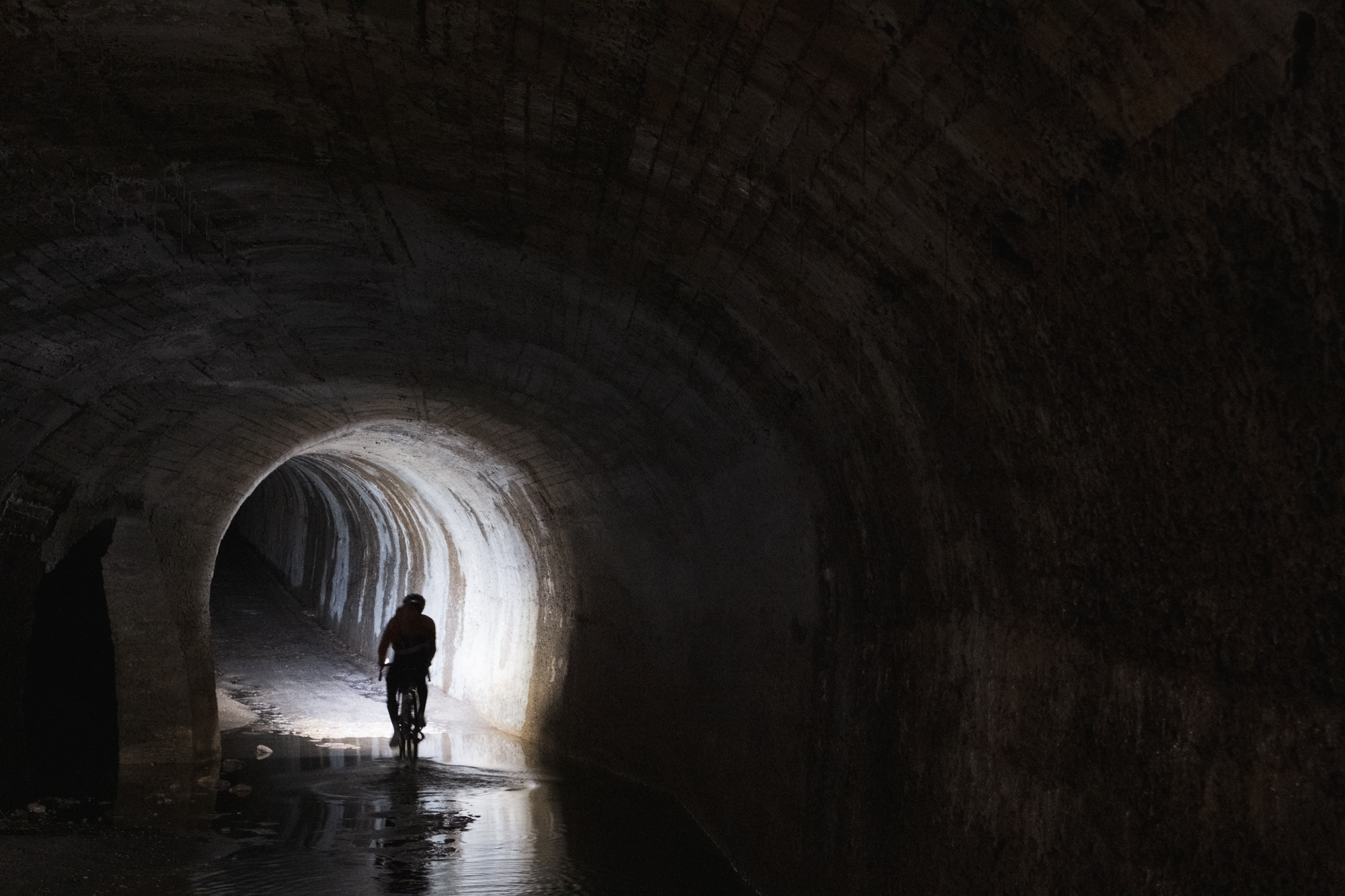
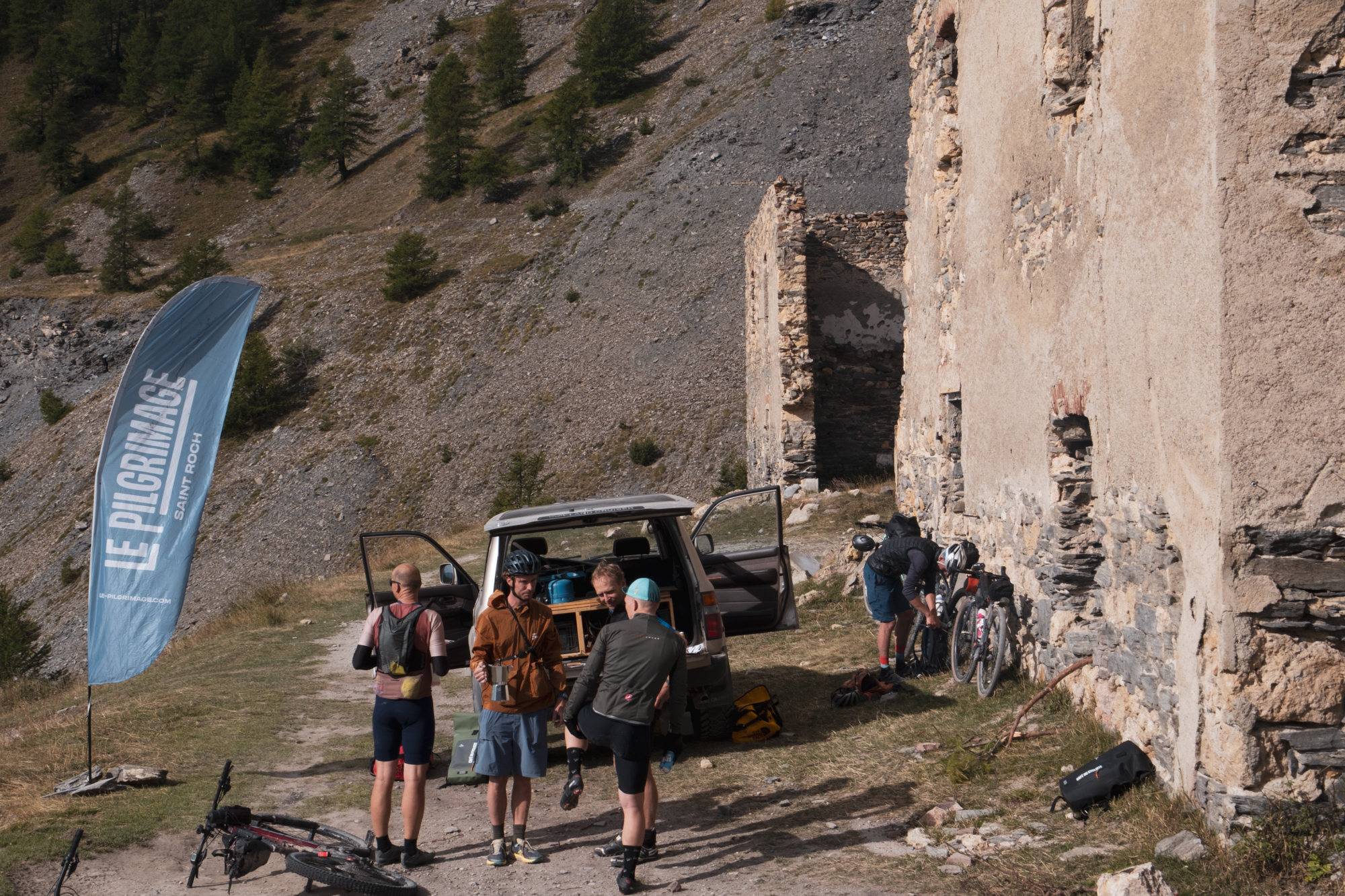
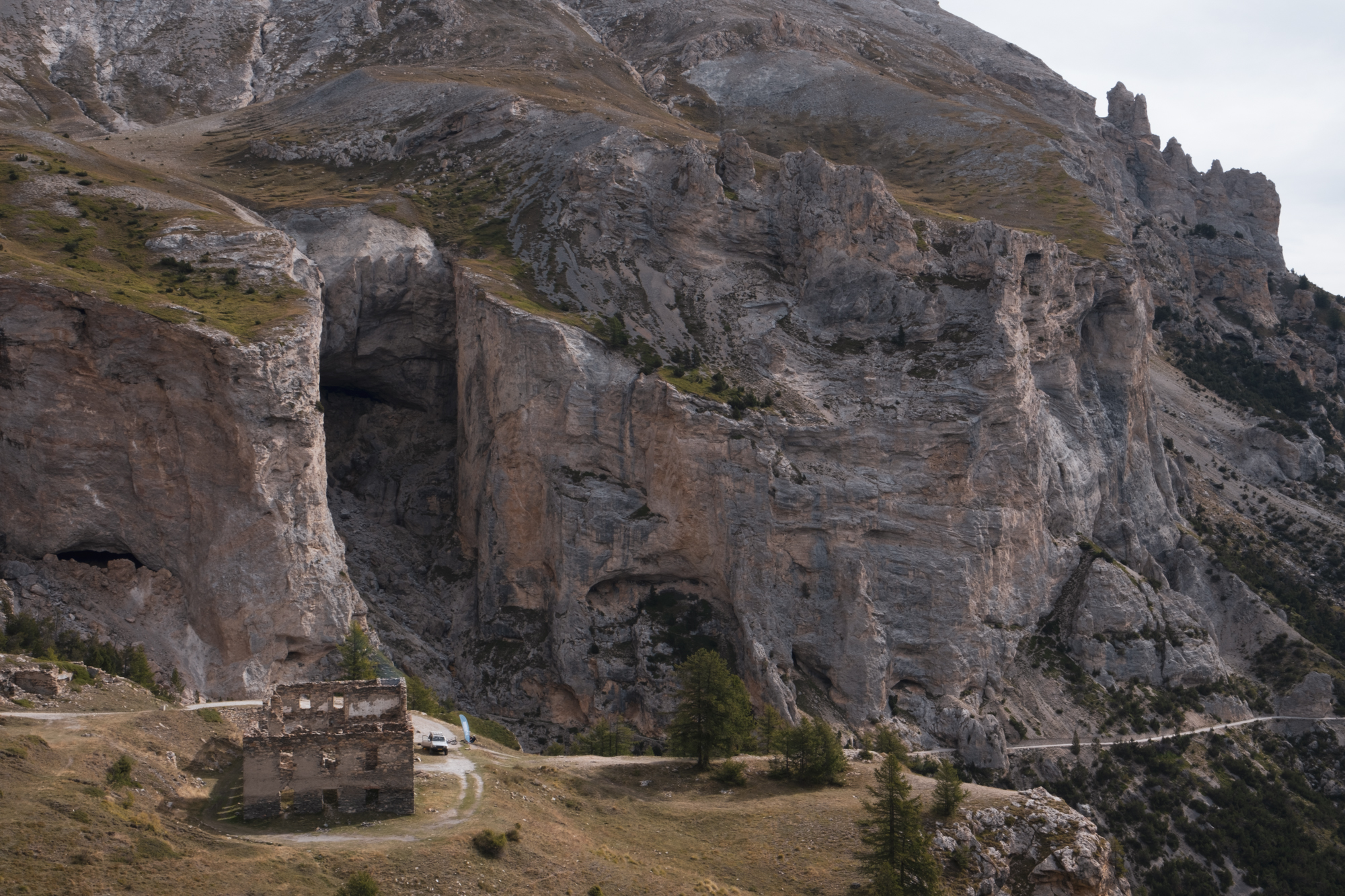
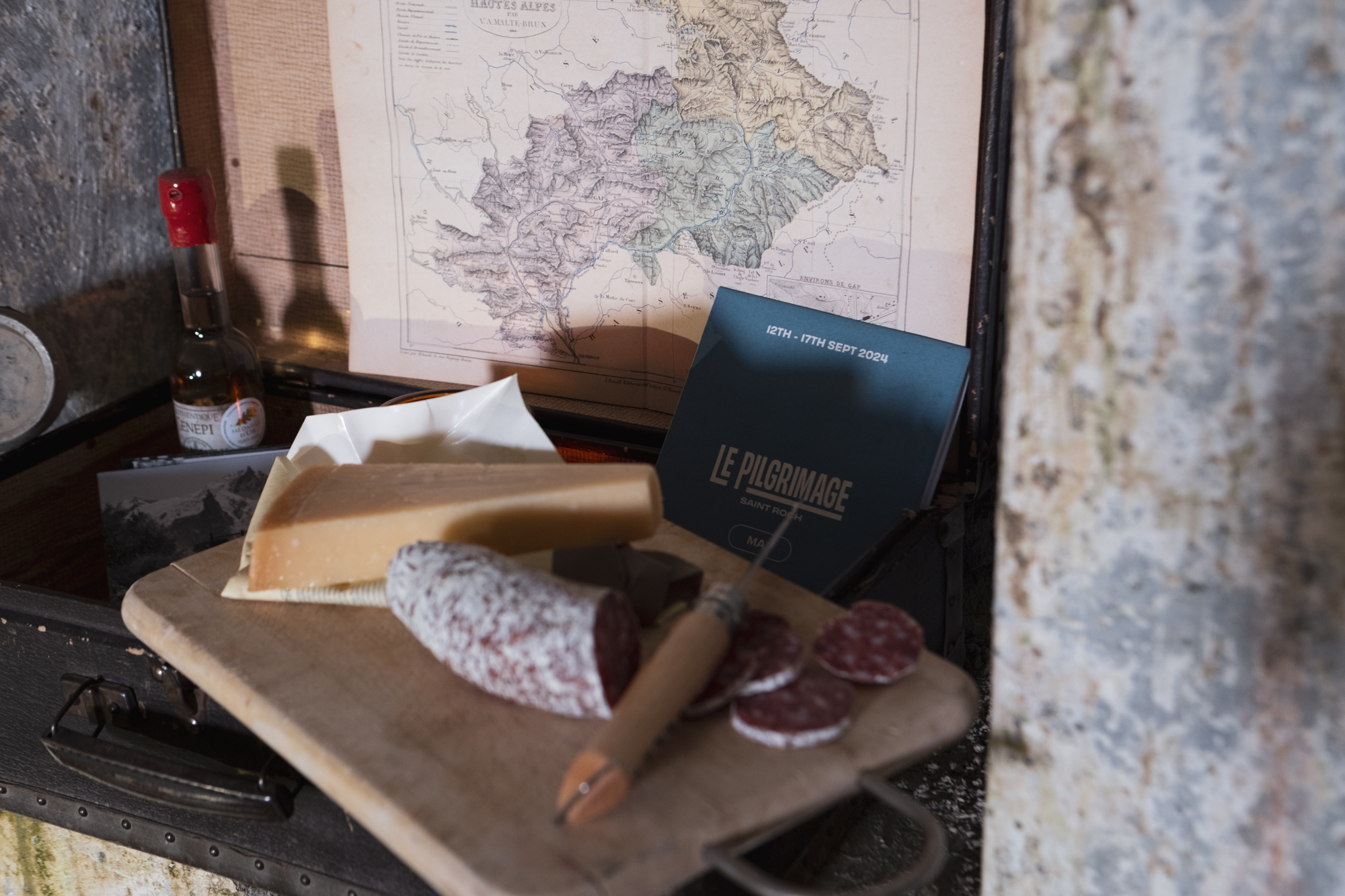
The extra bit involved climbing up to 2.800 meters of elevation and finding which of the galleries of the fortress on Mont Jafferau was the correct one. A dozen brave pilgrims took on the challenge and were rewarded not only with the treasure itself, consisting of local delicacies, but spectacular views too. Totally worth it.
The mission was accomplished, but there was still a long way until Puy Saint Vincent. Those arriving in the early afternoon prepared a table outside with apéro snacks and drinks. Italy treated us well when it came to food, but it was nice to savor Anne’s food again. Everyone arriving next joined the finisher’s party, which lasted until past dusk as there were a lot of things to talk with the pilgrims we had shared the journey with.
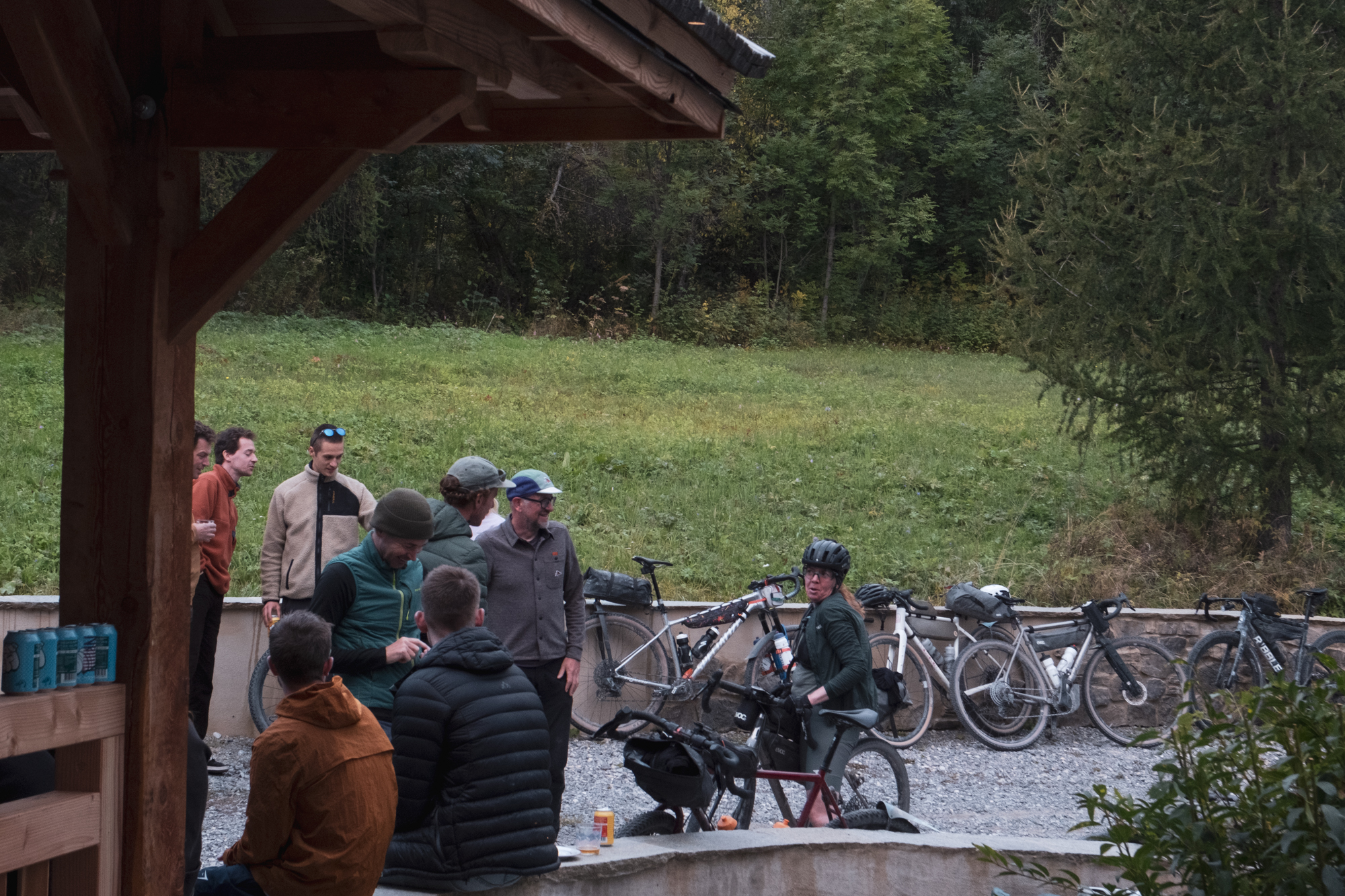
For those who sometimes wonder if it is worth it to pay for a ticket for an event instead of riding the route oneself any other day, we consider that Le Pilgrimage was a clear example of an event that goes beyond the riding part. Don’t get us wrong, the routes and landscapes, as explained above, were stunning and allowed us to discover places we may have not been to if it weren’t for this particular event. However, the support of everyone involved in the organization, the comfort of the basecamp, and the top-quality meals we were rewarded with at the start and end of each day, justify any price tag one may see – if quick enough – when the registrations for the 2025 edition open.

Javi es nuestro corresponsal en Bélgica, y trata de contrarrestar su obsesiva pasión por el análisis de datos con la relajante acción (o eso es lo que dice) de crear contenido para la revista. Javi is based in Belgium and tries to compensate for his obsessive passion for data analytics with the relaxing action (that's what he says) of creating content for the magazine. View all posts by Javi Angulo
 Javi Angulo
 Javi Angulo
 Javi Angulo
 Javi Angulo
 Javi Angulo
 Javi Angulo
 Javi Angulo
 Pavel Novotný
 Pavel Novotný
 Javi Angulo
 Javi Angulo
 Javi Angulo
Cuando las entradas de un evento se agotan en 24 horas, se demuestra el interés de los entusiastas del gravel por afrontar el reto. Cuando una gran parte de los que consiguen una inscripción son ciclistas que repiten, revela además el saber hacer de los organizadores, ya que los afortunados participantes vuelven a casa con ganas de vivir momentos similares año tras año.
Este es el caso de Le Pilgrimage, y la edición de 2024 ha sido inolvidable. Podemos considerarnos privilegiados por los momentos que compartimos con un grupo de peregrinos procedentes de toda Europa y más allá, con orígenes y niveles de forma física variados. Estábamos listos para embarcarnos en un viaje de gravel en los Alpes occidentales, que nos llevaría a lugares mágicos a través de terrenos desafiantes.
En la primera noche juntos en Chalet AlpeLune, ubicado en Puy Saint Vincent, los coorganizadores Simon Rosmolen y Cyril Chermin explicaron la misión, la visión y los valores de Le Pilgrimage. Han participado en muchos eventos de ciclismo a lo largo de los años y se dieron cuenta de que lo que más disfrutaban eran los momentos sociales. En base a eso, se propusieron organizar un evento centrado en la aventura, comfort y comunidad.
Todo eso se materializó en una primera edición exitosa, que junto con un atractivo material gráfico y fotos que mostraban lo que vivieron los participantes de 2023, animó a aún más personas a inscribirse, alcanzando la capacidad total del chalet. Como mencionó el coorganizador Cyril Chermin durante la cena de apertura, Le Pilgrimage fue “1 ruta, 40 historias diferentes”, y aunque estamos aquí para explicar la experiencia desde nuestro punto de vista, cada participante regresó a casa con una aventura reveladora en el bolsillo.
Los organizadores se ocuparon de todos los aspectos controlables, e incluso cosas como el clima estuvieron de nuestro lado. Después de una primera edición muy desafiante truncada por la lluvia y el frío, podemos contar con una mano las nubes que vimos en el cielo durante los días de ruta.
El evento tuvo lugar del 12 al 17 de septiembre. Era el final del verano y estábamos a 1.500 metros de altitud, alcanzando mayores altitudes en la bicicleta cada día, por lo que el clima era impredecible. Durante los días previos al inicio, una tormenta de frío azotó los Alpes, pero por suerte para nosotros, las consecuencias más severas se produjeron en el lado este. Aun así, nevó por encima de los 2.500 m cerca del chalet y las temperaturas para los próximos días serían muy bajas. En base a esa previsión, sacamos de la mochila toda la equipación de verano y metimos algunas capas gruesas en su lugar. Menos mal que lo hicimos.
Las etapas fueron autosuficientes, pero tan pronto como regresábamos al Chalet AlpeLune, nos trataban como reinas y reyes. Todos teníamos una plato de pasta recurperador esperándonos, y los que llegaban a un tiempo razonable pudieron disfrutar del jacuzzi y limpiar la bicicleta con todas las herramientas a nuestra disposición antes de la cena. Nos reuníamos todas las tardes a las 19:30 en el comedor para devorar lo que la chef Anne Pekelharing había preparado para nosotros, compartir las historias del día y prepararnos para lo que vendría al día siguiente.
Cada vez que pensamos en la etapa inicial, nos duele la parte baja de la espalda al recordar el esfuerzo para superar las imponentes rampas que tuvimos que afrontar. Viendo el perfil de la etapa, no parecía una ruta dura ya que no había ningún pico que sobresaliera del resto. Sin embargo, acumulamos 2.500 metros de desnivel en los primeros 50 kilómetros enlazando varias subidas de longitud moderada pero de gran desnivel, siempre dentro del Parque Nacional de Écrins. El denso bosque con árboles altos sólo nos permitía contemplar de vez en cuando las altas cumbres que nos rodeaban, pero también nos cubría del fuerte viento que azotaba la región.
Al final de la última de esas subidas se encontraba el punto de control de la etapa. Hicimos algo de porteo con la bici para llegar a Cabane St. Jean, un refugio de montaña para pastores y senderistas, pero fuimos recompensados con una fondue de queso y salchichas a la parrilla. Afrontamos el largo descenso con el estómago lleno y el primer sello en nuestra tarjeta brevet.
El último tercio del recorrido transcurrió principalmente por asfalto y esta vez no había forma de resguardarse del viento. Quienes iban en grupo pudieron minimizar su impacto, otra razón para afrontar esta prueba como una oportunidad de conocer gente mientras se pedaleaba en pelotón y no como un esfuerzo individual.
Si las temperaturas del primer día ya eran bajas, las previsiones para la etapa 2 no eran nada alentadoras. La carretera que lleva a la cima del Galibier había estado cerrada los dos días anteriores debido al hielo y, aunque la ruta que debíamos afrontar nos llevaría a la cima por el lado off-road, las altas probabilidades de encontrarnos con terrenos no transitables hicieron que los organizadores facilitaran diferentes alternativas para llegar al Refuge des Drayeres.
El cielo estaba despejado, así que abordamos el plan original con la esperanza de que el sol derritiera el hielo restante en los senderos. El acceso al Galibier desde Briançon se hace por la carretera principal, pero gracias a Le Pilgrimage descubrimos un camino alternativo, principalmente de gravel, paralelo a ella.
Tras tres horas de pedaleo, llegamos al inicio de la antigua carretera que lleva a la cima del Galibier. Ya habíamos acumulado más de 1.000 metros de desnivel, pero las pendientes aumentarían drásticamente en el último tramo. El terreno era muy accidentado y no se había derretido todo el hielo, por lo que tardamos una hora entera en cubrir los 7,5 kilómetros restantes. Las vistas del glaciar a nuestras espaldas lo compensaban.
Estábamos llenos de adrenalina en la cima de la famosa montaña. Todo era para nosotros, ya que ningún coche podía acceder a la carretera hasta la cima y en ese momento ningún otro ciclista desafiaba el clima adverso. Nuestro Hammerhead monstraba una temperatura ambiental de -4°C y apenas podíamos mantenernos en pie debido a las fuertes ráfagas de viento. El descenso hasta Plan Lachat fue corto pero extremadamente frío, por lo que la subida en gravel hasta el Alto Valle de la Clarée nos ayudó a entrar en calor de nuevo.
En algún momento, tuvimos que poner los pies en el suelo, ya que el gravel suave se convirtió en un tramo rocoso sin un camino claro. Algunos peregrinos vinieron bien preparados con botas de trekking para minimizar el riesgo de resbalones, pero aún así, la caminata con la bicicleta a cuestas fue larga y lenta. Finalmente llegamos al Refugio des Drayeres, donde algunos de los participantes que optaron por saltarse el Galibier ya estaban disfrutando del agradable catering preparado para nosotros.
La velocidad media aumentó considerablemente en el descenso a Briançon por el Valle de la Clarée, con algunos bonitos senderos que nos mantuvieron entretenidos. Fue durante la última subida antes de llegar al campamento base cuando nos dimos cuenta de la magnitud del desafío que habíamos logrado, pero lo que se avecinaba en los próximos dos días sería aún más alucinante.
Al igual que el año pasado, la última etapa fue una ruta de dos días de duración, en la que cada peregrino decidió dónde dormir antes de afrontar el tramo restante. Esta vez nos adentraríamos en Italia, con la Strada dell’Assietta y el Monte Jafferau – aunque esta última ubicación todavía era un secreto antes de comenzar la etapa – como puntos destacados. El aspecto de las bicicletas en la línea de salida reveló quién planeaba acampar y quién se hospedaría en un B&B, y según lo que escuchamos, la mayoría dormiría en Susa. Nosotros reservamos una noche un poco más arriba en la carretera para comenzar con algo de ventaja en la búsqueda del tesoro. Incluso en un evento social como Le Pilgrimage, nuestro lado competitivo sale a la luz de una manera u otra.
Captamos los primeros rayos de sol en nuestro camino hacia la frontera. Un tranquilo camino de gravel nos llevó a Claviere, donde pedimos un capuchino porque eso es lo primero que todos deben hacer al cruzar a Italia. Se produjo un reagrupamiento y Cyril se adelantó diciendo “no quiero perderme esta parte”, por lo que esperábamos algo interesante a continuación.
Unos minutos más tarde, nuestro Hammerhead nos advirtió de los desniveles que tendríamos que superar y las cosas se complicaron aún más cuando el camino recientemente asfaltado se convirtió en una mezcla de adoquines de Paris-Roubaix y campos de patatas. Como dice el dicho, “cuanto más dura la subida, mejor la vista”, y nos quitamos las capas de ropa que ya no necesitábamos mientras contemplábamos el paisaje con el que fuimos recompensados. Las temperaturas finalmente superaron los 15 °C y la crema solar que todos dejaron de lado durante las dos primeras etapas se convirtió de repente en un objeto preciado.
Antes de llegar a Strada dell’Assieta, un descenso técnico y rocoso fue seguido por una larga subida, asfaltada hasta Sestriere y luego off-road hasta la cota de 2.400 metros. Las múltiples porciones de pizza que ingerimos en la estación de esquí nos dieron la energía necesaria para llegar a la cima, y también nos aseguramos de llevar suficiente comida y agua extra, ya que durante los siguientes 40 kilómetros estaríamos pedaleando por una meseta a más de 2.000 metros, aislados de la civilización.
La Strada dell’Assieta fue sin duda uno de los puntos destacados no solo de Le Pilgrimage, sino de todo nuestro verano. Era como el típico sendero a través de la cresta de una montaña, pero muchos más ancho y largo, con vistas asombrosas de los valles de Susa y Chisone. Habíamos creado un buen margen de tiempo respecto al atardecer, por lo que pudimos permitirnos el lujo detenernos varias veces, mirar a nuestro alrededor y darnos cuenta de lo privilegiados que éramos de estar allí. Fue una verdadera sesión de mindfulness.
El punto final de la antigua carretera militar estaba cerca de la cima del Colle delle Finestre, otr o lugar mágico y uno de los puntos destacados de la quinta edición de Among the Giants. El descenso fue más irregular de lo que recordamos, con baches que dificultaban las cosas incluso en una bicicleta de gravel. Ese fue el último tramo accidentado del día, ya que el resto del descenso hasta Susa y los 15 kilómetros adicionales hasta nuestro alojamiento fueron sobre asfalto.
Nos despertamos y lo primero que hicimos fue abrir Dotwatcher para comprobar dónde había pasado la noche cada uno de nuestros compañeros y si alguno de ellos había iniciado ya la larga subida hasta el tercer y último punto de control de esta edición, la Caserma Grotte del Seguret.
Cuando retomamos la búsqueda del tesoro, dos compañeros peregrinos estaban por delante. Ambos habían seguido pedaleando hasta bien entrada la noche y habían plantado su vivac al lado de la antigua carretera militar. Formamos equipo e hicimos la mayor parte de la subida juntos, cruzando el túnel totalmente oscuro, parando en el punto de control para poner el último sello y continuando hasta la ubicación del tesoro, que fue revelada la noche anterior.
El tramo extra consistió en subir hasta los 2.800 metros de desnivel y encontrar cuál de las galerías de la fortaleza del Mont Jafferau era la correcta. Una docena de valientes peregrinos aceptaron el reto y fueron recompensados no solo con el tesoro en sí, compuesto por delicias locales, sino también con unas vistas espectaculares. Mereció totalmente la pena.
Misión cumplida, pero aún quedaba un largo camino hasta Puy Saint Vincent. Los que llegaron a primera hora de la tarde prepararon una mesa en el exterior con aperitivos y bebidas. Italia nos trató bien en cuanto a comida, pero fue agradable volver a saborear los platos de Anne. Todos los que llegaron a continuación se unieron a la fiesta de los finalistas, que duró hasta pasado el anochecer, ya que había mucho de qué hablar con los participantes con los que habíamos compartido el trayecto.
Para aquellos que a veces se preguntan si vale la pena pagar una entrada para un evento en lugar de recorrer la ruta uno mismo cualquier otro día, consideramos que Le Pilgrimage fue un claro ejemplo de un evento que va más allá de la parte ciclista. No nos malinterpretéis; las rutas y los paisajes, como ya os hemos explicado, fueron impresionantes y nos permitieron descubrir lugares en los que quizá no hubiésemos estado de no ser por este evento en concreto. Sin embargo, el apoyo de todos los implicados en la organización, la comodidad formada con el resto de participantes y las comidas de primera calidad con las que fuimos recompensados al principio y al final de cada día, justifican cualquier precio que uno pueda ver – si es lo suficientemente rápido – cuando se abran las inscripciones para la edición de 2025.
Javi es nuestro corresponsal en Bélgica, y trata de contrarrestar su obsesiva pasión por el análisis de datos con la relajante acción (o eso es lo que dice) de crear contenido para la revista. Javi is based in Belgium and tries to compensate for his obsessive passion for data analytics with the relaxing action (that's what he says) of creating content for the magazine. View all posts by Javi Angulo
Receive our monthly selection of the best articles, news, exclusive content and giveaways only for subscribers, subscribe to OUR NEWSLETTER
Receive our monthly selection of the best articles, news, exclusive content and giveaways only for subscribers, subscribe to OUR NEWSLETTER
Receive our monthly selection of the best articles, news, exclusive content and giveaways only for subscribers, subscribe to OUR NEWSLETTER
Receive our monthly selection of the best articles, news, exclusive content and giveaways only for subscribers, subscribe to OUR NEWSLETTER