- News
- Reviews
- Travel & Adventure
- Interviews
- Inside Industry Players
- Community
Bikes
Reviews
Components
Reviews
Cycling
Apparel


[raw_mobile_menu]
[wpml_language_switcher_down]


In November 2022 it was announced that Oud-Heverlee, a small municipality in Flemish Brabant, would host the following year the first-ever Gravel Belgian Championships. A few months later, in March 2023, the news was that the same event would also have the European Championships of the discipline at stake.
The awaited day for Belgians and riders from the rest of the continent finally arrived and on October 1st, around 1.600 starters of different categories and age groups took over the gravel paths and forests around Leuven.
The course consisted of a local loop of 28,4 km that led riders through covered gravel highways with no technical difficulty, and a big loop of 47,3 through more exposed areas, with tougher sections and a smaller share of unpaved roads.


Not all participants had to do the same amount of kilometers, as the number of laps varied depending on the category and age group. On the one hand, the elite women did two local loops before heading to the bigger loop and wrapping things up with an additional local loop, which added up to 132,5km. On the other hand, the men elite did a last lap on top of it and they ended up covering 160,9 km.
Unlike for the upcoming gravel World Championships, riders were allowed to race in their team kits rather than the national colors. Nonetheless, we saw the elite Italian riders, including the De Marchi brothers, wearing the azzurra. Mattia and Alessandro were racing together for the first time since their years as under 23!


The race started at 12:00, a time more similar to a road race than the typical long-distance gravel event. That may be the reason why so many WorldTeam riders and former pros populated the first rows at the startline. The elite men were the first to start, followed by the elite women, and then the age groupers.
With a course consisting of several loops, there was a big risk of the fastest riders lapping the rest of the field and causing some havoc. It was avoided until the last part, as for the third lap the elite riders headed to a bigger, distant loop while most of the age groupers finished their race in the local loop. However, the pace at the front of the race was so high that they even lapped many of the men 19-54 age groupers.


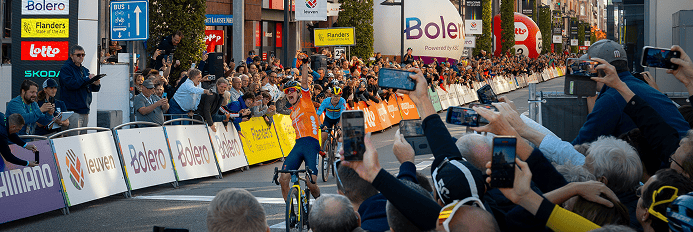
The story of the day was clearly the local hero Jasper Stuyven getting both the European and Belgian Championships. It was his first gravel race, and even if the off-road skills of the rider from Lidl-Trek may not be at the same level as the competitors in the lead, his knowledge of the area and his legs compensated for it.
Stuyven was quite active the whole day, trying to split the lead group and following moves too. He suffered a puncture but luckily it was not far from the tech zone and he was able to get a wheel from Thibau Nys, who had to abandon earlier in the race.


Alex Colman started the last lap in the lead, but on the first hill he was overtaken by Stuyven, who had attacked from the group just after crossing the line. The rider from Leuven would end up creating a gap of over a minute on the finish line. Tim Merlier, who is used to winning bunch sprints in road races, was the fastest of the chasing group and Paul Voss, nowadays one of the best gravel specialists, managed to outsprint several current pros to get the bronze medal.

That last solo lap in the lead, taking into account that he was racing in his backyard, was a unique moment for Stuyven. “It was very special to receive the cheers from the spectators and even the lapped riders”, he said to us in the press area.
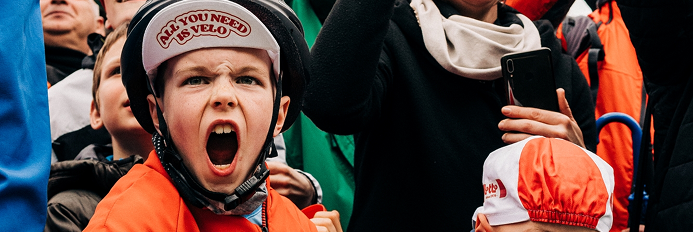
We even got goosebumps during the podium ceremony. The ovation as soon as the local rider stepped on the podium, the enthusiasm of the little kids, the emotions of Jasper’s partner… Who would have said that gravel would be capable of this?


After the ceremony, he was asked several questions about his presence in gravel events from now on, even if he is still fully focused on road racing. “I have no idea, to be honest. I didn’t expect to win so it is difficult to answer all those questions”. What is clear is that with the European Champion on the team and the signing of Carlos Verona, who has been taking part in the Gravel Earth Series and other gravel events, Lidl-Trek should consider investing some resources in a gravel team within their structure.

Even if the men’s race in general, and Jasper Stuyven in particular, were the focus of attention for most, the performance of the women is also worth highlighting. Tiffany Cromwell made the decisive move in the last off-road sections and was enough to start celebrating as soon as she entered the finish straight without worrying about the riders coming from behind. Lorena WIebes outsprinted Fem Van Empel and she also celebrated it, as she would be crowned as European Champion. Tiffany won the race but, given that she is Australian – they didn’t even play the national anthem during the podium ceremony as they were not prepared for it -, it was the Dutch rider who would be awarded the distinctive jersey.


In a matter of two years, gravel has seen the emergence of the World Series, a World Championship, and now a European Championship, a clear sign of how structured the discipline already is.
The physical level required to be at the front of one of these races is now also absurdly high, as pointed out by many of the finishers last weekend. The fun side of gravel gives room to the competitive approach of road racing when it comes to racing for a distinctive jersey, so we will see something along the same lines this weekend during the World Championships in Veneto, Italy.

Javi es nuestro corresponsal en Bélgica, y trata de contrarrestar su obsesiva pasión por el análisis de datos con la relajante acción (o eso es lo que dice) de crear contenido para la revista. Javi is based in Belgium and tries to compensate for his obsessive passion for data analytics with the relaxing action (that's what he says) of creating content for the magazine. View all posts by Javi Angulo
 Toni de la Torre
 Javi Angulo
 Toni de la Torre
 Javi Angulo

 Juliana Reis
 Javi Angulo

 Carlos Serra
 Javi Angulo
 Javi Angulo
 Carlos Serra

 Pol Sopeña
 Toni de la Torre
En noviembre de 2022 se anunció que Oud-Heverlee, un pequeño municipio en el Brabante Flamenco, albergaría al año siguiente el primer Campeonato de Bélgica de Gravel. Unos meses más tarde, en marzo de 2023, la noticia era que en el mismo evento también estaría en juego el Campeonato de Europa de la disciplina.
Finalmente llegó el día esperado por belgas y corredores del resto del continente, y el 1 de octubre alrededor de 1.600 participantes de diferentes categorías y grupos de edad se apoderaron de los caminos de gravel y los bosques alrededor de Lovaina.
El recorrido constaba de un bucle local de 28,4 km que llevaba a los corredores por bajo los altos árboles sin demasiada dificultad técnica, y un gran bucle de 47,3 km por zonas más expuestas, con tramos más duros y una menor proporción de caminos sin asfaltar.
No todos los participantes tuvieron que hacer el mismo número de vuelta, ya que too variaba según la categoría y el grupo de edad. Por un lado, las mujeres élite hicieron dos bucles locales antes de pasar al bucle más grande y cerrar con otra vuelta local, que sumó 132,5 km. Por su parte, los élite masculinos dieran una última vuelta adicional y acabaron recorriendo 160,9 km.
A diferencia del próximo Campeonato Mundial de Gravel, a los ciclistas se les permitió competir con la equipación de su equipo en lugar de con los colores nacionales. No obstante, vimos a los ciclistas italianos de élite, incluidos los hermanos De Marchi, vistiendo la azzurra. ¡Mattia y Alessandro corrían juntos por primera vez desde que competían en sub23!
La carrera comenzó a las 12:00 horas, un horario más parecido a una carrera en ruta que a la típica prueba de gravel de larga distancia. Esa puede ser la razón por la que tantos corredores de equipos del WorldTeam y ex profesionales ocuparan las primeras filas en la línea de salida. Los hombres élite fueron los primeros en comenzar, seguidos por las mujeres de élite y luego los grupos de edad.
Con un recorrido que constaba de varios bucles, existía un gran riesgo de que los corredores más rápidos superaran a gran parte del resto y causaran algunos estragos. Se evitó hasta la última parte, ya que en la tercera vuelta los corredores de élite se dirigieron a un circuito más grande y distante, mientras que la mayoría de los máster terminaron su carrera en el circuito local. Sin embargo, el ritmo al frente de la carrera era tan alto que incluso superaron a muchos de los hombres del grupo de edad de 19 a 54 años.
La historia del día fue claramente el héroe local Jasper Stuyven, que consiguió la sobre victoria en los campeonatos de Europa y Bélgica. Era su primera carrera de gravel y, aunque las habilidades fuera de carretera del corredor de Lidl-Trek no estén al mismo nivel que las de sus competidores en cabeza, su conocimiento de la zona y sus piernas lo compensaron.
Stuyven estuvo bastante activo todo el día, intentando partir el grupo de cabeza y siguiendo varios ataques también. Sufrió un pinchazo, pero afortunadamente no estaba lejos de la zona técnica y pudo recuperar una rueda de Thibau Nys, que tuvo que abandonar en la segunda vuelta.
Alex Colman comenzó la última vuelta como líder, pero en la primera colina fue adelantado por Stuyven, que había atacado desde el grupo justo después de cruzar la meta. El corredor de Lovaina acabaría creando una diferencia de más de un minuto en la línea de llegada. Tim Merlier, acostumbrado a ganar sprints masivos en las carreras en ruta, fue el más rápido del grupo perseguidor y Paul Voss, hoy en día uno de los mejores especialistas en gravel, logró superar a otros profesionales actuales para conseguir la medalla de bronce.
Esa última vuelta solo en cabeza, teniendo en cuenta que corría, como quien dice, en el patio de su casa, fue un momento único para él. “Fue muy especial recibir los ánimos de los espectadores e incluso de los corredores rezagados”, nos dijo en el área de prensa.
Incluso se nos puso la piel de gallina durante la ceremonia del podio. La ovación nada más subir al podio el corredor local, el entusiasmo de los más pequeños, las emociones de su mujer… ¿Quién hubiera dicho que el gravel sería capaz de todo esto?
Después de la ceremonia, le hicieron varias preguntas sobre su presencia en las pruebas de gravel a partir de ahora, a pesar de que sigue totalmente centrado en las carreras de ruta. “No tengo ni idea, si te soy honesto. No esperaba ganar así que es difícil responder a todas esas preguntas”. Lo que está claro es que con el Campeón de Europa en el equipo y el fichaje de Carlos Verona, que viene participando en las Gravel Earth Series y otros eventos gravel, Lidl-Trek debería plantearse invertir algunos recursos en un equipo gravel dentro de su estructura.
Aunque la carrera masculina en general, y Jasper Stuyven en particular, fueron el centro de atención para la mayoría, también vale la pena destacar el desempeño de las mujeres. Tiffany Cromwell hizo el ataque decisivo en el últimos tramo de gravel y le bastó para empezar a celebrar nada más entrar en la recta de meta sin preocuparse por las ciclistas que venían detrás. Lorena Wiebes superó a Fem Van Empel y también lo celebró, ya que se coronaría campeona de Europa. Tiffany ganó la carrera pero, al ser australiana -ni siquiera tocaron el himno nacional durante la ceremonia del podio porque no estaban preparados para ello-, sería la corredora holandesa la que se llevaría el maillot.
En cuestión de dos años, el gravel ha visto surgir las World Series, un Campeonato del Mundo y ahora un Campeonato de Europa, una clara señal de lo estructurada que está ya la disciplina.
El nivel físico necesario para estar al frente de una de estas carreras también es ahora absurdamente alto, como señalaron muchos de los finalistas el fin de semana pasado. El lado divertido del gravel da paso al enfoque competitivo de las carreras en carretera cuando se trata de competir por un maillot distintivo, por lo que veremos algo similar este fin de semana durante el Campeonato Mundial en Veneto, Italia.
Javi es nuestro corresponsal en Bélgica, y trata de contrarrestar su obsesiva pasión por el análisis de datos con la relajante acción (o eso es lo que dice) de crear contenido para la revista. Javi is based in Belgium and tries to compensate for his obsessive passion for data analytics with the relaxing action (that's what he says) of creating content for the magazine. View all posts by Javi Angulo
Receive our monthly selection of the best articles, news, exclusive content and giveaways only for subscribers, subscribe to OUR NEWSLETTER
Receive our monthly selection of the best articles, news, exclusive content and giveaways only for subscribers, subscribe to OUR NEWSLETTER
Receive our monthly selection of the best articles, news, exclusive content and giveaways only for subscribers, subscribe to OUR NEWSLETTER
Receive our monthly selection of the best articles, news, exclusive content and giveaways only for subscribers, subscribe to OUR NEWSLETTER