- News
- Reviews
- Travel & Adventure
- Interviews
- Inside Industry Players
- Community
Bikes
Reviews
Components
Reviews
Cycling
Apparel


[raw_mobile_menu]
[wpml_language_switcher_down]


¿Listo para un nuevo reto en formato de carrera de ultraciclismo para 2021? Pues ya puedes apuntarte en la agenda el Gran Guanche, una carrera de ultradistancia en las Islas Canarias (España). En el evento, con nombre de los aborígenes de Tenerife, se podrá participar de forma individual y autosuficiente en una de las tres modalidades ofrecidas: trail, gravel y carretera. El recorrido cruza todo el archipiélago, de isla en isla, lo que le dará un punto de motivación a los participantes para llegar a tiempo a coger el ferry. Así pues, una buena excusa para visitar una región llena de cultura, historia y paisajes cambiantes increíbles desde playas y acantilados hasta volcanes, desiertos y bosques.


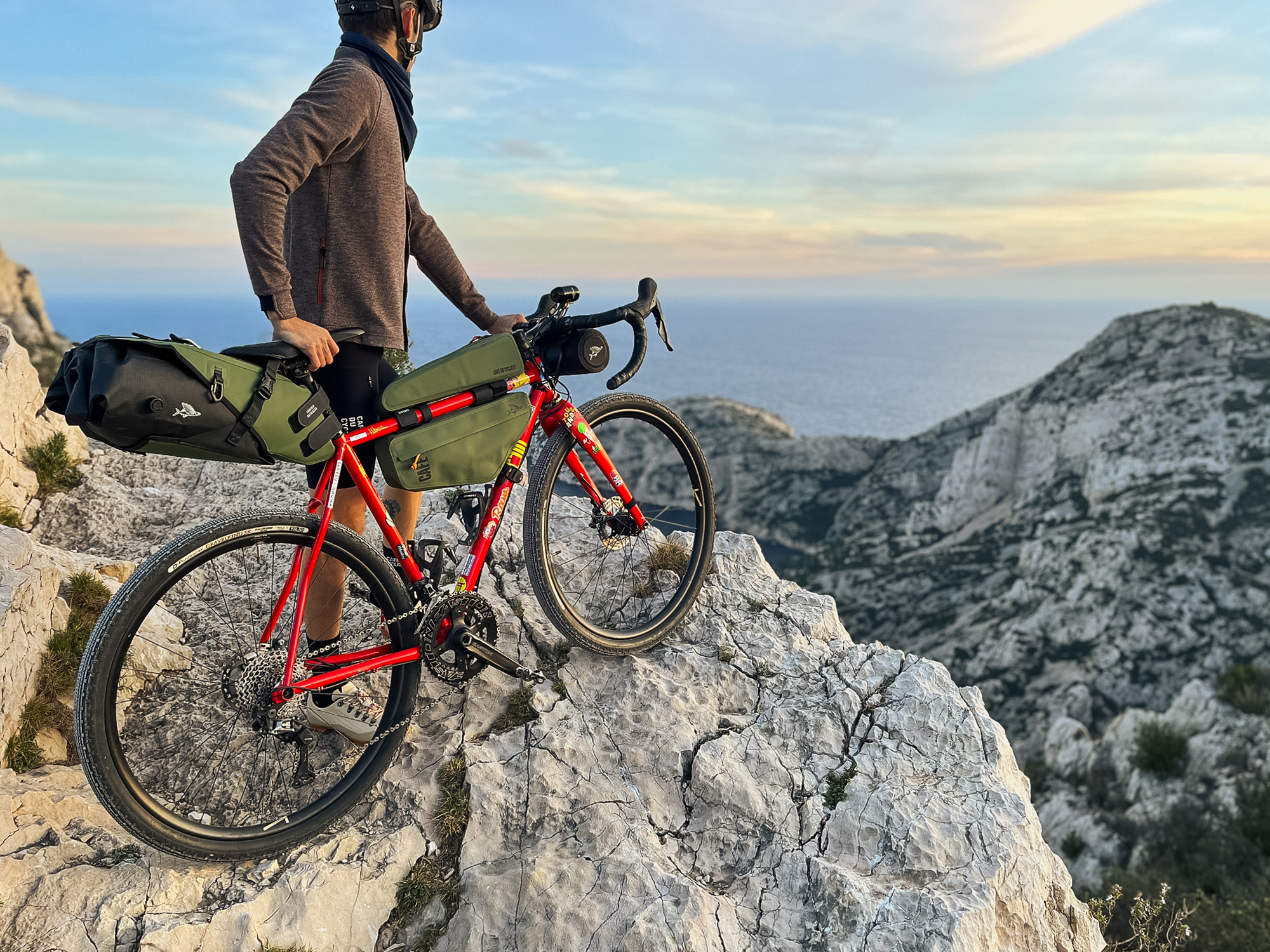
El pasado noviembre se organizó la primera salida en grupo Gran Guanche. La ruta recorrió de este a oeste el que será el mismo trazado que la carrera pero en un contexto amistoso de bikepacking familiar. De los 50 participantes inscritos, sólo 5 consiguieron llegar al archipiélago debido a cancelaciones de vuelos por las restricciones de la pandemia. Así, cada participante afrontó la aventura a su ritmo, ya que la idea era conocer la ruta y salir del turismo convencional de sol y playa para explorar todos los rincones escondidos. Estos pudieron disfrutar del clima, los paisajes, la comida, los secretos locales, y todo lo que rodea los volcanes, mientras transitaban el track marcado por la organización.


Esa salida social en grupo solo fue el presagio de lo que será la carrera de ultradistancia con mismo recorrido que tendrá lugar el 10 de abril de 2021. El evento se plantea como tres carreras que tendrán lugar los mismos días con recorridos ligeramente distintos, en función de la modalidad de ciclismo que se prefiera: trail (bici con ancho de rueda mínimo de 2.2”), gravel (mín. 40 mm) o carretera (mín. 25 mm).


Cada uno de los recorridos está planeado en función de la bicicleta a usar. De esta forma, encontraremos senderos, pistas y zonas de andar en la modalidad trail, mientras que será todo asfalto en el caso de carretera. La ruta más corta es la de carretera, con 600 km y 14.000 m de desnivel. La distancia en la categoría gravel son 700 km con 16.000 m de desnivel acumulado, y la trail será la más dura, con 800 km y 20.000 m. Así pues, aunque no queramos, al tener que cruzar cada una de las islas, muchas veces pasando por el punto más alto de estas, y acabaremos acumulando una buena cantidad de desnivel ya que iremos desde el nivel del mar hasta la cumbre.
Todas las rutas empiezan en puntos cercanos (norte de Lanzarote o La Graciosa), pero cada una de ellas acaba en una isla distinta. Así, la modalidad trail acaba en La Palma, la gravel en El Hierro, y la carretera en La Gomera. De este modo, si aún te quedan ganas, puedes aprovechar e ir a las otras islas una vez acabes tu ruta.


Estamos hablando de un archipiélago, de modo que para saltar de isla en isla, tendremos que coger barcos que nos ayudarán a enlazar el recorrido. Este será el punto crucial que, depende de cómo se desarrolle la carrera, puede definir el resultado. En el caso de trail y gravel, tendremos que usar 5 ferries, mientras que serán 4 si optamos por la bicicleta de carretera. Estos pasan frecuentemente y la suma total de los trayectos no sobrepasa las 8 horas. Perder uno significa dar ventaja a otros participantes o aprovechar para descansar un rato, cosa que nos puede beneficiar.
Si nos centramos en la ruta en gravel, por ejemplo, esta empezará desde la terminal de ferries en La Graciosa, donde se hará una ruta circular. Luego saltaremos a Lanzarote y la cruzaremos de un extremo atravesando sus paisajes negros volcánicos. Lo siguiente serán los desiertos de Fuerteventura con dunas que nos trasladarán al Sáhara. Una vez en Gran Canaria tendremos que subir por bosques hasta el Pico de las Nieves a 1.949 m sobre el nivel del mar para bajar de nuevo y montarnos al ferry hasta Tenerife, donde no pararemos de subir hasta ver el Teide. Finalmente, último ferry hasta El Hierro y su paisaje escarpado. El recorrido es 70% sin asfaltar con un terreno compacto y rodador, quitando el desnivel.


Las Islas Canarias son conocidas por su buen tiempo a lo largo de todo el año, con temperaturas entre los 15 y 25 ºC. Los participantes deberán planear cómo afrontar la ruta, dónde dormir o qué comer, siempre que sean autosuficientes y no cuenten con un equipo de soporte. A diferencia de otros eventos de bikepacking de este estilo, se podrá ir en grupo y motivará a los participantes a llegar a ciertos ferries juntos (pero no podrán ayudarse entre ellos). Desde la organización, simplemente se pide a los participantes que sean conscientes de la aventura que están emprendiendo, que sean respetuosos con el resto de participantes, y que cumplan el motto ‘leave no trace’.


Apasionado de la bici y de la competición, Pol, siempre está preparado para una nueva aventura. Le encanta la sensación de ponerse un dorsal y es un auténtico adicto al ciclocros. Passionate about bikes and racing, Pol is always ready for a new adventure. He loves the feeling of pinning a number and he is truly addicted to cyclocross. View all posts by Pol Sopeña
Ready for a new format of an ultracycling racing event for 2021? If that is the case you can already write down the Gran Guanche on the calendar, an ultradistance race in the Canary Islands (Spain). In the event, named after the indigenous of Tenerife, one will have to participate in an individual and self-supported manner, having to choose between three different categories: trail, gravel, or road. The route goes through the whole archipelago, from island to island, which will give an extra motivation boost for the participants to catch the first ferry. In any case, a good excuse to visit a region full of culture, history, and incredible and changing landscapes that range from beaches and cliffs to volcanoes, deserts, and forests.
Last November, the first Gran Guanche group ride was organized. The route crossed from east to west, following the same track of the race but in a friendly and familiar bikepacking context. Of the 50 registered participants, only 5 of them managed to reach the archipelago due to flight cancellations and pandemic restrictions. In this way, every participant was able to face the challenge at his own pace, the idea was to inspect the track and escape from the ‘sun-and-beach’ tourism to explore every hidden corner of the islands. They could enjoy the nice weather, the landscapes, the seafood, locally kept secrets, and everything that surrounds volcanoes, as they were riding the designed route.
That social group ride was just an introduction to what the ultracycling race through the same route will be, which will be happening on April 10th, 2021. The event is planned as three different races that will take place during the same days with slightly different tracks, depending on the chosen type of bicycle: trail (minimum tire width of 2.2”), gravel (min. 40 mm), or road (min. 25 mm).
Each one of the courses is planned specifically for the bike to use. Thus, we will find single tracks, gravel roads, and hike-a-bike sections in the trail category, whereas it will be all tarmac for the road one. The shortest course will be that of road, with 600 km and 14.000 m of elevation gain. The distance in the gravel category will be 700 km and 16.000 m of total climbing, and the trail will be the hardest one, with 800 km and 20.000 m. So, without wanting it, having to cross each one of the islands, many times through the highest point of these, we will end up climbing a lot and accumulating much elevation gain, since we will have to go from sea level to the summit.
All the routes start in nearby locations (north of Lanzarote or La Graciosa), but each one of them finishes on a different island. The trail category in La Palma, the gravel in El Hierro, and the road in La Gomera. So, if you finish the race feeling strong, you can take some extra days and finish visiting the other islands.
We are talking about an archipelago so, in order to skip from island to island, we will have to jump in boats to complete the whole route. This will be the key point that, depending on how the race goes, might decide the final result. In the trail and gravel categories, we will have to use 5 ferries, whereas it will be 4 for the road category. These depart frequently and the total time onboard of the several ferries is around 8 hours. Missing one might give an advantage to the other participants or represent some resting time, from which we could benefit.
For instance, if we focus on the gravel route, this will start from the ferry terminal in La Graciosa, where we will do a circular loop. Then, we will skip to Lanzarote and cross it from north to south through the dark volcanic landscapes. Next, it will be the deserts of Fuerteventura, with dunes that will take us to the Sahara. Once in Gran Canaria, we will have to climb through forests up to Pico de las Nieves at 1.949 m above sea level to later descend to the ocean and hop on a ferry to Tenerife, where we will start climbing till seeing Mount Teide. Finally, we will take the last ferry to El Hierro and its rocky and steep landscape. The route is 70% off-road through compact and fast terrain, without considering the elevation gain.
The Canary Islands are known for the warm weather throughout the year, with temperatures ranging from 15 and 25 ºC. The participants will have to plan how to face the route, where to sleep, or what to carry, as long as they are self-supported and do not rely on any support team. Unlike other bikepacking events of this style, participants will be allowed to ride together, which will motivate them to arrive at certain ferry terminals at certain times (mutual help will not be allowed). From the organization, they only ask the participants to be aware of the adventure they are starting, to be respectful with other participants, and to fulfill the motto ‘leave no trace’.
Apasionado de la bici y de la competición, Pol, siempre está preparado para una nueva aventura. Le encanta la sensación de ponerse un dorsal y es un auténtico adicto al ciclocros. Passionate about bikes and racing, Pol is always ready for a new adventure. He loves the feeling of pinning a number and he is truly addicted to cyclocross. View all posts by Pol Sopeña
 Javi Angulo
 Javi Angulo
 Pol Sopeña
 Pol Sopeña
 Javi Angulo

 Pavel Novotný
 Javi Angulo
 Javi Angulo
 Pavel Novotný
 Javi Angulo
 Pol Sopeña
 Javi Angulo
Receive our monthly selection of the best articles, news, exclusive content and giveaways only for subscribers, subscribe to OUR NEWSLETTER
Receive our monthly selection of the best articles, news, exclusive content and giveaways only for subscribers, subscribe to OUR NEWSLETTER
Receive our monthly selection of the best articles, news, exclusive content and giveaways only for subscribers, subscribe to OUR NEWSLETTER
Receive our monthly selection of the best articles, news, exclusive content and giveaways only for subscribers, subscribe to OUR NEWSLETTER