- News
- Reviews
- Travel & Adventure
- Interviews
- Inside Industry Players
- Community
Bikes
Reviews
Components
Reviews
Cycling
Apparel



[raw_mobile_menu]
[wpml_language_switcher_down]


La Gran Guanche Audax Gravel ha culminado otra exitosa temporada de pruebas de ultraciclismo sin asistencia en Canarias. Gran Guanche es un itinerario para ir de isla en isla con bicicleta en cualquier momento del año, pero también existe un evento anual organizado pero no competitivo para cada una de las variantes: trail, carretera y gravel.
Aprovechando las buenas temperaturas durante todo el año en el archipiélago, las pruebas Gran Guanche Audax tienen lugar entre los meses de diciembre y marzo, cuando hace falta valor para salir a montar en bici con el frío que hace en la mayor parte del hemisferio norte durante esos meses.


El 18 de marzo a las 22:00 horas, 100 ciclistas asumieron el reto de atravesar cinco islas a través de una ruta fija de forma autosuficiente. “No hay tiempo de corte, no hay premios, medallas, tarjetas brevet o diplomas de finalistas. El Audax se centra en la experiencia más que en los resultados finales”, manifiestan los organizadores en su web. El único desafío era seguir los tiempos marcados por el ritmo Audax más rápido.
El recorrido de la prueba es casi idéntico al del itinerario Gran Guanche para gravel, pero en este caso los corredores no partían de La Graciosa sino de Lanzarote. Con 110 km por delante y 9 h 30 min para tomar el ferry más temprano, los participantes pudieron tomarse las cosas con mucha calma en esta primera isla y aun así llegar a tiempo, o esforzarse un poco más y tener más tiempo para descansar mientras esperaban el ferry.
A la corta travesía de 35 minutos a Fuerteventura le siguió el inicio de la verdadera contrarreloj contra el ferry que esperaba al otro lado de la isla, ya que los ciclistas tenían que promediar 21 km/h en 160 km y 2.300 metros de desnivel acumulado para mantenerse al ritmo de Audax. Valió la pena apretar porque de esta forma uno podía descansar durante el viaje en ferry de dos horas hacia la tercera isla.


La mayoría de los corredores sobrepasaron las 24 horas de tiempo transcurrido mientras circulaban por Gran Canaria, y con una larguísima subida al Pico de las Nieves a casi 2.000 metros de desnivel, el cansancio acumulado comenzaba a jugar un papel importante.
En línea con el espíritu de Audax, los participantes pueden ir a rueda entre ellos, algo que muchos ciclistas aprovecharon. Además de los retos físicos de una prueba de este tipo, la soledad también es uno de los mayores obstáculos a superar, por lo que la posibilidad de rodar en grupo sitúa a Gran Guanche como una de las mejores pruebas para introducirse en el mundo del ultraciclismo.

En total, 10 ciclistas tomaron el ferry de las 06:00 a Tenerife, pero si Gran Canaria fue el primer test de dureza, esta siguiente isla realmente iba a marcar la diferencia. 174 km y 4.570 metros de desnivel no son moco de pavo, más aún después del tiempo que ya llevaban dándole a los pedales. La mayor parte era sobre asfalto o algún tipo de superficie pavimentada, por lo que al menos podían centrarse en las vistas en lugar de en lo que había a en el suelo a dos metros.
Conscientes de la magnitud del reto, varios de los corredores que seguían a tiempo con el ritmo de Audax decidieron incluso antes de la primera pedalada en Tenerife que no iban a intentar llegar al ferry de las 17:30 de la tarde del lunes.


Cuatro corredores llegaron a Los Cristianos, en el oeste de Tenerife, dentro del ritmo de Audax. Esta meta de tiempo se fijó en 38h de tiempo transcurrido, incluidos los transfers entre islas. El cronómetro dejó de correr una vez se llegaba a la meta de la penúltima isla, pero en El Hierro hubo un broche de oro de 117 km y 3.770 metros de desnivel positivo en el que los ciclistas pudieron deshacerse de sus bolsas y disfrutar de los variados paisajes de la isla con menos carga. Para ellos era obligatorio dormir antes de adentrarse a este bucle final por lo que, en cierta medida, pudieran recuperarse un poco antes de este último empujón.
No mucho después de que comenzaran a rodar de nuevo, Justinas Leveika atacó y creó una brecha que mantendría durante los kilómetros restantes para convertirse en el primer finalista. El ciclista de Noruega ya corrió un evento de ultraciclismo este año, terminando segundo en la Atlas Mountain Race. En los últimos años ha ganado la Three Peaks Bike Race y la Race Around Rwanda, y ya ha figurado entre los primeros clasificados en algunas de las más prestigiosas carreras de ultraciclismo, como Badlands, Transibérica, o la propia Gran Guanche pero en su versión de carretera.


Entre los otros tres corredores que marcaron el ritmo de Audax, el debutante en la disciplina Florian Chenaux terminó por delante de Nils Correvon, actual ganador de Seven Serpents y tercero en Badlands 2022, y Pierfrancesco Santin, ganador de Two Volcano Sprint 2022.


El ritmo de Audax estaba marcado de forma que los tiempos de espera en las diferentes terminales de ferry fueran limitados, lo que hacía que llegar más tarde al lado opuesto de una de las islas podía suponer cuatro, diez e incluso más horas de espera para el siguiente barco
Un gran grupo de ciclistas se quedó atrapado en Tenerife hasta que partió el ferry de las 17:30 del siguiente día a El Hierro, y tuvieron que recorrer el circuito final durante la noche. Entre ellos estaba Cynthia Frazer, que había cimentado su liderato en la categoría femenina durante su periplo de isla en isla, pero se le escapó el ferry que marcaba el ritmo de Audax por muy poco. “Tuve exactamente 9 horas y 45 minutos de ferry a ferry. Sabía que sería la isla más difícil debido al tiempo. Nunca había ido tan rápido durante tantos kilómetros con tanta elevación […] Di lo mejor de mí, pero a unos 60 km de la meta me di cuenta de que iba a perder el ferry por solo unos minutos. Estaba sin agua y en el desierto”, dijo en Instagram.


Su ventaja quedó en nada ya que Virginia Cancellieri y Cristiana Tamburini estaban en el mismo barco camino a la batalla final. No obstante, la estadounidense, que en los últimos meses ganó el Across Andes 2022 y Transcordilleras 2023, volvió a demostrar ser la más fuerte y terminó como primera mujer y novena en la general. Virginia Cancelleri llegó 28 más tarde que Cynthia pero dos horas antes que Cristiana, por lo que terminó en un merecido segundo lugar.


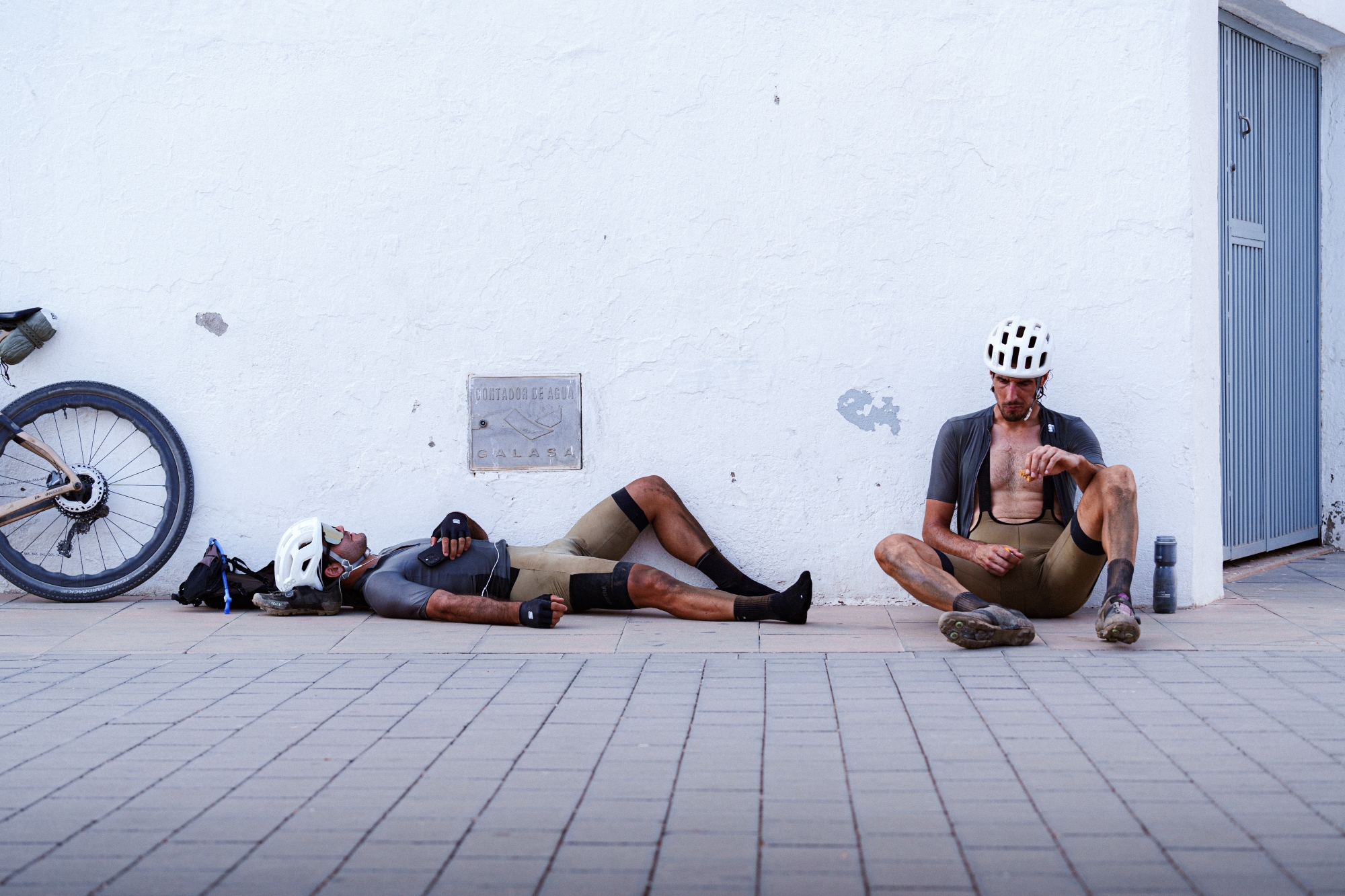
Sin presión y anteponiendo el ocio a todo lo demás, los ciclistas siguieron su camino hasta El Hierro para disfrutar de un bonito bucle por la quinta isla de la ruta. Cervezas, papas arrugás y mojo picón se vieron a raudales en la meta, donde los ciclistas tomaron un respiro antes de regresar a Tenerife, lugar en el que la mayoría tomó su vuelo de regreso a casa.

Javi es nuestro corresponsal en Bélgica, y trata de contrarrestar su obsesiva pasión por el análisis de datos con la relajante acción (o eso es lo que dice) de crear contenido para la revista. Javi is based in Belgium and tries to compensate for his obsessive passion for data analytics with the relaxing action (that's what he says) of creating content for the magazine. View all posts by Javi Angulo
The Gran Guanche Audax Gravel has wrapped up another successful season of unsupported ultracycling events in the Canary Islands. Gran Guanche is on its own an island hopping route that can be tackled at any point during the year, but there is also a yearly organized but not competitive event for each of the variants; trail, road, and gravel.
Taking advantage of the good temperatures all year long in the archipelago, the Audax events take place between the months of December and March, when it takes some courage to ride in the cold in most of the northern hemisphere.
On March 18th at 10 PM, 100 riders took on the challenge of riding across five islands through a fixed route in a self-supported way. “There’s no cut-off time, there are no prizes, no medals, no brevet cards or finisher diplomas. The Audax is focused on the experience rather than the final results.”, state the organizers on their website. The only challenge was to follow the timings set by the Audax pace.
The route of the event is almost identical to the Gran Guanche gravel itinerary, but in this case, riders did not start in La Graciosa but in Lanzarote. With 110 km ahead and 9h 30 min to catch the earliest ferry, riders could take it super easy on this first island and still make it on time, or push a bit more and have more time to rest while waiting for the ferry.
The short 35-minute crossing to Fuerteventura was followed by the start of the real time trial against the ferry waiting on the other side of the island, as riders had to average 21 km/h across 160 km and 2.300 meters of accumulated elevation to keep up with the Audax pace. It was worth pushing because riders could then rest during the two-hour ferry journey to the third island.
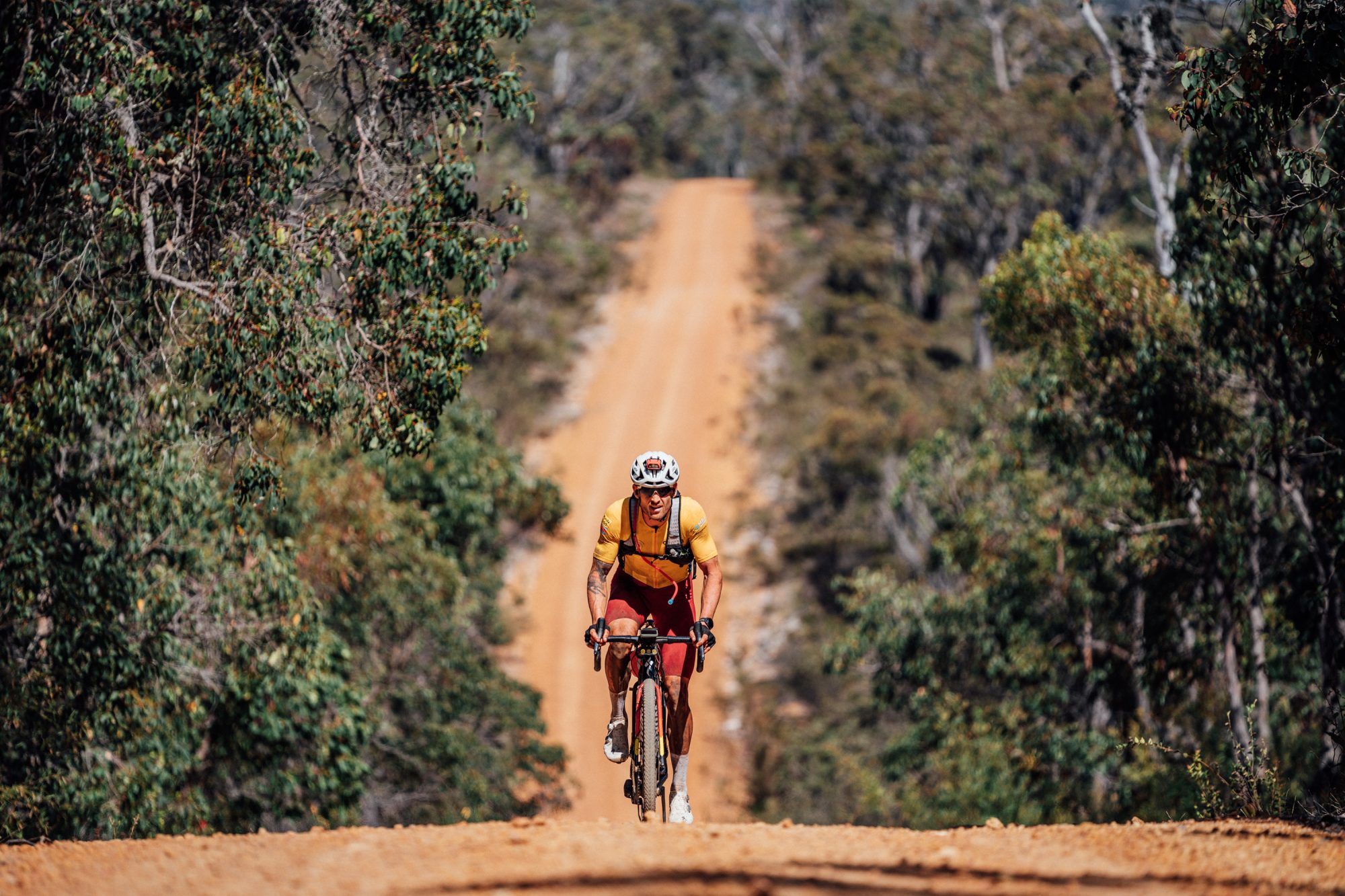
Most riders reached the 24 hours of elapsed time while in Gran Canaria, and with a very long climb up to Pico de las Nieves at almost 2.000 meters of elevation, the accumulated fatigue was starting to play an important role.
In the spirit of Audax, participants are allowed to draft each other, which is something many riders took advantage of. In addition to the physical challenges of an event of this type, solitude is also one of the biggest hurdles to overcome, so the possibility of riding in groups puts Gran Guanche as one of the best events to introduce yourself to the ultracycling world.
In total, 10 riders made the 6 AM ferry to Tenerife, but if Gran Canaria was the first real climbing test, Tenerife was truly going to make the difference. 174 km and 4.570 meters of elevation are no joke, even more after the time they had already spent on the saddle. Most of it was on tarmac or some sort of paved surface, so they could at least put their focus on the views ahead rather than on what was laying two meters in front of them.
Aware of the magnitude of the challenge, several of the riders that were still on time with the Audax pace decided before the first pedal stroke in Tenerife that they were not going to try to make it to the 5.30 PM ferry on Monday evening.
Four riders arrived at Los Cristianos, in the west of Tenerife, inside the Audax pace. This time goal was set at 38h of elapsed time, including inter-island transfers. The clock stopped ticking once they made it to the finish of the second-to-last island, but in El Hierro there was a closing loop of 117 km and 3.770 meters of elevation gain in which riders could get rid of their bags and enjoy the varied landscapes of the island. It was mandatory for them to sleep before tackling this final loop so, to some extent, they could recover a bit before this last push.
Not long after they started riding again, Justinas Leveika attacked and created a gap that he would maintain for the remaining kilometers to become the first finisher. The rider from Norway already raced an ultracycling event this year, finishing second in the Atlas Mountain Race. In recent years he has won the Three Peaks Bike Race and Race Around Rwanda, and he has also already been among the top finishers in some of the most prestigious ultracycling races, like Badlands, Transiberica, or the Gran Guanche itself but the road version.
Among the other three riders that made the Audax pace, the discipline debutant Florian Chenaux finished ahead of Nils Correvon, current winner of Seven Serpents and 3rd at Badlands 2022, and Pierfrancesco Santin, winner of Two Volcano Sprint 2022.
The Audax pace was set in a way that waiting times at the different ferry terminals were limited, which meant that arriving later than that to the opposite corner of one of the islands could mean four, ten, and even more hours of waiting for the next ferry.
A big group of riders was stuck in Tenerife until the 5.30 PM ferry to El Hierro departed the following day, and they had to ride the final loop overnight. Among them was Cynthia Frazer, who had built a decent gap in the women’s category during her island hopping journey, but she missed the Audax pace very by not much. “I had exactly 9 hours and 45 minutes from ferry to ferry. I knew it would be the hardest island due to timing. I have never ridden that fast for that many miles with that much elevation […] I gave it my best shot but about 60km from the finish I realized I was going to miss the ferry by just a handful of minutes. I was out of water and in the desert”, she said on Instagram.
Her lead came to nothing as Virginia Cancellieri and Cristiana Tamburini were on the same boat on the way to the final showdown. Nonetheless, the American, who in the last few months has won Across Andes 2022 and Transcordilleras 2023, proved again to be the strongest and finished as the first woman and 9th overall. Virginia Cancelleri arrived 28 minutes after Cynthia but she was two hours faster than Cristiana, so she finished in a deserved second place.
With the pressure off their shoulders and putting leisure over anything else, riders kept making their way to El Hierro to enjoy a loop around the fifth island of the route. Beers, papas arrugás and mojo picón were spotted in abundance at the finish line, where riders took a breather before returning to Tenerife, the island where most took their flight back home.
Javi es nuestro corresponsal en Bélgica, y trata de contrarrestar su obsesiva pasión por el análisis de datos con la relajante acción (o eso es lo que dice) de crear contenido para la revista. Javi is based in Belgium and tries to compensate for his obsessive passion for data analytics with the relaxing action (that's what he says) of creating content for the magazine. View all posts by Javi Angulo
 Javi Angulo
 Toni de la Torre
 Javi Angulo
 Javi Angulo
 Toni de la Torre
 Javi Angulo

 Pol Sopeña
 Toni de la Torre
 Pol Sopeña
 Toni de la Torre
 Javi Angulo
 Toni de la Torre
Receive our monthly selection of the best articles, news, exclusive content and giveaways only for subscribers, subscribe to OUR NEWSLETTER
Receive our monthly selection of the best articles, news, exclusive content and giveaways only for subscribers, subscribe to OUR NEWSLETTER
Receive our monthly selection of the best articles, news, exclusive content and giveaways only for subscribers, subscribe to OUR NEWSLETTER
Receive our monthly selection of the best articles, news, exclusive content and giveaways only for subscribers, subscribe to OUR NEWSLETTER