- News
- Reviews
- Travel & Adventure
- Interviews
- Inside Industry Players
- Community
Bikes
Reviews
Components
Reviews
Cycling
Apparel



[raw_mobile_menu]
[wpml_language_switcher_down]


En cuestión de apenas un par de años, el calendario europeo se ha llenado de multitud de carreras de gravel que, junto con la ya consolidada escena americana, mantienen ocupados a los ciclistas durante todo el año. Con un enfoque alternativo, África Oriental ahora también se está convirtiendo en una fuente de carreras de gravel que, además del incentivo competitivo, brindan a los ciclistas una experiencia mucho mayor.


Durante la segunda quincena de junio se llevaron a cabo tres eventos off-road en el este de África, cada uno de ellos con su propio formato e identidad. El 17 de junio llegó el momento de la primera edición de la carrera de un día Safari Gravel. Apenas tres días después, la ya consolidada Migration Gravel Race celebraba una nueva edición en el Masai Mara, y varios de los participantes se desplazaron hasta Tanzania para afrontar el 27 de junio el reto de ultradistancia que suponía la Evolution Gravel Race.
Una de las razones por las que Safari Gravel salió a la luz fue proporcionar a los ciclistas una buena introducción a la escena gravel de Kenia, como prueba preliminar antes de la Migration Gravel Race. Está dirigida tanto a locales como a ciclistas de otros continentes, y los participantes podían elegir entre un recorrido de 60 o 120 kilómetros.
Tuvo lugar en el Parque Nacional Hells Gate en Kenia, muy conocido por la película El Rey León. Los pilotos extranjeros llegaron al campamento el día antes de la carrera, prepararon sus bicicletas y se dirigieron rápidamente al briefing. Nos podemos imaginar su reacción al escuchar que se usaría un helicóptero para despejar el camino de animales peligrosos.


Algunos ciclistas se lo tomaron con calma con su foco puesto en la Migration Gravel Race, incluso si el día después de Safari Gravel la organización planeó un día completo de descanso con la opción de ir a dar un paseo en bote o un safari. No fue el caso de Amity Rockwell y Mattia De Marchi, quienes fueron los más rápidos en la carrera de 120 km.
El lunes 19, los que asistieron a Migration Gravel partieron temprano para un viaje en autobús de 6 horas hasta la nueva localización. Los que tuvieron que volver a casa lo hicieron con una experiencia revitalizante a sus espaldas.


La edición de 2023 de la Migration Gravel Race constaba de 650 km repartidos en cuatro etapas, todas ellas en territorio Masai Mara. Si Kenia en su conjunto ya destaca por su flora y fauna, la parte suroeste del país es una verdadera joya con campos verdes, la conocida sabana y una buena cantidad de colinas.
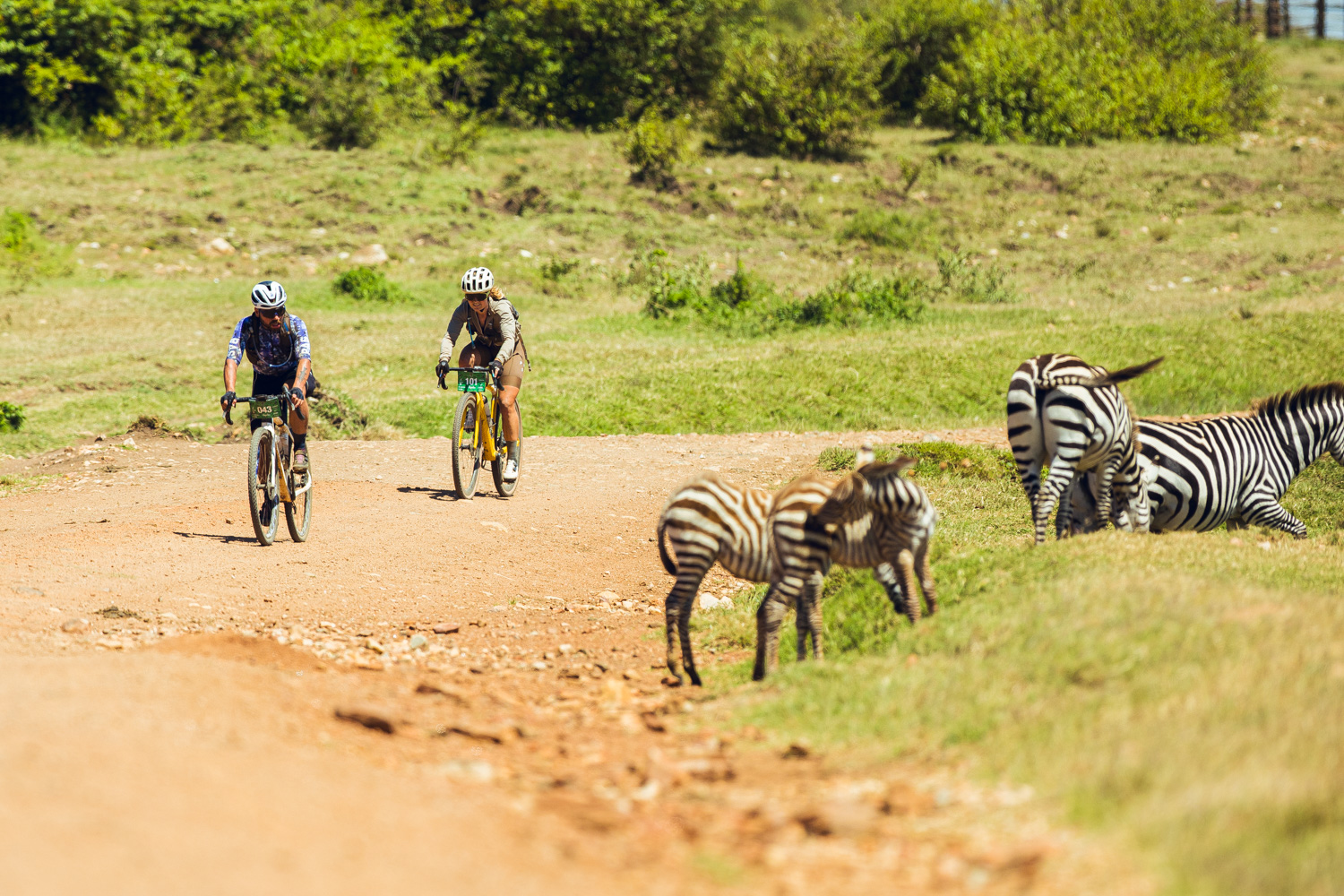
Durante esos días, los afortunados participantes vieron en muchas ocasiones animales salvajes cruzando los caminos de gravel apenas a una docena de metros por delante de ellos. La primera vez nadie podía creer lo que estaba viendo frente a ellos, pero al final se acostumbraron. “Es una pena que a veces estuviera tan concentrado en la carrera que me perdiera algunos buenos momentos”, comentó Martí Vigo, exciclista profesional de ruta del Androni Giocattoli-Sidermec. Ya viajó al este de África para correr el Tour de Ruanda, pero estas competiciones off-road le permitieron estar más cerca de los animales salvajes que pueblan la región.


Algunos de los ciclistas de gravel más exitosos de Europa viajaron a Kenia. Hay que tener en cuenta que la Migration Gravel Race es parte de la Serie de Gravel Earth, por lo que, aunque la razón principal para la mayoría de ellos fue simplemente montar en bicicleta en otra parte del mundo, también hubo un incentivo competitivo. Adicionalmente, se les pidió explícitamente que compitieran lo más fuerte posible, para comparar su nivel con el de los ciclistas locales de África Oriental. “Necesitamos saber quién está listo para competir internacionalmente”, dijo Mikel Delagrange del Team AMANI. El equipo Gravel Café du Cycliste estuvo bien representado con cuatro ciclistas, lo mismo que Enough CC con Mattia De Marchi dispuesto a repetir su buen resultado del año anterior.
Aparte de eso, el entusiasmo por esta carrera en particular se tradujo en un lleno completo, por lo que los que lograron obtener una inscripción pueden considerarse afortunados. Para llegar al campamento inicial, la mayoría de los riders procedentes del extranjero que no participaron en Safari Gravel pasaron primero una noche en Nairobi y luego llegaron a su destino con un autobús facilitado por la organización.
“Dentro de cuatro días serán personas diferentes a las que son ahora”, dijo Mikel durante la sesión informativa de la carrera a las personas que estaban a punto de embarcarse en esta inspiradora experiencia.


Cada día, mientras los ciclistas avanzaban por el difícil terreno de Masai Mara, la organización montaba el campamento base para que pudieran encontrar su propia tienda de campaña y comenzar el proceso de recuperación tan pronto como terminaran. “Fue bonito ver a los Masais locales tan involucrados en las tareas de organización del evento”, destacó Lydia Iglesias del Gravel Café du Cycliste.
En el este de África hay alrededor de 12 horas de luz al día durante todo el año, por lo que cuando los ciclistas se ducharon ya casi estaba empezando a oscurecer. Lydia nos contó que el tiempo post etapa pasaba volando. “Después de hacer cola para comer, preparar toda la ropa y planificar la siguiente etapa, el tiempo antes de ir a dormir estaba casi terminado”, dijo. Aun así, pudieron disfrutar de la vida en el campamento, que tenían un ambiente encantador y estaban ubicados en hermosos lugares cerca de donde viven las jirafas y las cebras.


Todas las etapas fueron duras, con caminos rocosos y largas rectas en las que era difícil avanzar por la irregularidad del terreno. No obstante, con etapas de 160 kilómetros de media, también hubo muchos tramos de flow por single tracks y pistas de gravel suave. Esta carrera se llevó a cabo durante los meses de invierno en Kenia, por lo que las temperaturas fueron afortunadamente suaves, también porque los ciclistas estaban constantemente a más de 2.000 de altitud. En resumen, no hubo días fáciles, con el terreno jugando un factor más importante que el desnivel acumulado.


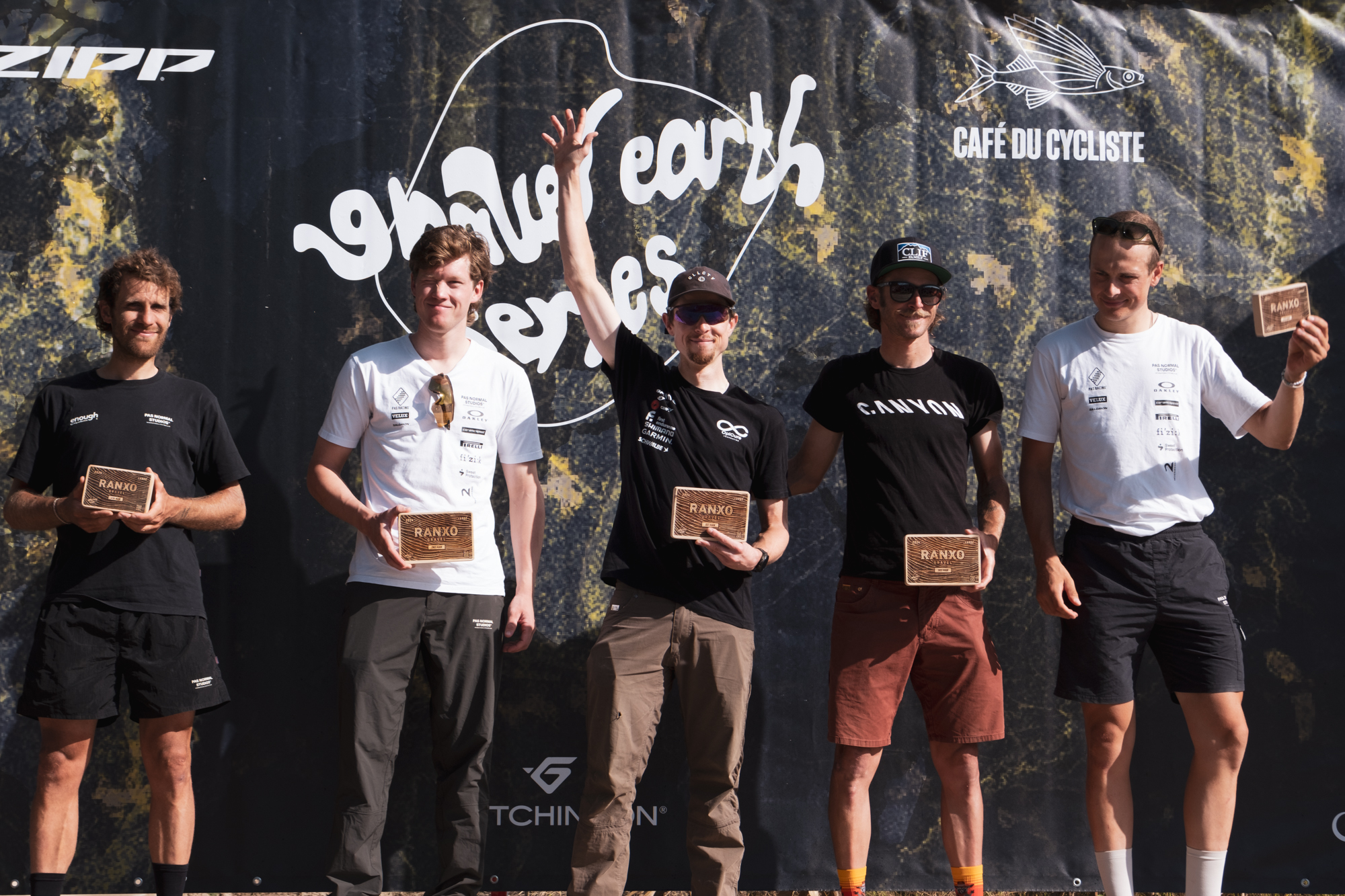
En cuanto a los resultados, Amity Rockwell fue la corredora más consistente y se adjudicó la Clasificación General de la carrera por delante de Madeleine Nutt y Maria Guðmundsdóttir. El mountain biker alemán Lukas Baum, quien confesó que participaba por primera vez en una carrera de gravel, inició su andadura en la disciplina con una notable victoria. Junto a él en el podio final estaban Lachlan Morton y Tanner Visnick.


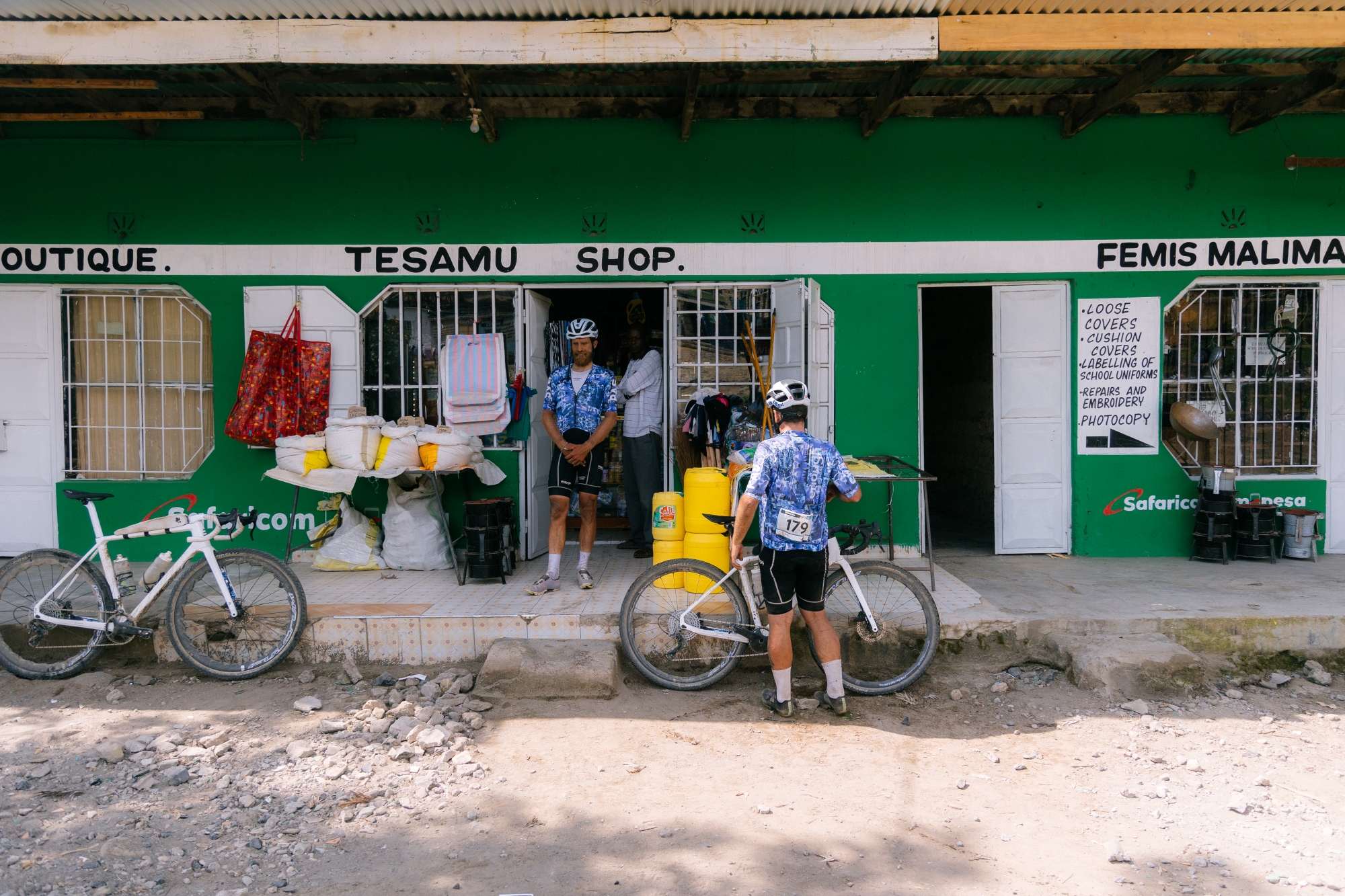
Volviendo a los testimonios, tanto Lydia como Martí destacaron la excitación de los más niños locales cada vez que pasaba un ciclista por su lado, y lo asombrados que se quedaban todos con el nivel físico de los participantes, pues para ellos era difícil creer que uno pudiera cubrir semejante distancias en bicicleta. El atletismo es, de largo, el deporte principal en Kenia, por lo que hoy en día las personas que usan lycra mientras andan en bicicleta todavía se ven como bichos raros.
No todos pueden decir que han estado andando en bicicleta en Kenia, rodeados de algunos de los animales más majestuosos de la tierra. Sin duda fue una experiencia enriquecedora tanto para los extranjeros como para los locales, y todos salieron beneficiados de esta 3ª edición de la Migration Gravel Race.
“Creo que gracias a eventos como este y a todos los proyectos en los que está involucrado el Equipo AMANI, el ciclismo en África Oriental crecerá exponencialmente, y sería genial porque ahí hay muy buenos atletas” – Lydia Iglesias
Respecto al año pasado, la Evolution Gravel Race cambió de formato y, aunque el recorrido se mantuvo igual, esta vez los corredores tuvieron que afrontarlo a través de dos etapas de 425 kilómetros en lugar de cinco más cortas. Nuevamente comenzó en el cráter de Ngorongoro y terminó junto al mar.
Hubo un descanso obligatorio de 12 horas entre etapas en un campamento organizado, que los ciclistas aprovecharon al máximo para dormir, comer e intercambiar historias con otros participantes. Este descanso comenzaba para cada corredor tan pronto como llegaban al campamento, sin importar la hora del día, por lo que para algunos era de noche mientras que otros tenían que detenerse durante el día y reanudar su intento ultra en la oscuridad.
Consideramos que este formato permite a los participantes disfrutar al máximo de todo el recorrido aunque en esencia no deja de ser una carrera de ultradistancia. Si los ciclistas ya sufren peligrosas alucinaciones mientras recorren los países más civilizados de Europa, la falta de sueño podría haber sido muy peligrosa aquí porque uno necesita estar completamente alerta en un lugar remoto como Tanzania.


Lachlan Morton ganó la Evolution Gravel Race y honró a su difunta amigo Sule Kangangi, quien obtuvo el primer lugar en la edición anterior. Lachlan completó los 850 km en un tiempo de 34 horas y 48 minutos.
Algunas personas eran conscientes del potencial del ciclismo gravel en el este de África desde la noticia de la primera edición de la Migration Gravel Race, y muchos otros se subieron al tren del hype después de ver a sus amigos correr allí. No esperamos ningún evento de participación masiva en el área en un futuro cercano, pero con el formato actual de Safari Gravel, Migration Gravel Race y Evolution Gravel Race, los ciclistas tienen diferentes oportunidades de probar de qué trata el ciclismo en el este de África.


Como alternativa, cualquier aficionado al ciclismo pronto podrá utilizar las instalaciones de la casa AMANI, que actualmente se está construyendo en Iten. La meca del atletismo también se está convirtiendo en un centro de ciclismo todoterreno, y el saber hacer de los lugareños y otras personas involucradas en los proyectos en el área asegurará que este crecimiento constante continúe.

Javi es nuestro corresponsal en Bélgica, y trata de contrarrestar su obsesiva pasión por el análisis de datos con la relajante acción (o eso es lo que dice) de crear contenido para la revista. Javi is based in Belgium and tries to compensate for his obsessive passion for data analytics with the relaxing action (that's what he says) of creating content for the magazine. View all posts by Javi Angulo
In a matter of just a couple of years, the European calendar has been populated with loads of gravel races which, together with the already established American scene, keep cyclists busy all year long. With an alternative approach, East Africa is now also becoming a source of gravel races that, in addition to the racing incentive, provide cyclists with a much broader experience.
During the second half of June, three gravel events took place in East Africa, each of them with its own format and identity. On June 17th it was time for the first edition of the single-day race Safari Gravel. Just three days later, the already-established Migration Gravel Race celebrated a new edition in the Masai Mara, and many of the participants made the trip to Tanzania in order to tackle on June 27th the ultra-distance challenge that the Evolution Gravel Race entailed.
One of the reasons why Safari Gravel came to life was to provide riders with a nice introduction to the Kenyan gravel scene as a preliminary test ahead of the Migration Gravel Race. It is intended both for locals and cyclists from other continents, and the participants could choose between a 60 or 120-kilometer course.
It took place in Hells Gate National Park in Kenya, well known for the Lion King movie. Foreign riders arrived at the camp the day before the race, prepared their bikes, and quickly headed to the briefing. We can imagine their reaction when they heard that a helicopter would be used to clear the road from dangerous animals.
Some riders took it easy with their focus set on the Migration Gravel Race, even if the day after Safari Gravel the organization planned a full day of rest with the option to go for a boat ride or safari. That wasn’t the case for Amity Rockwell and Mattia De Marchi, who were the fastest in the 120 km race.
On Monday 19th the ones attending the Migration Gravel departed early for a 6-hour bus drive to the new location. The ones that had to return home did it with a revitalizing experience under their belt.
The 2023 edition of the Migration Gravel Race consisted of 650 km spread in four stages, all of them in the Masai Mara territory. If Kenya as a whole already stands out for its flora and fauna, the southwestern part of the country is a true gem with green fields, the well-known savannah, and a decent amount of hills.
During those days, riders often saw wild animals crossing the gravel paths barely a dozen meters in front of them. At first, no one could believe what they were seeing in front of them, but in the end, they got used to it. “It is a pity that sometimes you were so focused on the race that you missed out on some nice moments” mentioned Martí Vigo, former professional road cyclist with Androni Giocattoli-Sidermec. He already traveled to East Africa to race the Tour of Rwanda, but off-road racing allowed him to be closer to the wild animals that populate the region.
Some of the most successful gravel riders in Europe made the trip to Kenya. Bear in mind that the Migration Gravel Race is part of the Gravel Earth Series so, even if the main reason for most of them was simply riding their bikes in another part of the world, there was also a competitive incentive. They were also explicitly requested to race as hard as possible, in order to compare their level with that of the local East African riders. “We need to know who is ready to race internationally” – said Mikel Delagrange from Team AMANI. The team Gravel Café du Cycliste was well represented with four riders, the same as Enough CC with Mattia De Marchi willing to repeat the good performance of the previous year.
Apart from that, the hype for this particular race translated into a sold-out, so the ones that managed to get an entry can consider themselves lucky. To get to the initial camp, most of the riders coming from abroad that did not take part in Safari Gravel spent first a night in Nairobi and then got to their destination with a bus provided by the organization.
“In four days’ time you will be different people than what you are right now”, said Mikel during the race briefing to the individuals that were about to embark on this life-changing experience.
Each day, while riders were pushing through the tough gravel of Masai Mara, the base camp was being built so that they could find their own tent and start the recovery process as soon as they finished. “It was nice to see the local Masais being so involved in the organizational tasks of the event”, said Lydia Iglesias from Gravel Café du Cycliste.
In East Africa there are around 12 hours of sunlight per day all year long, so by the time riders took a shower it was almost starting to get dark. Lydia told us that the post-stage time flew by. “After queuing to eat, preparing all the clothes, and planning the next stage, the time before going to sleep was almost over”, she said. Nonetheless, she found all the base camps very charming, with beautiful locations close to where giraffes and zebras live.
All the stages were tough, with rocky paths and long straights where it was difficult to make progress because of the rough surface. Nonetheless, with stages that were 160 kilometers long on average, there were also many flowy sections through single tracks and smooth gravel. This race took place during the winter months in Kenya, so the temperatures were fortunately mild, also because riders were constantly over 2.000 meters of elevation. All in all, there was no easy day, with the terrain playing a bigger factor than the elevation gain.
Results-wise, Amity Rockwell was the most consistent rider and claimed the General Classification of the race ahead of Madeleine Nutt and Maria Guðmundsdóttir. The German mountain biker Lukas Baum, who stated that was taking part in a gravel race for the first time, started his journey in the discipline with a notable win. Next to him on the final podium were Lachlan Morton and Tanner Visnick.
Back to the testimonials, both Lydia and Martí highlighted the excitement of the little kids whenever a cyclist passed by their side, and how amazed the locals were by the physical level of participants, as for them it was hard to believe that one can cover such distances on a bicycle. Running is by far the main sport in Kenya, so nowadays people wearing lycra while riding a bike are still seen as weirdos.
Not everyone can say they have been riding their bikes in Kenya, surrounded by some of the most majestuous animals on Earth. It was surely an enriching experience both for foreigners and locals, and everyone benefited from this 3rd edition of the Migration Gravel Race.
“I think that thanks to events like this and all the projects that Team AMANI is involved in, cycling in East Africa will grow exponentially, and that would be great to see because there is a lot of potential there” – Lydia Iglesias
Compared to last year, the Evolution Gravel Race changed its format and, although the course remained the same, this time riders had to tackle it with two 425-kilometer stages rather than five shorter ones. It again began at the Ngorongoro Crater and ended by the sea.
There was a mandatory 12-hour break in an organized camp in between the stages, which riders made the most of by sleeping, getting food in, and exchanging stories with other fellow participants. This break started for each rider as soon as they reached the camp, no matter what time of the day, so for some it was night time while others had to stop during the day and resume their ultra attempt in the dark. After the break, it was a flat-out race to the sea.
We consider this format allows participants to enjoy the whole route to the fullest even if in essence it is still an ultra-distance race. If riders already suffer dangerous hallucinations while riding through the most civilized countries in Europe, sleep deprivation could have been very dangerous here because one needs to stay fully alert in a remote place like Tanzania.
Lachlan Morton won the Evolution Gravel Race and he honored his late friend Sule Kangangi, who claimed the first spot in the previous edition. Lachlan completed the 850 km in a riding time of 34 hours and 48 minutes.
Some people were aware of the potential of gravel cycling in East Africa since the news about the first edition of the Migration Gravel Race, and many others got on the hype train after seeing friends race there. We are not expecting any mass participation events taking place in the area in the near future, but with the current format of Safari Gravel, Migration Gravel Race and Evolution Gravel Race, riders have different chances to get a taste of what cycling in East Africa is about.
Alternatively, any cycling enthusiast will soon be able to use the facilities of the AMANI house, which is currently being built in Iten. The running mecca is becoming an off-road cycling hotbed too, and the know-how of locals and others involved in the projects in the area will make sure that this steady growth continues.
Javi es nuestro corresponsal en Bélgica, y trata de contrarrestar su obsesiva pasión por el análisis de datos con la relajante acción (o eso es lo que dice) de crear contenido para la revista. Javi is based in Belgium and tries to compensate for his obsessive passion for data analytics with the relaxing action (that's what he says) of creating content for the magazine. View all posts by Javi Angulo
 Toni de la Torre
 Javi Angulo
 Javi Angulo
 Javi Angulo
 Javi Angulo
 Toni de la Torre
 Javi Angulo
 Javi Angulo

 Juliana Reis
 Javi Angulo
 Pavel Novotný
 Javi Angulo
Receive our monthly selection of the best articles, news, exclusive content and giveaways only for subscribers, subscribe to OUR NEWSLETTER
Receive our monthly selection of the best articles, news, exclusive content and giveaways only for subscribers, subscribe to OUR NEWSLETTER
Receive our monthly selection of the best articles, news, exclusive content and giveaways only for subscribers, subscribe to OUR NEWSLETTER
Receive our monthly selection of the best articles, news, exclusive content and giveaways only for subscribers, subscribe to OUR NEWSLETTER