- News
- Reviews
- Travel & Adventure
- Interviews
- Inside Industry Players
- Community
Bikes
Reviews
Components
Reviews
Cycling
Apparel


[raw_mobile_menu]
[wpml_language_switcher_down]


Cuando este año Ceylin del Carmen Alvarado, la corredora del Alpecin-Fenix, decidió hacer el salto prematuro de categoría de sub23 a elite no se equivocó. El título de campeona absoluta del mundo de ciclocross fue la culminación de una temporada espectacular en la que Ceylin ha ido de menos a más. Originaria de República Dominicana, a los 5 años su familia se mudó a los Países Bajos, donde año tras año nos ha ido demostrando sus excelentes cualidades en esta disciplina tan técnica, explosiva y táctica que es el ciclocross. Después de unas más que merecidas vacaciones, hace unos días pudimos hablar con Ceylin, quien nos contó un poco sobre ella, su temporada y su pasión por el ciclismo. Todo ello con una actitud risueña y abierta a lo largo de la entrevista, que fue acompañada de una sonrisa de oreja a oreja en todo momento.


¿Cómo nos describirías tus inicios en el mundo del ciclismo?
“El deporte ha estado siempre presente en nuestra familia. Nosotros empezamos en atletismo, pero mi padre al poco tiempo nos introdujo al ciclismo. Él, desde bien joven ya lo practicaba e incluso competía a nivel amateur y nos transmitió esa afición que dura hasta ahora. Comenzamos en ruta y al cabo de dos años probamos en ciclocross, que nos gustó mucho.”
¿Qué es lo que más te gusta del ciclocross?
“La diversidad. A diferencia de la ruta, en ciclocross cada carrera y circuito son distintos. El terreno puede ser seco o húmedo, tienes arena o barro, hay montañas pequeñas y tienes que bajarte y montarte en la bicicleta rápidamente. Son todos estos factores los que a mi me encantan. Es algo parecido al BTT, que también practico.
Además está la afición y el ambiente familiar que se respira. Yo intento compartir lo máximo que pueda con la gente. Todo empieza por la mañana en la zona de caravanas, donde nos piden autógrafos y fotos. Luego nos ven cuando probamos el circuito y, por ejemplo, al pararnos a practicar una sección, nos comentan cómo tendríamos que hacerlo, como si fueran nuestros entrenadores (ríe). Durante la carrera nos dan muchos ánimos, quizá especialmente en Bélgica, dónde te hacen sentir como uno de ellos. También, les gusta mucho beber y creo que también contribuye a que te animen incluso más. Al acabar, se quedan horas y horas después de la carrera hasta que salgamos y puedan hablar un poco con nosotras. Es divertido, porque han aprendido alguna palabra en español para animarme, otros aficionados aún me preguntan cómo me he adaptado al frío, ¡pero es que ya llevo casi toda mi vida aquí!”
¿Cómo es el dia a dia para Ceylin?
“Mi dia a dia… Entreno todos los días, de modo que todos los días estoy montada en la bicicleta. Pero por ejemplo ahora que no estoy en plena temporada: me levanto, desayuno, compruebo el email, ayudo en casa y salgo con los amigos a comer algo, es un poco raro no estar entrenando al ritmo habitual .
Si estoy en plena temporada es un poco distinto y toca escuchar al entrenador del equipo. Me levanto y por la mañana salgo en bicicleta. Llego al mediodía, como algo, y quizá entreno una segunda vez, pero ya en casa. Después, durante la tarde, descanso y salgo con mis amigos para escapar un poco de las cuatro paredes. Para acabar bien el dia toca comer bien y acostarme a tiempo.”
Has tenido una temporada espectacular ¿Como la resumirías?
“Esta temporada no me la esperaba para nada, pero fue maravillosa. Sabía que iba a ser algo muy bonito y que podía ir lejos, pero nadie esperaba que pudiera ir tan bien. Pienso que ha habido muchos factores que me han llevado hasta aquí. Por ejemplo, soy un año mayor y un año más fuerte, el equipo y el BTT me han ayudado mucho o el poder de dios. Como ciclista he aprendido y crecido tanto física como mentalmente, y aún creo que puedo seguir creciendo, pero el paso no será tan grande.
Claramente, el mejor momento de la temporada fue ganar el mundial, pero también estuvo la victoria en Koksijde (Bélgica), que es mi circuito favorito y fue mi primera victoria en una copa del mundo. El peor fue cuando me caí en el último tramo de Hoogerheide (Países Bajos), ahí perdí la carrera y también la general de la copa del mundo. Fue un golpe duro.”

¿Qué te hace destacar respeto al resto de corredoras?
“Creo que la técnica es mi punto fuerte, pero también está mi manera de correr y pensar en las carreras, noto que es distinta. Sin embargo, la mayor diferencia es mi personalidad; soy una persona alegre y sociable que en todo momento está relajada y siempre con una sonrisa antes y después de la carrera. Además, intento tener una buena relación con las otras corredoras. Ser amigos es una gran palabra, pero somos buenas compañeras que nos respetamos en todo momento.”
¿Cómo te planteas una carrera?
“Si voy a una competición voy para ganar. También cabe decir que casi todas las carreras que he disputado han sido eventos importantes en el que me jugaba un título o una posición en la clasificación general del campeonato. Ha habido un par de carreras en el calendario que no tenían tanta repercusión y tenía más libertad. La primera parte de la carrera tranquilamente y al final, si me sentía bien, podía ir a por todas.”
Háblanos un poco del día D, el campeonato del mundo en Dübendorf (Suiza). El circuito era muy rápido, para ciclistas potentes y, aunque pocas, las secciones técnicas eran complicadas¿Cómo se desarrolló?¿Qué sentiste?
“La última vuelta de la carrera fue muy dura ya que estuvimos compitiendo desde la salida hasta el final. En la penúltima vuelta recuerdo pensar y sentir que estaba muy cansada y que quizá ese no sería mi día. Sin embargo, al empezar la última vuelta me dije que debía pelear por el primer puesto y que debía aguantar hasta el último momento, traté de hacer las secciones técnicas primera. Recuerdo que en la última subida de barro siempre entraba segunda o tercera, y cada vez tenía que bajar de la bicicleta ya que no tenía la velocidad suficiente para llegar hasta arriba. Pero en la última vuelta dejé un espacio por delante para conseguir subirla. Si no lo lograba, hubiera sido sólo y únicamente mi culpa, pero lo logré y me coloqué detrás de AnneMarie Worst. En el último puente y en la última curva no me dejó entrar de primera, de modo que llegamos al sprint casi igualadas. Ahí lo di todo hasta el final y fui mejor.
No me creía que había ganado. Estaba pensando más en el cansancio y el dolor que en el hecho de haber logrado el título de campeona del mundo. Ahora, cuando veo imágenes o el vídeo de ese día regresa todo a la mente, cada curva, cada instante e incluso lo que pasaba por mi la cabeza. Al verlo, hay momentos en los que se me llenan los ojos de lágrimas. Fue un día realmente increíble del que tengo muy bonitos recuerdos.”

¿Ha cambiado tu vida después del mundial?
“Pues mi vida es casi igual. Lo que más ha cambiado es la atención que recibo: entrevistas, periódicos o radio. La gente en la calle me reconoce más, me miran, me paran y me comentan la jugada. Pero yo soy la misma persona; mis relaciones con amigos y familia siguen igual. También cabe destacar que desde República Dominicana hay cada vez más interés. Las personas se interesan y hablan de mi, antes no existía esa conexión.”
¿Cómo afrontarás esta nueva temporada?
“En abril comenzaré con la temporada de BTT, hasta los mundiales en junio. Después haré una corta temporada en ruta, para no perder ritmo de competición y la velocidad, para después empezar de nuevo en ciclocross. Referente al cx quiero defender los títulos ya ganados y me gustaría poder correr mejor que en la pasada temporada.”
El ciclismo femenino está en auge. ¿Cómo lo percibes?
“Creo que la UCI está haciendo pasos para equiparar las diferencias entre hombres y mujeres. Por ejemplo, las carreras duran entre 45-50 min en vez de 40 min. El salario aun no es igual, pero los premios se están igualando. Este año también vimos por primera vez los mundiales femeninos en la categoría junior. Aunque la intención está ahí, es un proceso lento que tendrían que agilizar y acelerar.
Sobre la mejora en el nivel del ciclocross femenino, por ejemplo cada vez hay más chicas que saltan las barreras, como un modo de reivindicación. De hecho, Sanne Cant, AnneMarie o yo misma sabemos brincarlo, pero como no hay la necesidad de hacerlo, no lo hacemos. Si las corredoras de delante empezaran a saltarlas, nos veríamos forzadas a hacerlo para no perder segundos. Pienso que cada año habrá más chicas que lo harán, y de aquí unos cuantos años será casi obligatorio. Pero es cierto que son altas, 40 cm. Los hombres tienen más fuerza y van más rápido, a nosotros nos cuesta un poco más. Pero sería bonito para el público y para decir que también podemos.”
Nuestra pregunta favorita ¿Una anécdota?
“Recuerdo la competición en Ronse (Bélgica), para la clasificación del DVV trofee. Fue un día bonito pero también de reflexión. Había vuelto de una semana de campamento de entrenamiento a un circuito de mucho barro y lluvia. Iba corriendo delante sola, destacada y cuando fui a cambiar de bicicleta habían tirado la mía al suelo y tuve que cambiarla yo misma. Lo hice tan calmadamente que AnneMarie me alcanzó. Corrimos juntas pero me volví a escapar, me caí en la última vuelta pero conseguí ganar. Fue un momento introspectivo en el que me di cuenta que había crecido tanto mental como físicamente en este deporte. Sentí que a partir de ese momento pocas cosas me impedirían llegar hasta donde yo quisiera.”


Fotos de: Sam Buchli , Brazo de Hierro

Apasionado de la bici y de la competición, Pol, siempre está preparado para una nueva aventura. Le encanta la sensación de ponerse un dorsal y es un auténtico adicto al ciclocros. Passionate about bikes and racing, Pol is always ready for a new adventure. He loves the feeling of pinning a number and he is truly addicted to cyclocross. View all posts by Pol Sopeña
This year, when Ceylin del Carmen Alvarado, the rider for Alpecin-Fenix, decided to take a step further and compete in the elite category instead of U23, she was not wrong. The Cyclocross World Championship title was the culmination of a spectacular season in which Ceylin has continuously excelled. Born in the Dominican Republic, she moved to the Netherlands with her family when she was 5 years old, where she developed as an athlete and has proved to be a very talented cyclocross rider with impressive technical skills, explosiveness, and tactics. After some well-deserved vacations, some days ago we had the chance to talk to Ceylin, who told us a little bit about herself, her season and her passion for cycling. All of this in a very chill interview, with a very open and cheerful attitude and a wide smile from ear to ear.
How would you describe your beginnings in cycling?
“In our family, we have always been closely attached to sports. We started in athletics but, eventually, my father introduced us to cycling. From a young age, he had always cycled and he even competed at an amateur level. He had the chance to share his passion with us, which we love as well and lasts until now. We first started in road cycling and in the following two years we tried cyclocross, we loved it!”
What do you like the most about cyclocross?
“Diversity. Unlike road cycling, in cyclocross every race and course are different. The terrain can either be dry or humid, you have sand or mud, there are small hills and you have to get off and back on the bike as fast as you can. It is the combination of all these factors that I love. It is something similar to MTB, which I also do.
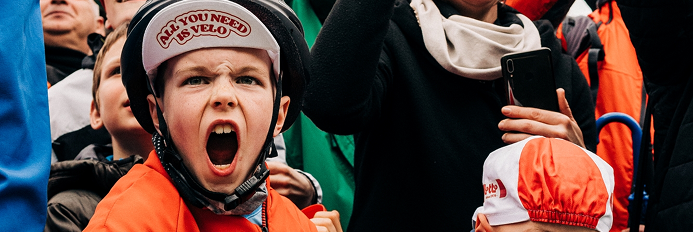
In addition, the fans and the familiar atmosphere is something quite special. I try to share as much as I can with them. Everything starts in the morning when we get to the parking lot, where they ask for autographs and pictures. Then, they watch us inspecting the course and, for example, when we stop to practice a section, they tell us how we should do it like they were our own coaches (laughs). During the whole race, they constantly cheer us up, especially in Belgium, where you feel like one of them. They also like drinking a lot, which increases their commitment to shout out and cheer up. When we finish the race, they remain there for hours waiting for us to get out of the RV and talk a little bit with us. It is funny because some have learned some random Spanish words that they shout during the race. Other fans still wonder how I have been able to adapt to the cold, but I have been living here almost all of my life!”
What does a day in Ceylin’s life look like?
“My daily routine… I train every single day, therefore I am on the bike each day of the week. But now, since I am not in full season: I wake up, I have breakfast, I check the email, I help around the house and I go out with my friends to eat something. It is kind of strange not being in the usual training schedule.
In full season it is rather different and I must pay attention to the coach. During the morning I go out and ride. I am usually back around noon when I eat something. I might train a second time during the day, but already at home. Later, during the evening, I get some rest and go out with some friends to escape from the four walls. To finish the day it is time to eat well and head to bed on time.”
You had an incredible season, could you summarize it?
“It was not something I was expecting, but I had a wonderful season. I knew that it was going to be something beautiful and that I could go far, but nobody expected that it would go so well. I think there were many factors that contributed to it. For instance, I am a year older and a year stronger, the team and the MTB helped a lot or the love of God. I learned and grew up as a cyclist from both a physical and mental point of view. I still believe that I can improve, but the next step will not be as large as this one was.
Clearly, the best moment of the season was winning the World Championship, but the victory in Koksijde (Belgium) was very important as well; it is my favorite course and it was my first victory in the World Cup. On the other side, the worst day was when I crashed in the last section of Hoogerheide (the Netherlands), I lost the race but I had also lost the first place in the general classification for the World Cup. It was a hit below the belt.”
Regarding the other riders, what makes you stand out?
“I do believe that the technique is my strong point, but I also feel like I race and think differently during the competitions. Aside from that, the biggest difference is my personality; I am a very cheerful and sociable person who is very calm and always with a smile before and after each race. Besides, I try to have a good relationship with the other riders. Being friends is a big word, but we are good colleagues and we always respect each other.”
How do you prepare for a race?
“If I register for a race I want to win. It is worth mentioning, that every race I have participated in were important events in which I was competing for a title or the general classification of the championship. There were a couple of more relaxed races that did not have as much repercussion and I was freer. The first part of the race was relaxed and in the end, if I was feeling alright, I could give it all.”
Tell us a bit about the D-day, the World Championship in Dübendorf (Switzerland). The course was very fast, for powerful cyclists, and the technical sections, only a few, were hard. How did it go? What did you feel?
“The last lap was very tough since we had been battling from start to finish. In the second-to-last lap I remember thinking and feeling totally exhausted and that maybe that would not be my day. However, when the last lap started I told myself to fight for the first position and to hold on until the last moment. I tried doing the technical sections first. I remember arriving at the muddy hill second or third in every lap; I had to get off the bike because I did not have enough speed to get to the top. But in the last lap, I left a gap before me in order to try reaching the summit. If I did not succeed it would be my fault, yet I managed to do it and to keep on AnneMarie Worst wheel. In the last fly-over and in the last turn I could not get to the front, thus we arrived at the last sprint side by side. I gave it all till the end and I was the best.
I could not believe I had won. I was thinking about the fatigue and the pain I was feeling instead of realizing I had won the world champion title. Now, when I see images or videos about that day everything comes back to my mind: every corner, every second and even what I was thinking at that very moment. There are times when my eyes still fill in with tears. It was a really amazing day from which I have fantastic memories.”
Has your life changed after winning the world title?
“My life is pretty much the same. What has changed the most is the attention I receive from the media: interviews, newspapers or the radio. People on the streets recognize me, they stop me and we discuss their thoughts and opinions. But I am still the same person; the relationship with my friends and my family remains the same. I should also add that from the Dominican Republic there is an increasing interest in me, a connection that would not have appeared otherwise.”
What are your plans for the next season?
“In April I will start the MTB season, which will last until the World Championship in June. After that I will do a short season in road cycling in order to maintain the competitive spirit and the speed, to later focus on cyclocross again. Regarding cyclocross, I would like to keep the titles I have already won and to have a better season than the last one.”
Women’s cycling is raising, what can you tell us about that?
“I believe the UCI is taking steps to diminish the differences between women and men. For instance, the races last between 45-50 min instead of 40 min. The salary is still different, but the prizes are being equaled. This year we also had the chance to witness the first world championship in the women junior category. Even though the UCI has good intentions, the process is slow and they should accelerate it.
About the level in women’s cyclocross, it is increasing each year. For example, there are more women who are bunny-hopping the barriers, as a way to claim our place in the sport. In fact, Sanne Cant, AnneMarie or myself are capable of passing them, but there is no need in doing it right now. If the leading riders started hopping them, we would all feel forced to do it in order not to lose seconds. I think that every year there will be more women doing it, and in a few years, it will be mandatory. It is also true that they are quite high, 40 cm. Men are stronger and go faster, for us it is a little bit harder. In any case, it would be a good show for the spectators to prove that we are also capable of.”
Our favorite question, an anecdote?
“I remember this season’s race in Ronse (Belgium), for the general classification in the DVV trofee. It was a great day, but also a moment to take a step back and reflect. The previous week I had been in a training camp, and the course felt the complete opposite, with mud and rain. I was riding alone in front of the race when I entered the pit area and my bike had been dropped on the ground. I had to switch bikes myself. I did it so slowly that AnneMarie caught up with me. We rode together for a while, but I broke alone again. In the last lap, I crashed, but I managed to win. It was an introspective moment in which I realized that I had grown up from a mental and physical point of view. I felt like from that moment on, only a few things would be able to set me back.”
Photos by: Sam Buchli , Brazo de Hierro
Apasionado de la bici y de la competición, Pol, siempre está preparado para una nueva aventura. Le encanta la sensación de ponerse un dorsal y es un auténtico adicto al ciclocros. Passionate about bikes and racing, Pol is always ready for a new adventure. He loves the feeling of pinning a number and he is truly addicted to cyclocross. View all posts by Pol Sopeña
 Pavel Novotný
 Javi Angulo
 Javi Angulo

 Toni de la Torre
 Javi Angulo
 Javi Angulo
 Javi Angulo
 Javi Angulo

 Pol Sopeña
 Javi Angulo
 Javi Angulo

 Sergio Querpache
Receive our monthly selection of the best articles, news, exclusive content and giveaways only for subscribers, subscribe to OUR NEWSLETTER
Receive our monthly selection of the best articles, news, exclusive content and giveaways only for subscribers, subscribe to OUR NEWSLETTER
Receive our monthly selection of the best articles, news, exclusive content and giveaways only for subscribers, subscribe to OUR NEWSLETTER
Receive our monthly selection of the best articles, news, exclusive content and giveaways only for subscribers, subscribe to OUR NEWSLETTER