- News
- Reviews
- Travel & Adventure
- Interviews
- Inside Industry Players
- Community
Bikes
Reviews
Components
Reviews
Cycling
Apparel


[raw_mobile_menu]
[wpml_language_switcher_down]


Año tras año, ya son más los ciclistas que se adentran al mundo de la larga distancia, ya sea haciendo una ruta de larga duración durante el fin de semana, o enlazando varias etapas en un viaje. Eso sí, hay un salto importante si consideramos carreras de ultradistancia, en las que sólo los más intrépidos se atreven a participar. Si pensamos en la escena española, nombres como Julián Sanz por sur retos varios nos pueden sonar, y entre ellos también destaca Carlos Mazón.
Tras una charla con Carlos, en la que nos contó mil y una anécdotas, nos dimos cuenta que su pasión por la bicicleta va más allà de lo que es tener éxito en carreras. Para él, la bicicleta es un medio de transporte que le permite viajar y vivir aventuras en las que se reta a ti mismo, se esfuerza al máximo, está en armonía con el entorno, conoce a gente, y disfruta del camino mientras pedalea.


La pasión por el ciclismo fue un hecho gradual. Todo empezó como un medio de transporte por la ciudad, en concreto Bilbao, ciudad al norte de España en la que actualmente reside. Poco a poco, comenzó a viajar para conocer su entorno. Empezando por el País Vasco y todos esos pueblecitos, puertos y montañas que no conocía, cada vez se fue alejando más. Para esos viajes de verano un poco más largos que se planteaba, como el Camino de Santiago o la Via de la Plata, empezó a entrenar y proponerse retos. Buscando rutas que hacer para descubrir países dió con la TransAm en 2014, una ruta cicloturista de costa oeste a este de Estados Unidos en la que participó en 2015. Al año siguiente asistió a la TransContinental, donde quedó tercero. En ese momento se enganchó y ha participado en otras carreras como la TransIbérica 2018 (1º), Three Peaks 2019 (2º), o la Atlas Mountain Race 2020 (7º).

De toda su experiencia en ultradistancia, y viendo que en la península Ibérica no habían competiciones de ese estilo, Carlos, junto a David Rodríguez, se plantearon organizar un evento al que llamaron TransIbérica. La primera edición fue en 2018, y con apenas una decena de participantes que acabaron dando la vuelta a la península, el resultado y la recepción de los corredores fue más que positiva. El evento fue creciendo y al año siguiente repitieron. Además organizaron una carrera nueva, la TransPyrenees. Este año 2020 no podía ser distinto, y un nuevo reto en bicicletas de gravel tendrá lugar, Badlands, además de las dos otras competiciones. Eso sí, están compactadas en el calendario a finales de verano por culpa de la pandemia global. ¿Algún valiente asistirá a todas?
A parte de ser un ciclista a nivel competitivo, Carlos es un fuerte promotor y defensor de la bicicleta como medio de transporte. Por ejemplo, se fue a hacer un estudio biomecánico a Madrid, e hizo los dos trayectos desde Bilbao en bici, nada menos que 400 km en línea recta. Además, está involucrado en iniciativas locales como ConBici en Bilbao que promueve el ciclismo urbano.
Con tan solo 26 años, Carlos se planteó la posibilidad de ver un país nuevo y, a su vez, vivir una aventura única, participar en la TransAm 2015. Su objetivo era claro, acabar la carrera haciendo 300 km al día. Él haría su carrera sin fijarse en los otros, a su propio ritmo. Al final acabó haciendo una media de 330 km diarios durante 20 días. Lo que no se esperaba era acabar tan bien de cabeza y de físico.
Al ser su primera carrera de ultradistancia se reservó y al final pudo apretar, acabando en 2º lugar. Sin embargo, fue penalizado porque no siguió el track establecido en algunos segmentos e iba sin GPS de seguimiento, que se quedó sin batería. Sólo iba con mapas de papel y, a mitad de carrera, la tarjeta de memoria del móvil en el que llevaba los mapas se estropeó, con lo que únicamente podía seguir una línea imaginaria. Al llegar cerca de meta adelantó a los que iban en 2º posición y, aunque no se le reconociera en la clasificación, fue una gran experiencia en la que aprender, ganar experiencia y conocerse a sí mismo.


Para la TransContinental se preparó mucho mejor y acabó tercero después de estar batallando por el 2º lugar. Consiguió hacer 380 km al dia con un desnivel acumulado promedio de 4.600 m. Eso en un total de 10 días en los que sólo durmió 18 horas. Se tratan de carreras de estómago en las que tienes que ser capaz de ingerir constantemente todas las calorías que vas gastando. Su estrategia era disfrutar del viaje y para eso trazó una ruta pasando por lugares carismáticos que le servían de pequeñas metas de referencia. Al ser un recorrido tan abierto y con pocos checkpoints se dio cuenta de algunos de los fallos de la carrera en que los corredores podían hacer trampas, como ir por la autopista o tener a alguien en coche que te ayude. Así pues, con la intención de mejorar y organizar una carrera en territorio español, apareció la idea de la TransIbérica.
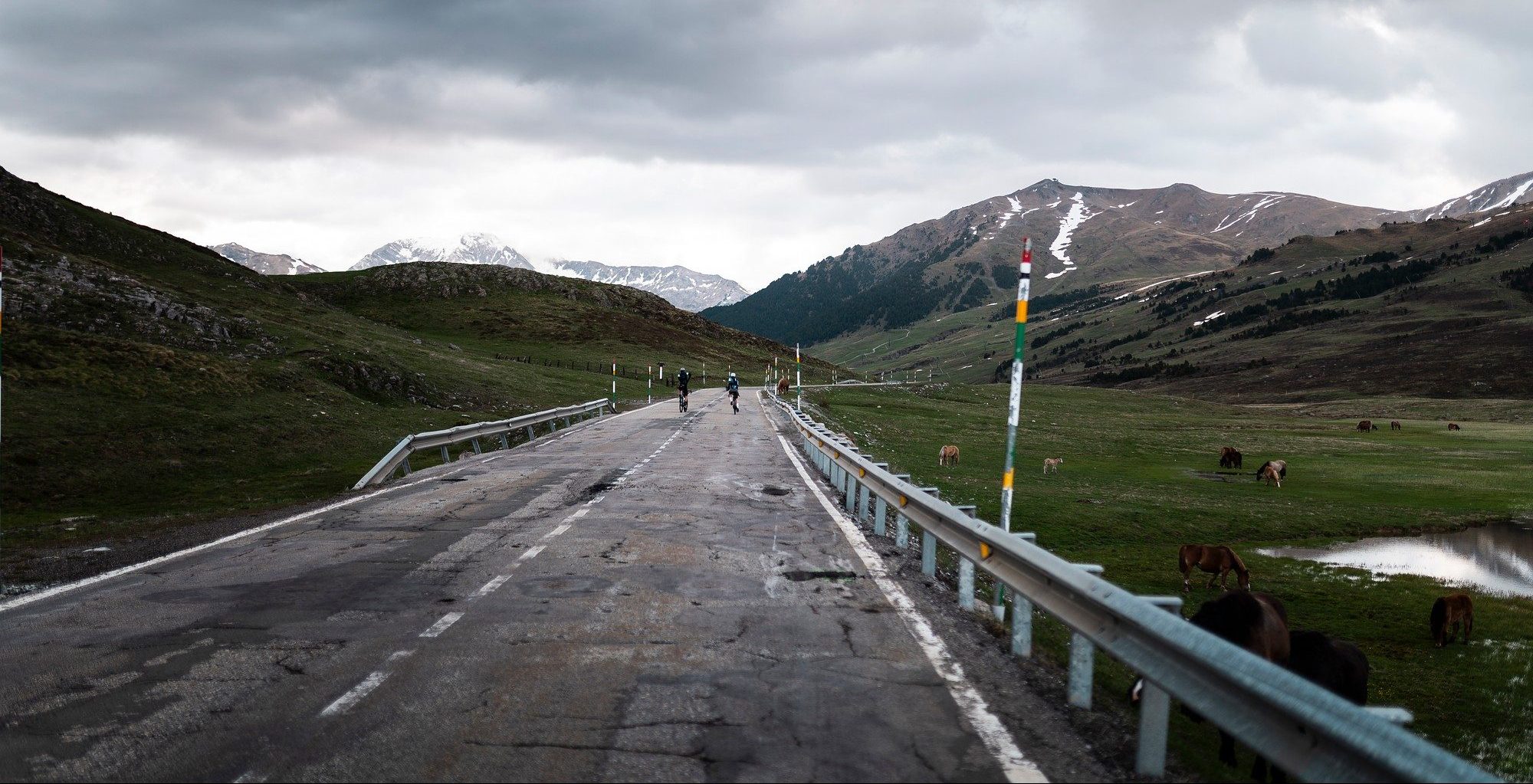
En 2018 se organizó la primera TransIbérica, con un recorrido alrededor de la península que le da nombre. Al tener un número reducido de participantes, Carlos también participó. El hecho de ser el organizador no suponía ninguna ventaja, ya que los checkpoints eran públicos desde hacía meses. Al contrario, hubo momentos en los que le perjudicó porque se encargaba de tomar fotos, se preocupaba por los participantes, y tenía que tomar decisiones de organización. En un punto perdió más de 4 horas por unas llamadas y una tormenta en Andorra. Como el resto, no tuvo ayuda externa, y se podía conocer la zona como cualquier otro español que hubiera viajado. Al final, acabó primero, pero la posición fue más que nada anecdótica, ya que el premio que te llevas no es un obsequio sino la experiencia durante el camino.


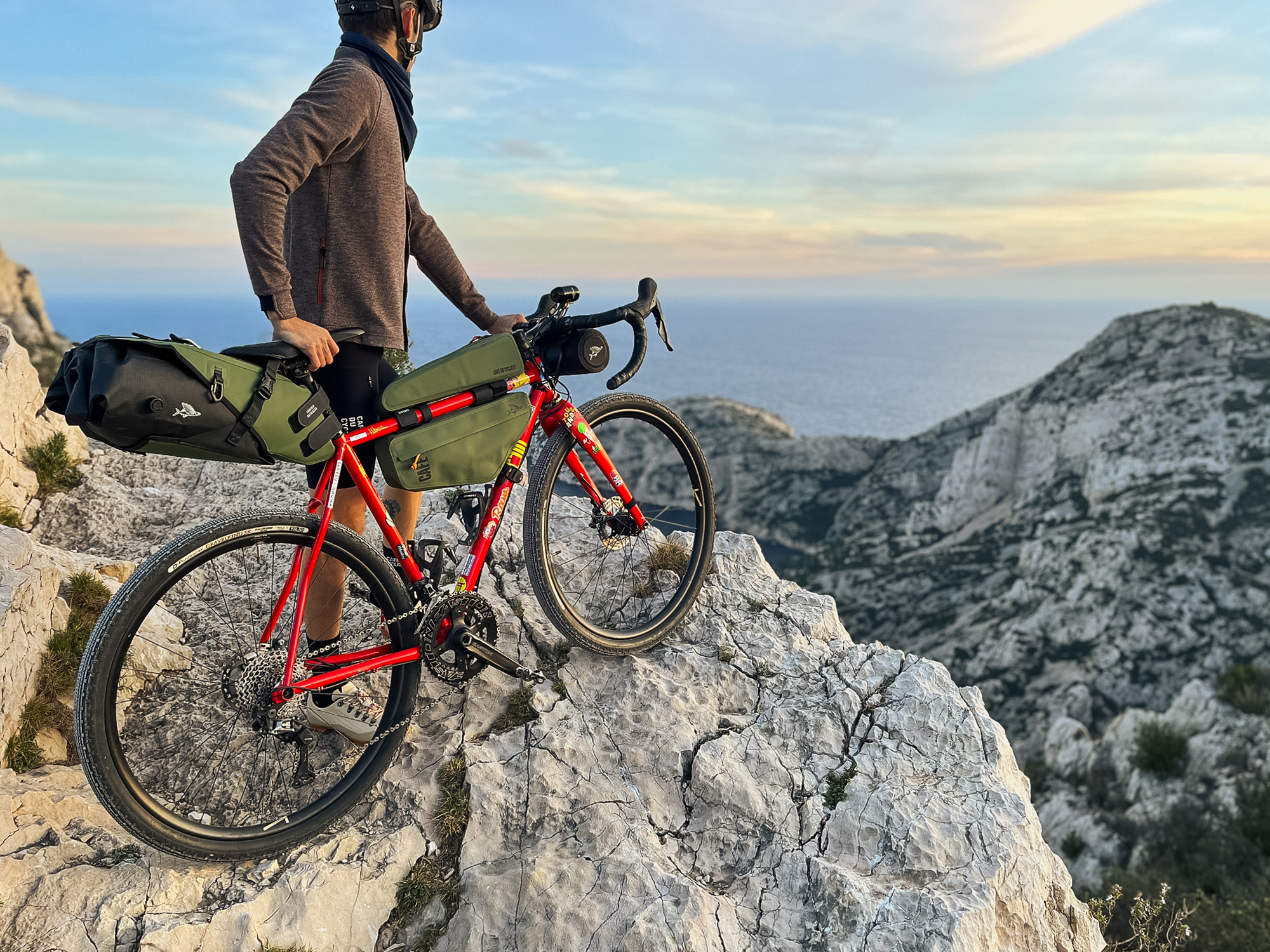
La Atlas Mountain Race a principios de año era la primera carrera de gravel a la que asistía, pero no fue lo que los participantes se esperaban antes de llegar. Anunciada como carrera de gravel salió fuerte al principio para sacar ventaja, pero a los pocos kilómetros se vió que era un terreno propio de bicicletas de montaña, y eso lo cambió todo. La bicicleta de gravel que llevaba no le permitía relajarse en ningún momento y tuvo que andar mucho (remontar ríos y portear la bici más de 35 km). Además, la comida y el agua eran escasos (alguna lata, pan, refrescos, aceitunas, quesitos y dulces, perdió 5 kg). Suerte de la leche en polvo y la avena que llevó que le sirvieron de desayuno y cena en dos días. Como él nos comenta, fue una carrera de penurias.
Fue compitiendo por el 2º y 3º lugar hasta que llegó al último punto de control antes de meta, derrotado. La frustración por no llegar a mostrar todo su potencial por la mala elección de material y comida le invadió y desconectó de la carrera, pensando solo en acabar. A 50 km de meta un arenal bestial le desbordó. Se paró media hora en una sombra y se durmió sentado. Llegó enfadado a meta, pero al menos había comida y, curiosamente, recuperaron sus gafas de ver que había perdido al empezar la carrera. Acabó 7º pero la posición no importaba, le dolió en el alma y se quedó con malas sensaciones. Fue una carrera de aprender y que con el tiempo la ves con optimismo. Para la siguiente, MTB de doble suspensión y comida deshidratada hasta los topes.


Para este año se planteaba la Torino-Niza y la Dos Volcanos. La primera coincide con la organización de Badlands, y la segunda dependerá del estado físico con el que llegue a otoño. Son pruebas más cortas, de unos 2.000 km, y no son tan exigentes como otras pero te obligan a llevar una preparación física más buena. En una carrera de 5.000 km el factor físico no es tan limitante, pero en una carrera corta uno debe estar concentrado todo el rato. La organización de todas las carreras de TransIbérica absorbe mucho tiempo y al no poder delegar le toca a él toda la responsabilidad. Seguramente hará la TransPyrenees ida y vuelta para supervisar el recorrido y algún tramo de Badlands de nuevo. Así pues, lo que queda de año será para disfrutar y pensar en el año que viene.

Apasionado de la bici y de la competición, Pol, siempre está preparado para una nueva aventura. Le encanta la sensación de ponerse un dorsal y es un auténtico adicto al ciclocros. Passionate about bikes and racing, Pol is always ready for a new adventure. He loves the feeling of pinning a number and he is truly addicted to cyclocross. View all posts by Pol Sopeña
Year after year, the number of cyclists who get into long-distance is higher, whether it is going on a long ride during the weekend, or connecting several stages on a trip. With no doubt, there is a huge step if we consider ultracycling races, in which only the most intrepid are willing to participate. Thinking about the Spanish scene, names such as Julián Sanz for his many personal challenges pop into our minds and, among them is Carlos Mazón.
After a chat we had with Carlos, in which he told us a bajillion stories, we realized that his passion for cycling goes beyond being successful in racing. For him, the bicycle is a means of transportation that allows him to travel and live adventures to challenge and push himself, be in harmony with the environment, meet people, and enjoy the journey as he pedals.
The passion for cycling was something gradual. Everything started as a means of transportation through the city, in particular Bilbao, a city in northern Spain in which he lives. Little by little, he started traveling to explore his surroundings. Beginning with the Vasque Country and all those villages, climbs and mountains he did not know, he gradually got further away. For those longer trips he was planning, like the Camino de Santiago or the Via de la Plata, he began training and set more challenging feats. Searching for routes to go and discover new places he came across TransAm in 2014, in which he participated in 2015. The year after he attended the TransContinental, finishing third. From that moment on he was hooked and he has participated in other races such as the TransIbérica 2018 (1st), Three Peaks 2019 (2nd), or Atlas Mountain Race 2020 (7th).
From all his experiences in ultracycling, and considering that there were no such competitions in the Iberian peninsula, David Rodríguez and him decided to organize an event called TransIbérica. The first edition was in 2018, and with barely 10 participants who toured around the peninsula, the result and acceptance of the riders were very positive. The event started expanding and it was repeated the following year. Moreover, they organized a new race, the TransPyrenees. This year 2020 could not be less, and a new challenge with gravel bikes will take place, Badlands, in addition to the other two competitions. However, they will be compacted in the calendar to the end of summer due to the global pandemic. Will any brave rider participate in all of them?
Aside from being a competitive cyclist, Carlos is a strong promoter and advocate for the bicycle as a way of getting around. For instance, he went to Madrid to get a bikefit done and did the whole round trip on a bike from Bilbao, more than 400 km in a straight line on each journey. Furthermore, he is involved in local initiatives such as ConBici in Bilbao that promote urban cycling.
Being 26 years old, Carlos considered the possibility of visiting a new country and, at the same time, living a unique experience by participating in the TransAm 2015. His objective was clear, finishing the race by riding 300 km each day. He was going to do his own race without paying attention to the others, setting his own pace. In the end, he ended up traveling 20 days with an average of 330 km daily. What he was not expecting was to finish in such a good mental and physical state.
Being his first race, he saved energies during the whole race, and in the end, he was able to push ending up in 2nd place. Nevertheless, he was penalized because he did not follow the track in some segments and he went without a tracking GPS, which battery had damaged. He only had some paper maps and, half-way through the race, the cell-phone memory card which contained the maps broke, he could only follow an imaginary line. Once he got closer to the finish line he overtook the second place contenders and, despite his final position not being recognized, it was a great experience of learning and getting to know himself.
For the TransContinental he prepared himself much better and finished in 3rd place after battling for the 2nd one. He managed to daily ride 380 km with an average ascend of 4.600 m, all of that during 10 days and just 18 hours of sleep. These are stomach races in which one must be able to constantly replenish all the calories that are spent. His strategy was to enjoy the trip and, for that, he designed a track passing through some charismatic places that acted as reference points of his own. Being such an open route with just a few checkpoints he realized that other riders were capable of cheating, like going through highways or having a secret support car. Thus, with the intention to improve that and organize a race in Spain, the idea of TransIbérica appeared.
In 2018 the first TransIbérica was organized, with a route around the peninsula that has its name. Having a small number of participants, Carlos also participated. Being part of the organization represented no advantage since the checkpoints had been public for months. On the contrary, there were moments that were detrimental because he had to take photographs, he cared about the riders, and he had to take organization decisions. During a point in the race, he lost more than 4 hours attending calls and a storm in Andorra. Like the rest, he had no external help, and he knew the region as any other Spaniard who has traveled. In the end, he finished first, but the position was not relevant since the prize you get is not material but the experience of the journey.
The Atlas Mountain Race at the beginning of the year was the first gravel race he ever attended, but it was not what the participants were expecting before getting there. Advertised as a gravel race he pushed the pace on the start to get some distance, but after some kilometers, it turned to be terrain for mountain bikes, and that changed everything. The gravel bike he rode would not allow him to ever relax and he had to walk the bike for dry rivers through more than 35 km. Besides, food and water were scarce (a few cans, bread, sodas, olives, cheese and sweets, he lost 5 kg). He was lucky he had some milk powder and oats with him that acted as breakfast and dinner for two days. As he says, it was a misery race.
He had been competing for 2nd and 3rd place until he got to the last checkpoint, wasted. The frustration for being unable to show his full potential and the bad choice of material and food invaded him and he disconnected from the race, only thinking about the finish. At 50 km from the end, a huge sandpit overwhelmed him. He stopped for half an hour under a shadow and he fell asleep while sitting up. He was angry when he got to the finish, but at least there was food and, oddly enough, his glasses were there, which he had lost at the start of the race. He finished 7th but that did not matter. He was hurt and full of bad sensations. It was a race about learning that, with time, you see from a more optimistic point of view. For the next one, a full-suspension MTB and tones of dehydrated food.
For this year he was considering Torino-Nice and Two Volcanos. The first overlaps with Badlands, and the second one will depend on what his shape is in autumn. These are shorter races, around 2.000 km, and though they might not be as demanding they require a better level of fitness. In a 5.000 km race the physical shape is not as limiting, but in a shorter one focus must be constant. The organization of all the TransIbérica races takes a lot of time and responsibilities. Most likely, he will do the TransPyrenees (round-trip) to check the state of the route, and some parts of Badlands again. Hence, the rest of the year will be a moment to enjoy and start thinking about new goals.
Apasionado de la bici y de la competición, Pol, siempre está preparado para una nueva aventura. Le encanta la sensación de ponerse un dorsal y es un auténtico adicto al ciclocros. Passionate about bikes and racing, Pol is always ready for a new adventure. He loves the feeling of pinning a number and he is truly addicted to cyclocross. View all posts by Pol Sopeña
 Javi Angulo
 Javi Angulo
 Javi Angulo
 Pol Sopeña
 Pol Sopeña
 Javi Angulo
 Javi Angulo
 Javi Angulo
 Pol Sopeña
 Javi Angulo
 Javi Angulo
 Javi Angulo
Receive our monthly selection of the best articles, news, exclusive content and giveaways only for subscribers, subscribe to OUR NEWSLETTER
Receive our monthly selection of the best articles, news, exclusive content and giveaways only for subscribers, subscribe to OUR NEWSLETTER
Receive our monthly selection of the best articles, news, exclusive content and giveaways only for subscribers, subscribe to OUR NEWSLETTER
Receive our monthly selection of the best articles, news, exclusive content and giveaways only for subscribers, subscribe to OUR NEWSLETTER