- News
- Reviews
- Travel & Adventure
- Interviews
- Inside Industry Players
- Community
Bikes
Reviews
Components
Reviews
Cycling
Apparel



[raw_mobile_menu]
[wpml_language_switcher_down]


Here in the northern hemisphere, we are heading to winter, and it is understandably more difficult to find the motivation to go out and ride. The grim weather conditions and scarce hours of daylight turn indoor cycling into the most logical way of spinning the legs, unless something persuades us enough to ride outside no matter what’s on the other side of the front door.
This is where a new bike comes into play. In collaboration with Jaegher, our editor Javi recently got his hands on his first gravel bike, a Jaegher Hurricane FL.X 1912 which he has been putting to the test since day one with future adventures and challenges in mind.


Jaegher was founded in 1934 in Flanders, Belgium. The brand name means hunter, and its pronunciation is the same as Yeager, “a reference we like to make to the first man to break the sound barrier in a jet plane”, as they state. Each of the models they produce is also related to the plane’s topic, as all products are named after famous jets. Particularly, Hurricane refers to the Hawker Hurricane, a British fighter aircraft of the 1930s–40s.

If we focus again on their products, the base material of their bikes is Columbus XCr stainless steel tubes coming from Italy, which are then welded in their atelier in Ghent. The paint job, finish, and assembly are also done in Flanders. They recently opened a showroom, also in Ghent, and there is a new atelier being built, four times bigger than the current one.
“Your race cycle doesn’t arrive here together with thousands of other mass-production race cycles in a container from the other side of the world. It is made over here. No other brand is more Belgian or Flemish than Jaegher.”
One of the many advantages of made-to-measure bikes is that they can accommodate all the physiological particularities and geometry preferences of the rider. We ended up with a geometry that feels aggressive at first glance but nonetheless is clearly off-road oriented.

The fork has a tire clearance of up to 700c x 47 mm so we can tackle crazy adventures with this bike too. Trying to find the balance between racing and bikepacking, this frame has additional bolts on the downtube but none on the fork or top tube.
Regarding the cable routing, we won’t deny that a fully integrated build looks very clean, but we are also aware of the struggles to disassemble an integrated cockpit and we chose a semi-integrated approach instead. There are many trips planned with this bike over the next year, and we like the ease of disassembling a semi-integrated cockpit.


Steel bikes are cool, but stainless steel bikes are the real deal. Emanuel from Jaegher told us about the benefits of this alloy and, knowing that it would fit with our riding style, we went for it. This model is called Hurricane 1912, and the year refers to when this iron alloy was created for the first time.
Three times stronger than ordinary steel, weatherproof & durable given the resistance of the material to corrosion, and difficult to beat when it comes to finding the best performance-comfort balance. We also want to mention that stainless steel is also more environmentally sustainable and recyclable than carbon.

Unlike Tom Boonen’s newest bike, which was displayed at Bespoked, we opted for a more subtle, yet beautiful paint job. The frame has a hand-brushed naked finish with CPC (ceramic polymer coated) logos. Given its look, we have already been told several times that it looks like a titanium bike.

Regarding the carbon fork and the stem, though, we were encouraged to do something out of the ordinary, and we are quite satisfied with the result. We wanted the same base color for the frame logos but, given the different paint techniques used, the output was not exactly the same.
A light sand color was used as the base and the faded lizard green with stints gave it the perfect touch. It was done using wet paint and applying a matte finish. The fluorescent orange was used for the logos, both Jaegher and RAW Cycling ones, and the requested drawing on the stem.
“My life motto is ‘tunnel vision’ and, every time I look at my stem, I am reminded about focusing on my own goals and forgetting about external inputs.” – Javi


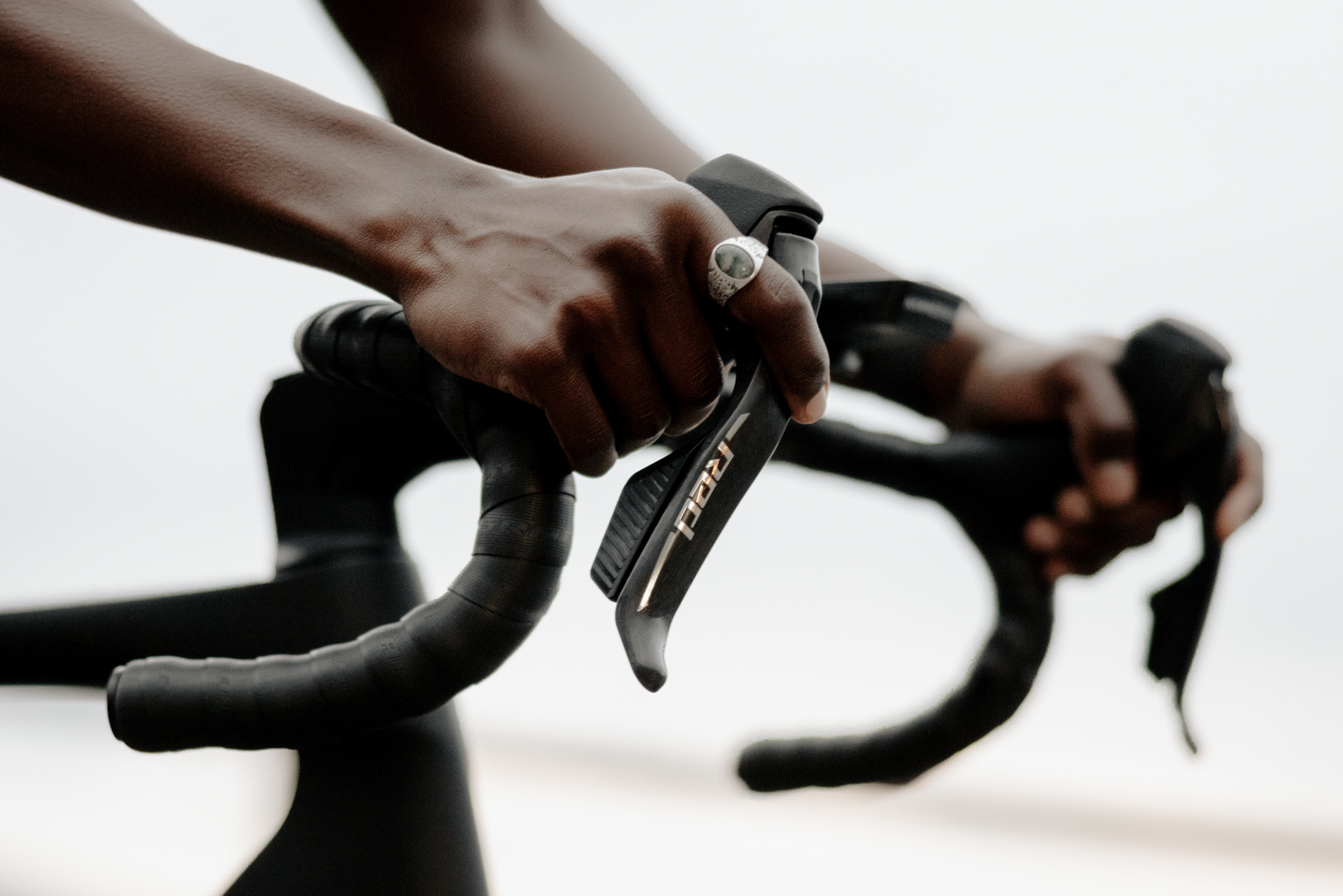
In addition to the frame material, geometry, and paint job, we also had complete freedom of choice when it came to components. The drivetrain is a SRAM Force AXS XPLR 1x, but we included the Classified Powershift system to be able to count on a second front ring. Ah, you don’t know yet what Classified is about? The Belgian company is taking the cycling industry by storm with the innovative way in which they combine the benefits of both 1x and 2x drivetrains through a sleek, wireless system that eliminates the front derailleur.


With a button located in the left hood, one can shift from the big ring to the virtual small one, which has a ratio of 0,686. This means that for each revolution on the cassette, the wheel rotates 0,686 revolutions. This ratio is comparable to 53/36, 50/34 or 48/33 combinations.
After a month of testing it, we can say that its ability to shift instantly and under pressure is a game changer. During the rides we have done so far we have encountered on numerous occasions steep hills just after a blind turn, and shifting from the big to the virtual small ring prevented us from putting a foot on the ground. The gear range is also a big advantage, and during these first weeks we have been riding with a 46T and an 11-34 cassette, for a total of 24 gears.


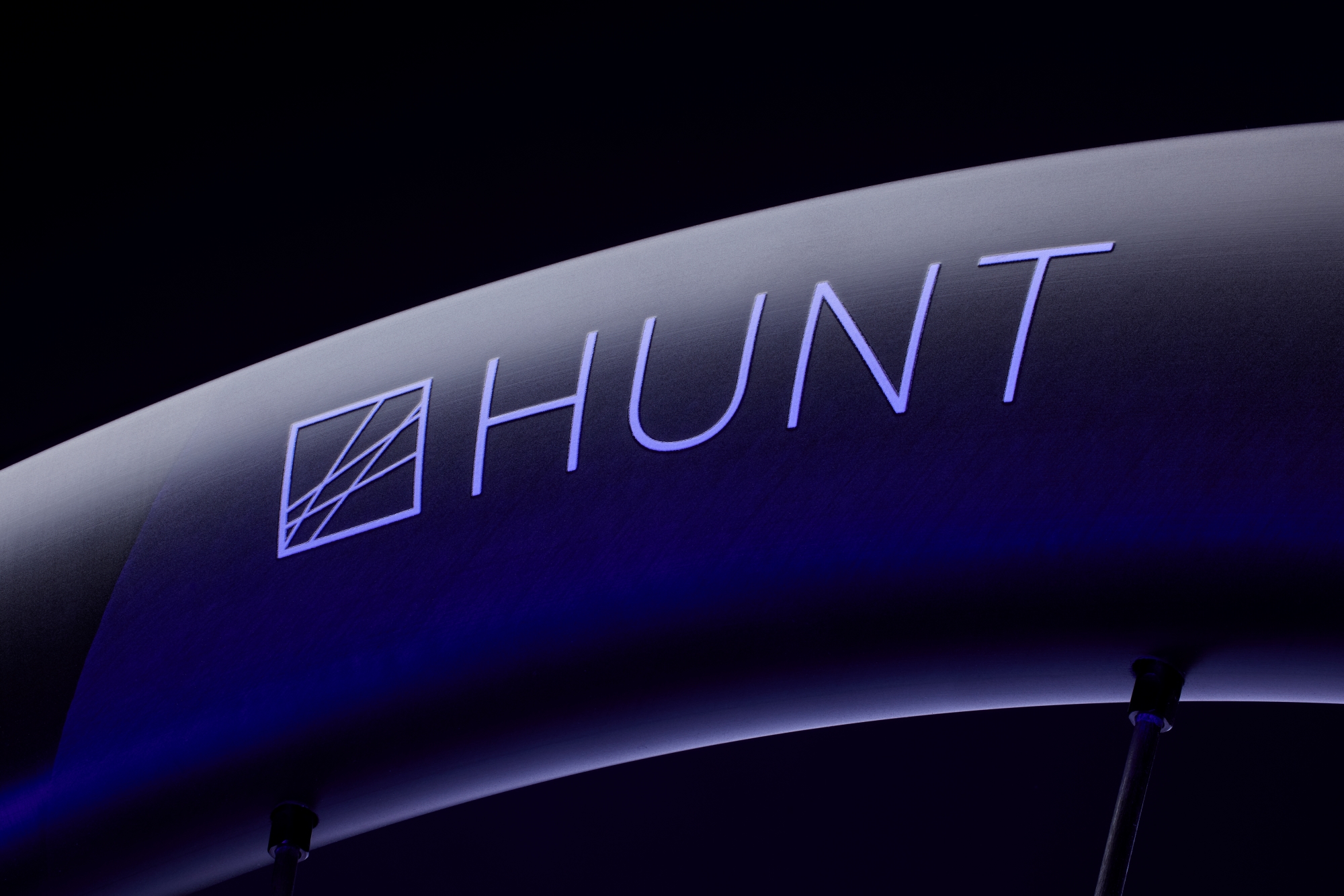
Incorporating the Powershift system also implies getting the necessary set of wheels. These HUNT 40 Carbon Gravel Race rims are hookless and 40 mm deep. Unlike the loud free hubs of the rest of the wheelsets of the British brand, this one is silent, which is a pity.
Another Belgian brand present in this build is Cyclowax. We already incorporated their hot waxing system in the chain lubing routine of our previous bikes, and on this occasion, we count on a pre-waxed chain out-of-the-box.

The Chris King headset and King cages are a must if you have the option to choose the components of your bike. The bottom bracket is a Cema stainless steel T47, and the products that are part of the Zipp Service Course SL/XPLR pack complement the rest of the bike.


The good thing about getting a new bike in autumn is that there are several months ahead in which we can test different setups with the summer adventures in mind. This bike has already gone through a lot. After a couple of rides in Flanders we brought this Jaegher Hurricane FL.X to Girona to take part in GiRodeo, and we can say it turned heads among the participants.


So far it passes with flying marks all the tests done in dusty, muddy, and rocky conditions. One can feel that it is made to measure, and it behaves like an extension of our own body. It feels light when climbing, it is definitely responsive when descending, and the chosen geometry allows us to adopt an aggressive position on the flat sections.
We have been fortunate enough to test many gravel bikes over the years and, whether because of the fact that we finally have our own, or because the stiffness of the material encourages us to, we were more daring and aggressive on the descents, with the bike responding amazingly.

No complaints about the frame, but it is true that the width of the WTB Vulpine tires (40 mm) was probably not enough for some of the descents we faced in Girona, so in the short term we will make the most of the tire clearance by mounting wider tires.
Beyond performance, we fell in love with the sound of the small stones hitting the stainless steel, which may even sound masochistic. The fluorescent flashes of the bright orange details, when the sunlight starts to fade away, give a perfect aesthetic touch to the entire build. Javi finally owns a gravel bike, and what a bike to start with.


Javi es nuestro corresponsal en Bélgica, y trata de contrarrestar su obsesiva pasión por el análisis de datos con la relajante acción (o eso es lo que dice) de crear contenido para la revista. Javi is based in Belgium and tries to compensate for his obsessive passion for data analytics with the relaxing action (that's what he says) of creating content for the magazine. View all posts by Javi Angulo

 Juliana Reis
 Toni de la Torre
 Toni de la Torre
 Javi Angulo
 Javi Angulo

 Pavel Novotný

 Pol Sopeña
 Javi Angulo
 Javi Angulo
 Pavel Novotný
 Javi Angulo
 Javi Angulo
Aquí, en el hemisferio norte, nos acercamos al invierno y, comprensiblemente, es más difícil encontrar la motivación para salir a montar en bicicleta. Las malas condiciones climáticas y las escasas horas de luz del día convierten al ciclismo indoor en la forma más lógica de hacer mover las piernas, a menos que algo nos convenza lo suficiente para rodar en el exterior sin importar lo que nos espere al otro lado de la puerta de entrada.
Aquí es donde entra en juego una bicicleta nueva. En colaboración con Jaegher, nuestro editor Javi tuvo acceso recientemente su primera bicicleta gravel, una Jaegher Hurricane FL.X 1912 que ha estado poniendo a prueba desde el primer día con futuras aventuras y retos en mente.
Jaegher fue fundada en 1934 en Flandes, Bélgica. El nombre de la marca significa ‘cazador’, y su pronunciación es la misma que Yeager, “una referencia que nos gusta hacer al primer hombre que rompió la barrera del sonido en un avión a reacción”, como afirman. Cada uno de los modelos que producen también está relacionado con el tema de la aviación, ya que todos los modelos adoptan el nombre de aviones famosos. En particular, esta Hurricane se refiere al Hawker Hurricane, un avión de combate británico de las décadas de 1930 y 1940.
Si volvemos a centrarnos en sus productos, la base de sus bicicletas son los tubos de acero inoxidable Columbus XCr procedentes de Italia, que luego son soldados en su taller de Gante. La pintura, el acabado y el montaje también se realizan en Flandes. Recientemente abrieron una sala de exposición, también en Gante y están construyendo un nuevo taller, cuatro veces más grande que el actual.
“Tu bicicleta de carrera no llega aquí junto con miles de otras bicicletas producidas en masa en un contenedor desde el otro lado del mundo. Está hecha aquí. Ninguna otra marca es más belga o flamenca que Jaegher.”
Una de las muchas ventajas de las bicicletas hechas a medida es que pueden adaptarse a todas las particularidades fisiológicas y preferencias del ciclista en cuanto a geometría. Terminamos con una geometría que parece agresiva a primera vista pero que, sin embargo, está claramente orientada a condiciones todoterreno.
La horquilla tiene un pase de rueda para neumáticos de hasta 700c x 47 mm, por lo que también podemos afrontar aventuras locas con esta bicicleta. Tratando de encontrar el equilibrio entre las carreras y el ciclismo, este cuadro tiene tornillos adicionales en el tubo diagonal, pero ninguno en la horquilla o el tubo superior.
En cuanto a la integración de cables, no negaremos que un montajetotalmente integrado destaca por su apariencia, pero también somos conscientes de las dificultades que supone desmontar un cockpit integrado y, en su lugar, elegimos un enfoque semiintegrado. Hay muchos viajes planeados con esta bicicleta durante el próximo año y nos gusta la facilidad y rapidez de desmontaje de la opción escogida.
Las bicicletas de acero son geniales, pero las bicicletas de acero inoxidable son lo mejor. Emanuel de Jaegher nos habló de las ventajas de esta aleación y, sabiendo que encajaría con nuestro estilo de conducción, nos decidimos por ella. Este modelo se llama Hurricane 1912, y el año hace referencia a cuando se creó por primera vez esta aleación de hierro.
Tres veces más fuerte que el acero común, resistente a la intemperie y duradero dada la resistencia del material a la corrosión, y difícil de superar cuando se trata de encontrar el mejor equilibrio entre rendimiento y comodidad. También queremos mencionar que el acero inoxidable también es más sostenible ambientalmente y reciclable que el carbono.
A diferencia de la bicicleta más nueva de Tom Boonen, que se exhibió en Bespoked, optamos por un trabajo de pintura más sutil pero hermoso. El marco tiene un acabado desnudo cepillado a mano con logotipos de CPC (recubrimiento de polímero cerámico). Por su aspecto, ya nos han dicho varias veces que parece una bicicleta de titanio.
En cuanto a la horquilla y la potencia de carbono, nos animaron a hacer algo fuera de lo común y estamos bastante satisfechos con el resultado. Queríamos el mismo color base para los logotipos de los marcos pero, dadas las diferentes técnicas de pintura utilizadas, el resultado no fue exactamente el mismo.
Se utilizó un color arena claro como base y un verde lagarto difuminado con manchas le dio el toque perfecto. Se realizó utilizando pintura húmeda y aplicando un acabado mate. El naranja fluorescente se utilizó para los logos, tanto de Jaegher como de RAW Cycling Magazine, y el dibujo solicitado en la potencia.
“Mi lema es ‘tunnel vision’ y, cada vez que mire mi potencia, me haré saber que debo centrarme en mis propios objetivos y olvidarme de las influencias externas.” – Javi
Además del material del cuadro, la geometría y la pintura, también teníamos total libertad de elección en lo que respecta a los componentes. La transmisión es una SRAM Force AXS XPLR 1x, pero incluimos el sistema Classified Powershift para poder contar con un segundo plato delantero. Ah, ¿aún no sabes de qué se trata Classified? La empresa belga está arrasando en la industria del ciclismo con la forma innovadora en la que combina los beneficios de las transmisiones 1x y 2x a través de un elegante sistema inalámbrico que elimina el desviador delantero.
Con un botón situado en el capó izquierdo se puede pasar del plato grande al pequeño virtual, que tiene un ratio de 0,686. Esto significa que por cada revolución del casete, la rueda gira 0,686 revoluciones. Esta relación es comparable a las combinaciones 53/36, 50/34 o 48/33.
Después de un mes probándolo, podemos decir que su capacidad para cambiar instantáneamente y bajo presión es un verdadero punto de inflexión. Durante los recorridos que hemos realizado hasta ahora nos hemos encontrado en numerosas ocasiones con subidas pronunciadas justo después de una curva a ciegas, y poder cambiar instantáneamente del plato grande al pequeño evitó que tuviéramos que poner un pie en el suelo. La amplitud de marchas también es una gran ventaja, y durante estas primeras semanas hemos rodado con un 46T y un cassette 11-34, para un total de 24 marchas.
Incorporar el sistema Powershift implica también hacerse con el juego de ruedas necesario. Estas llantas HUNT 40 Carbon Gravel Race son hookless y tienen 40 mm de profundidad. A diferencia de los ruidosos bujes libres del resto de ejes de ruedas de la marca británica, este es silencioso, lo cual es una lástima.
Otra marca belga presente en esta construcción es Cyclowax. Ya incorporamos su sistema de encerado en caliente en la rutina de lubricación de cadenas de nuestras bicicletas anteriores, y en esta ocasión contamos con una cadena preencerada lista para usar.
El juego de dirección Chris King y los portabidones King son imprescindibles si tienes la opción de elegir los componentes de tu bicicleta. El pedalier es un Cema T47 de acero inoxidable, y los productos que forman parte del pack Zipp Service Course SL/XPLR complementan el resto de la bicicleta.
Lo bueno de adquirir una bicicleta nueva en otoño es que quedan varios meses por delante en los que podemos probar diferentes configuraciones pensando en las aventuras del verano. Esta bicicleta ya ha pasado por mucho. Después de un par de salidas en Flandes trajimos esta Jaegher Hurricane FL.X a Girona para participar en el GiRodeo, y podemos afirmar que llamó la atención de los participantes.
Hasta el momento pasa con nota excelente todas las pruebas realizadas en condiciones de polvo, barro y pedregosas. Se puede sentir que está hecha a medida y se comporta como una extensión de nuestro propio cuerpo. Se siente ligera en subida, definitivamente responde en los descensos, y la geometría elegida nos permite adoptar una posición agresiva en los tramos llanos.
Hemos tenido la suerte de probar muchas bicicletas gravel a lo largo de los años y, ya sea porque por fin tenemos la nuestra, o porque la rigidez del material nos anima, en las bajadas fuimos más atrevidos y agresivos.
Del cuadro no hay ninguna queja, pero sí es cierto que la anchura de las cubiertas WTB Vulpine (40 mm) probablemente no fue suficiente para algunas de las bajadas que afrontamos en Girona, así que a corto plazo aprovecharemos al máximo el pase de ruedas con el que contamos, y montaremos neumáticos más anchos.
Más allá del rendimiento, nos enamoró el sonido de las pequeñas piedras golpeando el acero inoxidable, algo que incluso puede sonar masoquista. Los destellos fluorescentes de los detalles de color naranja brillante, cuando la luz del sol comienza a desvanecerse, dan un toque estético perfecto a toda la construcción. Javi por fin tiene una bici de gravel, y vaya bici con la que empezar.
Javi es nuestro corresponsal en Bélgica, y trata de contrarrestar su obsesiva pasión por el análisis de datos con la relajante acción (o eso es lo que dice) de crear contenido para la revista. Javi is based in Belgium and tries to compensate for his obsessive passion for data analytics with the relaxing action (that's what he says) of creating content for the magazine. View all posts by Javi Angulo
Receive our monthly selection of the best articles, news, exclusive content and giveaways only for subscribers, subscribe to OUR NEWSLETTER
Receive our monthly selection of the best articles, news, exclusive content and giveaways only for subscribers, subscribe to OUR NEWSLETTER
Receive our monthly selection of the best articles, news, exclusive content and giveaways only for subscribers, subscribe to OUR NEWSLETTER
Receive our monthly selection of the best articles, news, exclusive content and giveaways only for subscribers, subscribe to OUR NEWSLETTER