- News
- Reviews
- Travel & Adventure
- Interviews
- Inside Industry Players
- Community
Bikes
Reviews
Components
Reviews
Cycling
Apparel


[raw_mobile_menu]
[wpml_language_switcher_down]


There is a new gravel event by Transibérica that has persuaded people from 20 distinct countries in its first edition to ride through the north of Spain in an unsupported way.
In ancient mythology, Basajaun means “the lord of the forest”, and as one of the characteristics of the Basque Country is the large share of the territory populated by trees and green fields, we find that the name is very fitting.


We have found it difficult to label this event, as it has the unsupported characteristics of ultracycling, the obligation of following a track like in a regular one-day race, and a distance from start to finish that puts Basajaun on the verge between a particularly long one-stage race and a pure ultradistance event. There are tougher and longer races, but the particularities of this route are impossible to replicate.
There was a predefined track that the riders had to follow, unless they had to look for food or accommodation. It was about 795 kilometers in length, 75% of it being off-road and with a total elevation gain of 14.000 meters. Along the way, riders passed by some of the most remote, diverse, and challenging places in the north of Spain, riding at some points a few kilometers from the border with France.


With a start in Vitoria on July 30th, the first kilometers were neutralized while crossing the outskirts of the city, but it wasn’t long until riders left the tarmac behind and started riding on gravel.
To begin with, the approach to Urbasa mountain range was not excessively hilly, but there were a couple of hike-a-bike sections and narrow trails that stretched the pack. As they continued heading east, the route shared a couple of sections with the St James path, which is highly frequented by pilgrims throughout the year.


On the first day, riders enjoyed some perfect weather for riding, as the temperature stayed within the mid-twenties. Unfortunately, the remainder of the event would be quite different.


The mountains were getting closer and closer as they approached the Pyrenees. This segment of the course delighted everyone at Basajaun, mainly because the spirits were still high. Some highlights were the Irabia dam and the medieval village of Ujue.
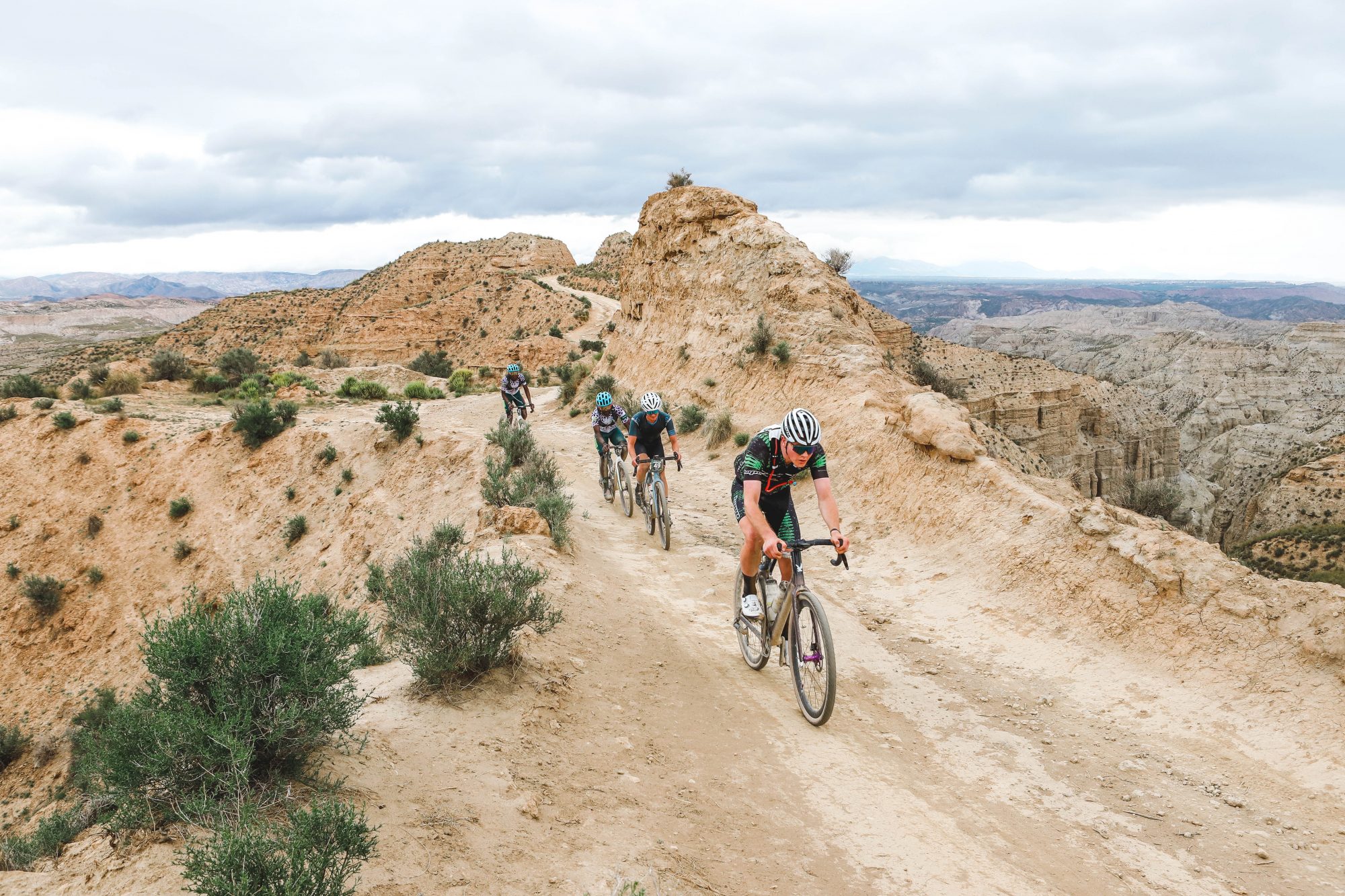
From kilometer 400 to 460, riders were fully immersed in the Bardenas Reales desert. Coming from a hilly and green part of the country, the flat and dusty terrain must have surely been a big shock to the system for riders.
Crossing the desert there were no big hills nor technical sections, so riders could forget a bit about the terrain ahead and focus on finding a place to refill water or hide from the sun.


Next, the route of Basajaun brought riders to ride alongside the Ebro river. They would head west until they arrived at the Sierra de la Demanda. The highest point riders reached was within the last third of the route, and with energy levels already low by then, the 1.998 meters of altitude of Tres Cruces were not very welcome.
As they say, “it’s all downhill from here”, and although there were still around 130 kilometers ahead, the hilliest part of Basajaun was already behind.
Before the start, there was no clear favorite for the win. With all the most well-known ultra cyclists either racing somewhere else or resting for an upcoming event, Basajaun was the perfect chance for other riders to be under the spotlight.


Paul Voss, multiple Grand Tour finisher while racing for the current BORA-hansgrohe team, took the early lead, and around the 200 km mark, he was a handful of kilometers ahead of a chasing group of fourteen riders. Unfortunately for him, the combination of knee pain and saddle sore was too much, and had to stop. Patxi Plazaola was at some point first, but the following night he also scratched from the race after many mechanical problems.

It was around km 480 when suddenly Oliver Beresford found himself in the lead, and he would remain there until the end. Following the traditions of ultra-cycling and bikepacking, there was no prize for the fastest rider except the honor of finishing first. He did it in 48 hours and 9 minutes so, although he cannot better his result, he will surely come back to try to do it in under two days.
In pairs, Federico Bassis and Manu Truccolo from Enough CC were the first ones to arrive. They even finished among the top 5 overall, something rarely seen in ultradistance events.
The temperatures continued rising, and those who required more time to finish the route had to suffer more hours under the sun. Among them, Tamara Santander was the first women’s finisher with a time of 4 days, 2 hours and 49 minutes.

While all the riders that took part in Basajaun will now enjoy a deserved break, there is no rest for the organizers as Transibérica, one of the three yearly events organized by Carlos Mazón and Javi Gamallo, starts on August 13th.

Javi es nuestro corresponsal en Bélgica, y trata de contrarrestar su obsesiva pasión por el análisis de datos con la relajante acción (o eso es lo que dice) de crear contenido para la revista. Javi is based in Belgium and tries to compensate for his obsessive passion for data analytics with the relaxing action (that's what he says) of creating content for the magazine. View all posts by Javi Angulo
 Javi Angulo
 Javi Angulo
 Javi Angulo
 Javi Angulo
 Javi Angulo
 Pavel Novotný
 Javi Angulo
 Javi Angulo
 Javi Angulo
 Javi Angulo

 Pol Sopeña
 Pavel Novotný
Hay una nueva prueba gravel de Transibérica que ha persuadido a gente de 20 países distintos en su primera edición a recorrer el norte de España sin apoyo externo.
En la mitología antigua, Basajaun significa “el señor del bosque”, y como una de las características del País Vasco es la gran parte del territorio poblada por árboles y campos verdes, nos parece un nombre muy apropiado.
Nos es difícil poner una etiqueta esta prueba, ya que es unsupported como la mayoría de carreras de ultraciclismo, tiene la obligación de seguir un trazado como en una carrera normal de un día, y la distancia a completar pone a Basajaun en el limite entre una carrera de una sola etapa particularmente larga y una prueba de ultradistancia. Hay eventos con mayor dureza o duración, pero las singularidades de este recorrido son imposibles de replicar.
Había una ruta predefinida que los ciclistas debían seguir, a menos que tuvieran que buscar comida o alojamiento. Tenía unos 795 kilómetros de longitud, el 75% de ellos fuera de carretera y con un desnivel total de 14.000 metros. En el camino, los ciclistas pasaron por algunos de los lugares más remotos, diversos y desafiantes del norte de la península ibérica, rodando en algunos puntos a pocos kilómetros de la frontera con Francia.
Con salida en Vitoria el 30 de julio, los primeros kilómetros se neutralizaron cruzando las afueras de la ciudad, pero no pasó mucho tiempo hasta que los pilotos dejaron atrás el asfalto y empezaron a rodar sobre tierra.
Para empezar, la aproximación a la sierra de Urbasa no fue excesivamente accidentada, pero había un par de tramos en los que llevar la bici a cuestas y senderos estrechos que alargaban al pelotón delantero. A medida que avanzaban hacia el este, la ruta compartía un par de tramos con el Camino de Santiago, muy frecuentado por peregrinos durante todo el año.
El primer día, los ciclistas disfrutaron de un clima perfecto para montar en bicicleta, ya que la temperatura se mantuvo cerca de los 25 grados. No obstante, la situación en el resto de la carrera sería bastante diferente, y el calor pasaría a adquirir una gran relevancia.
Las montañas se acercaban cada vez más a medida que se acercaban a los Pirineos. Este segmento del curso hizo las delicias de todos en Basajaun, principalmente porque los ánimos seguían altos. Destacan el embalse de Irabia y la villa medieval de Ujue.
Desde el kilómetro 400 al 460, los corredores se sumergieron de lleno en el desierto de las Bardenas Reales. Viniendo de una parte montañosa y verde del país, el terreno llano y polvoriento seguramente fuera un gran shock para los ciclistas.
Cruzando el desierto no había grandes cuestas ni tramos técnicos, por lo que los ciclistas podían olvidarse un poco del terreno por delante y concentrarse en encontrar un lugar para recargar agua o esconderse del sol.
A continuación, la ruta de Basajaun trajo a los participantes a rodar en paralelo al río Ebro. Se dirigieron al oeste hasta llegar a la Sierra de la Demanda. El punto más alto que alcanzaron los ciclistas fue dentro del último tercio del recorrido, y con los niveles de energía ya bajos para entonces, los 1.998 metros de altitud de Tres Cruces no fueron muy bienvenidos.
Como dicen, “a partir de aquí todo es cuesta abajo”, y aunque todavía quedaban unos 130 kilómetros por delante, la parte más montañosa de Basajaun ya estaba a sus espaldas.
Antes del inicio, no había un claro favorito para la victoria. Con todos los ultraciclistas más conocidos compitiendo en otro lugar o descansando para un próximo evento, Basajaun fue la oportunidad perfecta para que otros ciclistas hicieran notar su presencia.
Paul Voss, múltiple finalista de Grandes Vueltas mientras competía para el equipo BORA-hansgrohe actual, tomó la delantera temprano, y alrededor del kilómetro 200 estaba un punado de kilómetros por delante de un grupo perseguidor de catorce ciclistas. Desafortunadamente para él, la combinación de dolor en la rodilla e irritaciones por el sillín fue demasiado y tuvo que parar. Patxi Plazaola también fue en algún momento primero, pero a la noche siguiente tuvo que abandonar tras muchos problemas mecánicos.
Fue cerca del kilómetro 480 cuando de repente Oliver Beresford se encontró en cabeza, y así se mantendría hasta el final. Siguiendo las tradiciones del ultraciclismo y el bikepacking, no hubo premio para el ciclista más rápido excepto el honor de terminar primero. Lo hizo en 48 horas y 9 minutos por lo que, aunque no puede mejorar su resultado, seguro que volverá para intentar hacerlo en menos de dos días.
Por parejas, Federico Bassis y Manu Troccolo de Enough CC fueron los primeros en llegar. De hecho, ambos llegaron entre los cinco primeros en total, algo raramente visto en carreras de ultra distancia.
Las temperaturas seguían subiendo, y los que requerían más tiempo para terminar el recorrido tenían que sufrir más bajo el sol. Entre ellos, Tamara Santander fue la primera finisher femenina con un tiempo de 4 días, 2 horas y 49 minutos.
Si bien todos los corredores que participaron en Basajaun disfrutarán ahora de un merecido freno, no hay descanso para los organizadores ya que el 13 de agosto arranca Transibérica, una de las tres pruebas anuales organizadas por Carlos Mazón y Javi Gamallo.
Javi es nuestro corresponsal en Bélgica, y trata de contrarrestar su obsesiva pasión por el análisis de datos con la relajante acción (o eso es lo que dice) de crear contenido para la revista. Javi is based in Belgium and tries to compensate for his obsessive passion for data analytics with the relaxing action (that's what he says) of creating content for the magazine. View all posts by Javi Angulo
Receive our monthly selection of the best articles, news, exclusive content and giveaways only for subscribers, subscribe to OUR NEWSLETTER
Receive our monthly selection of the best articles, news, exclusive content and giveaways only for subscribers, subscribe to OUR NEWSLETTER
Receive our monthly selection of the best articles, news, exclusive content and giveaways only for subscribers, subscribe to OUR NEWSLETTER
Receive our monthly selection of the best articles, news, exclusive content and giveaways only for subscribers, subscribe to OUR NEWSLETTER