- News
- Reviews
- Travel & Adventure
- Interviews
- Inside Industry Players
- Community
Bikes
Reviews
Components
Reviews
Cycling
Apparel


[raw_mobile_menu]
[wpml_language_switcher_down]


“Apúntate a una prueba de ultradistancia”, dijeron. “No es tan duro como crees”, nadie dijo nunca. La edición 2023 de Across Andes va directa a los anales de la historia debido al clima inclemente y, a pesar de la belleza y la excelente organización del evento, seguramente hará que los participantes y dotwatcher se lo piensen dos veces antes de inscribirse a un reto similar.
Across Andes 2023 fue etiquetada como la edición “Patagonia Verde” y el punto de partida fue Coyhaique, en la región de Aysén de Chile. La carrera, que inicialmente tenía una longitud de 1.000 km con 15.000 metros de desnivel positivo, se desarrolló mucho más en el sur que en años anteriores, lo que tuvo sus pros y sus contras. Permitió a los participantes sumergirse en los variados paisajes del “fin del mundo”, como se cataloga a esta región, pero su remota localización está directamente relacionada con condiciones climáticas impredecibles.


El 19 de noviembre, 226 corredores hicieron acto de presencia en la salida a las 6 de la mañana, siendo conocedores de la previsión meteorológica, aunque las condiciones en ese momento eran muy buenas. Durante los siguientes días, tendrían que afrontar una combinación de temperaturas gélidas, viento, lluvia y nieve, que convirtieron una ruta ya de por sí desafiante en una batalla contra obstáculos internos y externos.
El primero de los tres puestos de control estaba situado en el kilómetro 220. Rob Britton, actual ganador de Badlands, llegó primero a esta estancia cercana a Ñirehuao, y sin perder tiempo ya que Andrés Tagle lo perseguía, se detuvo apenas unos minutos y retomó su contrarreloj individual.


En ese momento, Rob todavía estaba bastante seco, pero la tormenta comenzó alrededor de las 4 de la tarde y atrapó a la mayoría de los ciclistas antes de llegar al punto de control inicial. La situación sólo empeoraría en los próximos dos días. Sebastian Breuer, ganador de Badlands 2022, empezó la carrera delante pero una combinación de enfermedad y problemas mecánicos le llevaron a abandonar. Isi Solari fue la primera fémina en llegar a la Estancia Ñirehuao, con una diferencia de alrededor de 40 minutos con Luci Castillejos que quedó en nada pues prefirió pararse a comer un buen plato antes de retomar su esfuerzo bajo la lluvia.


Poco después del CP1, los ciclistas recorrieron un gran tramo de la Carretera Austral, una carretera de más de 1.000 kilómetros de longitud que cruza la Patagonia rural. Para entonces, ya todos estaban empapados, y ni siquiera las mejores prendas de vestir aguantaban la cantidad de lluvia que caía del cielo. Dadas las condiciones, y aunque parezca contradictorio, la mayoría siguió adelante porque no había dónde refugiarse. Finalmente lograron mantener la lluvia bajo control poniéndose todo tipo de capas impermeables poco convencionales.


La subida más importante tuvo su punto más alto alrededor del km 360. La subieron por el lado sur, que está asfaltado pero es muy empinado, y descendieron al otro lado por un camino todoterreno muy técnico y accidentado. Rob tuvo que afrontarlo durante la noche y, ya fatigado y consciente de las consecuencias físicas de poner el cuerpo en condiciones tan exigentes, encontró sus límites y se bajó de la bici.
Es comprensible que muchos otros corredores desistieran en su intento de terminar Across Andes 2023. Algunos lo hicieron en el CP1 por lo que se pudo gestionar un transfer a gran escala que los trajera de regreso a Coyhaique. Otros se dieron por vencidos más adelante en el camino y fueron llevados sanos y salvos a un lugar cálido.


La densidad de población en la región patagónica es de por sí una de las más bajas del continente, por lo que teniendo en cuenta que era temporada baja, había pocos o ningún lugar donde refugiarse. Dormir al aire libre bajo la tormenta, dado el equipamiento minimalista que traen los ciclistas a este tipo de eventos, no era una opción racional.
Desde el CP1, Ash Wedelich inició su remontada y cuando llegó a la segunda parada para conseguir el sello de su tarjeta ya lideraba el ranking femenino y se encontraba entre los quince primeros de la general. Isidora Solari y Sami Sauri también pusieron fin a su participación en Across Andes siendo el clima la principal causa.


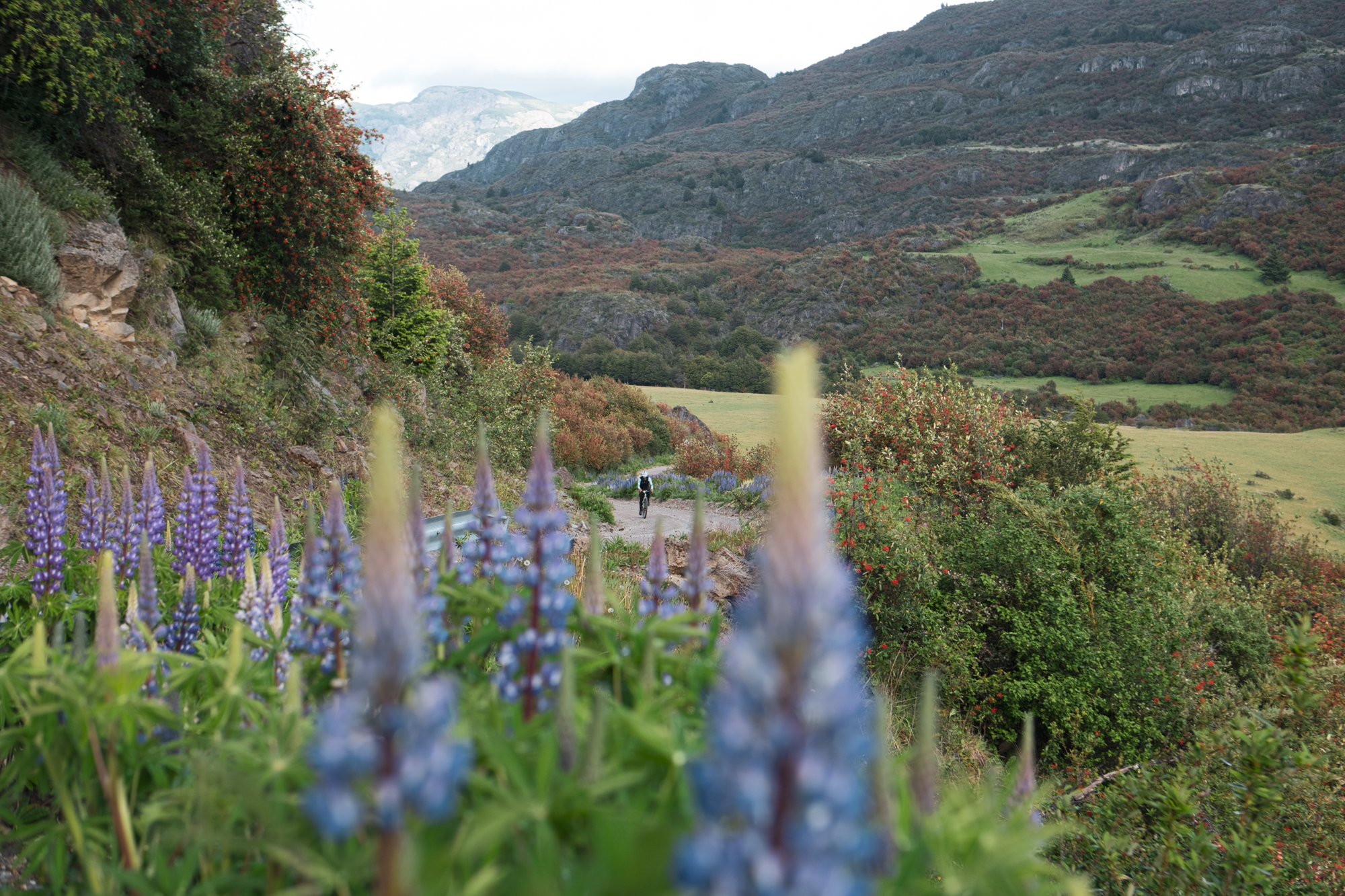
Probablemente no pudieron prestar atención, pero desde nuestra cómoda posición en casa, buscamos en Internet los diferentes lugares que los ciclistas tuvieron la suerte de visitar y sorprendimos. Los caminos a través de los paisajes patagónicos varían entre tramos expuestos con multitud de montañas a la vista y segmentos con caminos estrechos a lo largo de los fiordos de la costa del país. Es verdad que en esta ocasión los corredores no pudieron apreciar la belleza de la región, pero se ha anunciado que la ruta de la siguiente edición será prácticamente idéntica así que con suerte los organizadores podrán explotar el potencial de la zona.
Dadas las múltiples loops contenidas en la rutal, los ciclistas pasaron por La Junta varias veces. La primera vez fue en el km 450, con el segundo punto de control localizado 70 km más adelante. Los ciclistas se dirigieron hacia el este hasta casi llegar a la frontera con Argentina, y luego debían pasar nuevamente por el pueblo patagónico en su camino hacia la costa del Pacífico.

Originalmente, los ciclistas tomaban un ferry en dos ocasiones para cruzar el río Palena y recorrer unos 10 kilómetros hasta llegar al tercer puesto de control CP3. Luego regresarían tierra adentro siguiendo los mismos caminos en la otra dirección. Sin embargo, los organizadores, pensando que las autoridades locales cancelarían el servicio de ferry debido a la incesante tormenta, actuaron de forma proactiva y acortaron la ruta. El punto de control tres sería un punto de control virtual en lugar de físico, sin tener que detenerse en ningún lugar para conseguir el sello. Esto significó que la ruta final tenía una longitud de unos 850 km en lugar de 1.000 km. El tiempo límite se mantuvo sin cambios, por lo que los corredores que aún estaban en ruta podían estar seguros de llegar a tiempo a la meta.
Los corredores fueron notificados al respecto y la noticia fue recibida con sentimientos encontrados. Quienes se estaban esforzando para llegar al cruce en ferry marcado en su planning, teniendo en cuenta que hay 13 horas entre el primer y el segundo servicio del día, sintieron que habían perdido algunas balas preciosas. Nos recordó las estrategias logísticas de los distintos eventos del Gran Guanche.
Andrés Tagle ganó con un tiempo de 47 horas y 11 minutos. Mostró su mentalidad implacable desde el momento, alrededor del kilómetro 150, en el que rajó su neumático y tuvo que comenzar su persecución a Rob Britton. Una vez que el canadiense abandonó, tomó la delantera sin saberlo y nunca miró hacia atrás. ¡No durmió nada!


Como dijo Andrés durante la grabación del episodio del podcast Noise by Across Andes, no miró en ningún momento el dot tracker, y fue la gendarmería local quien le dijo que él era el primero en pasar. Otro dato interesante es su alimentación durante su esfuerzo: 76 geles, 35 barritas y 80 frugelés, un caramelo típico de Chile.
La conclusión común es que el terreno era menos técnico y montañoso que en ediciones anteriores, pero las condiciones lo hicieron súper duro. La opinión de Andrés es válida pues ya ganó la edición inaugural en 2019. Lo hizo en pareja con Rodrigo Canuto, quien también formó parte de la edición de este año y finalizó cuarto. En esta ocasión fue el italiano Cristian Auriemma, de 49 años, quien acabó segundo, a dos horas de Andrés. Matt Brokenshire puede decir que tuvo una exitosa primera experiencia en ultradistancia al terminar tercero.


Hablamos antes sobre el regreso de Ash y el dolor que empezaba a sentir en la rodilla. Eso, combinado con la hipotermia después de tantas horas bajo la fría lluvia y la nieve, significaba que no podría llegar a la meta, incluso si estuviera “sólo” a 160 km de distancia. Al final, las ganadoras fueron María Paola Bulla y Raquel Parizi. Sí, ganadoras en plural porque cruzaron la línea de la mano.
En cuanto a las parejas, fueron César Mato y Óscar Pujol quienes se alzaron con la victoria. Aunque llegaron muchas horas después del ganador absoluto, demostraron que tenían piernas para estar delante, pero optaron por un planteamiento más relajado y prefirieron descansar bien cada noche.


El jueves por fin dejaría de llover definitivamente y los mid-packers pudieron disfrutar de los paisajes camino a la meta, permitiéndose incluso disfrutar de una buena noche de sueño para tener energías suficientes a su llegada y celebrar con el resto. 66 participantes individuales y 9 parejas pueden decir que terminaron Across Andes antes de la hora límite, pero cada persona que comenzó la carrera cinco días antes puede estar orgullosa de su logro.


Hoy 1 de diciembre se abrieron las aplicaciones para Across Andes 2024. Debido a la gran cantidad de interesados, y en línea con los eventos de ultradistancia más relevantes, las inscripciones se otorgarán mediante un sistema de lotería, así que muestra tu interés ahora si quieres recorrer en noviembre de 2024 la Carretera Austral y mucho, mucho más.

Javi es nuestro corresponsal en Bélgica, y trata de contrarrestar su obsesiva pasión por el análisis de datos con la relajante acción (o eso es lo que dice) de crear contenido para la revista. Javi is based in Belgium and tries to compensate for his obsessive passion for data analytics with the relaxing action (that's what he says) of creating content for the magazine. View all posts by Javi Angulo
“Sign up for an ultradistance event”, they said. “It is not as challenging as you may think”, no one ever said. This year’s Across Andes was one for the books due to the inclement weather and, despite the beauty and excellent organization of the event, it will surely prompt participants and dotwatchers to think twice before signing up for a similar challenge.
Across Andes 2023 was tagged as the “Patagonia Verde” edition and the starting point was Coyhaique, in the Aysén region of Chile. The race, which was initially 1.000 km in length with 15.000 meters of elevation gain, took place much more in the South than in previous years, which had its pros and cons. It allowed participants to immerse themselves in the varied landscapes of “the end of the world”, as this region is called, but its remoteness is directly related to unpredictable weather conditions.
On November 19th, 226 riders lined up for the start at 6 AM and they were already aware of the weather forecast, even if the conditions at that moment were very good. Over the next handful of days, they would have to tackle a combination of freezing temperatures, wind, rain and snow, which turned an already challenging route into a battle against internal and external hurdles.
The first of the three checkpoints was located at the 220 km mark. Rob Britton, the current winner of Badlands, arrived first to this estancia near Ñirehuao, and with no time to waste because Andrés Tagle was chasing behind, he stopped for barely a handful of minutes and resumed his individual time trial.
At that moment, Rob was still fairly dry, but the storm started at around 4 PM and caught most riders before reaching the initial checkpoint. It would only get worse over the coming two days. Sebastian Breuer, winner of Badlands 2022, started the race at the front but a combination of illness and mechanical problems prompted him to scratch. Isi Solari was the first female to arrive at Estancia Ñirehuao, with a gap of around 40 minutes to Luci Castillejos that would come to nothing as she preferred to take a proper meal before resuming her effort under the rain.
Not long after CP1, riders covered a big stretch of the Carretera Austral, a +1.000 km long highway crossing rural Patagonia. By then, everyone was already soaked, and not even the best clothing garments would cope with the amount of rain falling from the sky. Given the conditions, and even if it may seem contradictory, most continued pushing on because there was no place to take shelter. In the end, they managed to keep the rain under control by putting on all kinds of unconventional waterproof layers.
The most relevant climb had its highest point at around the 360 km mark. They climbed it from the south side, which is paved but extremely steep, and descended to the other side through an utterly technical and rough off-road path. Rob had to tackle it during the night and, already fatigued and aware of the physical consequences of putting your body in such ultra-challenging conditions, he found his limits and scratched.
Understandably, many other riders desisted in their attempt to finish Across Andes 2023. Some did it at CP1 so a transfer could be arranged to bring them back to Coyhaique. Others gave up further in the route and were taken to a warm place safe and sound.
The population density in Patagonia region is per se one of the lowest in the continent, so taking into account that it was low-season, there were few to no places to take shelter. Sleeping outside under the storm, given the minimalistic gear riders bring to this kind of event, was not a rational option.
From CP1, Ash Wedelich started her comeback and by the time she reached the second stop to get the stamp on her card, she was already leading the female ranking and inside the top fifteen overall. Isidora Solari and Sami Sauri also put an end to their Across Andes participation with the weather being the main cause.
Participants probably didn’t pay attention, but from our comfortable position at home, we researched the different places that riders were fortunate enough to visit and ‘wow’. The paths through the Patagonian landscapes vary between wide open sections with many peaks in sight, and narrow stretches of (g)roads along the fjords at the west of the country. It is true that on this occasion riders could not appreciate the beauty of the region but it has been announced that the next edition will be almost the same route, so hopefully we will fully see what the area has to offer.
Given the multiple loops within the overarching loop, riders passed by La Junta several times. Firstly it was at the 450 km mark, with the second checkpoint being located 70 km ahead. Riders headed east until they almost reached the border with Argentina, and then were supposed to pass by the Patagonian village again on their way to the Pacific coast.
Originally, riders would take a ferry on two occasions to cross the Palena River and ride around 10 kilometers to reach the third checkpoint CP3. They would then head back inland following the same paths in the other direction. However, the organizers, thinking that the local authorities would cancel the ferry service due to the relentless storm, acted proactively and cut the route short. Checkpoint three would be a virtual checkpoint instead of a physical one, without having to stop anywhere to get the stamp. This meant that the final route was around 850 km in length instead of 1.000 km. The cutoff time remained unchanged so everyone still on route could be confident to make it to the finish line on time.
The riders were notified about it, and it was received with mixed feelings. Those who were pushing to reach the desired ferry crossing, taking into account that there are 13 hours between the first and second service of the day, felt that they had lost some precious bullets. It reminded us of the logistic strategies of the different Gran Guanche events.
Andrés Tagle won with a time of 47 hours and 11 minutes. He showed his relentless mindset from the moment at around kilometer 150 when he slashed his tire and had to chase Rob Britton. Once the Canadian scratched, he took the lead without knowing it and never looked back. He didn’t sleep at all!
As Andrés said during the recording of the Noise by Across Andes podcast episode, he didn’t look at the dot tracker at all during the race, and it was the local gendarmerie who told him that he was the first one to pass by. Another interesting takeaway is his nutrition during his effort: 76 gels, 35 bars and 80 frugelés, a typical candy from Chile.
The common conclusion is that the terrain was less technical and hilly than in previous editions, but the conditions made it super hard. Andrés’ opinion is a valid one as he already won the inaugural edition in 2019. He did so while riding in pairs with Rodrigo Canuto, who was also part of this year’s edition and finished fourth. On this occasion, it was the Italian Cristian Auriemma, aged 49, who finished second, two hours behind Andrés. Matt Brokenshire can say he had a successful first-ever ultradistance experience as he finished third.
We talked before about Ash’s comeback and the pain she was starting to feel in her knee. That, in combination with hypothermia after so many hours under the cold rain and snow, meant that she would not be able to make it to the finish line, even if she was “just” 160 km away. In the end, the winners were Maria Paola Bulla and Raquel Parizi. Yes, winners in plural because they crossed the line hand in hand.
Regarding the pairs, it was César Mato and Óscar Pujol who claimed the win. Although they arrived many hours after the overall winner, they had the legs to be at the front, but the pair went for a relaxed approach and preferred to have a proper rest each night.
On Thursday the rain would finally stop for good, and the mid-packers could enjoy the landscapes on their way to the finish line, even allowing themselves to have a proper night of sleep to have enough energy on their arrival and celebrate with the rest. 66 individual participants and 9 pairs can say they finished Across Andes before the cutoff time, but every single person who started the race five days before can be proud of their achievement.
Today, December 1st, the applications for Across Andes 2024 have been opened. Due to the big number of interested people, and in line with the most relevant ultradistance events, entries will be granted based on a lottery system, so apply now if you want to ride along the Carretera Austral and much, much more.
Javi es nuestro corresponsal en Bélgica, y trata de contrarrestar su obsesiva pasión por el análisis de datos con la relajante acción (o eso es lo que dice) de crear contenido para la revista. Javi is based in Belgium and tries to compensate for his obsessive passion for data analytics with the relaxing action (that's what he says) of creating content for the magazine. View all posts by Javi Angulo
 Javi Angulo
 Javi Angulo
 Javi Angulo
 Javi Angulo
 Javi Angulo
 Javi Angulo
 Pavel Novotný
 Pavel Novotný
 Javi Angulo
 Javi Angulo
 Juliana Reis
 Javi Angulo
Receive our monthly selection of the best articles, news, exclusive content and giveaways only for subscribers, subscribe to OUR NEWSLETTER
Receive our monthly selection of the best articles, news, exclusive content and giveaways only for subscribers, subscribe to OUR NEWSLETTER
Receive our monthly selection of the best articles, news, exclusive content and giveaways only for subscribers, subscribe to OUR NEWSLETTER
Receive our monthly selection of the best articles, news, exclusive content and giveaways only for subscribers, subscribe to OUR NEWSLETTER