- News
- Reviews
- Travel & Adventure
- Interviews
- Inside Industry Players
- Community
Bikes
Reviews
Components
Reviews
Cycling
Apparel


[raw_mobile_menu]
[wpml_language_switcher_down]


Ha habido muchas carreras históricas en ruta en las últimas temporadas, y los fotógrafos tienen el privilegio de ver cómo se desarrolla la carrera desde un punto de vista único. Puede que estén allí por trabajo en lugar de por placer, pero nadie puede negar que han sido testigos de primera mano de momentos que permanecerán grabados en nuestras retinas durante mucho tiempo.
Kristof Ramon es uno de los fotógrafos deportivos más influyentes, pero incluso después de todos estos años cubriendo el pelotón profesional, lo que ha podido experimentar durante las últimas semanas no tiene precedentes. El Campeonato del Mundo de ruta en su ciudad natal y una Paris – Roubaix épica bajo la lluvia para los hombres, que también fue el primer encuentro con los adoquines franceses para las mujeres. Dos eventos que tendrán un lugar en la historia del ciclismo, y que ocurrieron con solo una semana de diferencia.


Cuando los campeonatos del mundo vinieron a casa
Kristof nació y se crió en Lovaina, por lo que cuando supo que el Campeonato del Mundo de 2021 iba a terminar “en casa” quiso involucrarse en el evento, ya fuera en colaboración con los organizadores o no. “El ciclismo es un deporte internacional que se lleva a cabo en todo el mundo, y de repente llegó aquí el evento más grande”, mencionó Kristof, todavía tratando de procesar lo sucedido. Tras pasar tantas noches en hoteles a lo largo de los años, esta vez el resto del mundo se tuvo que desplazar a Flandes para disfrutar deuna magnífica semana de ciclismo.
Uno de los eventos paralelos durante los Mundiales de ciclismo fue la exposición de fotografías que montó con su propio material y también con fotos de otros fotógrafos de ciclismo, con un enfoque en los ciclistas que se han convertido en campeones del mundo a lo largo de los años. No obstante, el papel más importante en el evento fue inesperado e implicó ser el fotógrafo jefe del comité organizativo (LOC). Eso significaba que él era el único que podía cubrir la carrera desde una moto, junto con el fotógrafo oficial de la UCI.
A diferencia de otros eventos, donde hasta a una decena de fotógrafos se les da luz verde para fotografiar la carrera desde la parte trasera de una moto, los Campeonatos del Mundo son extremadamente exclusivos en este sentido.
Ya conocía todas las subidas, curvas y los mejores lugares para fotografiar a lo largo de la ruta como la palma de su mano después de todo el tiempo que ha vivido allí, y la cantidad de carreras que ha cubierto por esa zona. Había planeado ya desde dónde fotografiar en cada momento de la carrera, pero el LOC se puso en contacto con él y todo cambió. Pasar todo el día en una moto puede haber limitado un poco su rango de posibles fotos, pero aceptó la propuesta, ya que era una oportunidad única en la vida.
“Estar en esa posición fue único. El rugido al subir Wijnpers por primera vez… todavía se me pone la piel de gallina. Mi hija y mi esposa estaban entre el público, y también vi a muchos amigos a lo largo de la carrera. Mi padre fue llevado al hospital local la semana anterior, y aunque sabía que estaba en buenas manos, hizo que fuera aún más emotivo”


La cantidad de horas de trabajo durante el fin de semana le impidió reunirse con la cantidad deseada de ciclistas, amigos o periodistas, pero actuó como anfitrión cada vez que tuvo la oportunidad de dar la bienvenida a personas que conocía. Se sintió orgulloso de su ciudad durante toda la semana y, a pesar de los compromisos profesionales, disfrutó mucho del evento.
“Fue el pico de mi carrera como fotógrafo de ciclismo. Todo se juntó, cerrando el círculo después de todo el tiempo pasado fuera de casa”


Un fin de semana de adoquines y barro
Al igual que los ciclistas, Kristof Ramon y todos los demás fotógrafos tenían cierto temor de lo que se avecinaba. La previsión meteorológica mostraba ya a principios de semana que las posibilidades de una Paris – Roubaix en mojado eran altas, 19 años después de la última. La emoción se convirtió en miedo a medida que se acercaba el día de la carrera, pero todos tuvieron tiempo suficiente para prepararse para una edición con barro. Mientras los ciclistas probaban neumáticos más anchos y presiones más bajas durante sus entrenamientos previos a la carrera, Kristof y el resto de fotógrafos organizaron la cobertura de una carrera en condiciones excepcionales.

Para Paris – Roubaix, contó con la ayuda de su fotógrafo de apoyo de confianza Rhode Van Elsen y el plan original era que ambos trabajaran desde motos pero eso generalmente significa más costes y problemas logísticos. No pudieron encontrar un segundo motorista, porque uno de los pilotos en los que Kristof confía para hacer la tarea se lesionó durante una carrera anterior y decidió no volver, con todos los demás disponibles muy demandados para el fin de semana.
En su lugar, optaron por una moto y un coche, y dadas las condiciones climáticas, resultó ser un movimiento inteligente. Los primeros 100 km de carrera antes de que los pilotos lleguen a los adoquines suelen ser inútiles desde la perspectiva de un fotógrafo, por lo que Kristof hizo esas primeras horas dentro del cómodo coche y solo se enfrentó a la lluvia para llegar a tiempo al paso del primer segmento. Cuando llegó al lugar, los otros fotógrafos ya estaban temblando después de todo el tiempo que habían pasado esperando afuera, y sus cámaras ya estaban empapadas.


Al mirar las fotos que tomó durante el fin de semana, uno puede pensar que estaba en todas partes, ya que capturó los ataques cruciales, el sufrimiento de los ciclistas, las motos cayéndose… Sin embargo, Kristof dice que ve la carrera de forma muy fragmentada.
“Las personas que ven las carreras por televisión tienen una visión mucho más completa, mientras que yo solo veo momentos muy concretos. Sabía que al principio del Carrefour de l’Arbre Moscon era el líder con un gran margen. Yo estaba ubicado al final del segmento, así que cuando pasaron y vi que ya no estaba al frente, te puedes imaginar que no tenía idea de lo que había pasado”
Con las mujeres compitiendo el sábado y los hombres al día siguiente, todo el fin de semana estuvo lleno de adoquines. No es común ver a las mujeres competir en el mismo evento en días diferentes, y aunque Kristof considera que esta es la fórmula del éxito para las carreras femeninas, cree que no será fácilmente adoptada por otras competiciones importantes. “Será difícil ver a las mujeres compitiendo en la Ronde van Vlaanderen el día antes que los hombres porque la cicloturista generalmente se lleva a cabo el sábado y los organizadores no querrán perder esa fuente de ingresos”, dice.


Ya sea con las dos competiciones desarrollándose el mismo día o no, en fines de semana como esos, Kristof se pasa el día completo cubriendo la carrera, y dedica casi toda la noche a hacer un repaso de las distintas fotografías. Casi una semana después de la carrera, todavía estaba limpiando las cámaras, por lo que se puede decir que recordará esta edición durante mucho tiempo, ya sea para bien o para mal.
¿Y ahora qué?
Mientras tanto, ya está planificando la próxima temporada, repleta nuevos clientes y retos. Consciente de su carga de trabajo presente y futura, comenzó a buscar a alguien que hiciera algunas tomas de respaldo para poder llegar a más lugares, lo que beneficiaría a su negocio y a los clientes para los que trabaja. Si vas por tu cuenta y decides ir en moto, es muy posible que pierdas la pista del pelotón y pases el resto del día intentando contactar de nuevo con la carrera, así que Rhode llegó a bordo para ayudarle y rápidamente se integró en la forma en que trabaja Kristof.
Junto con él, continuarán cubriendo las carreras de mujeres, incluso si aún no ofrece el mejor retorno de la inversión, y cubrir las carreras de hombres no deja espacio para mucho más.


Después de esas dos semanas llenas de emociones, se dio cuenta de que quizás ya había hecho todo lo que pensaba que era posible en el mundo del ciclismo. Esta sensación de “¿y ahora qué?” es lo que lo impulsa a buscar nuevos desafíos, tratando de llegar aún más lejos. Tiene su propia agencia y, como toda persona que establece un nuevo proyecto, su objetivo es construir un negocio que pueda sostenerse por sí mismo, para que Kristof pueda centrarse en sus ambiciones personales.
“Actualmente el calendario ciclista dicta mi día a día, pero en un periodo de cinco años quiero empezar a hacer mis propios proyectos. Fotografiar solo las cosas que quiero fotografiar y encontrar nuevos formatos y plataformas donde poder compartir mi trabajo”
Tiene previsto publicar su primer libro fotográfico en 2023 y, a partir de entonces, planea seguir haciendo sus propios proyectos para impresiones, exposiciones y más.


Kristof considera que es necesario trabajar siempre hacia un objetivo. También cree fuertemente en el concepto introducido por Gladwell sobre las 10.000 horas necesarias para convertirte en experto en algo. Estuvo obsesionado con la fotografía durante años, lo que resultó crucial para adquirir los conocimientos y habilidades necesarios para el trabajo a realizar, y las cosas técnicas se volvieron intuitivas con el tiempo.
“Hay muchas técnicas de disparo, como obturador lento o rápido, apertura abierta o cerrada… Pero ya no tengo que pensar en eso. Si cambia la iluminación, configuro los ajustes correctos sin siquiera darme cuenta”


En el pasado se ganaba bien la vida como director de TV. Comenzó a apasionarse por la fotografía, pero su equipo fotográfico era muy básico. Tuvo que invertir mucho dinero para, simplemente, ser capaz de empezar, pero en menos de un año se demostró que valió la pena. Esto es lo que Kristof denomina como “un salto”, y nos anima a tomar decisiones como la que el tomó de forma más frecuente, ya sea en nuestra carrera profesional o vida personal.
“Si lo piensas en exceso, muchas veces es demasiado tarde. Sé que es un cliché, pero cuando estás en tu lecho de muerte, sobre lo que piensas es acerca de las cosas que no hiciste. No tendrás remordimientos si al menos lo intentaste, así que hazlo”
Kristof continuará estando presente por un tiempo en la mayoría de carreras del calendario ciclista, y seguirá siendo una referencia para multitud de fotógrafos. No obstante, después de conocerle mejor, no nos sorprenderíamos si de repente le vemos involucrado en cosas no relacionadas con su trabajo actual, siempre guiado por la intuición que le ha permitido llegar hasta aquí.

Javi es nuestro corresponsal en Bélgica, y trata de contrarrestar su obsesiva pasión por el análisis de datos con la relajante acción (o eso es lo que dice) de crear contenido para la revista. Javi is based in Belgium and tries to compensate for his obsessive passion for data analytics with the relaxing action (that's what he says) of creating content for the magazine. View all posts by Javi Angulo
There have been a lot of historical races in the last couple of seasons, and cycling photographers have the privilege of watching the race unfold from a unique point of view. They may be there for work instead of leisure, but no one can deny that they have witnessed first-hand moments that will remain stuck in our heads for a long time.
Kristof Ramon is one of the most influential cycling photographers, but even after all these years covering the pro peloton, what he has been able to experience during the past few weeks has no precedents. The Road World Championships in his hometown and an epic Paris – Roubaix under the rain for the men, which was also the first-ever encounter with the French cobblestones for the women. Two events that will have a place in the history of the sport, and which happened only a week apart.
When the World Championships came home
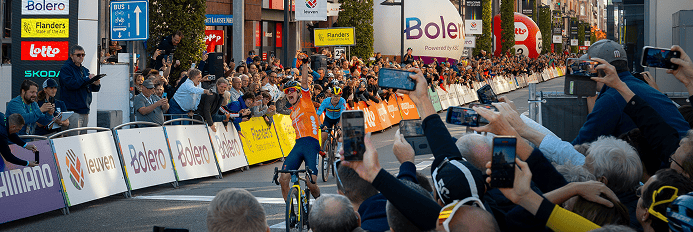
Kristof is born and raised in Leuven, so when he knew that the 2021 World Championships were going to finish in his hometown, he really wanted to be involved in the event, either in collaboration with the organizers or not. “Cycling is an international sport that takes place all over the world, and all of a sudden the biggest event came here”, mentioned Kristof, still trying to process what happened. After spending so many nights a year in hotels, this time it was the rest of the world who traveled to enjoy a magnificent week of cycling in Flanders.
One of the side events during the WC was the photo exhibition that he curated with his own material and with photos from other cycling photographers too, with a focus on the riders that have become world champions over the years. Nonetheless, his most important role in the event was an unexpected one and involved being the chief photographer of the Local Organizing Committee. That meant that he was the only photographer allowed to work on the motorbike in the race alongside the official UCI photographer.
Unlike in other events, where up to a dozen photographers are given the green light to cover the race from the back of a moto, the World Championships are extremely limited in this regard.
He already knew all the climbs, turns, and the best photo spots along the route like the back of his hand after all the time he has lived there, and the number of races around that area that he has covered. He must have already planned from where to shoot at every moment of the race, but then the LOC contacted him and everything changed. Spending the entire day shooting from a moto may have constrained a bit his range of possible photos, but he accepted the proposal, as it was a once-in-a-lifetime opportunity.
“Being in that position was unique. The roaring riding up the Wijnpers for the first time… I still get goosebumps. My daughter and my wife were along the road, and I saw a lot of friends in the middle of the race too. My father was taken to the local hospital just the week before, and although I knew he was in good hands, it made it extra emotional”
The number of hours working over the weekend prevented him from meeting the desired amount of riders, friends, or journalists, but he acted like the host any time he had the chance to welcome people he knew. He felt proud of his city during the whole week, and despite the professional commitments, he still enjoyed it a lot.
“It was the peak of my career as a cycling photographer. It all came together, coming full circle after all the time spent away from home”
A weekend of cobbles and mud
Same as the riders, Kristof Ramon and all the other photographers were afraid of what was coming. The weather forecast showed already at the beginning of the week that the chances of a wet Paris – Roubaix were high, 19 years after the last one. The excitement turned into fear as the race day approached, but everyone had enough time to get ready for a muddy edition. While the riders tested wider tires and lower pressures during their rides leading up to the race, Kristof and the rest of the photographers prepared the coverage of a race under exceptional conditions.
For Paris – Roubaix, he relied on the help of his trusted backup photographer Rhode Van Elsen and the original plan was for both of them to work from the motorbikes, but that usually means more costs and logistic nightmares. They couldn’t find a second person to drive a moto, because one of the riders Kristof relies on to do the task of motorbiker got injured earlier in the season and decided not to come back, with all the other moto pilots being already booked for the weekend.
They opted for a moto and a car instead, and given the weather conditions, it resulted to be a smart move. The first 100 km of the race before the riders reach the cobbles tend to be useless from the perspective of a photographer, so Kristof did those first hours inside the comfortable car and only faced the rain to be on time for the pass of the first segment. When he arrived at the spot, the other photographers were already shaking after all the time they had spent waiting outside, and their camera gear was already soaked.
By taking a look at the photos he took during the weekend, one can think that he was everywhere, as he captured the crucial attacks, the suffering of riders, the motorbikes crashing… Nonetheless, Kristof says that the way he sees the race is very fragmented.
“People that watch the racing on TV have a much better overview, whereas I only see snapshots of it. I knew that at the beginning of the Carrefour de l’Arbre Moscon was the leader by a big margin. I was located at the end of the segment, so when they passed by and I saw that he was no longer in front, you can imagine that I had no idea about what had happened”
With the women racing on Saturday and the men the following day, the entire weekend involved cobblestones. It is not common to watch women race the same event on different days, and although Kristof considers this as the formula of success for women’s racing, he thinks it will not be easily adopted by other major competitions. “It will be difficult to see the women racing the Ronde van Vlaanderen the day before the men because the sportive event usually takes place on Saturday, and the organizers will not want to lose that source of income”, he said.
Either with the two races taking place on the same day or not, on weekends like those Kristof spends the full day covering the race, and it takes him almost the whole night to get through all the pictures. Almost a week after the race, he was still cleaning the cameras, so one can say that he will remember this edition for a long time, for better or worse.
What now?
In the meantime, he is already planning the next season, with new clients and challenges. Aware of his present and future workload, he started looking for someone to do some backup shooting so he could reach more places, which would benefit his business and the clients he works for. If you are alone and decide to be on the motorbike, it is highly possible to lose track of the peloton and play catch up during the rest of the day, so Rhode came in and he quickly integrated himself with the way Kristof works.
Together with him, they will continue covering women’s racing, even if it doesn’t offer the best return on investment yet, and covering men’s racing doesn’t leave room for much more.
After those two weeks full of emotions, he realized that he may have already done everything that he thought was possible in the cycling world. This sensation of “what now?” is what is driving him to search for new challenges, trying to go even further. He has his own agency, and like every person who establishes a new project, his goal is to build a business that can sustain itself, so that Kristof can focus on his own things.
“Right now the cycling calendar dictates my day-to-day, but within five years I want to be doing my own projects. Shoot just the stuff that I want to shoot and find new formats and platforms where I can then share that work”
He has his eyes set on publishing a photo book in the near future, and he estimates that it could see the light in 2023. From then on, he plans on continuing doing his own projects for prints, expos, and more.
Kristof considers that it is necessary to always work towards a goal. He also strongly believes in the concept introduced by Gladwell about the 10.000 hours needed to achieve true expertise in something. He was obsessed with photography for years, which was crucial to acquire the knowledge and skills needed for the job, with technical things becoming intuitive over time.
“There are a lot of shooting techniques, like slow or fast shutter, open or closed aperture… But I don’t have to think about it anymore. If the lighting changes, I set the correct settings without even realizing it”
In the past, he was a TV director and doing great. He started being passionate about photography, but his camera gear was very basic. He had to invest a lot of money just to start things, but within a year it already showed to be worth it. That is what Kristof calls “a jump”, and he encourages us to make choices like that one more frequently in our career or personal life.
“If you overthink it, many times it is too late. I know it is a cliché, but when you are close to death, what you think most of is about the things you did not do. You will have no regrets if you at least tried, so do it”
Kristof will continue being present in most cycling events for a while and being a reference for a lot of photographers. Nonetheless, after getting to know him better, we would not be surprised if we suddenly find him doing unrelated things, always guided by the intuition that has allowed him to be in the privileged position that he is at the moment.
Javi es nuestro corresponsal en Bélgica, y trata de contrarrestar su obsesiva pasión por el análisis de datos con la relajante acción (o eso es lo que dice) de crear contenido para la revista. Javi is based in Belgium and tries to compensate for his obsessive passion for data analytics with the relaxing action (that's what he says) of creating content for the magazine. View all posts by Javi Angulo
 Javi Angulo
 Pavel Novotný
 Javi Angulo
 Javi Angulo
 Pavel Novotný
 Javi Angulo
 Javi Angulo

 Pol Sopeña

 Stefano Rizzardi

 Toni de la Torre
 Toni de la Torre
 Toni de la Torre
Receive our monthly selection of the best articles, news, exclusive content and giveaways only for subscribers, subscribe to OUR NEWSLETTER
Receive our monthly selection of the best articles, news, exclusive content and giveaways only for subscribers, subscribe to OUR NEWSLETTER
Receive our monthly selection of the best articles, news, exclusive content and giveaways only for subscribers, subscribe to OUR NEWSLETTER
Receive our monthly selection of the best articles, news, exclusive content and giveaways only for subscribers, subscribe to OUR NEWSLETTER