- News
- Reviews
- Travel & Adventure
- Interviews
- Inside Industry Players
- Community
Bikes
Reviews
Components
Reviews
Cycling
Apparel


[raw_mobile_menu]
[wpml_language_switcher_down]


It was time to visit Colombia. The country we had heard so many good things about and where we have multiple distant friends. In another situation, our adventure spirit would have led us to plan all the stay on our own. However, this time our knowledge of the region and its roads was limited. We went looking for the perfect hosts, and Colombici proved to be key to living the best possible experience.
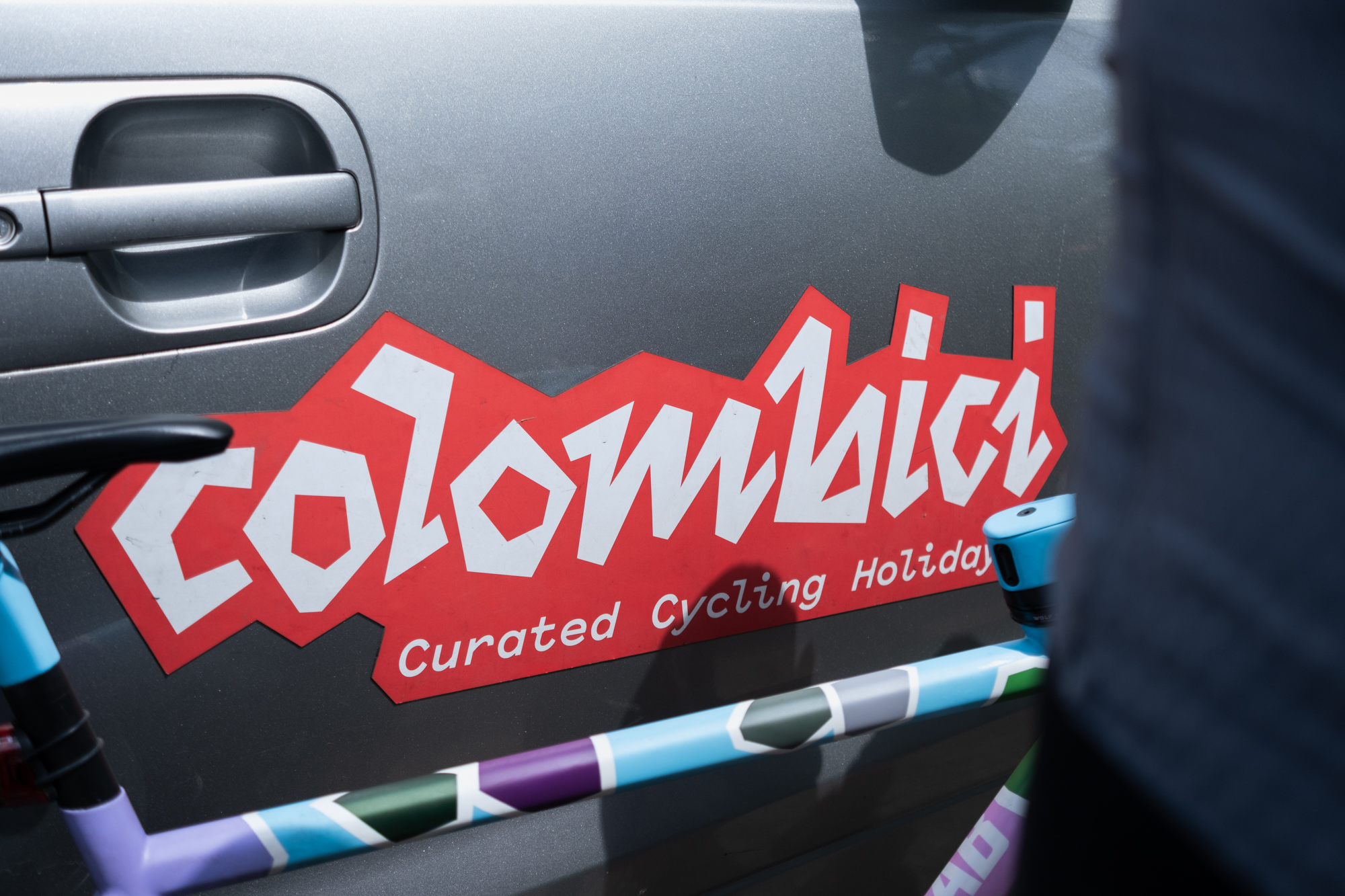
For Maya and Pan, what started as trips on their own to discover Colombia – where they currently reside -, turned into their main occupation. While there were already tour operators offering training camps that followed the principle “more hours of cycling is better”, Colombici focused from the beginning on finding the perfect balance between the physical challenge and the subsequent reward. The opinion of all the groups of cyclists who have opted for their services, and our own, support their positioning.
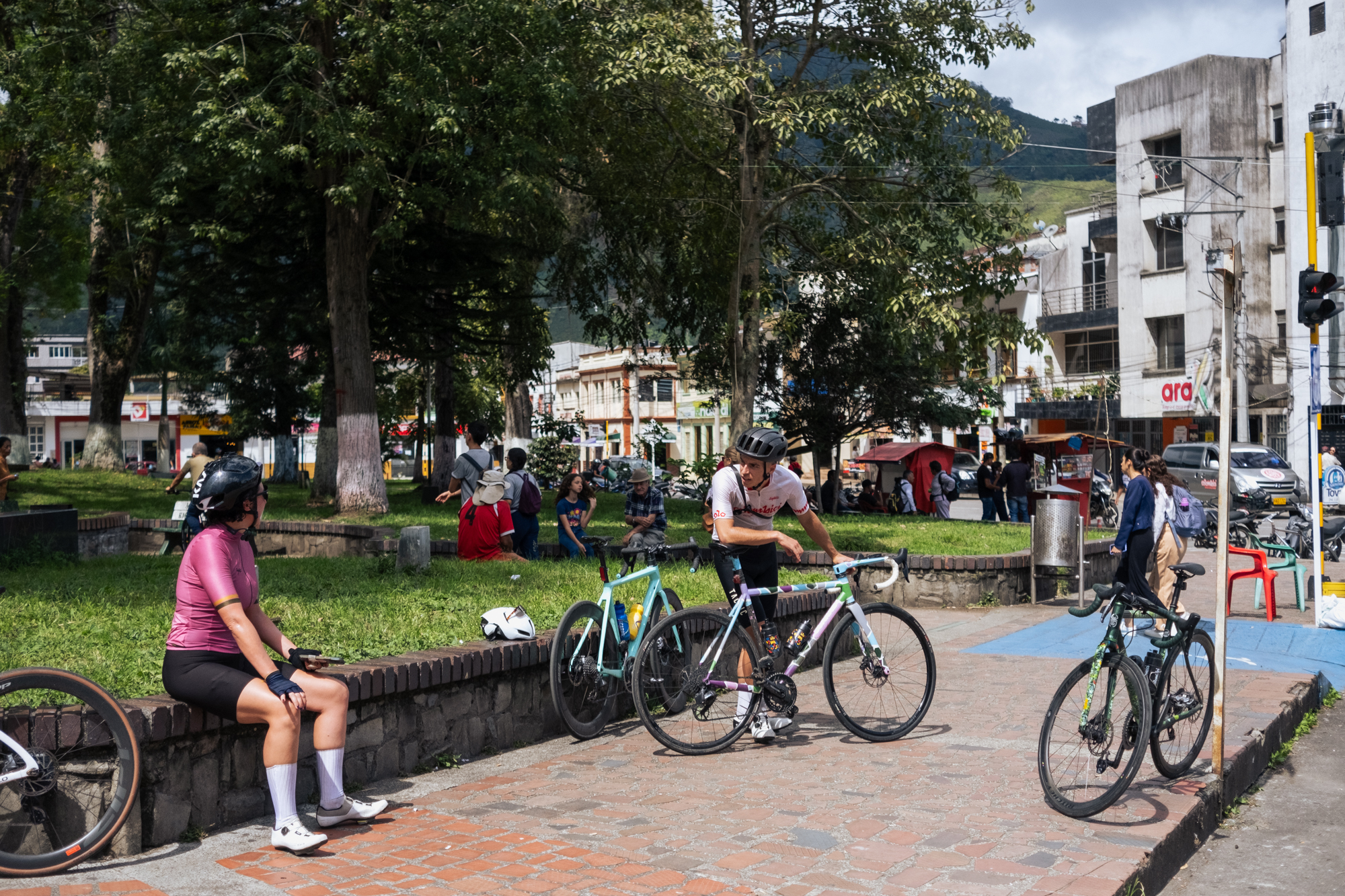
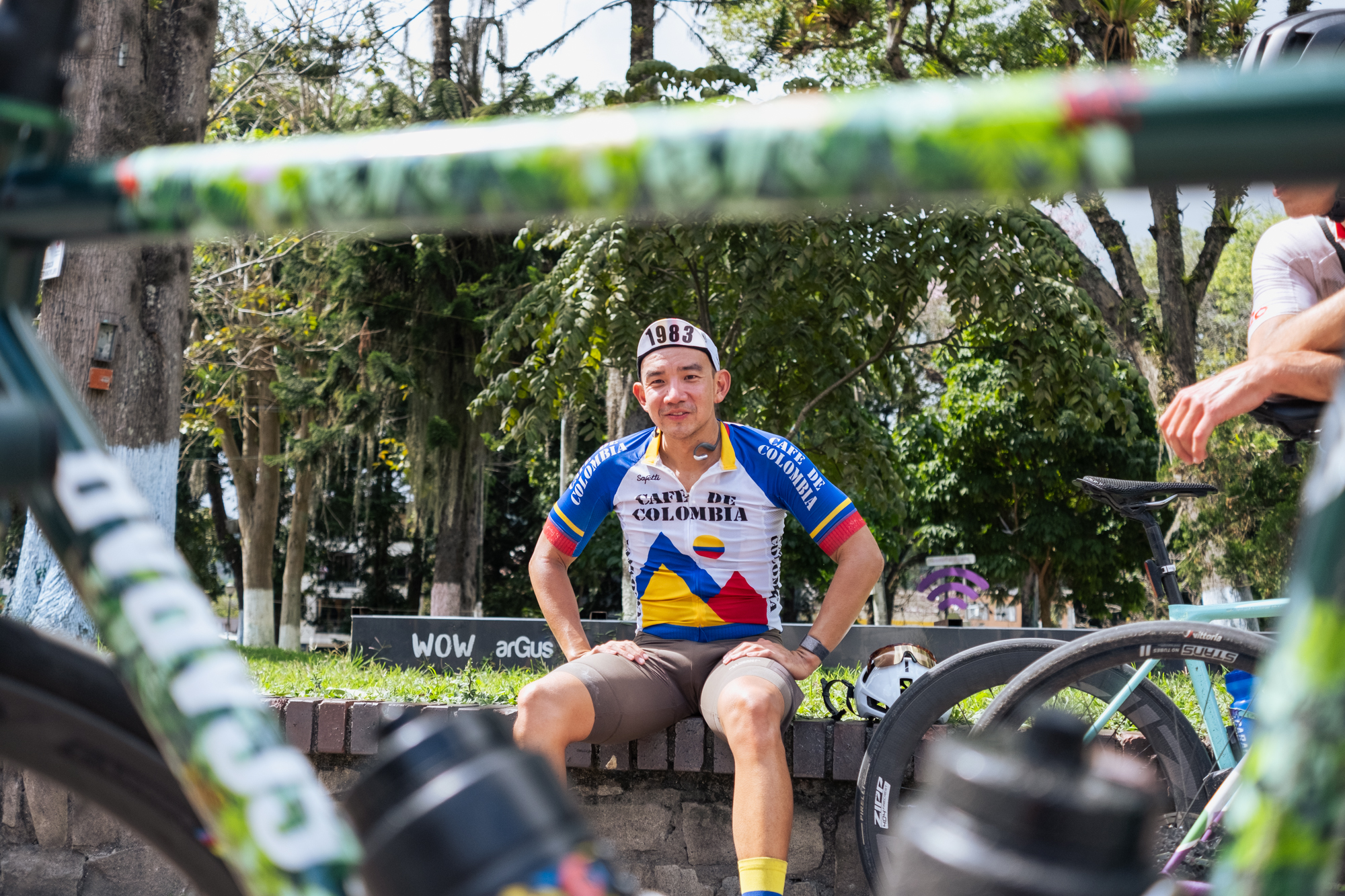
Having resided in several countries, they are aware of the needs and desires of international cyclists when it comes to cycling adventures. We are all attracted by exotic places, and Colombia is unique in many ways. There are landscapes, roads, and architectural styles that cannot be found anywhere else in the world, and Colombici has created a portfolio of itineraries that cover all of them.
Of all the options on the table, we opted for their Into Coffee Heartlands tour, which would take us from the country’s capital, Bogotá, to the department of Quindío, where one can find picturesque towns such as Filandia and Salento. The tour also included Alto del Sifón, currently the longest paved climb in the world, with a peak at 4,120 meters above sea level.
It was a strange feeling not having to plan anything for our trip, since Colombici took care of everything. The routes were definitely attractive, and the proposed activities were to our liking. All that was left was to count down the days until we traveled to South America and met them.
We landed in Bogotá, but we would spend only a few hours there as our route began on the outskirts, relatively far from the traffic of the capital. Jet-lagged and trying to find oxygen at 2,600 meters above sea level, we got the Scarab bikes ready to ride through Colombia.
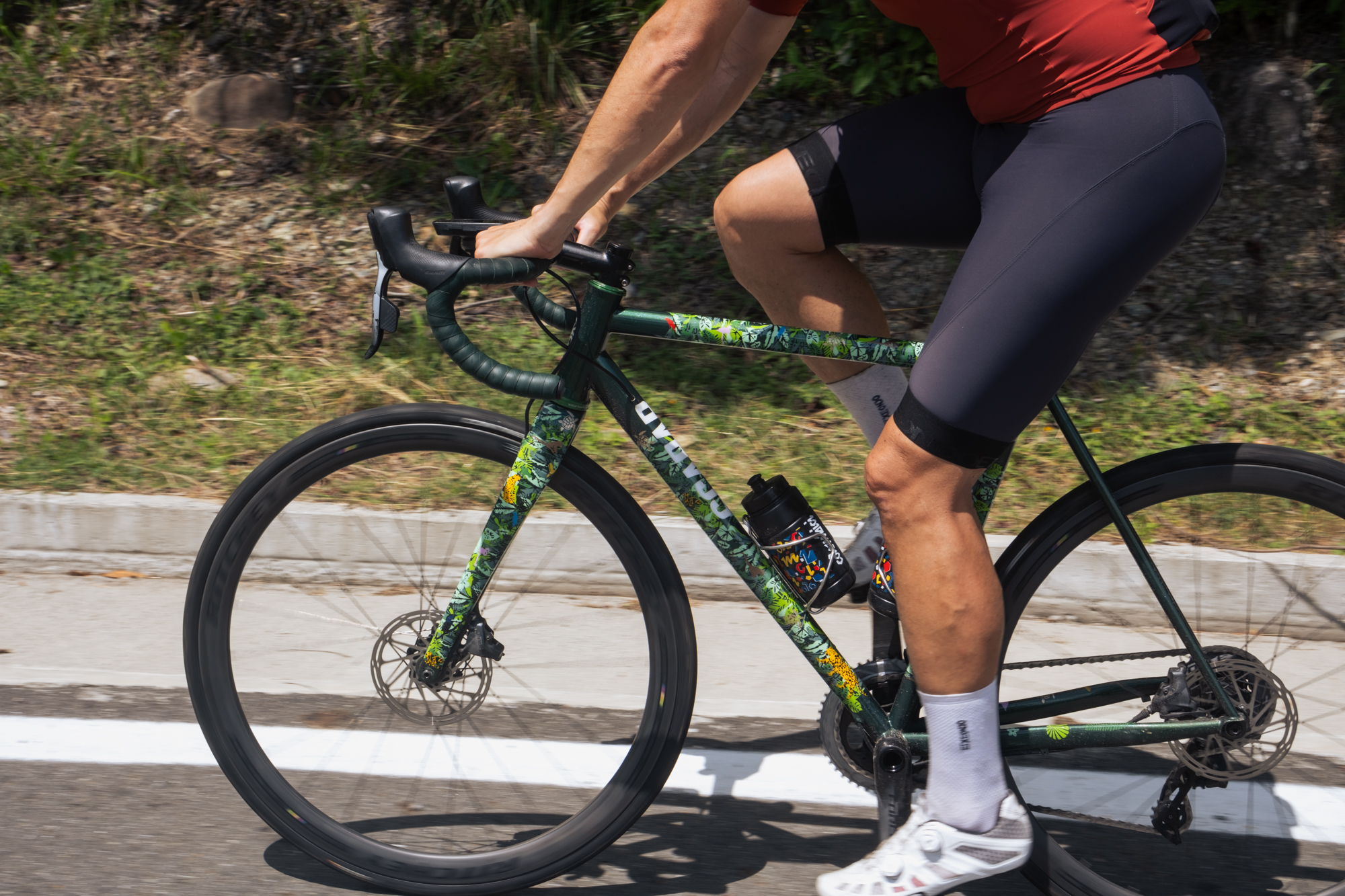
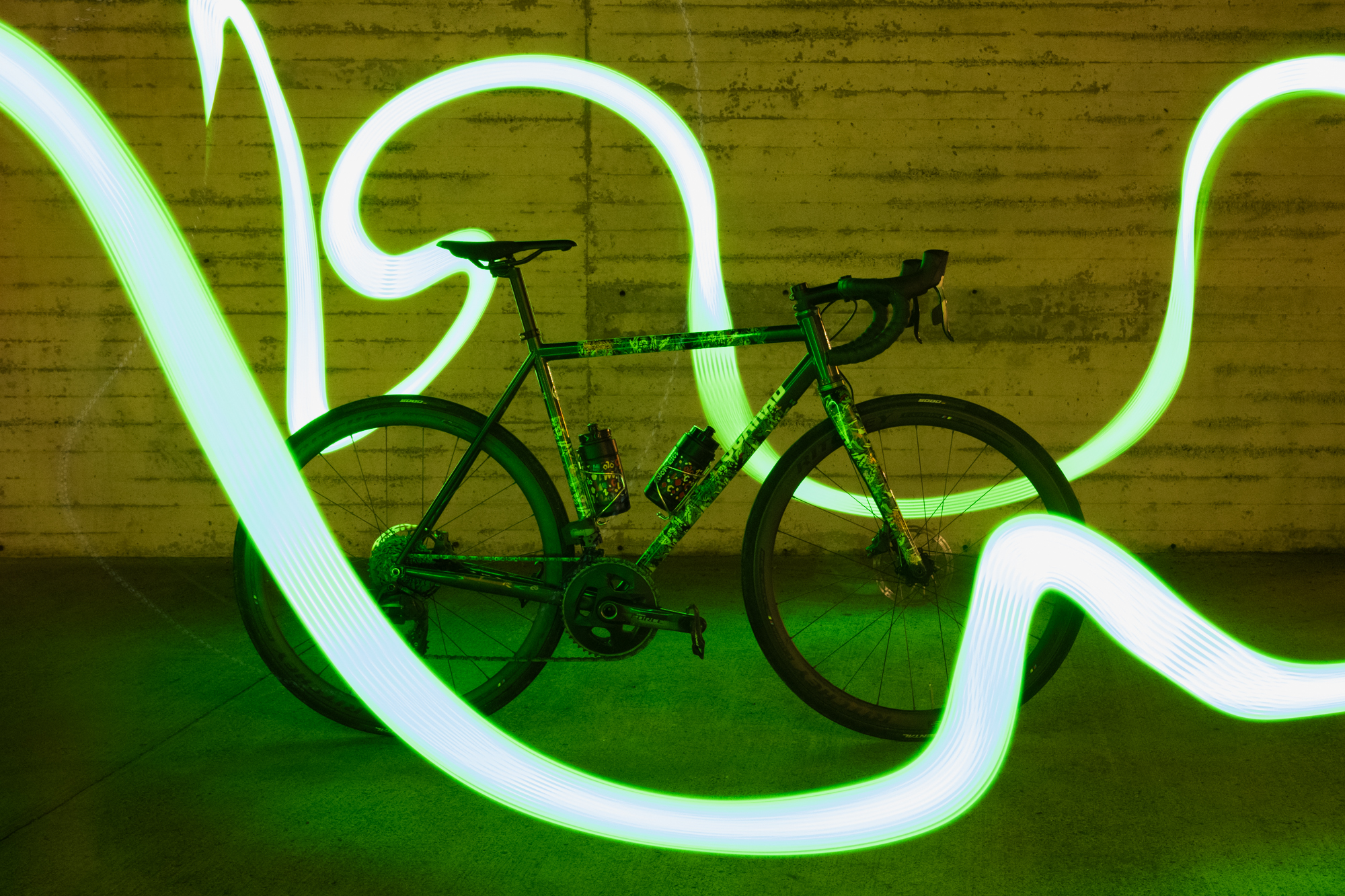
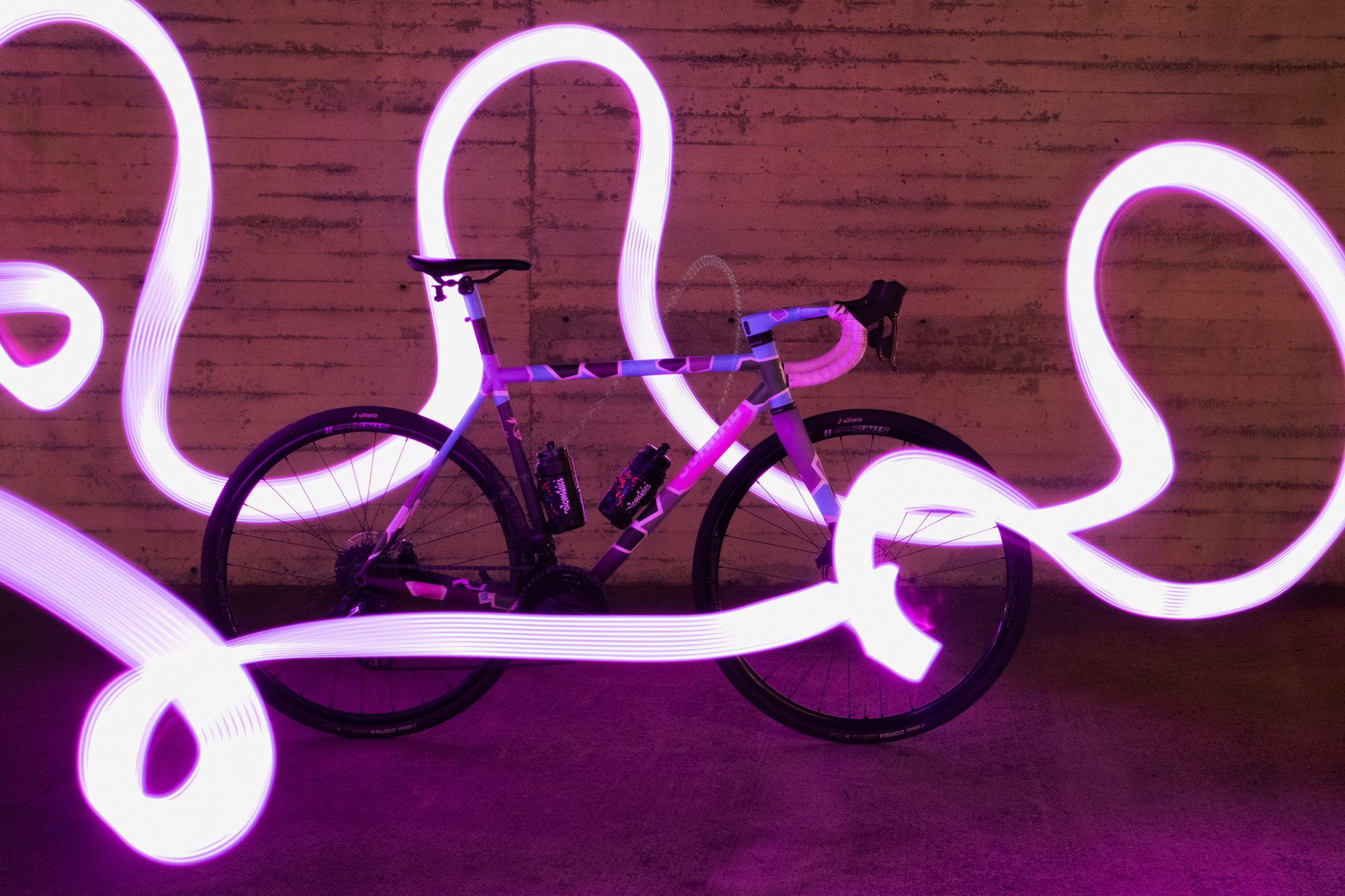
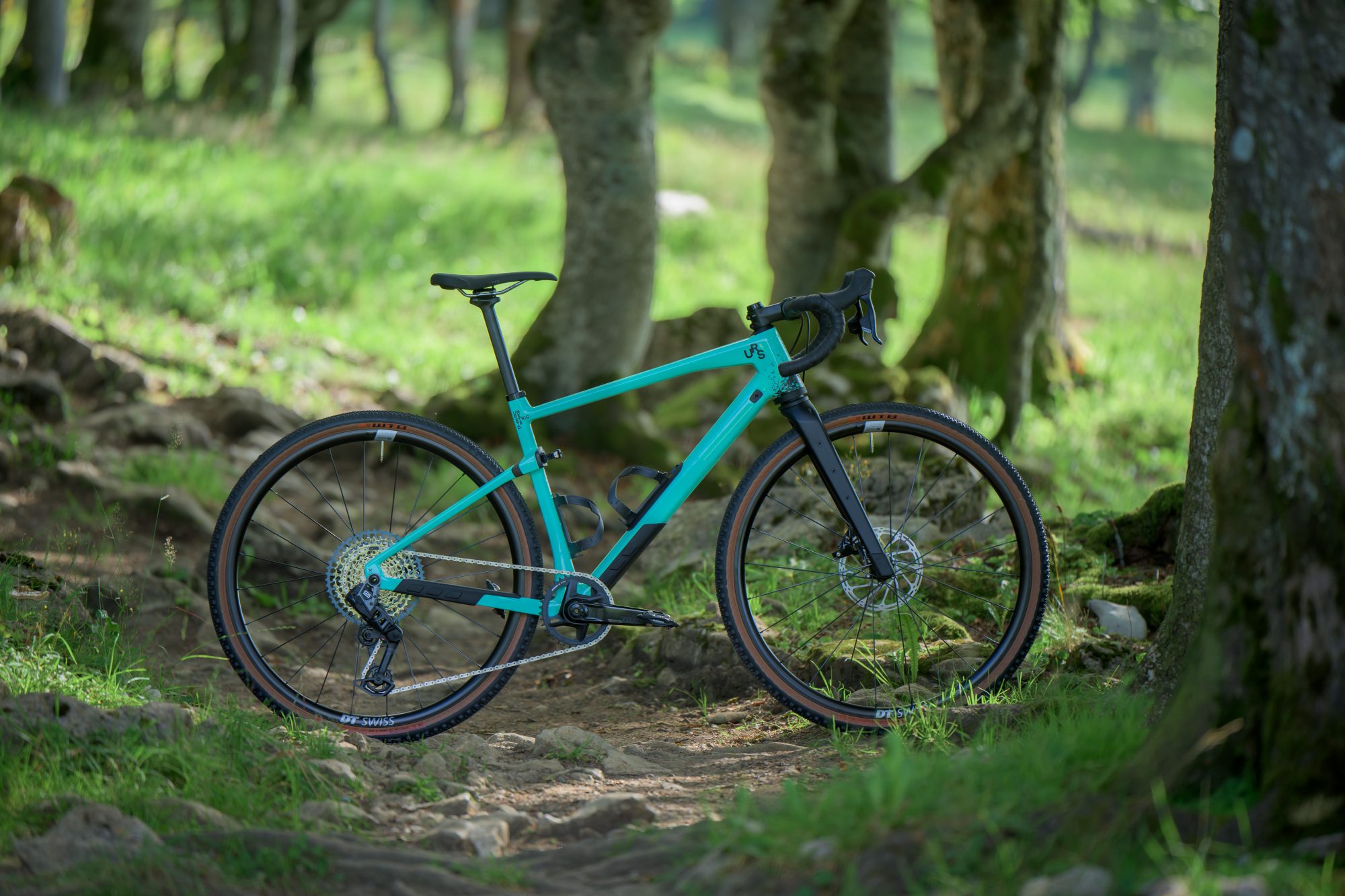
Toni rode the Apüna all-road model from the Medellín brand, made of steel and with a really particular paint job, as Scarab is characterized for. Javi’s bike was the version of the Santa Rosa road model with integrated cables and bigger tire clearance. It also featured the brand’s new Colibrí Damping System, which replaces the traditional steel seat post with a carbon mast. In addition to the clear aesthetic aspect, this improvement offered great comfort throughout the ride thanks to its damping properties to absorb vibrations.
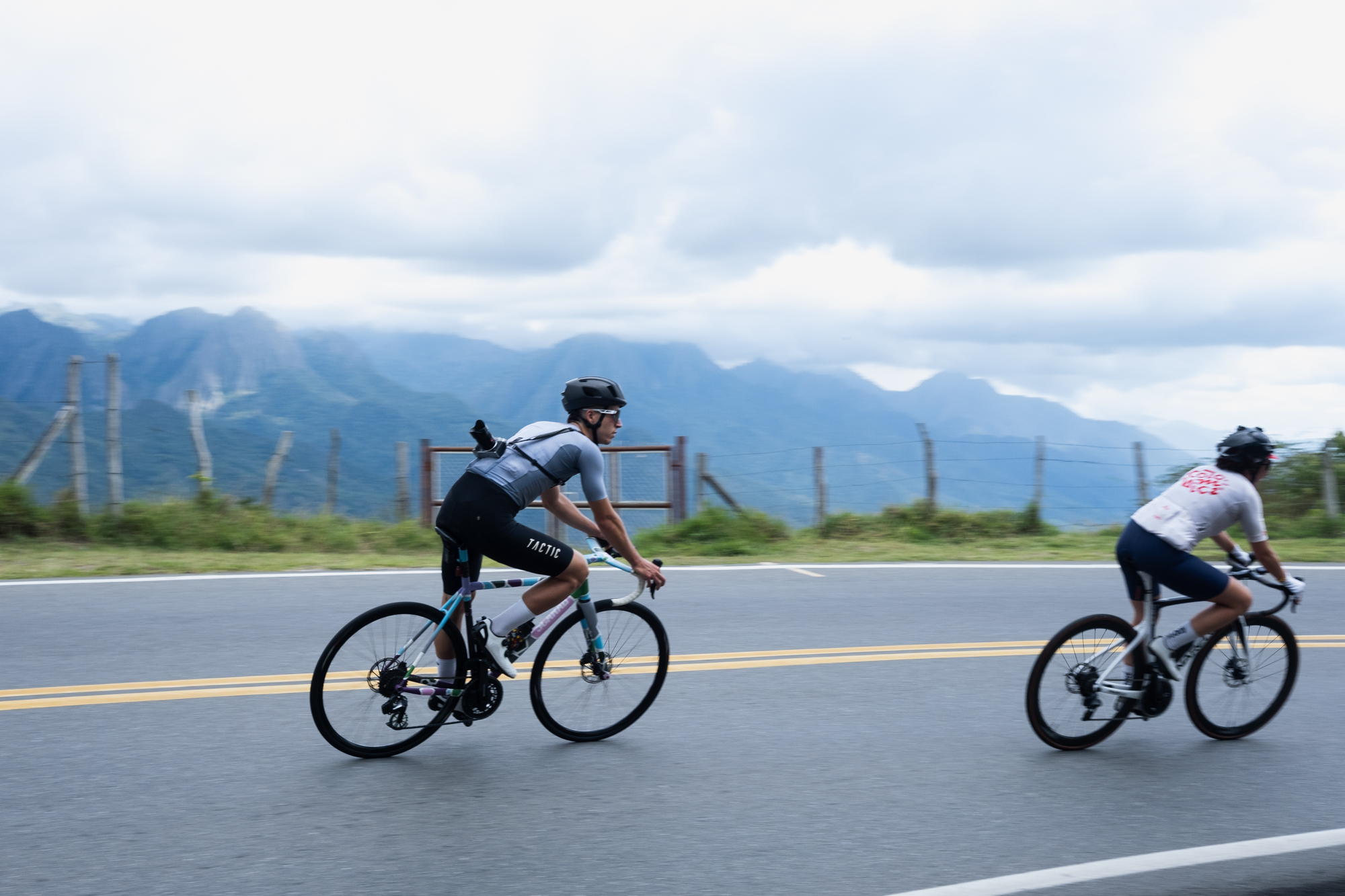
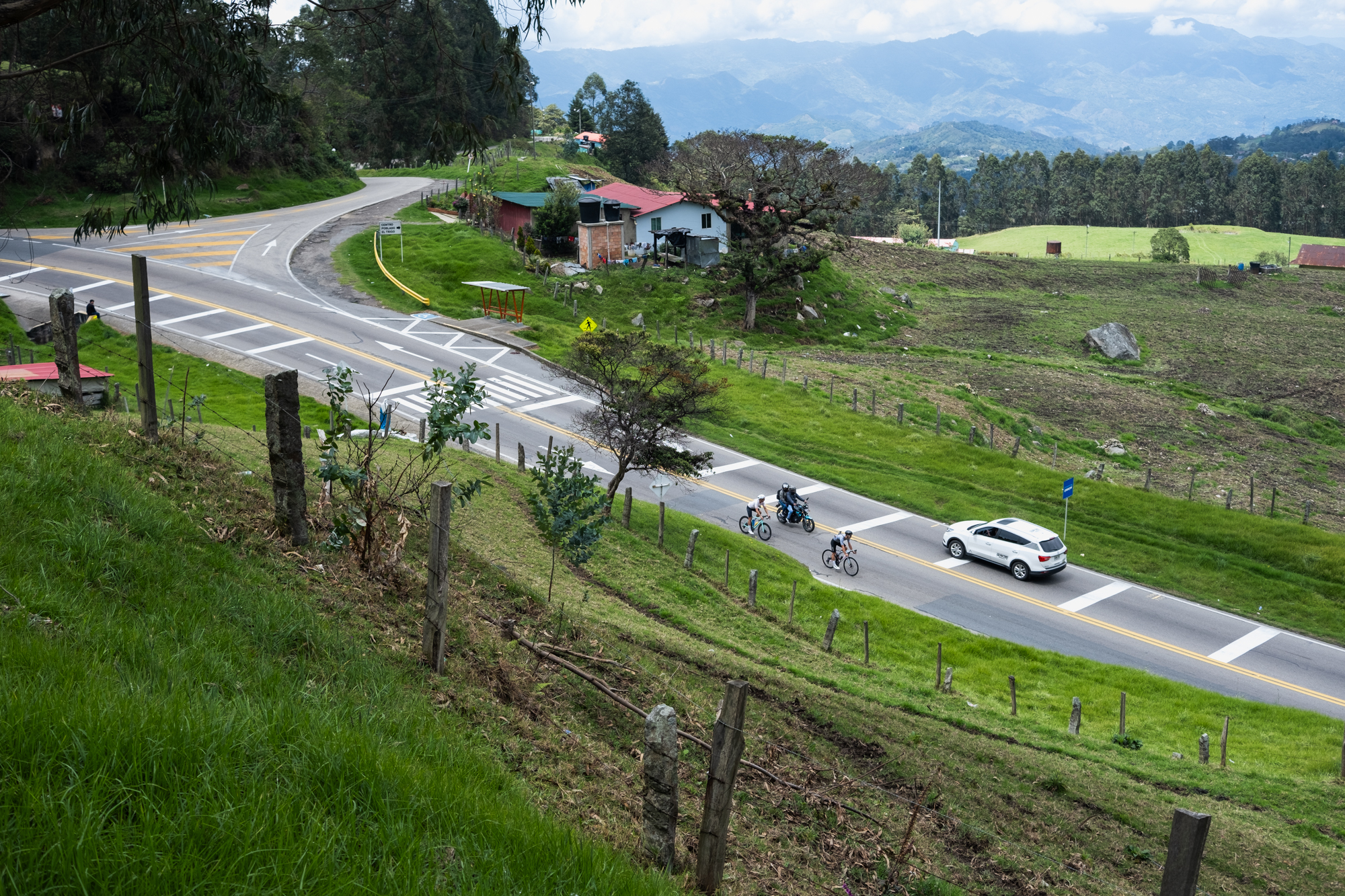
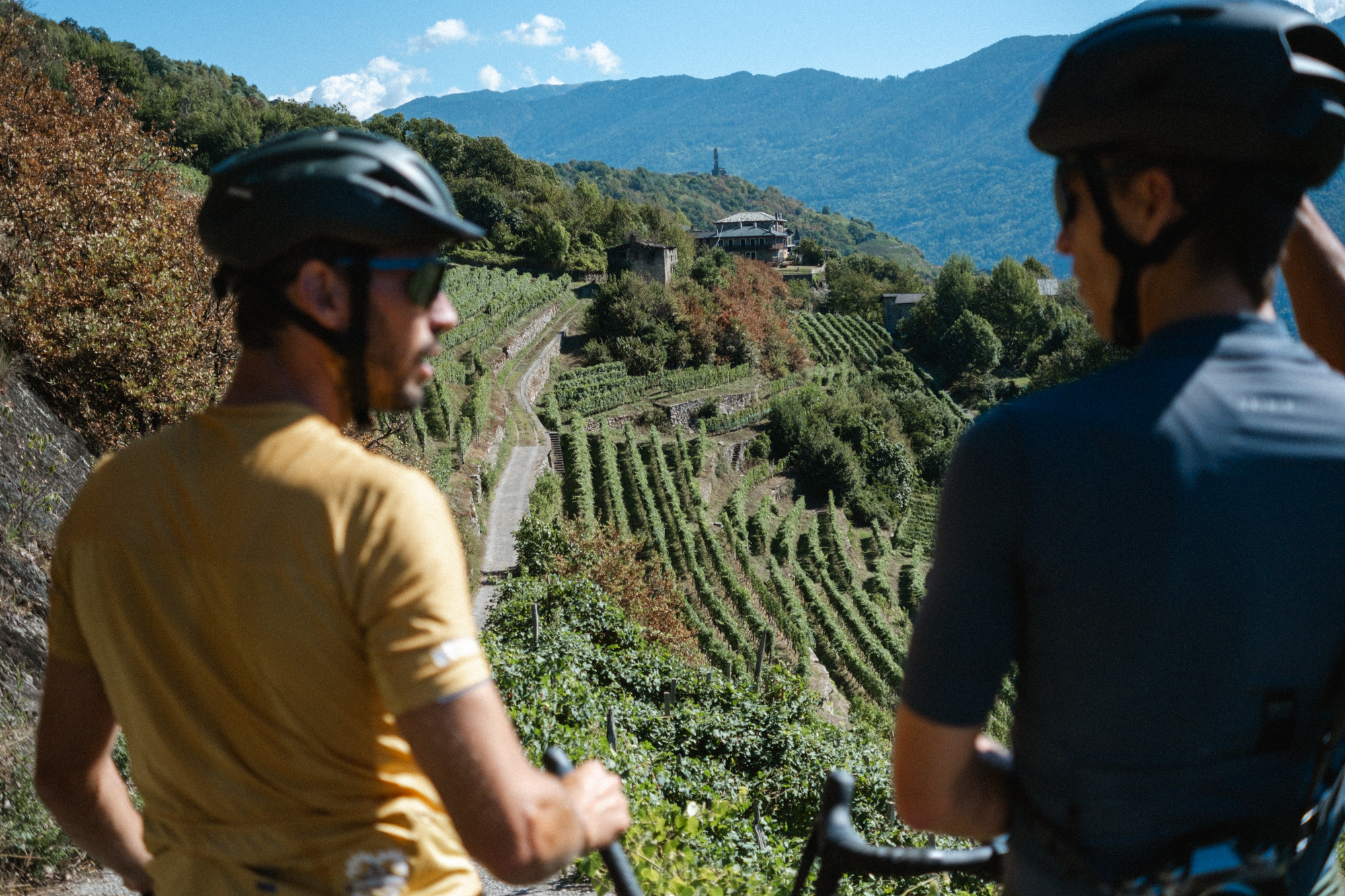
With a gentle climb, we began our journey in Colombia. The traffic was moderately dense, and we were pleasantly surprised that the vehicles, in most cases, left the desired gap when overtaking us. Wide roads, lines painted in yellow instead of white… we were unmistakably in America.
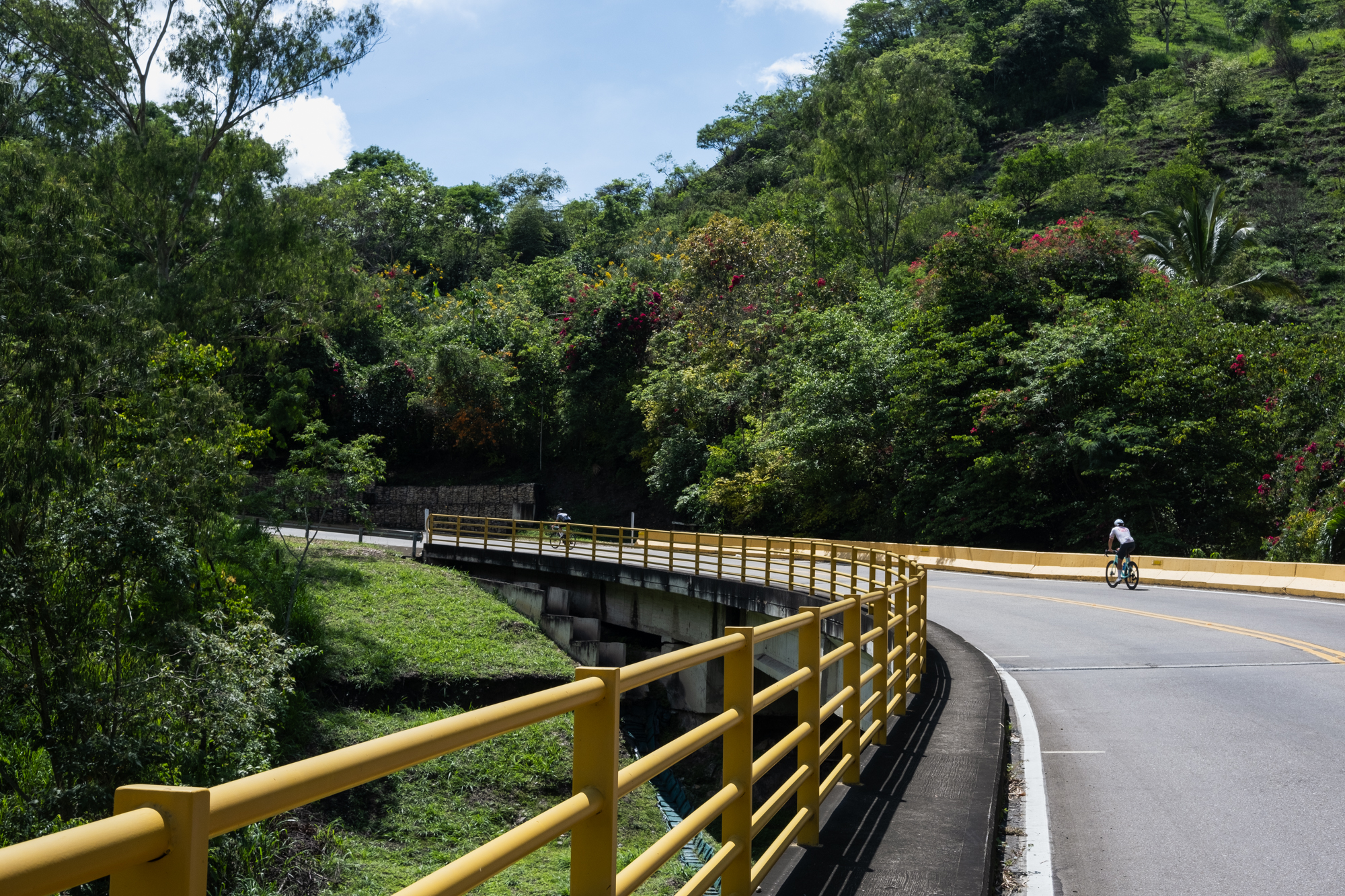
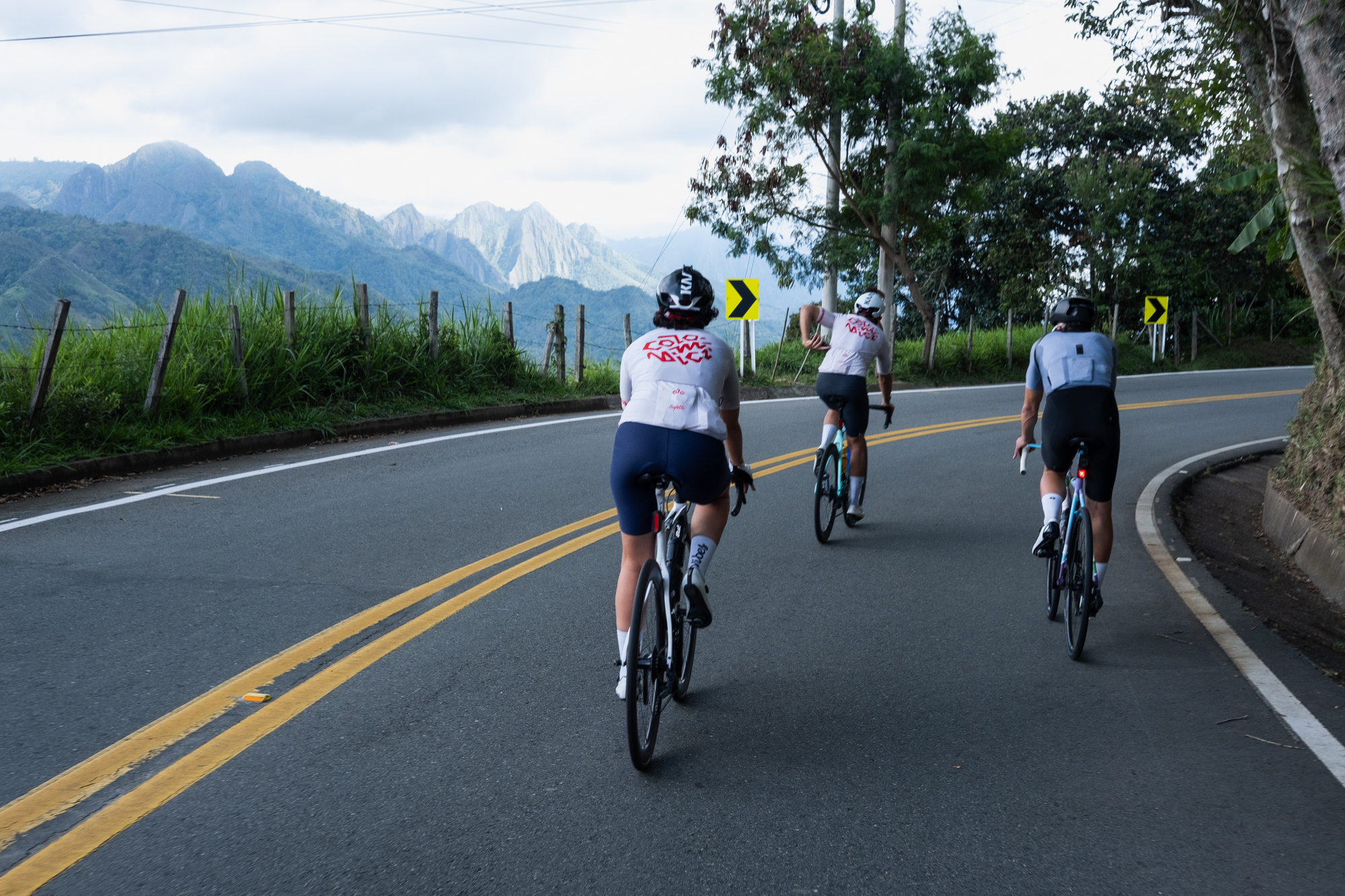
The trend of the first stage was mostly downward, as we ended the day at just 500 meters above sea level. The descent was long, without steep slopes, and we could enjoy the views of the mountains. We were struck by the fact that, unlike in Europe, vegetation was present even on the highest peaks, altering their silhouette.
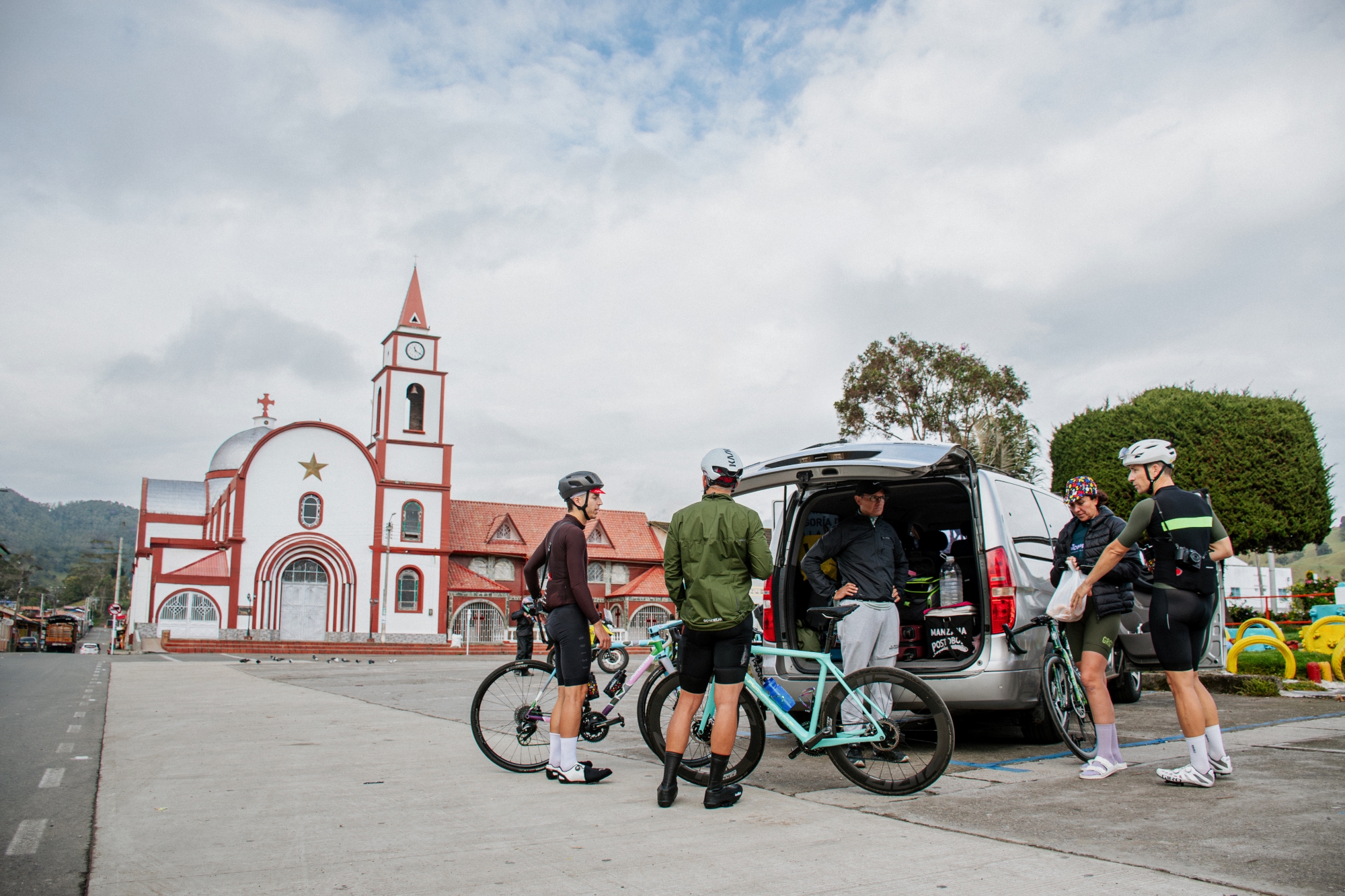
We stopped in Vianí. The tasting of typical Colombian products began. Empanadas and almojábanas satisfied our hunger, and guayaba bocadillos would provide us with the sugar needed for the rest of the stage.
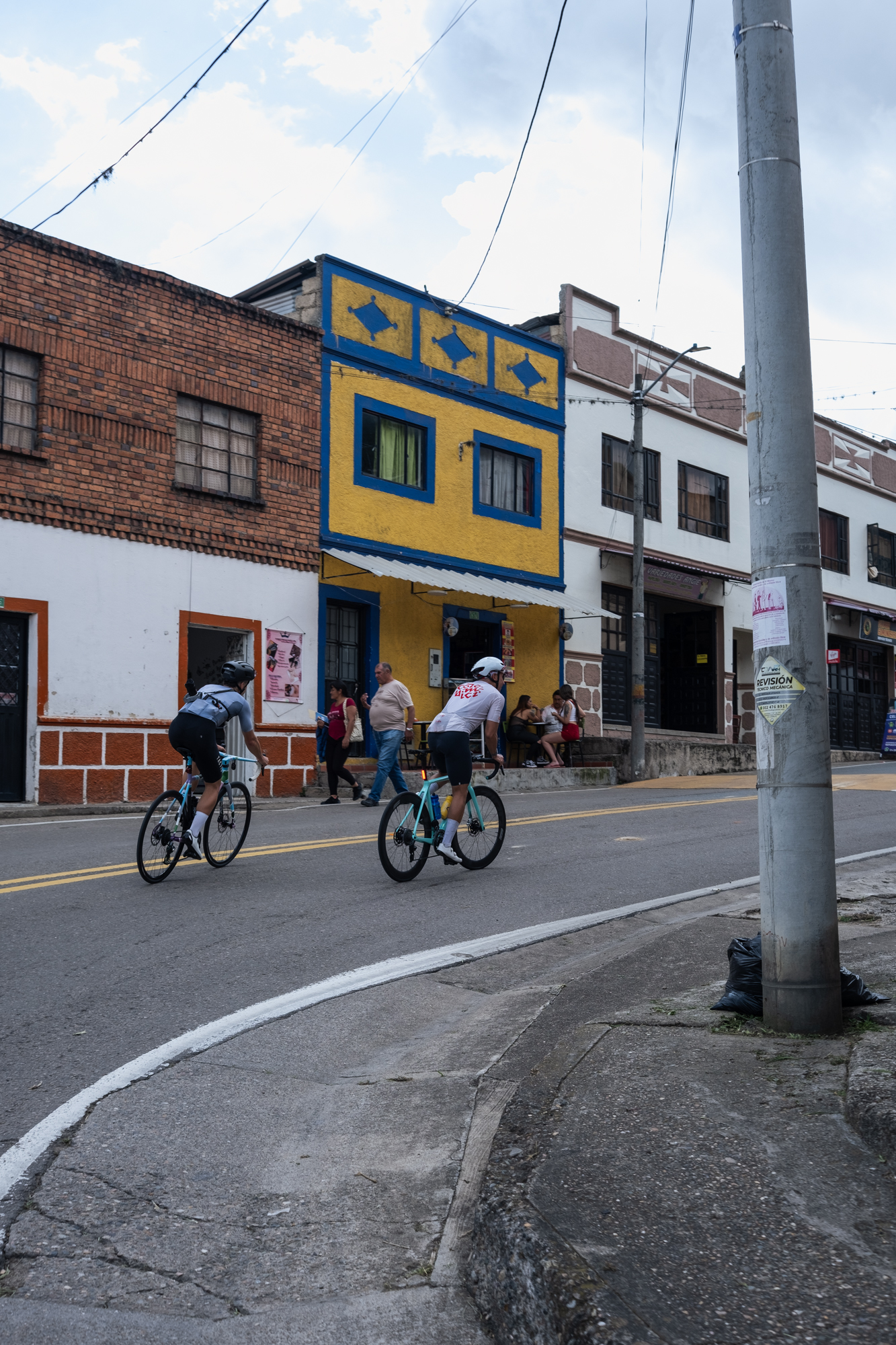
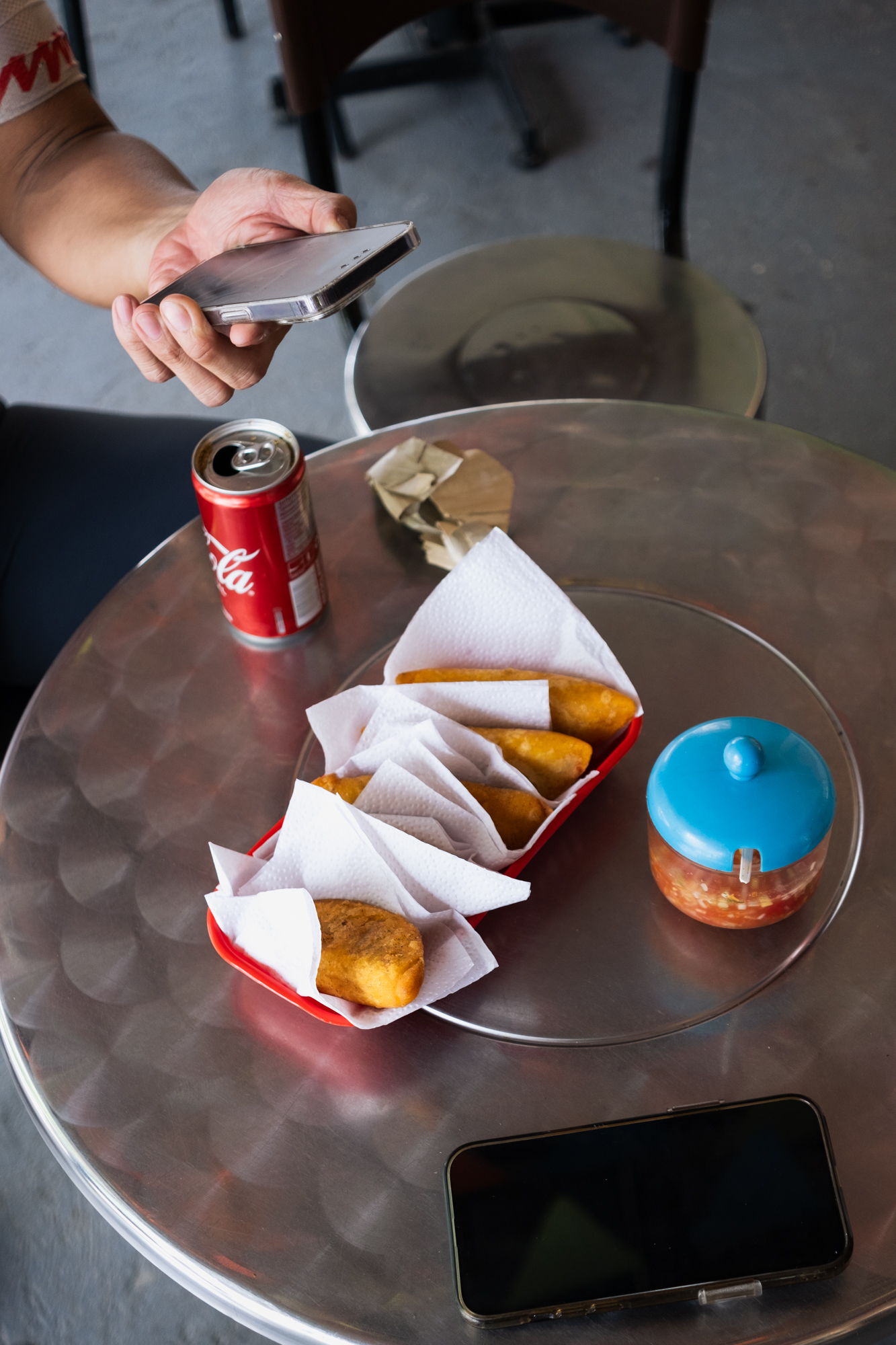
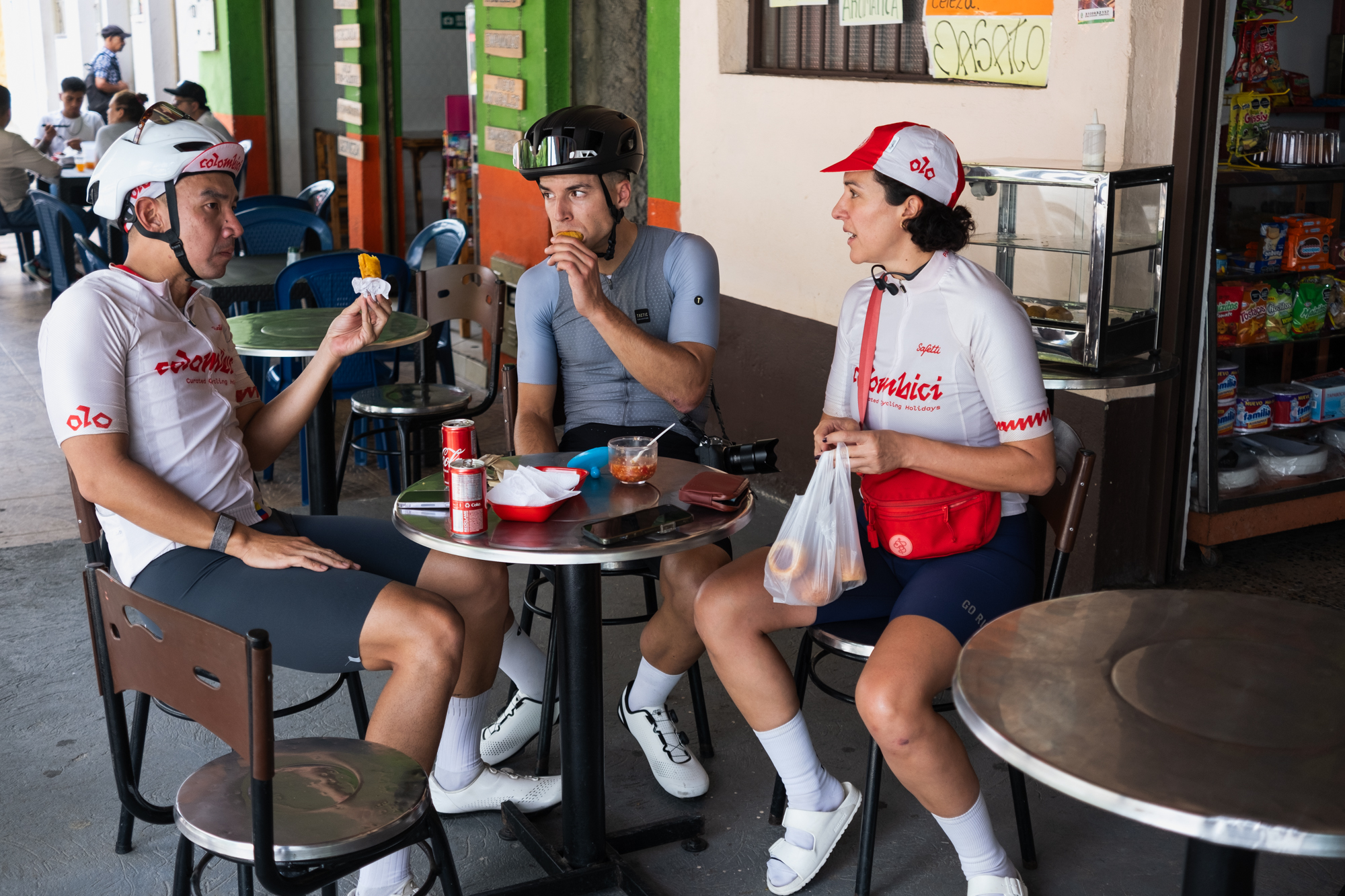
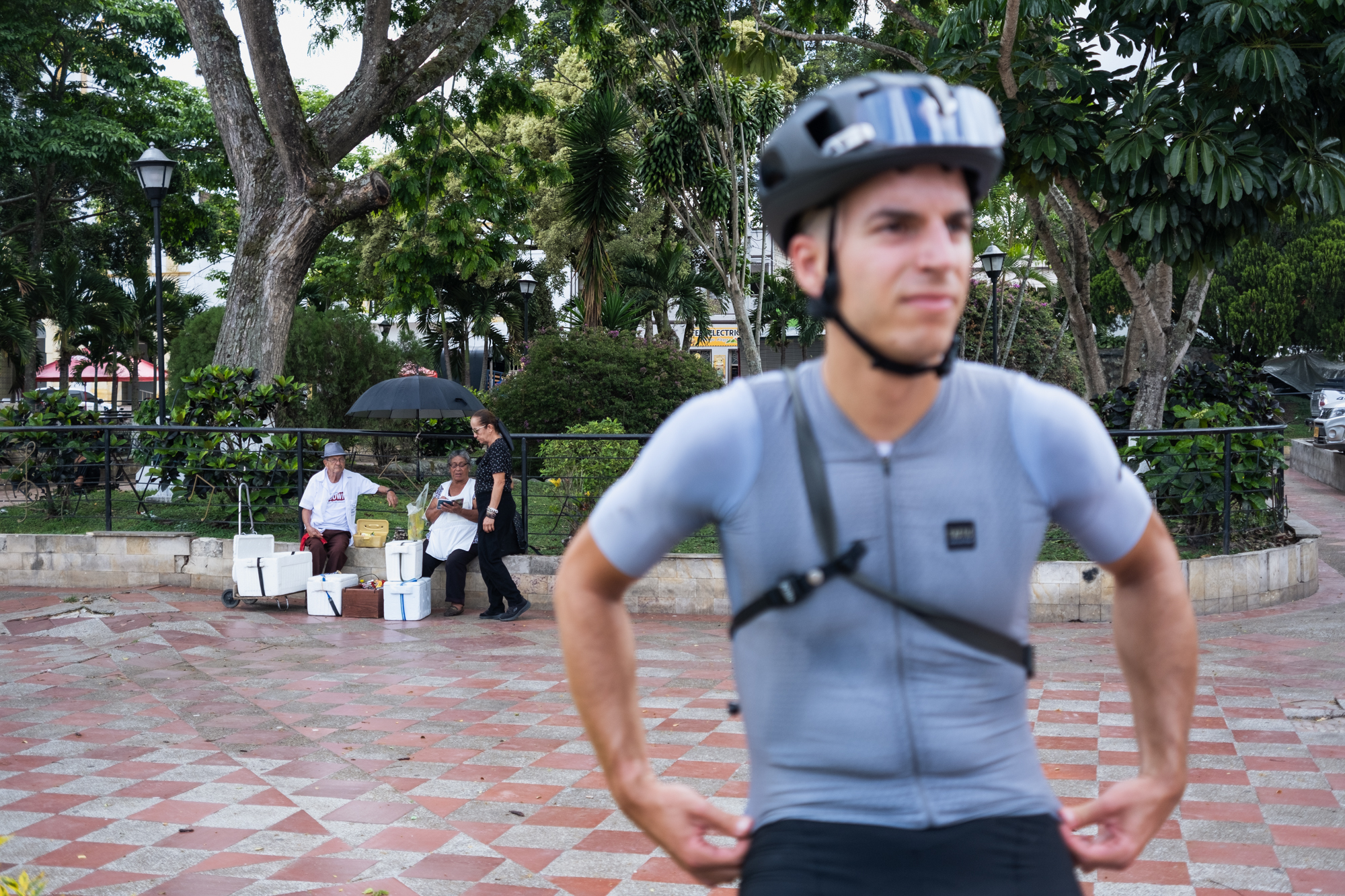
The descent continued, and the road became even more winding. We caught a glimpse of the Magdalena River, and it was at the Curva del Ángel where it was appreciated in all its splendor. This river crosses all the main departments of Colombia, before flowing into the Caribbean.
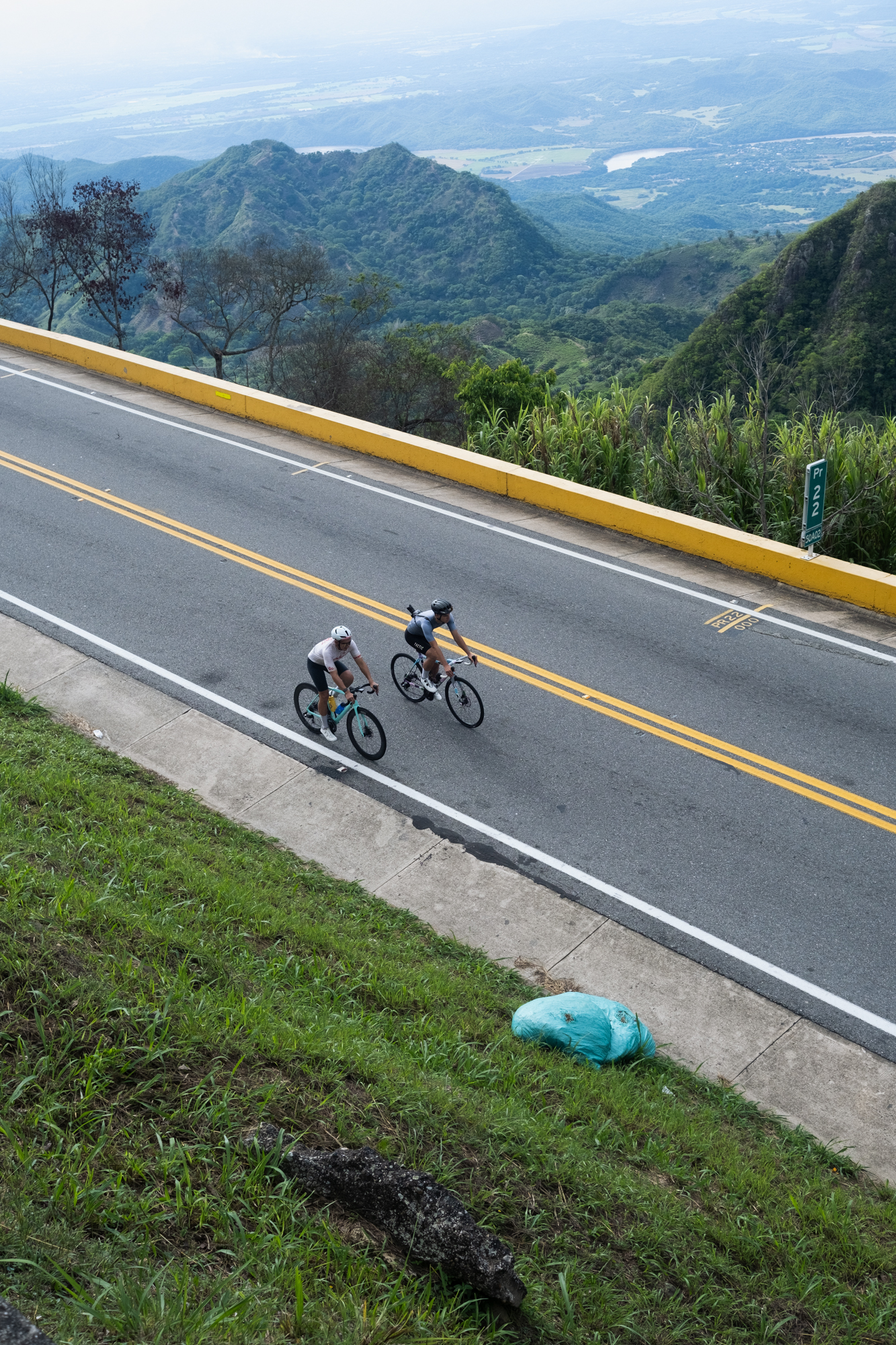
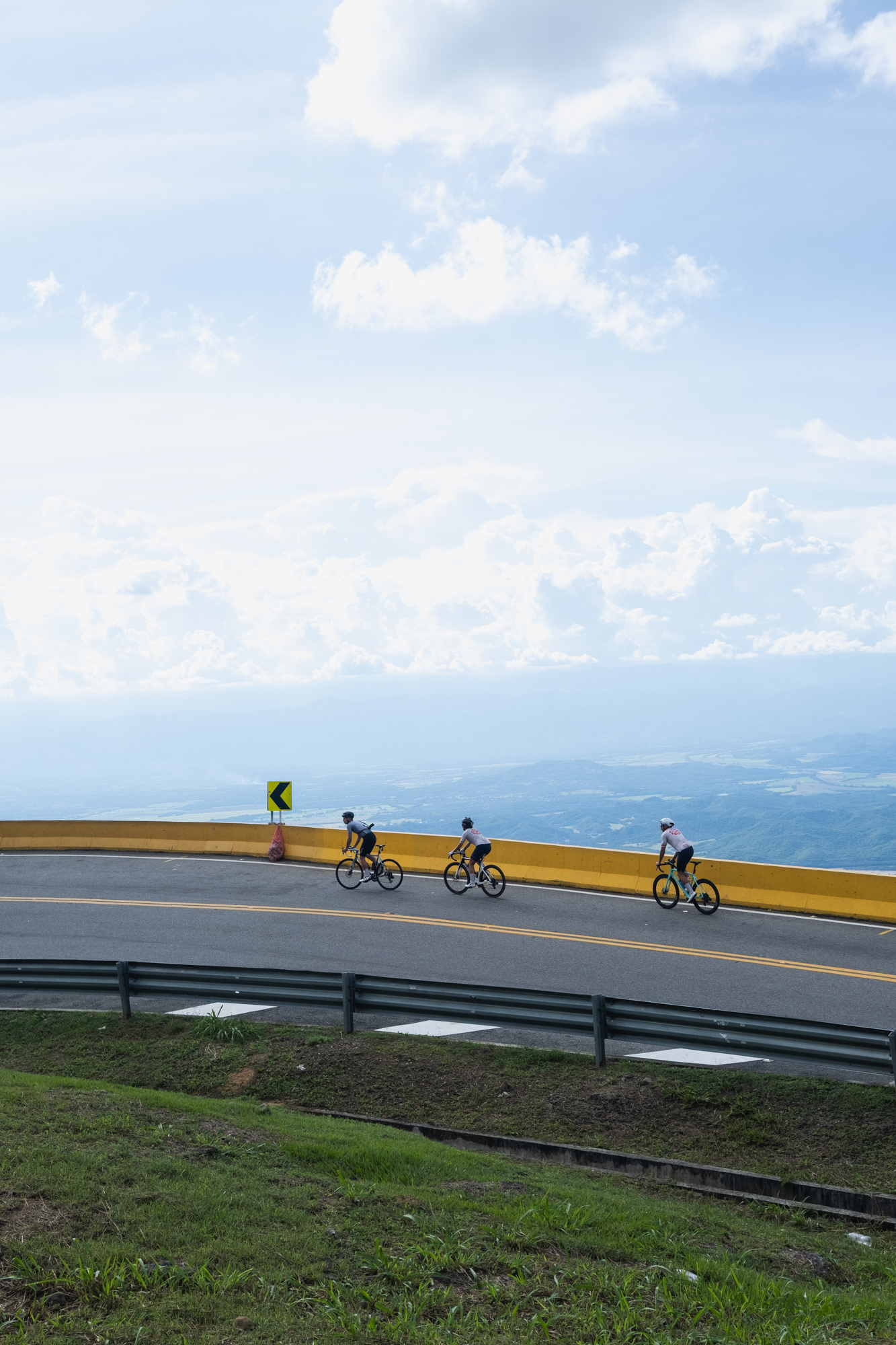
A couple of unexpected and brief showers made an appearance in the last third of the day. This reduced the ambient temperature, which played in our favor since the temperatures tend to be extremely high in that area. We put an end to the first stage in Cambao, the border between the departments of Cundinamarca and Tolima.
We got into the broom car of Danilo, a former professional cyclist who would offer us his support throughout our journey. We arrived in Honda, where we took a short walk before going to rest at the Hotel Posada Las Trampas.
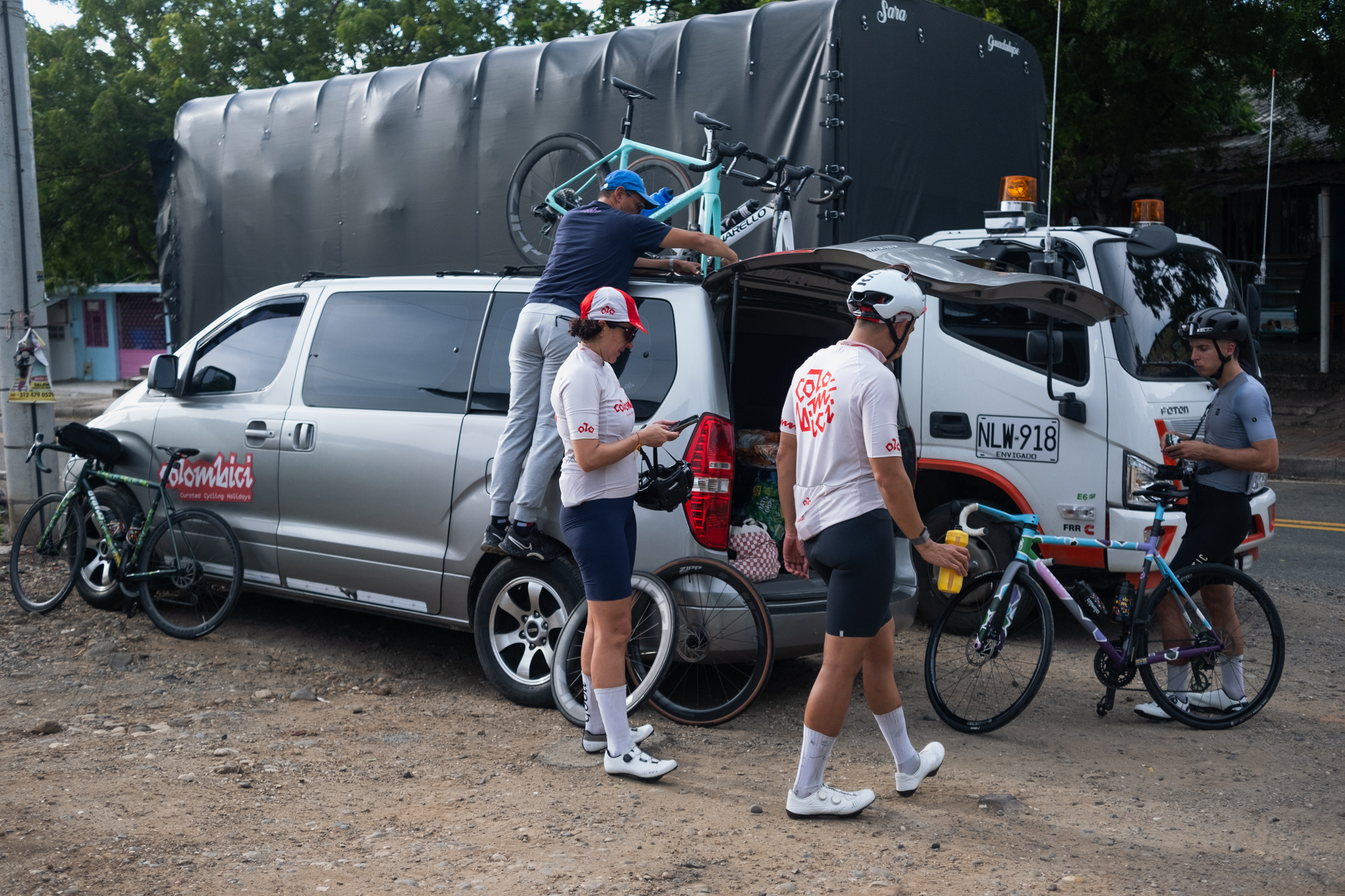
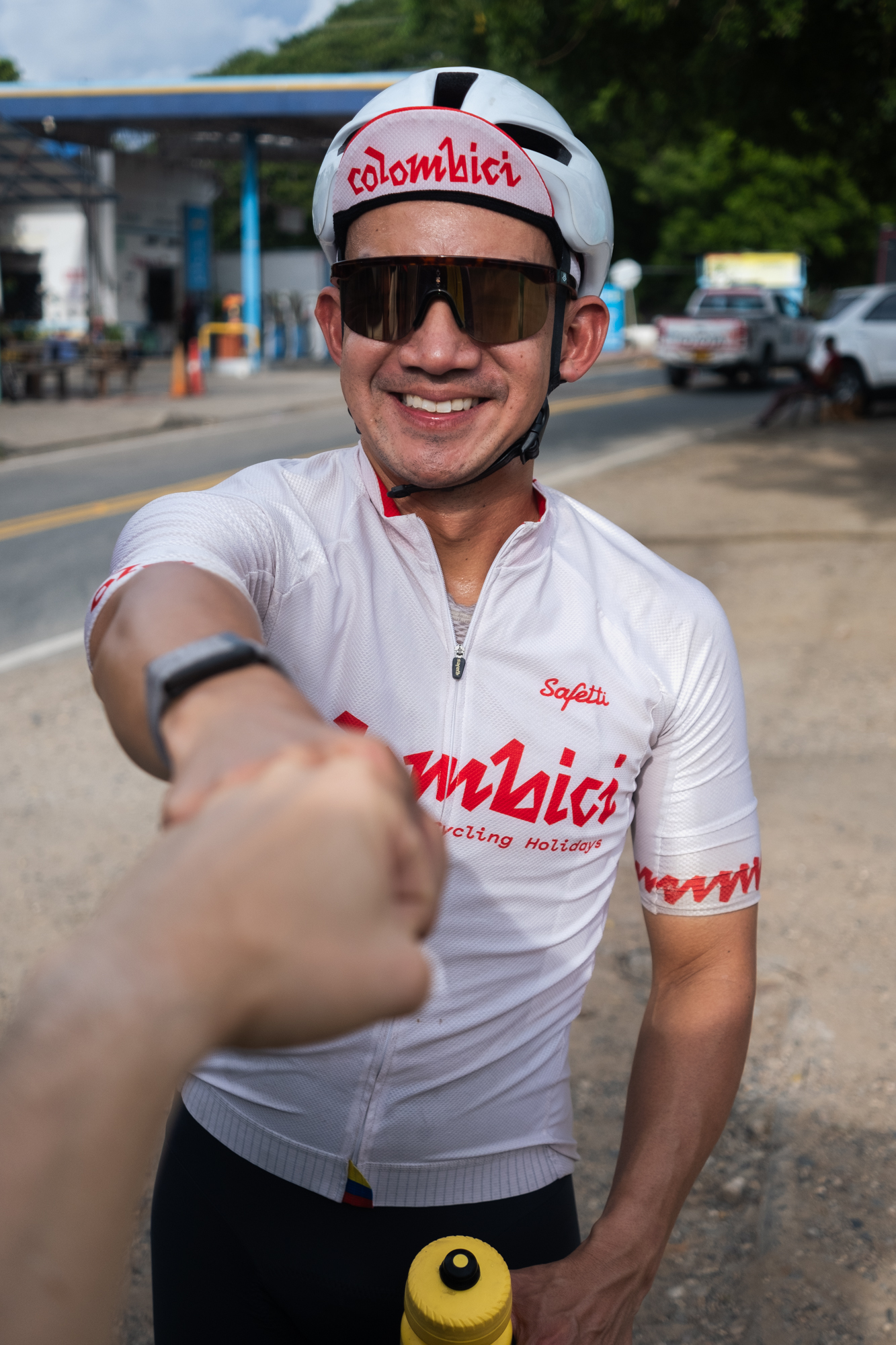
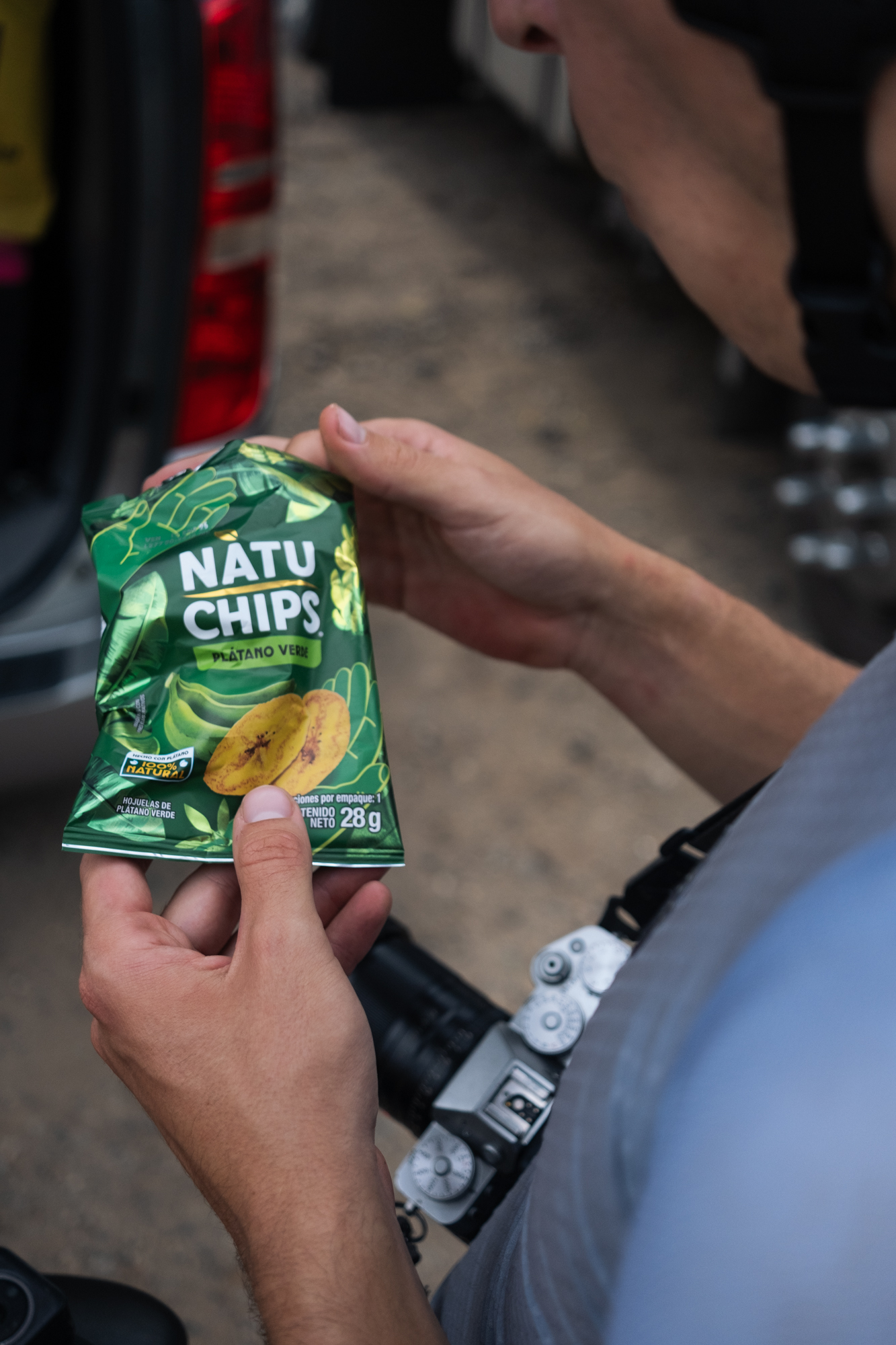
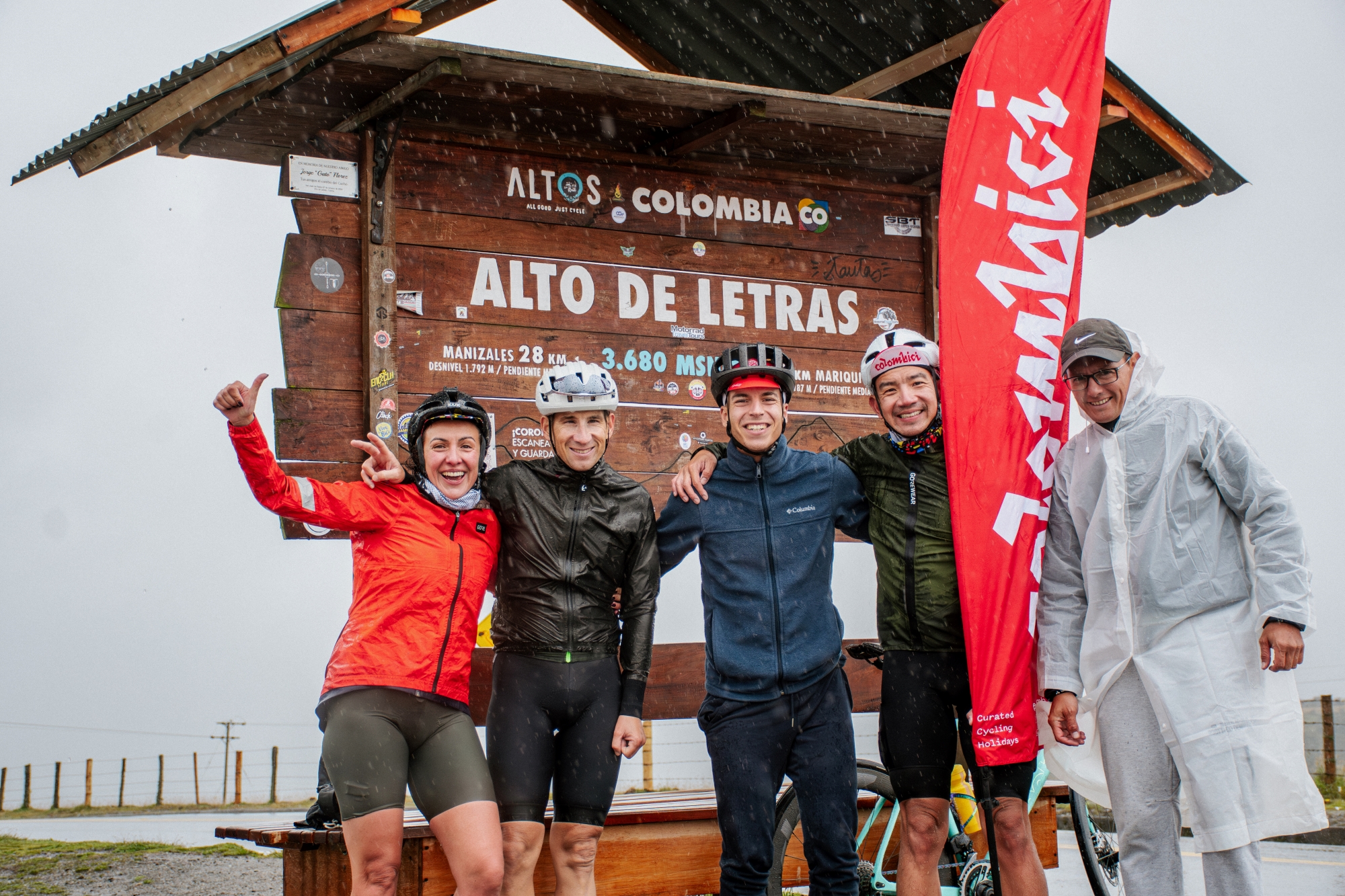
Our approach to Alto del Sifón continued with a second stage that had its own highlights. The first two hours were completely flat, with Mariquita and Armero being the most relevant towns in that first part of the day. Mariquita is the place from where most cyclists begin their ascent to Alto de Letras, which tops out at 3,680 meters above sea level. That was until now the most mythical climb in the country, but the government recently paved an old path, and now it is possible to ascend on a road bike to Alto del Sifón via Armero.
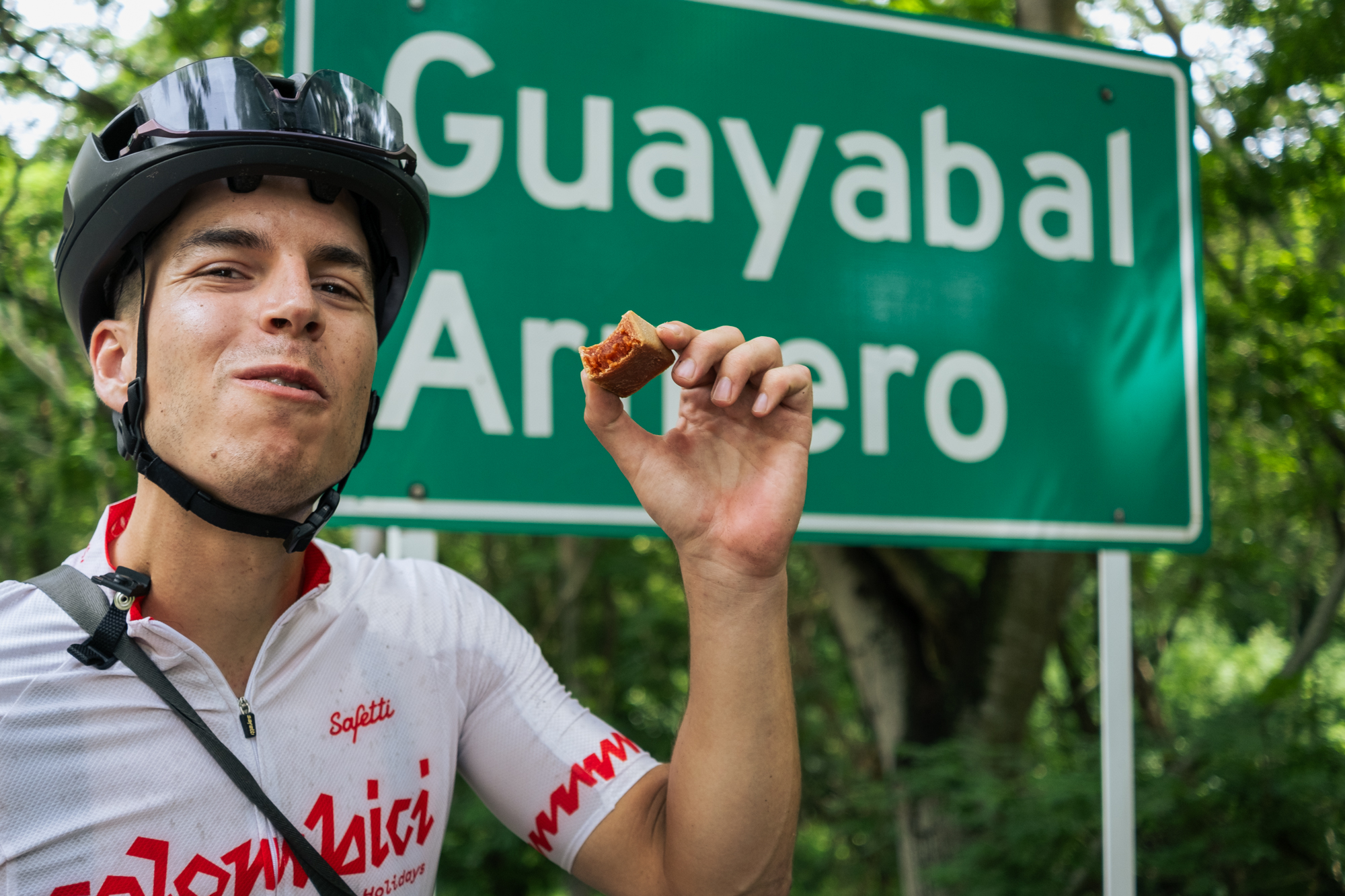
The wind was blowing in our favor as we headed south, and we covered the entire stretch to Armero quickly, with only one stop in Guayabal Armero to take a photo eating a guayaba sandwich. It was mandatory.
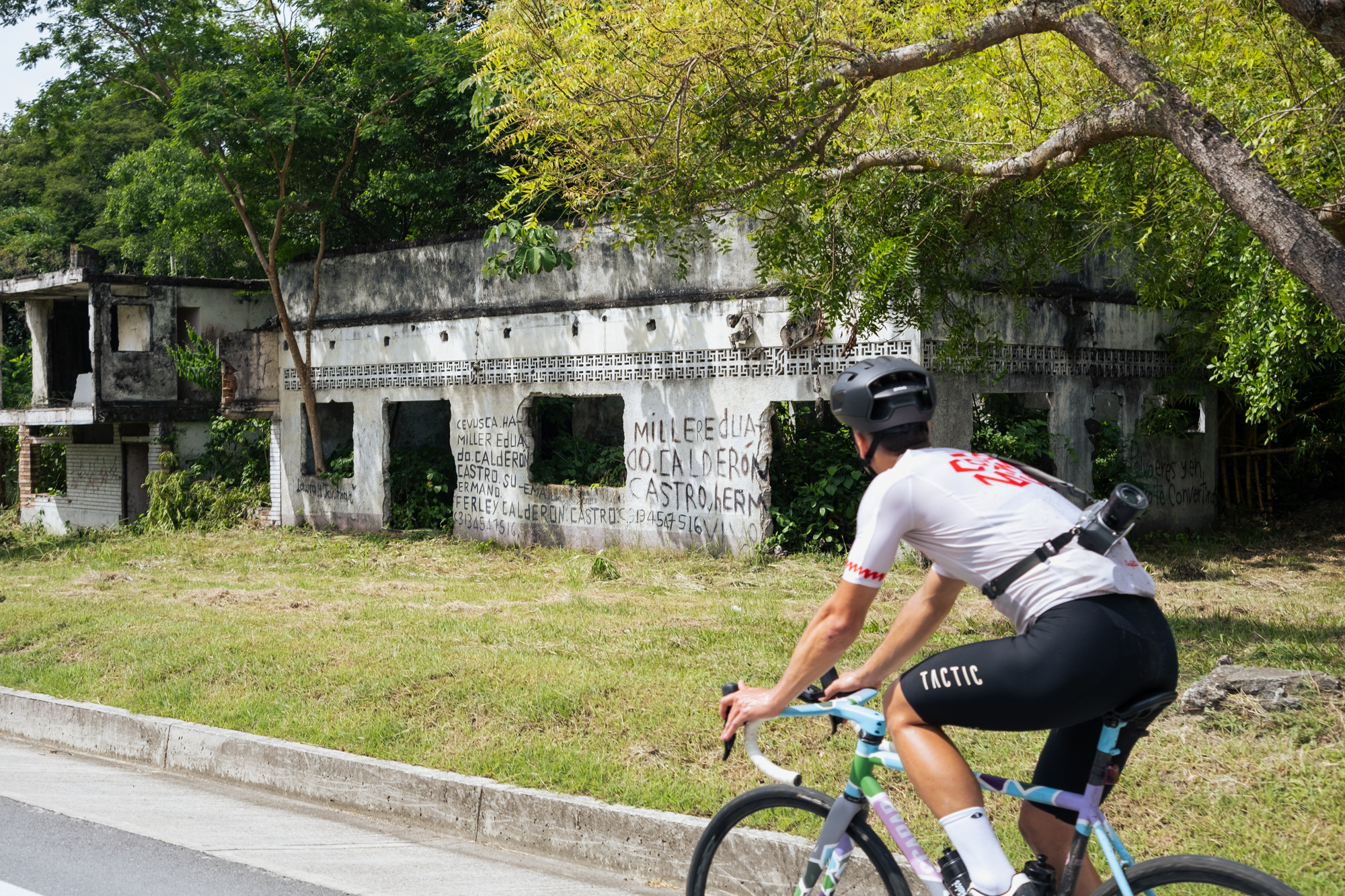
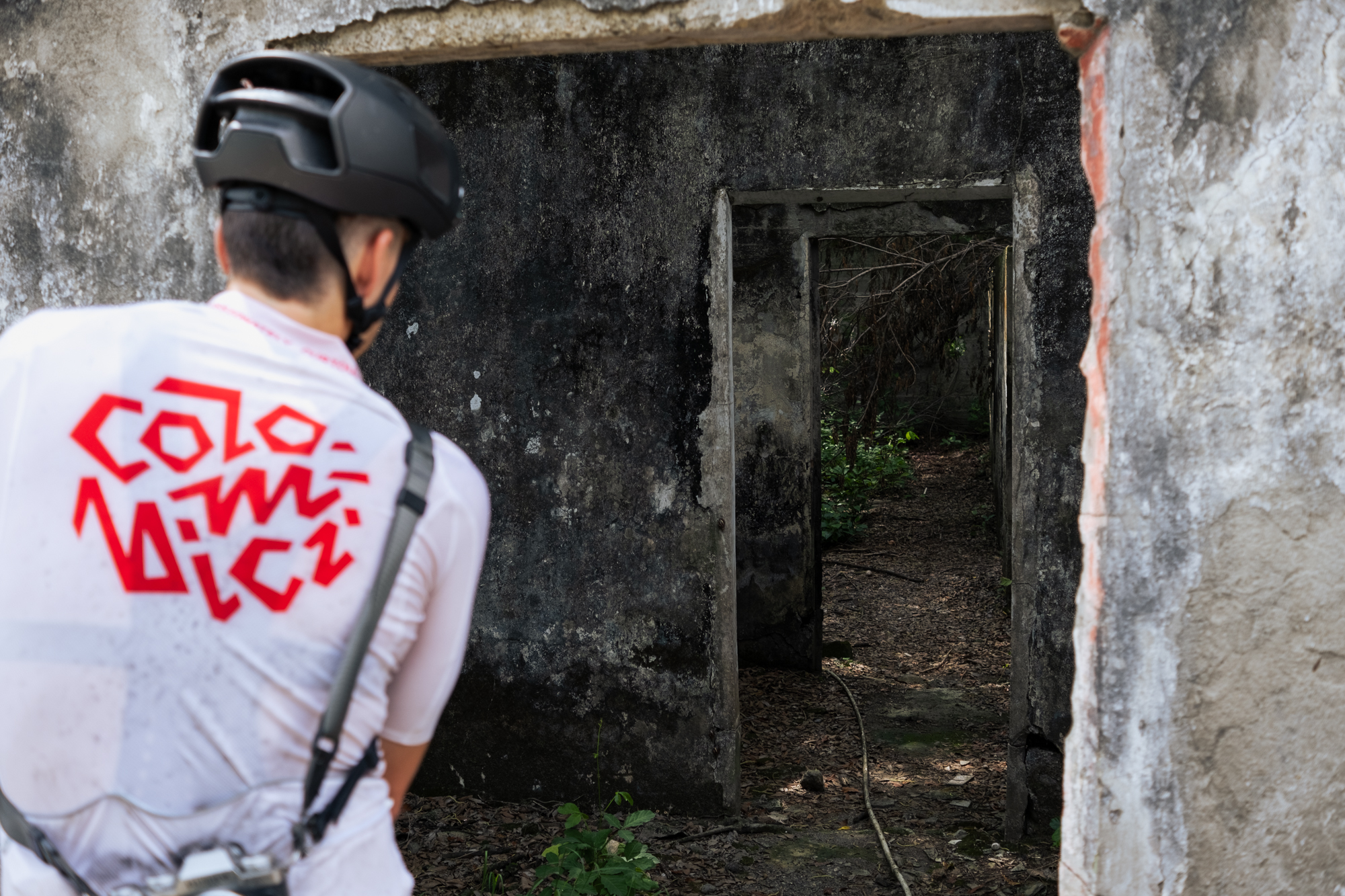
It was not until that day that we learned of the tragedy in Armero. In 1985, the eruption of the Nevado del Ruiz volcano caused an avalanche down the slope that destroyed the town, killing more than 20,000 inhabitants. We were deeply touched when riding past the ruins of the tragedy.
Just a couple of kilometers further, we stopped one last time before starting the climb to Líbano. It was very hot for us, but that is the usual temperature in the area. A few achiras and almojábanas were our fuel for the 30 km ascent ahead of us.
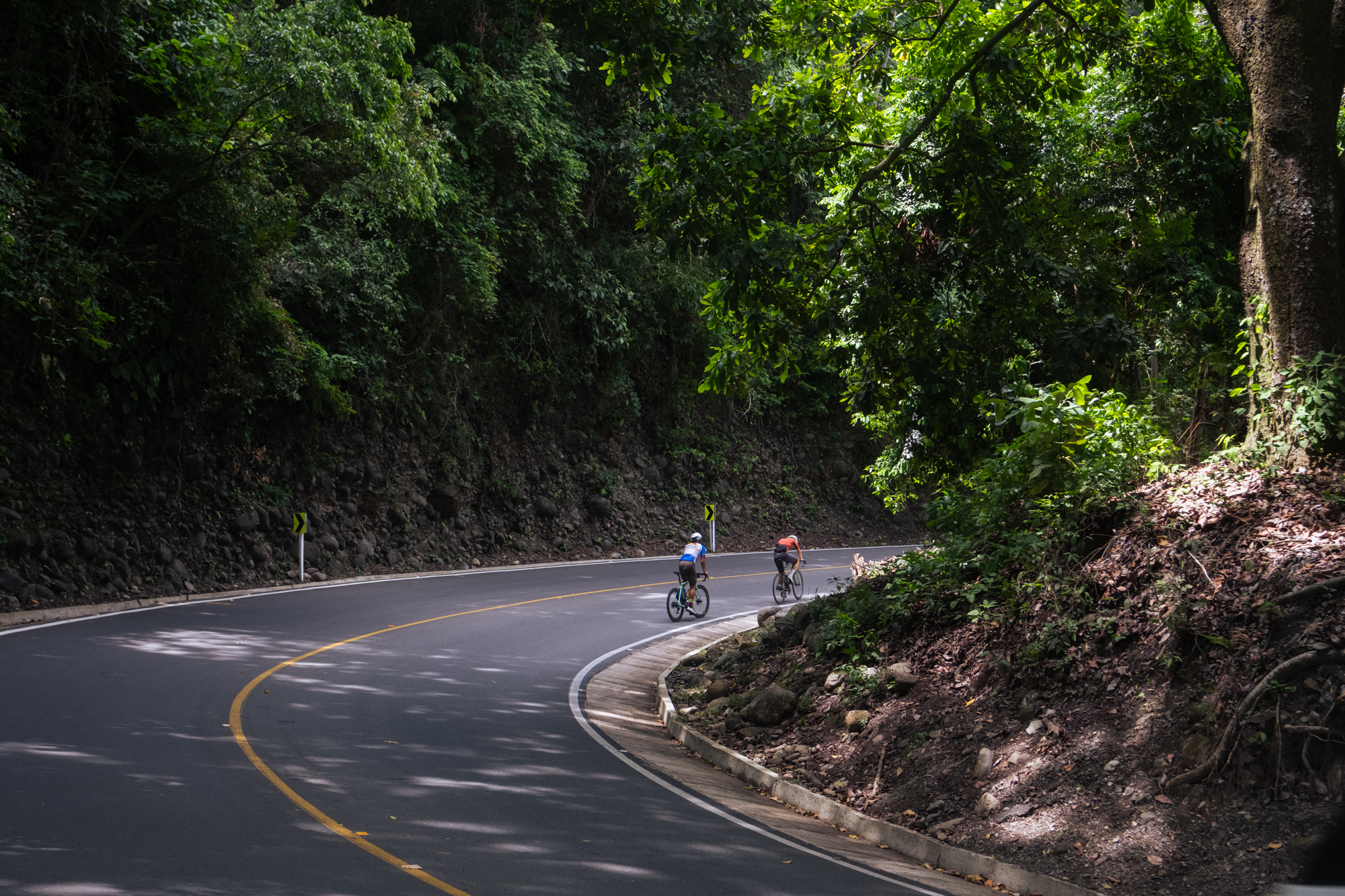
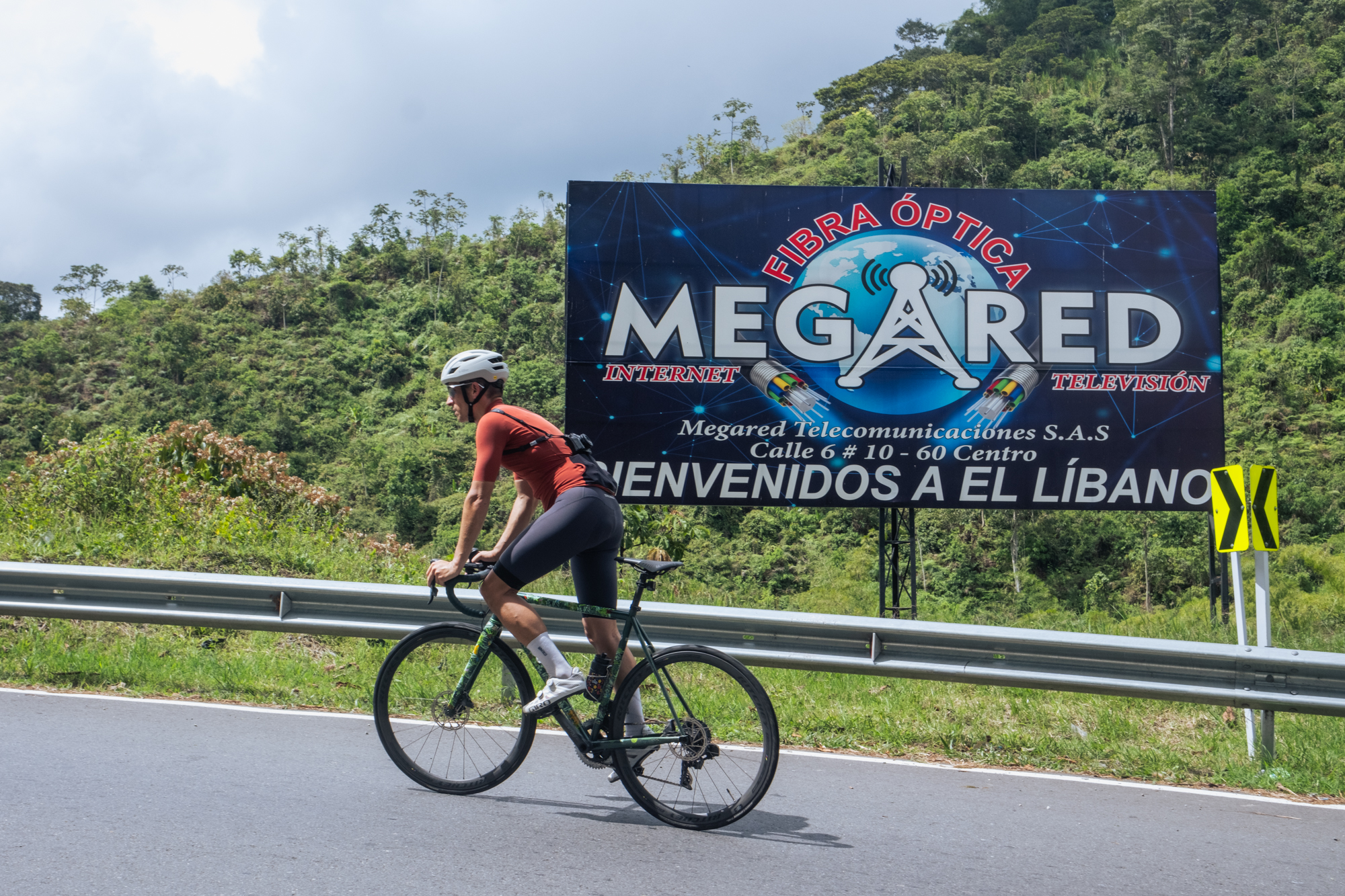
It was not an easy one, but the more elevation we accumulated that day, the less we had to climb the next day. Some cyclists climb to Alto del Sifón from Armero, which involves 115 km of continuous ascent. We divided the climb into two sections, sleeping in Líbano, the last medium-sized town before the summit.
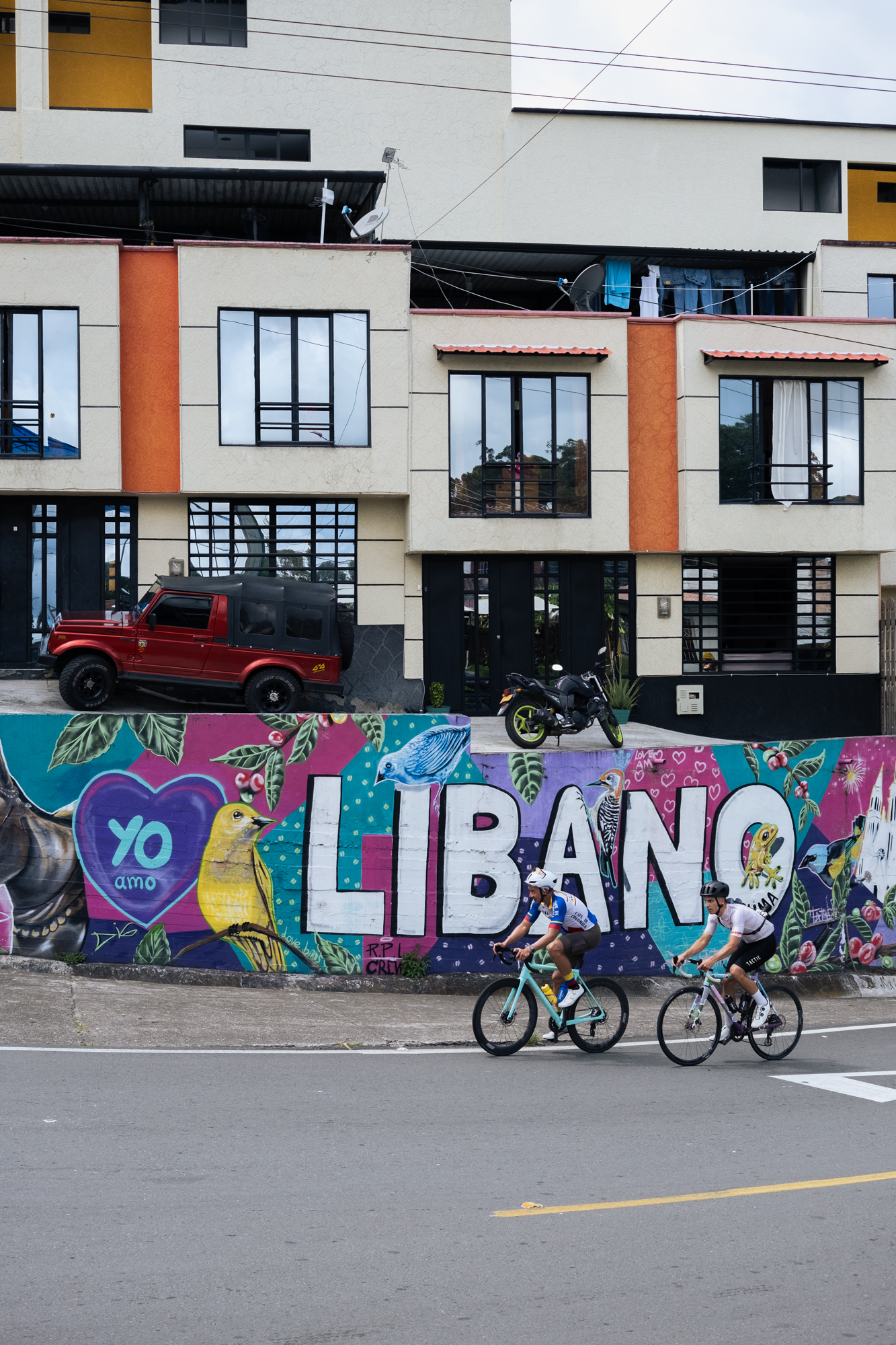
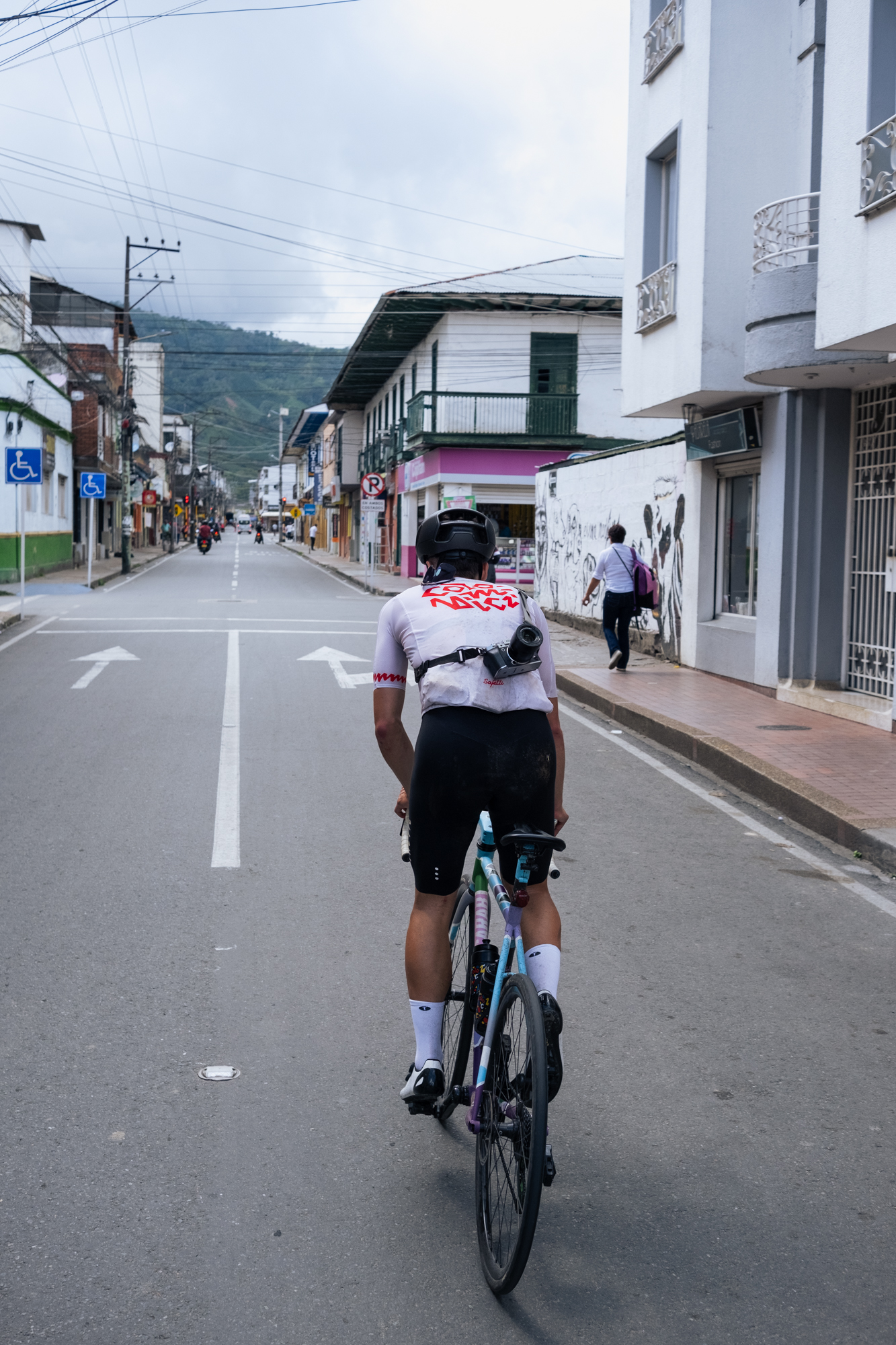
If the ascent to Alto del Sifón is already a major challenge in itself, the weather conditions were going to accentuate its toughness. It started to rain the previous afternoon, and although it stopped just when we started our route – at 5:30 a.m. to try to reach the top at a reasonable time – we faced intermittent rain throughout the day.
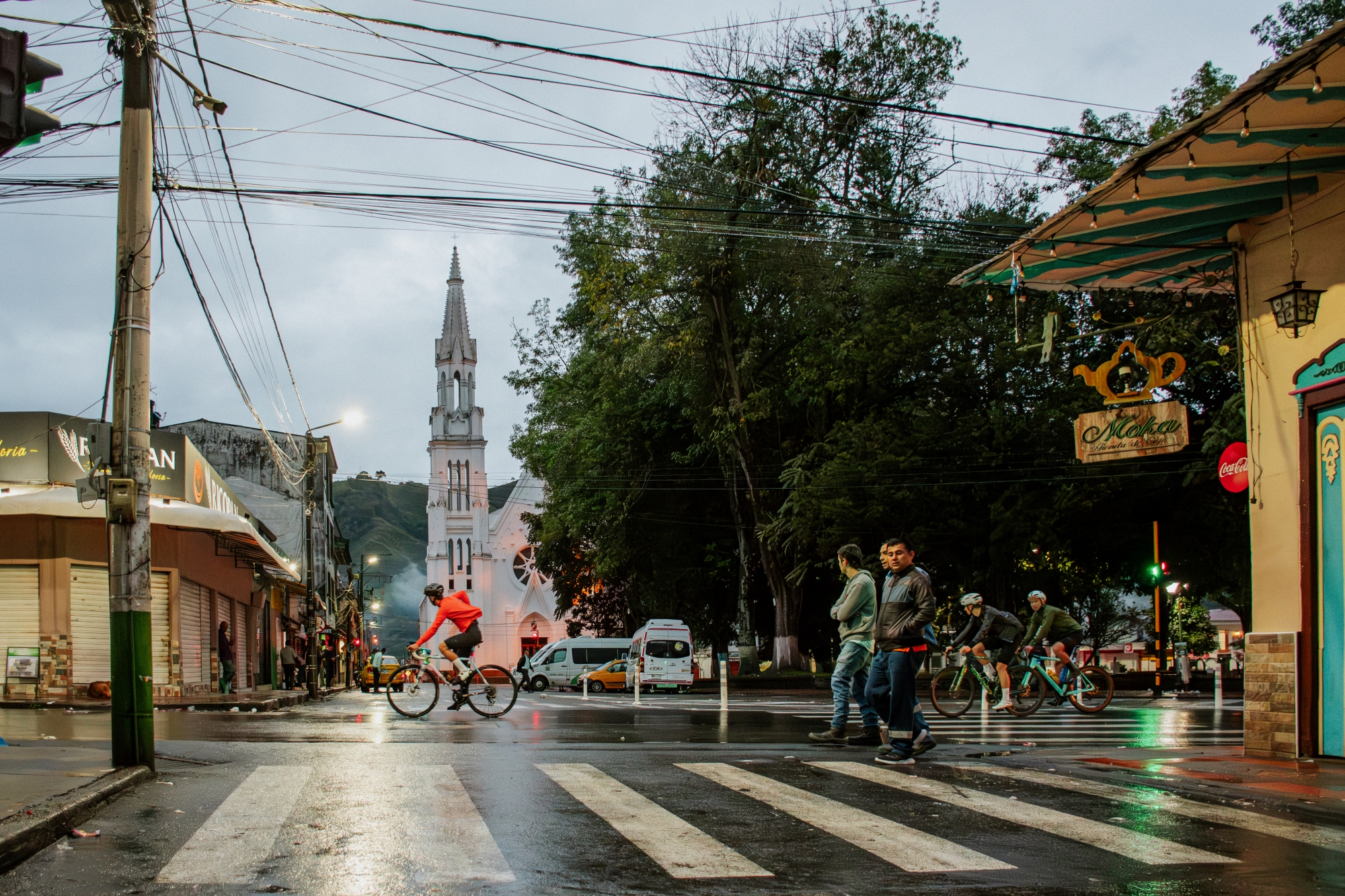
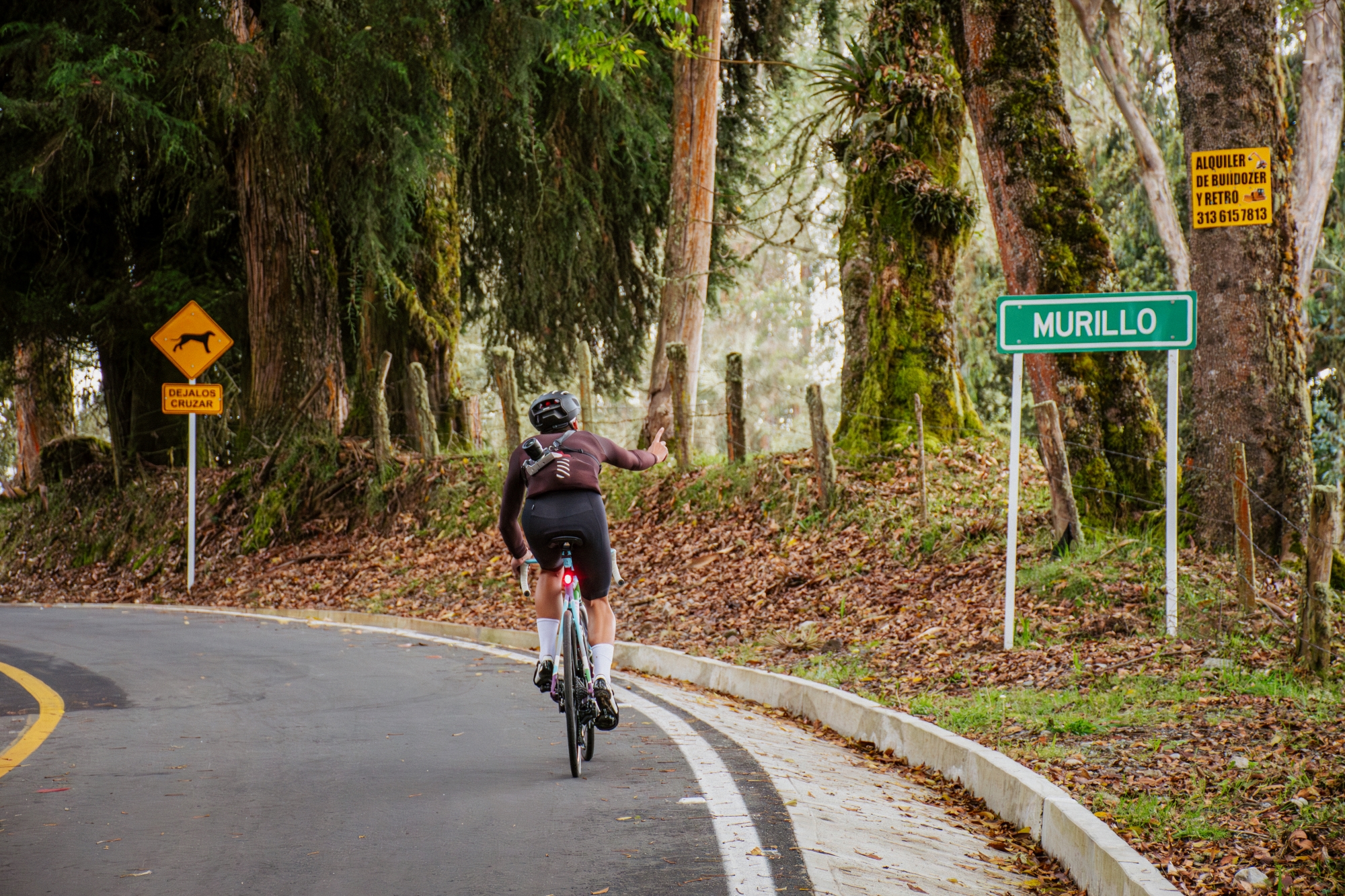
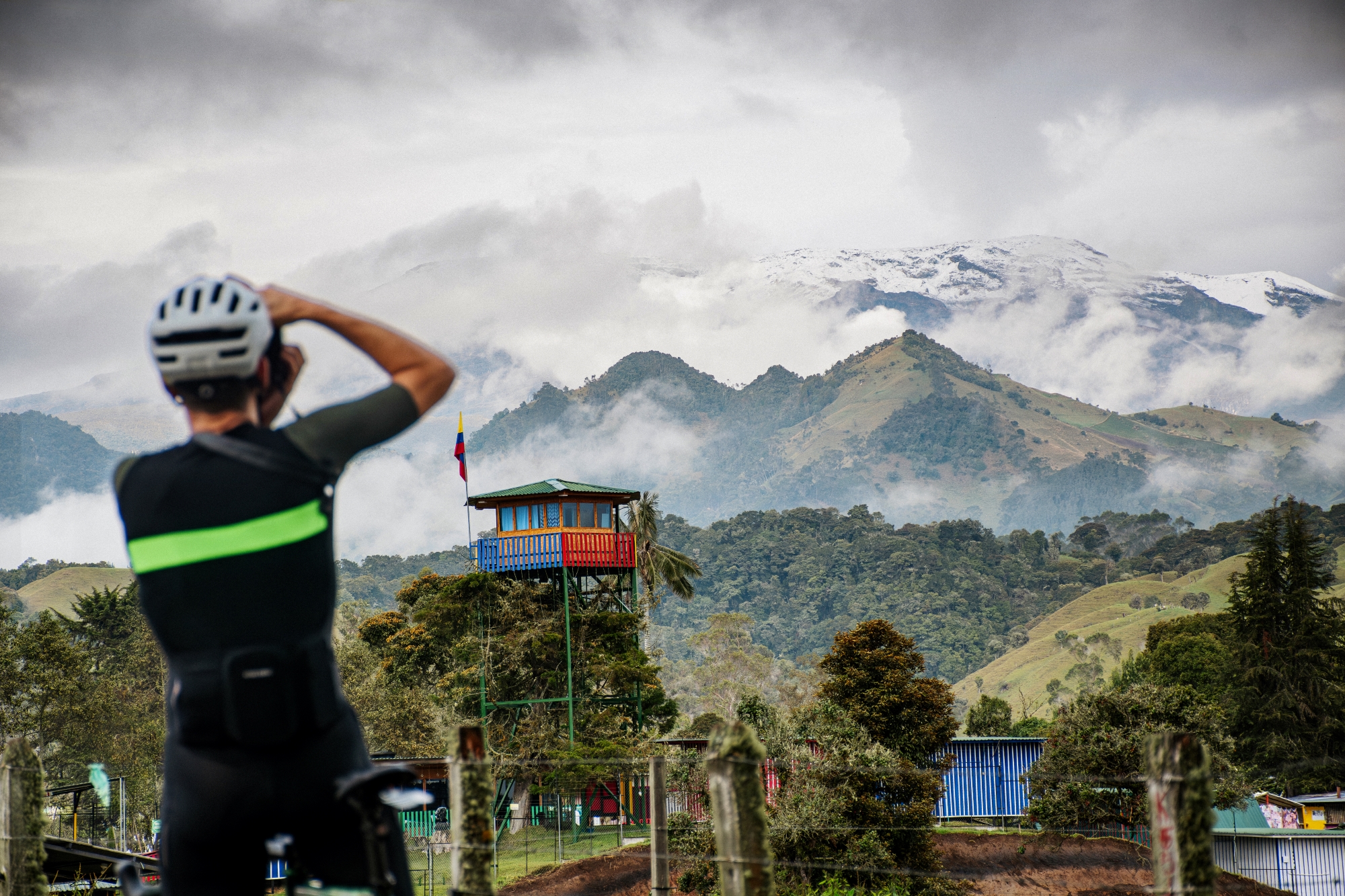
The first segment was the hardest because of its slopes. We arrived at Murillo, a small town at 2,900 meters of altitude with a lot of charm. From there we could appreciate from a distance the Nevado del Ruiz, something that lifted our spirits. What raised our body temperature was the broth we drank while taking shelter in one of the local restaurants in the square.
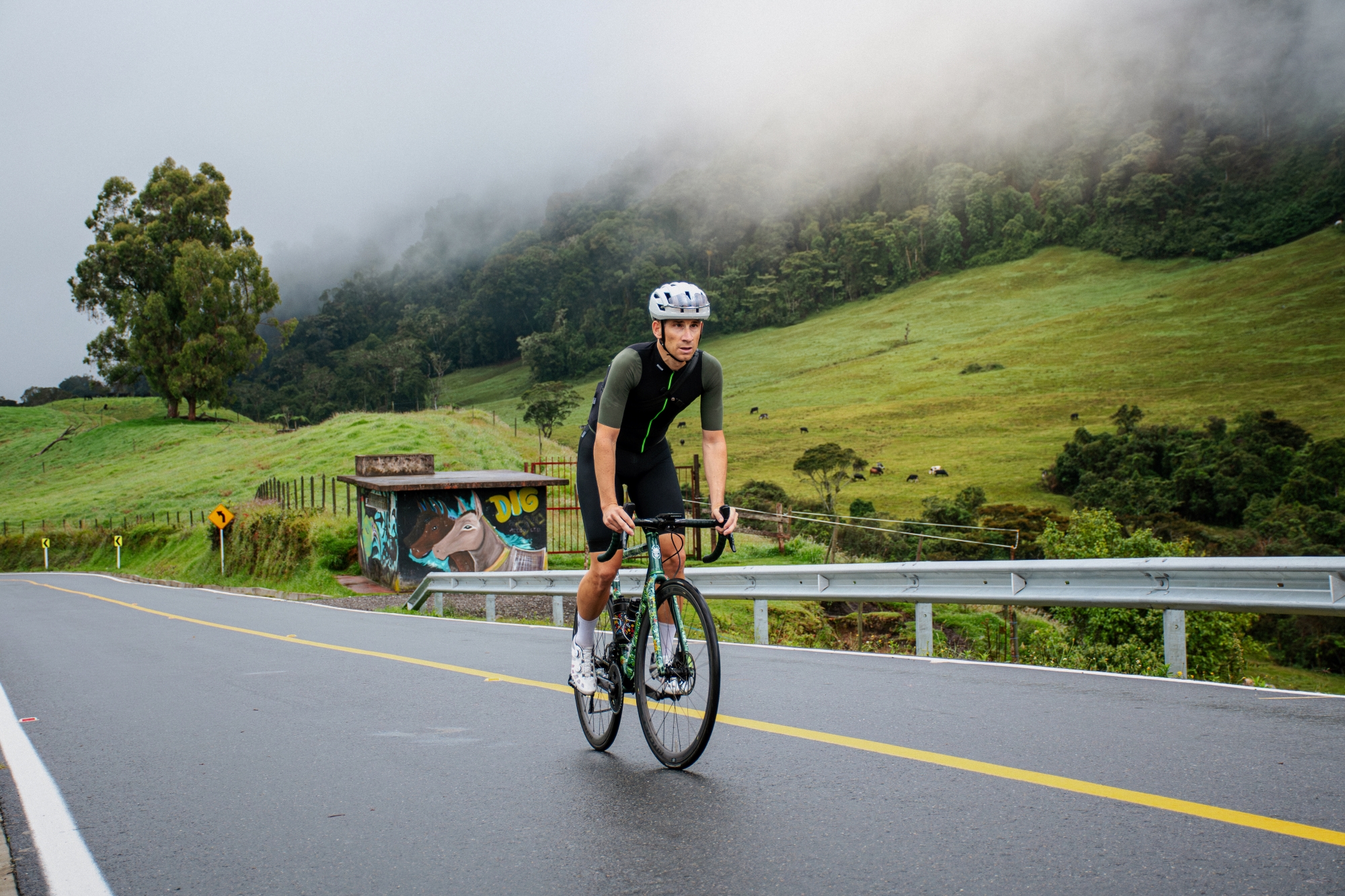
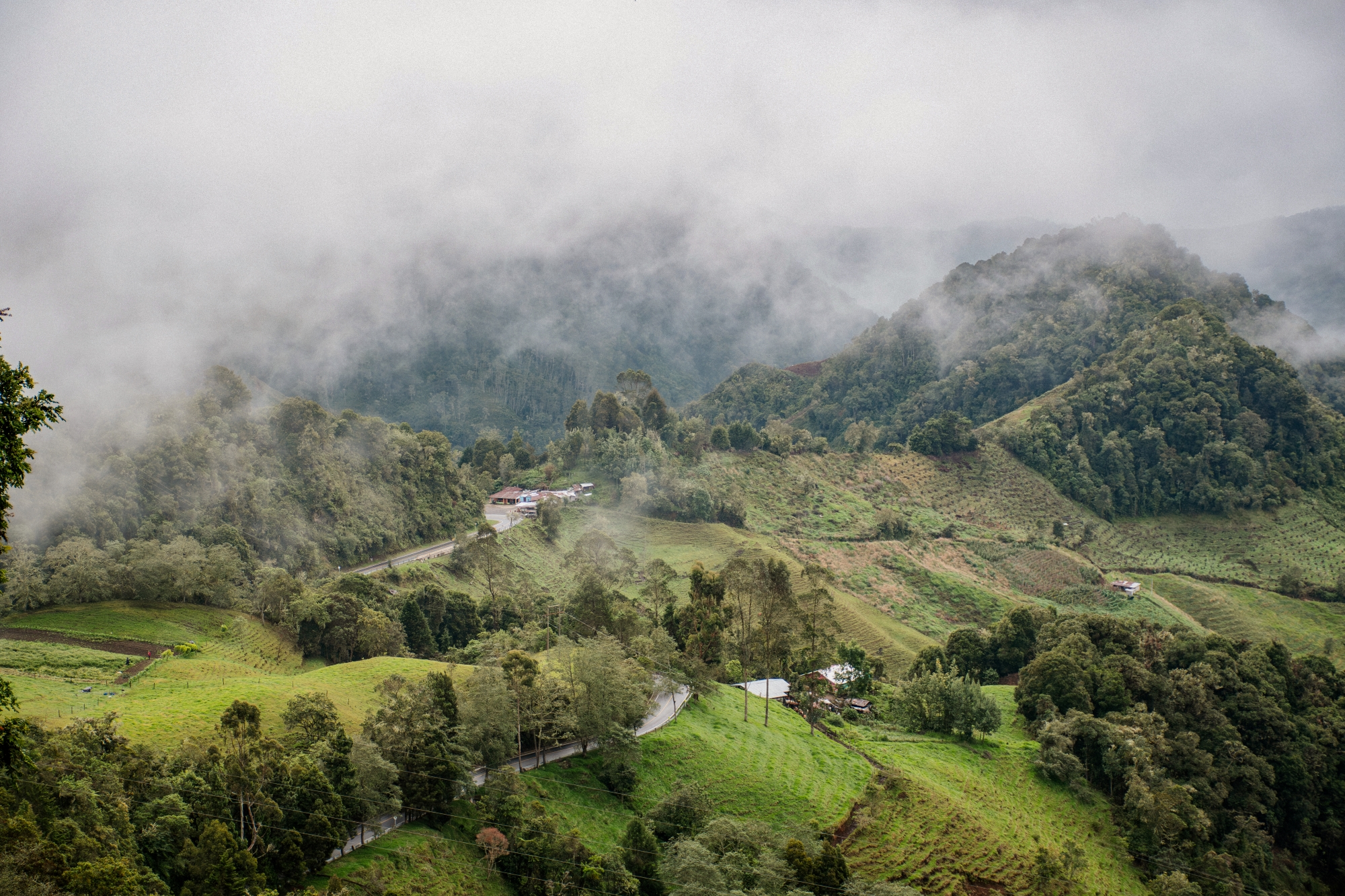
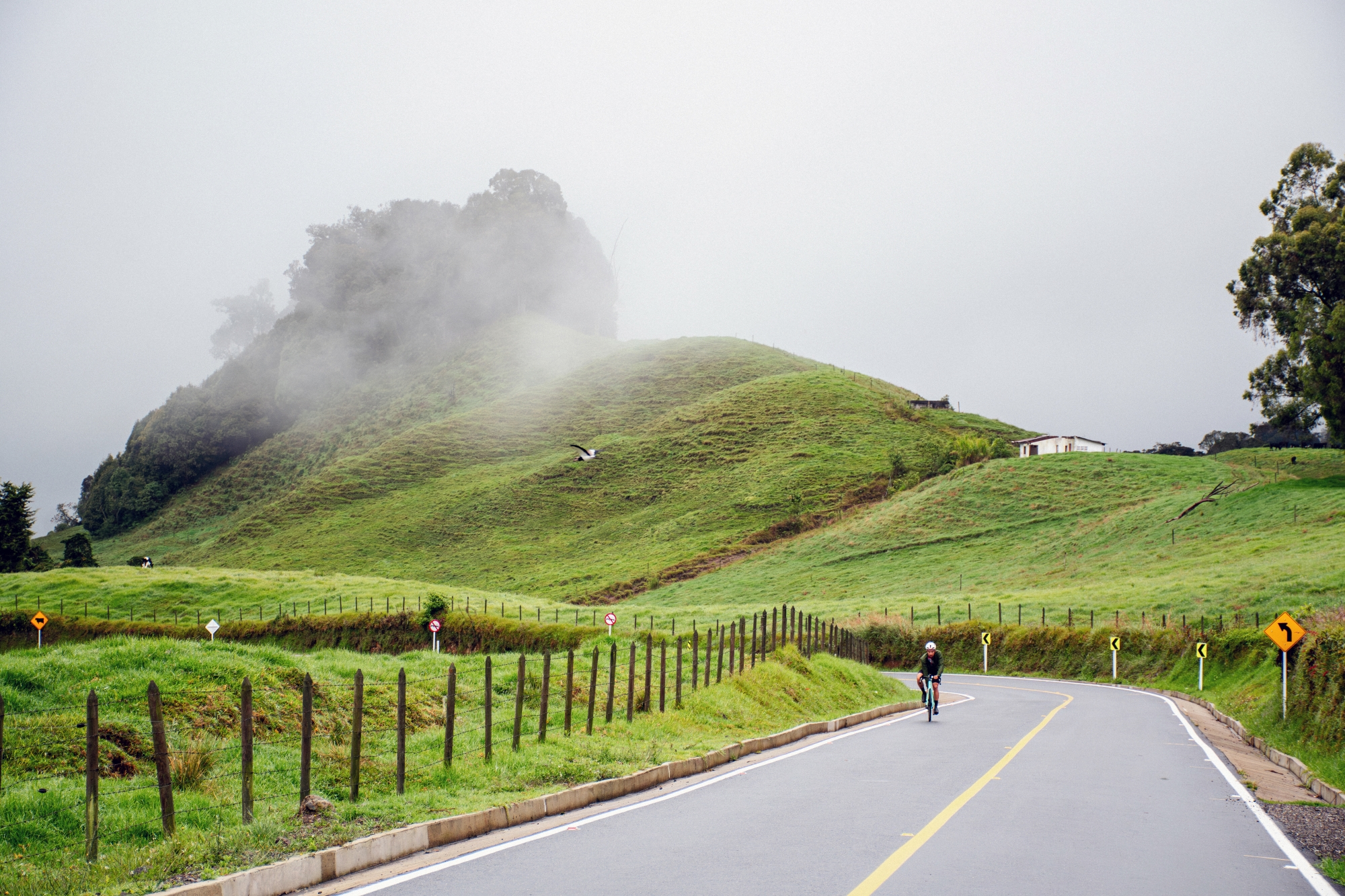
With 25 km of ascent already behind us, we confidently faced the remaining 30. The lack of oxygen was already apparent, and there came a time when we could barely pedal. There were energies left, but our legs were simply not responding.
There was no hurry; Once we were wet, it didn’t matter if it was still raining or not, and we were on time to reach the summit before midday. At times riding in a group, at times forgetting about the others and following our own pace, we were counting down the kilometers that separated us from the highest summit of the entire trip.
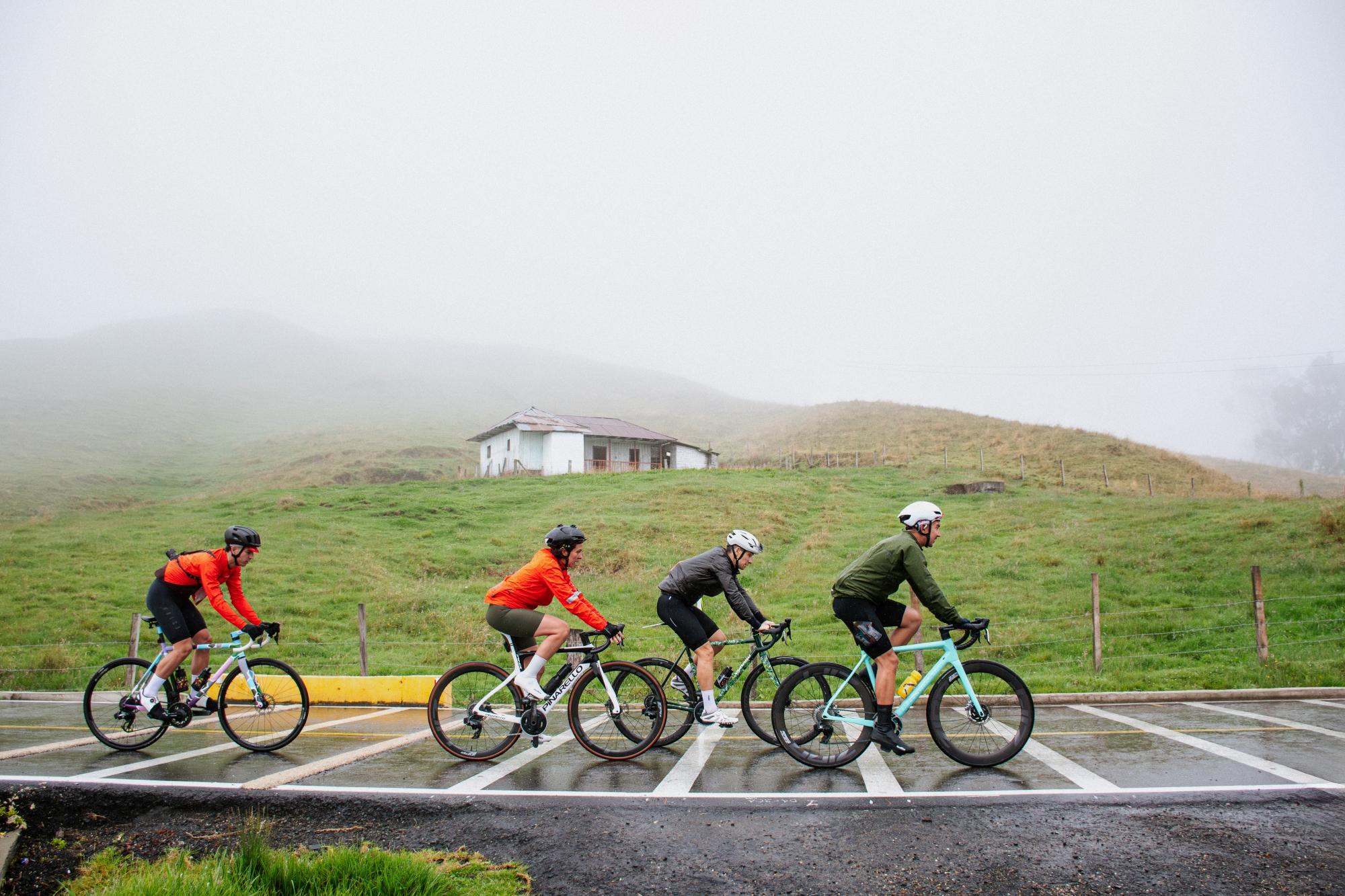
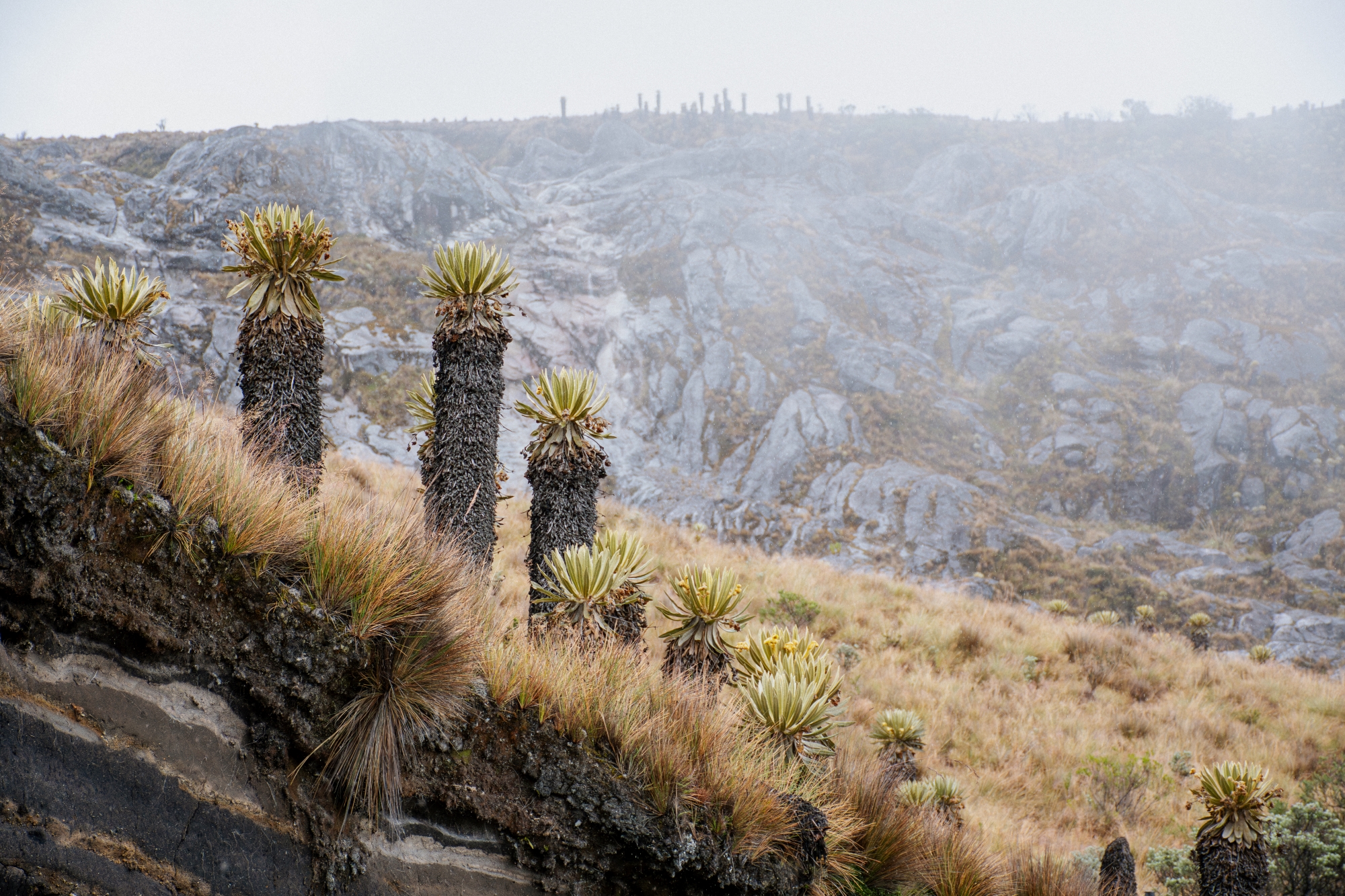
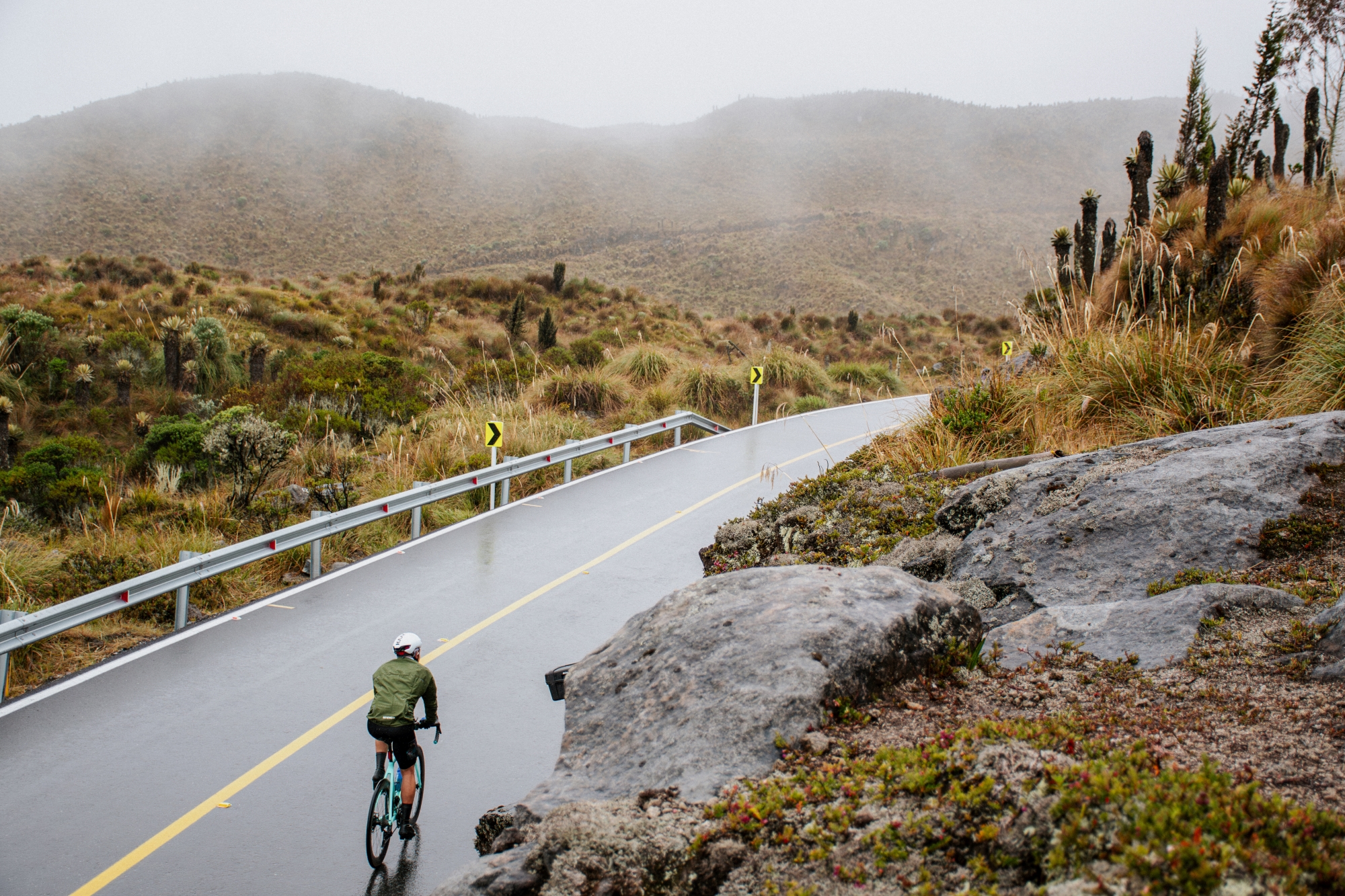
Above the 3,800-metre mark, the fauna disappeared, and the landscape seemed like it was from another planet. It is what is known as the páramo. At that moment we saw the first frailejones, a native plant with a thick trunk and a rosette at the top. We were told that they barely grow 1 cm per year, so when we saw the size of some of them we imagined how old they were.
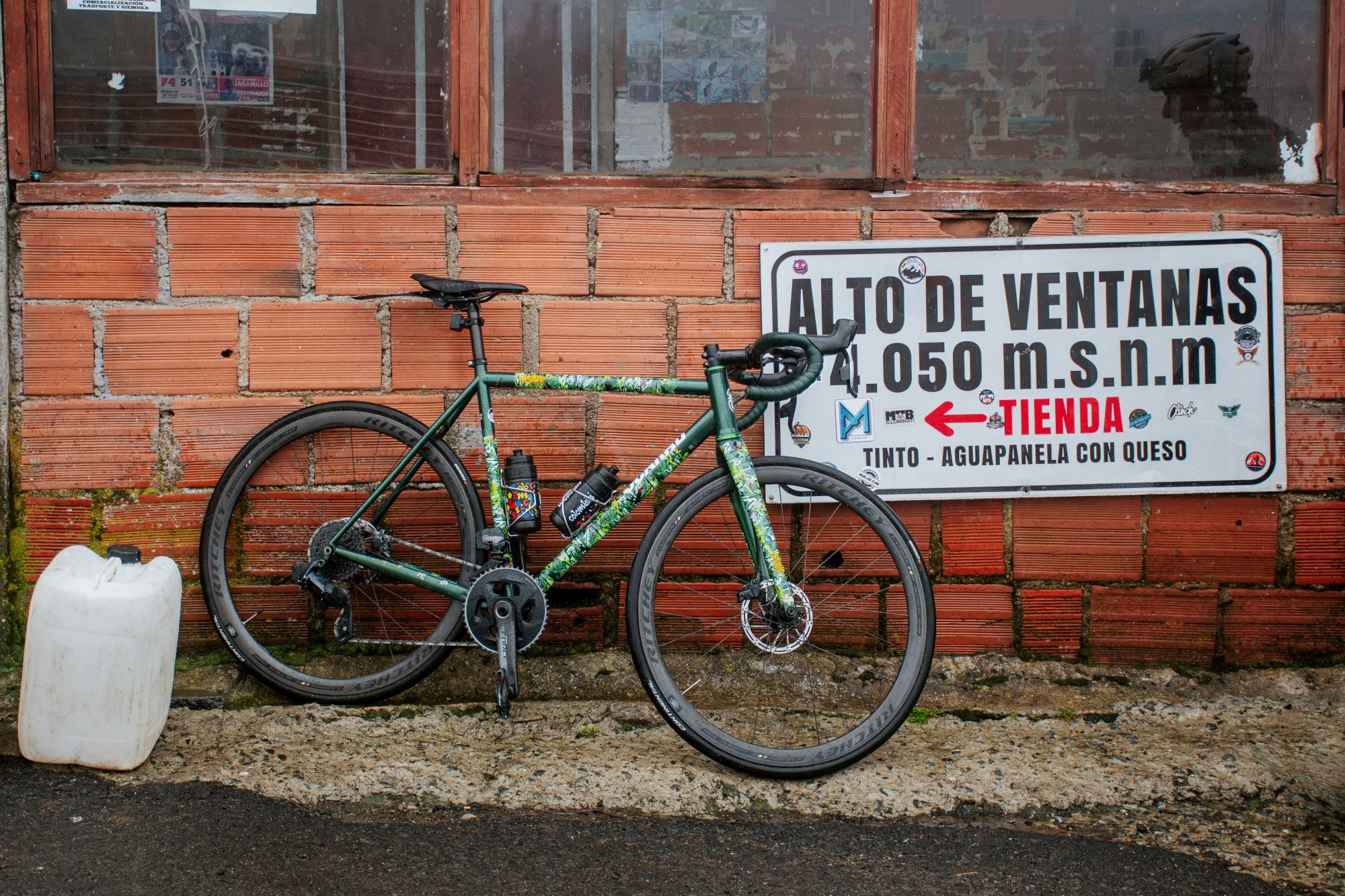
First, we reached Alto de Ventana, we went down about three kilometers, and five kilometers further – without realizing it because there is no sign indicating it – we reached Alto del Sifón.
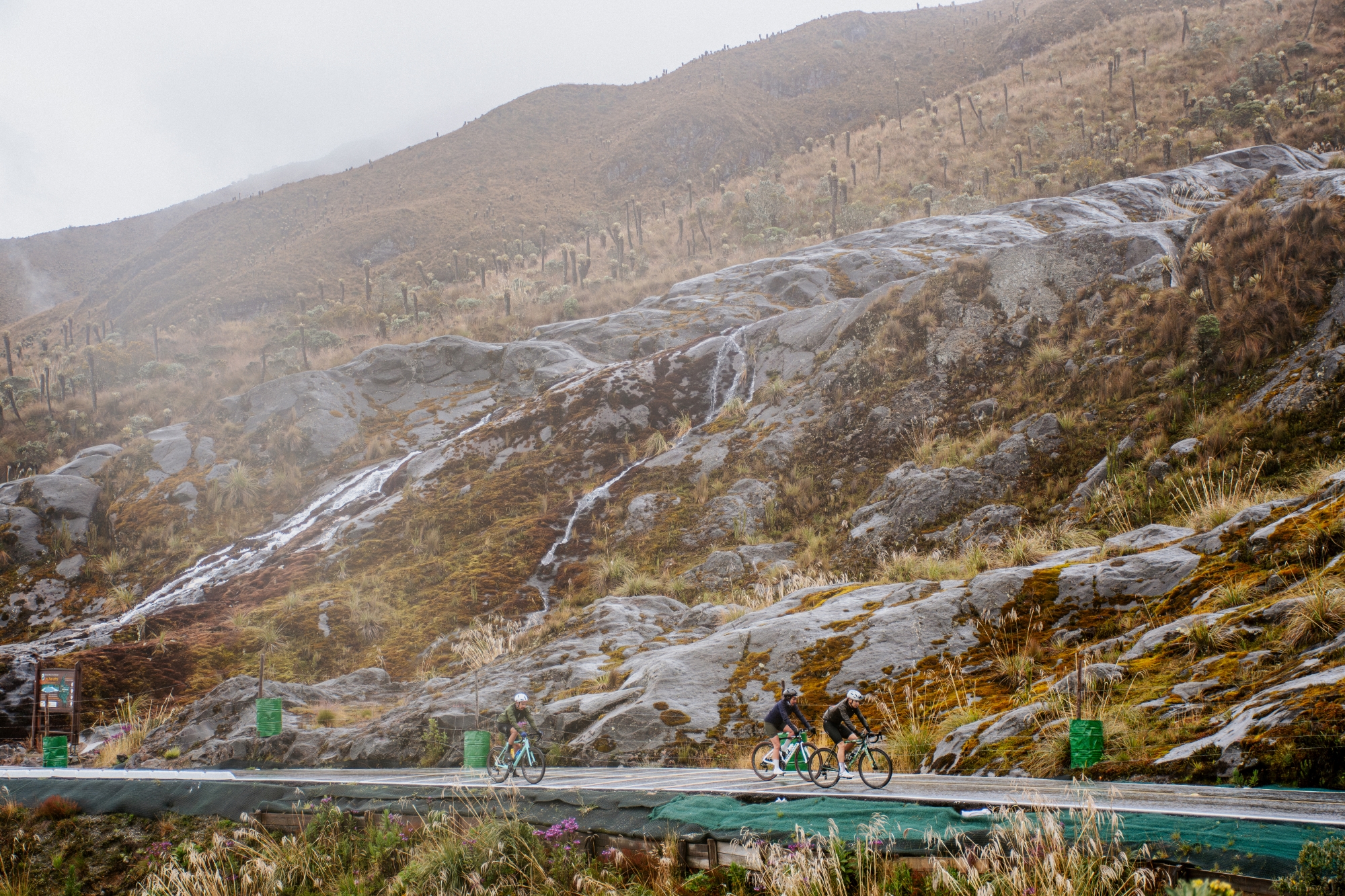
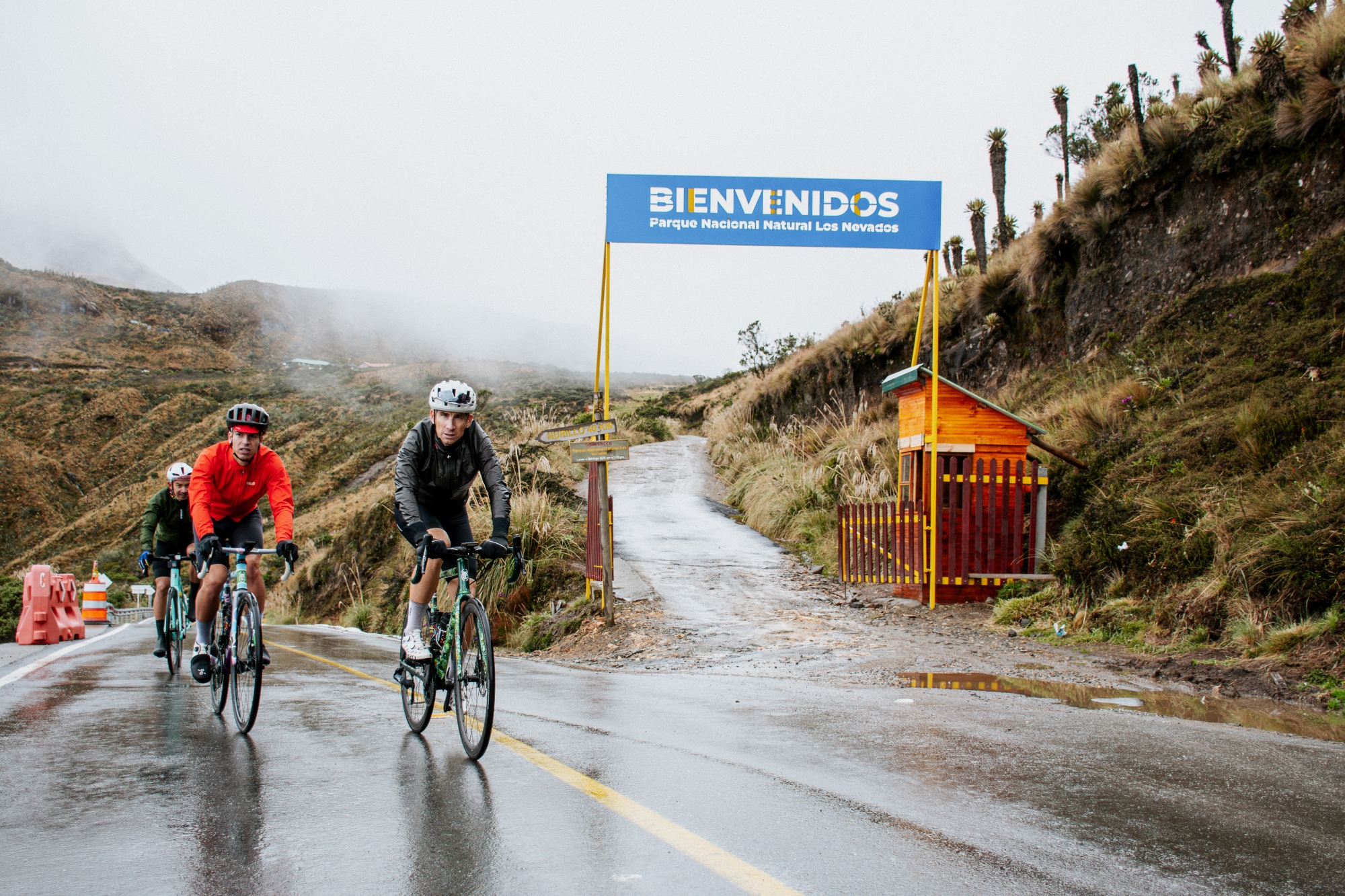
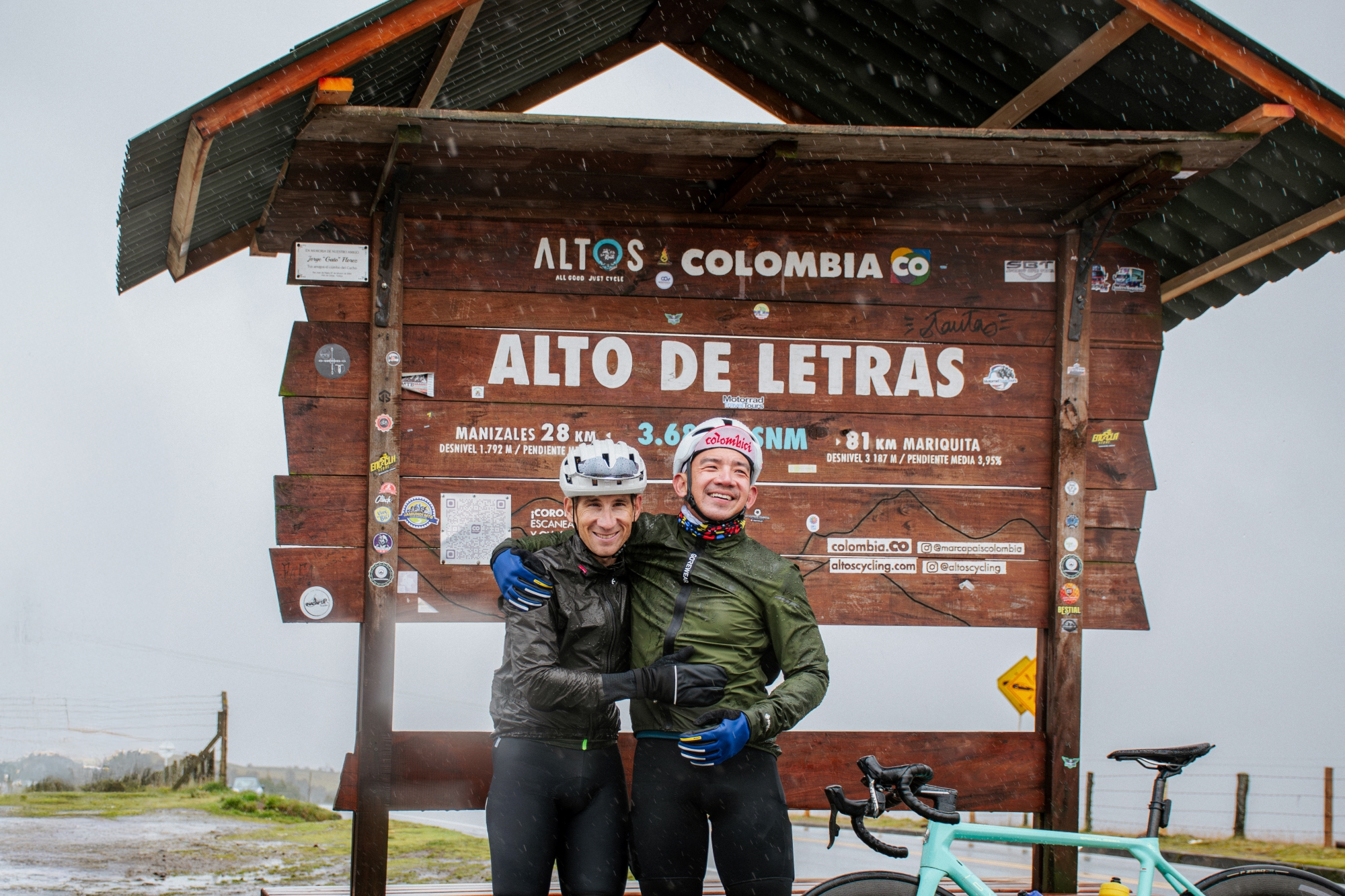
Did the third stage end there? No, we also wanted to conquer the famous Alto de Letras, even if it wasn’t from the most common side. From Sifón we entered the Los Nevados National Natural Park, and then began a descent in heavy rain and cold. We were grateful for the moment when we reached the crossroads to begin the gentle climb to Letras.
We were extremely proud of the achievement, but there was no time for celebration. We got in the car and drove down to Manizales, where the hot springs of Termales el Otoño awaited us.
On the fourth day of our Into Coffee Heartlands tour, we got slowly back into pace with a visit to Hacienda Venecia, where they showed us everything that goes into a cup of coffee. From harvesting the fruit to the roasting, with the pre-drying and drying process in between. We became experts on the subject.
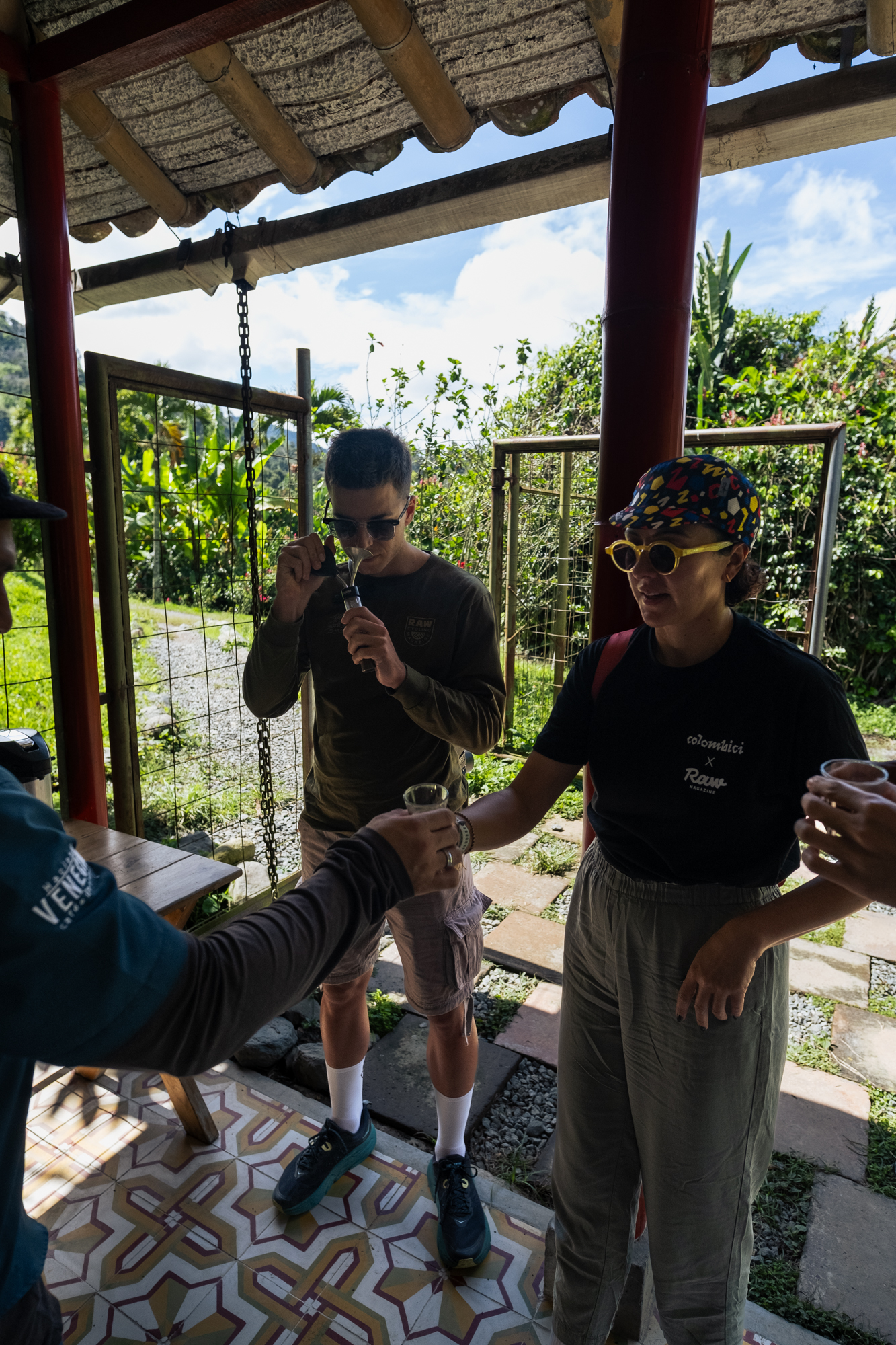
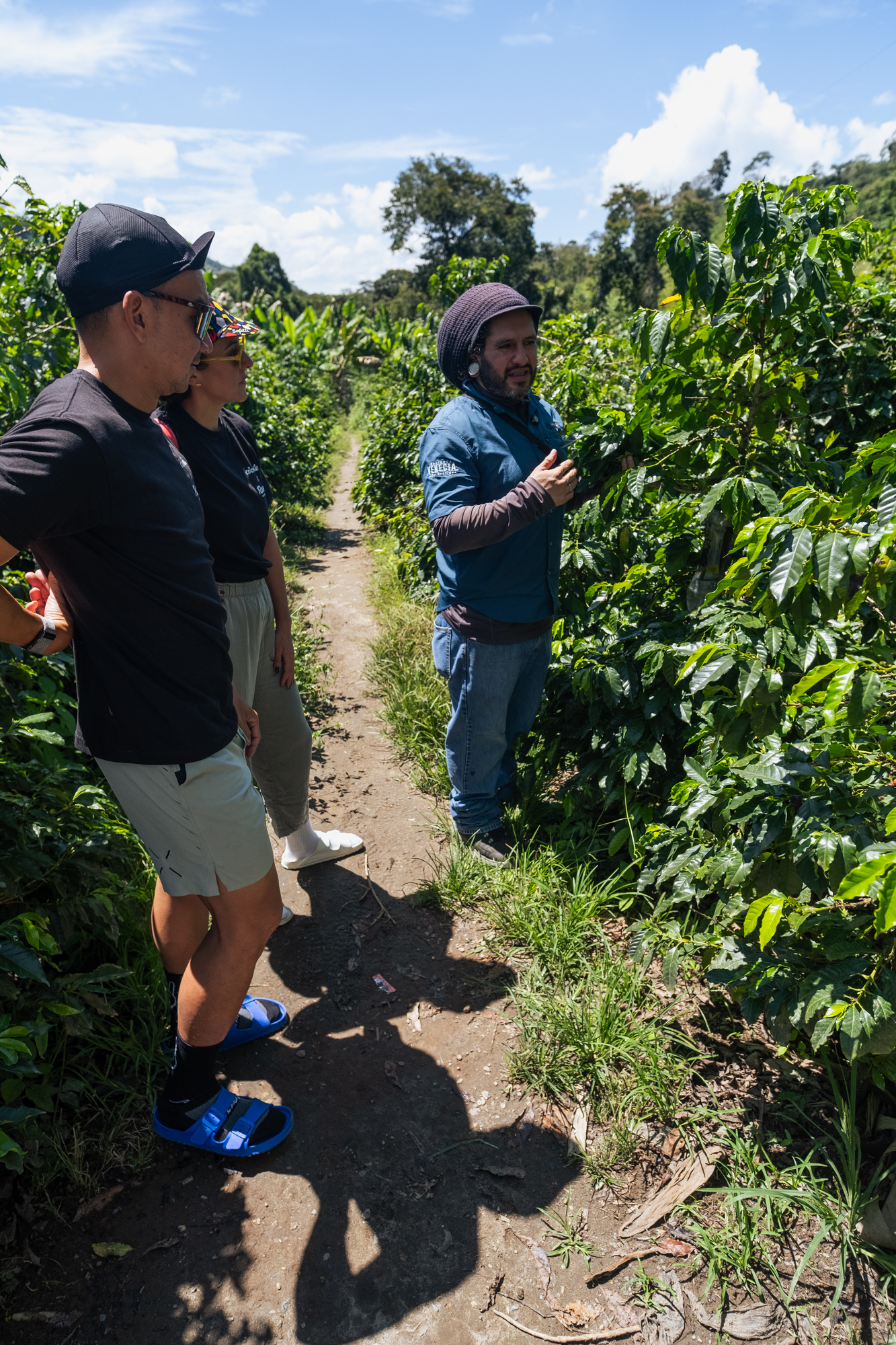
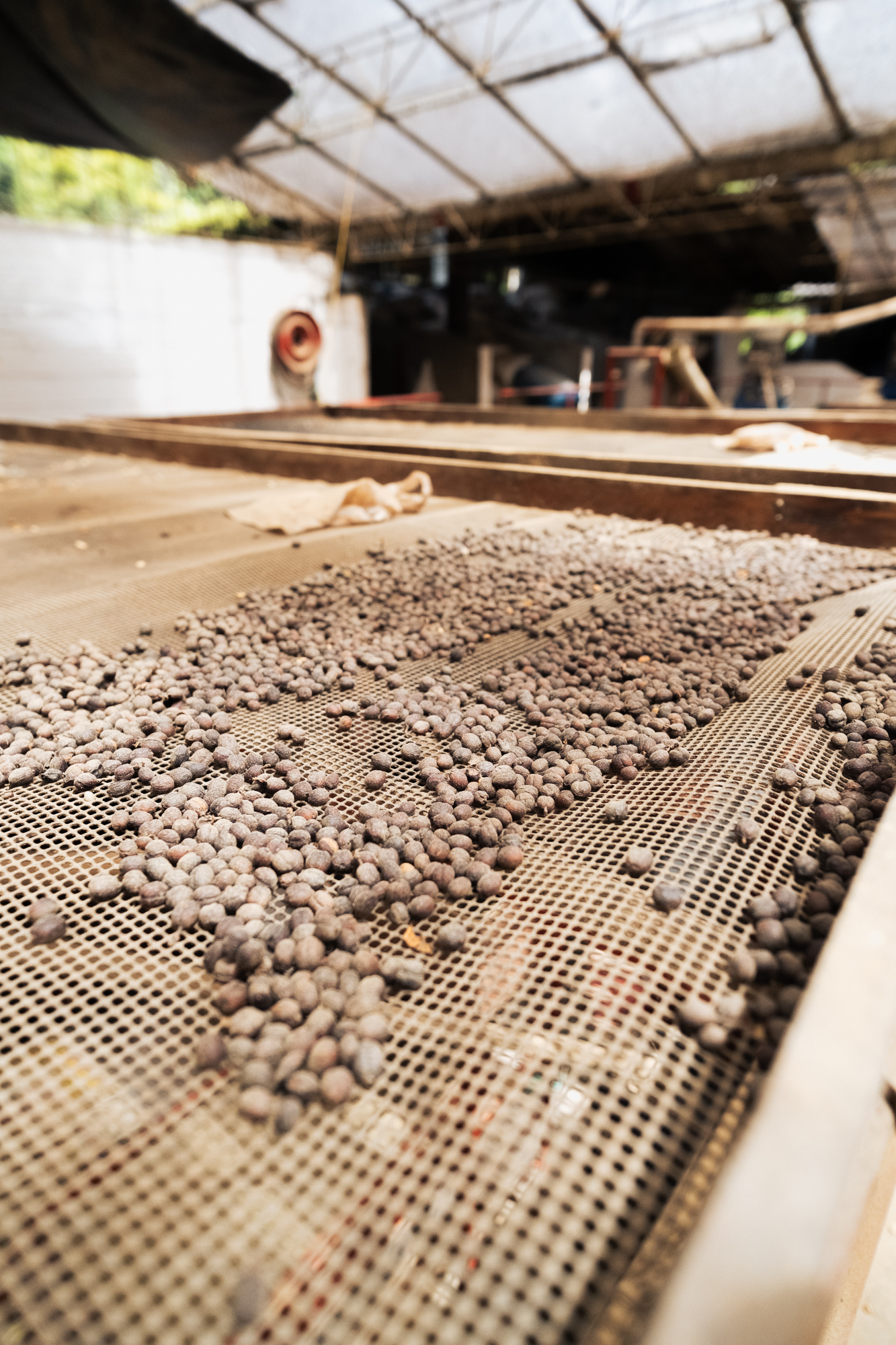
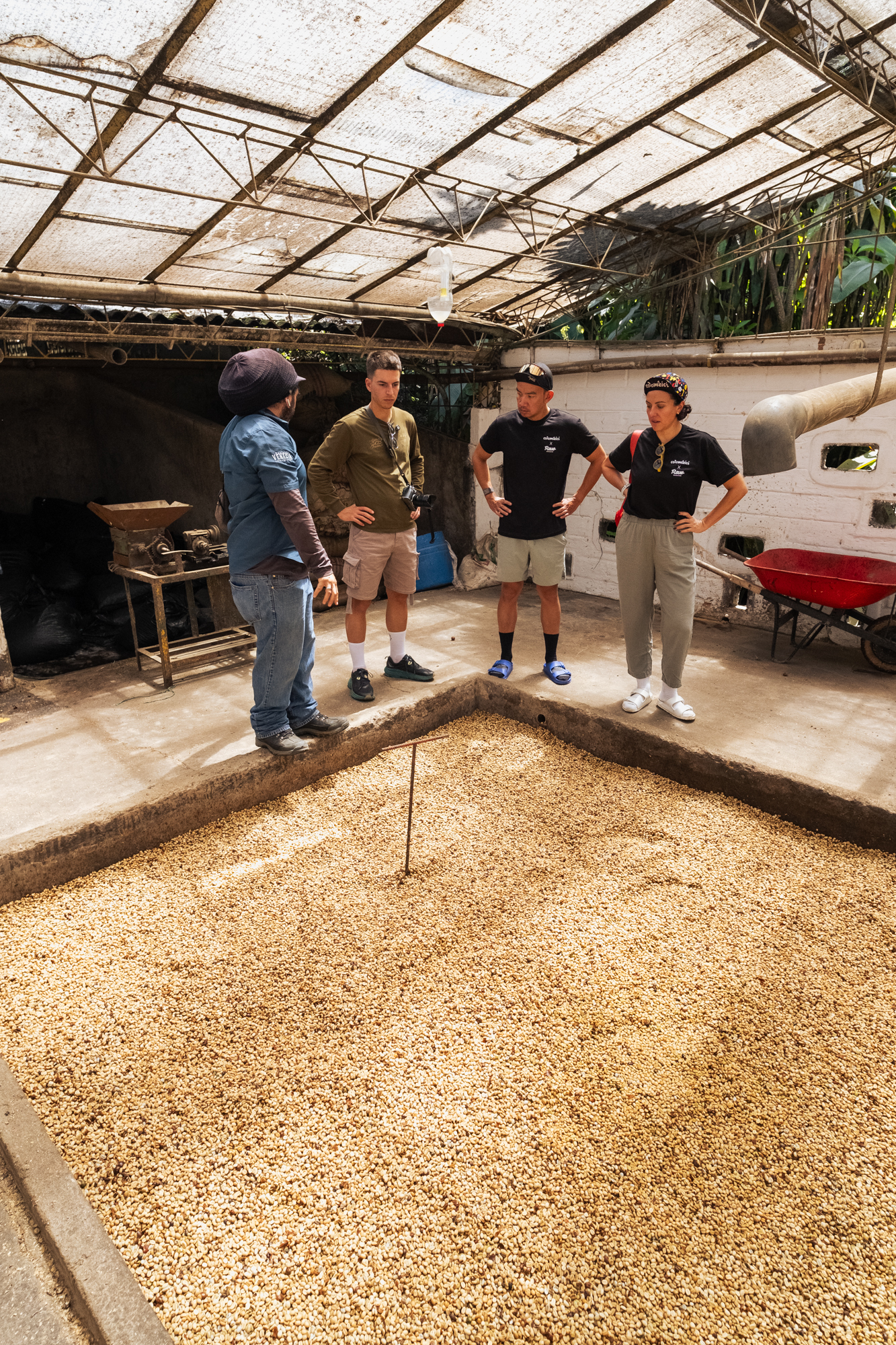
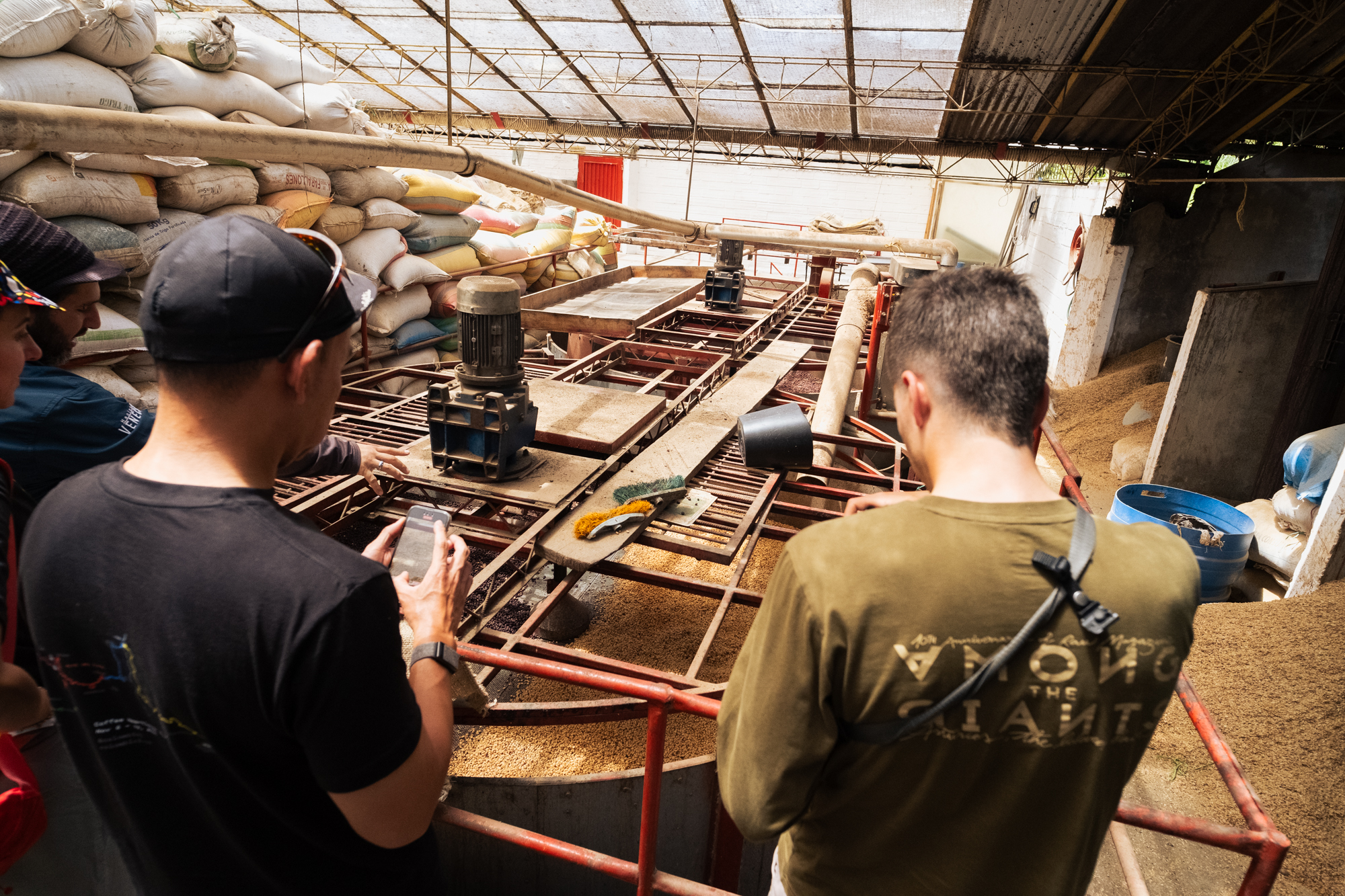
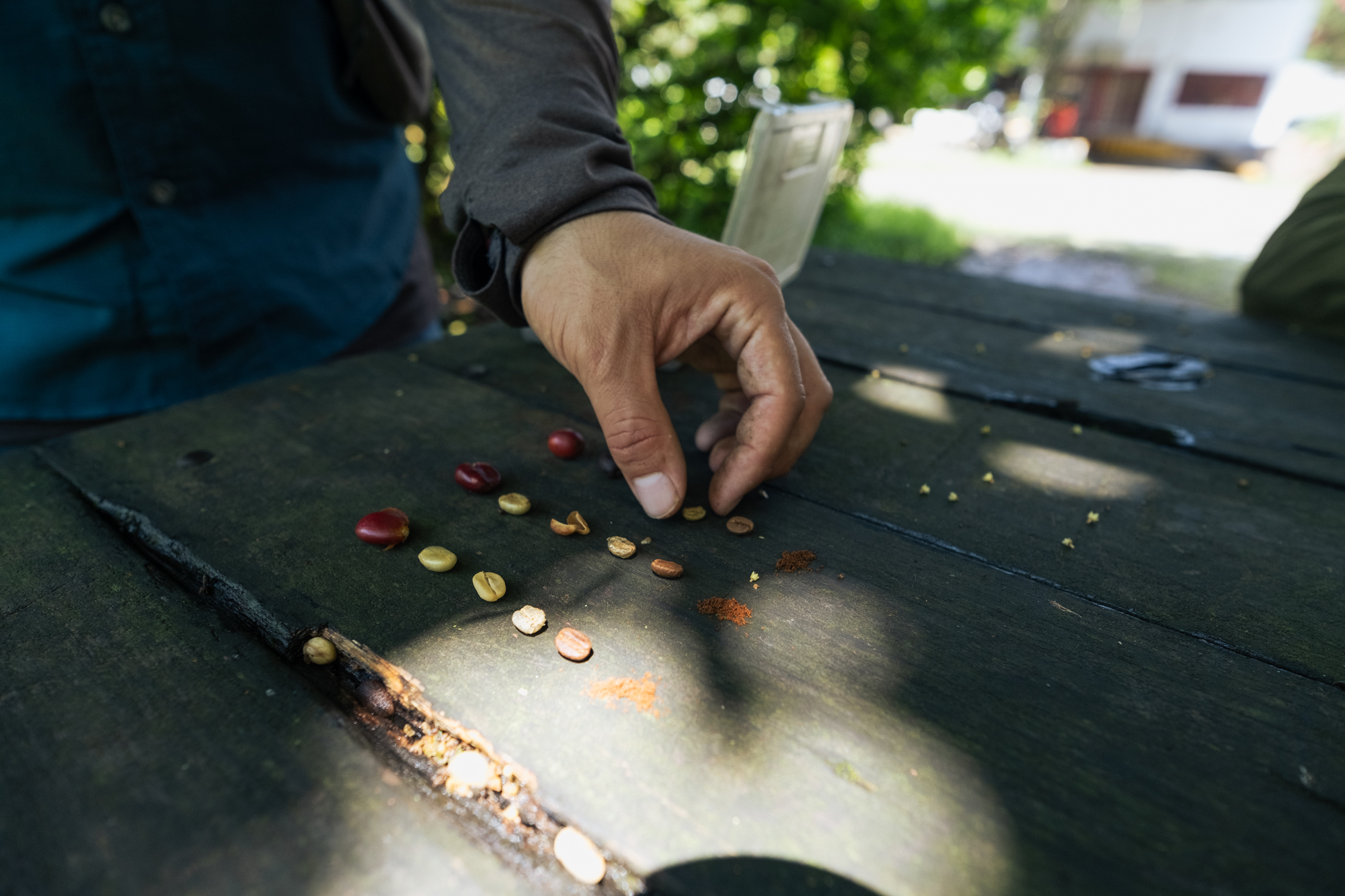
The whole morning was spent there, so time was running out. It was a transition stage, going around Pereira and then entering the department of Quindío. According to the locals, the most typical meal in Colombia before going out to ride is a good broth, so we followed their advice and also complemented it with a refreshing cold agua panela with lemon.
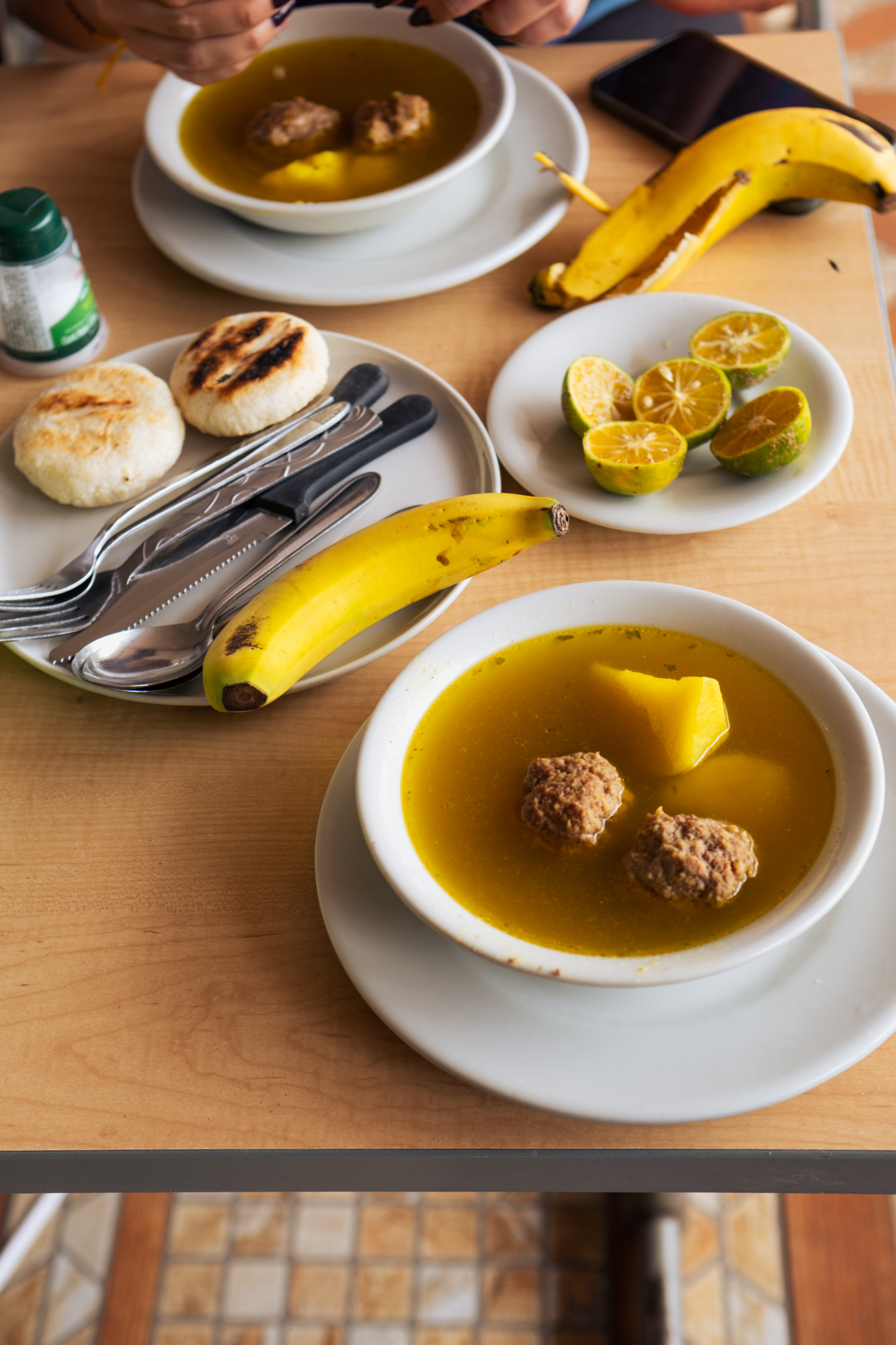
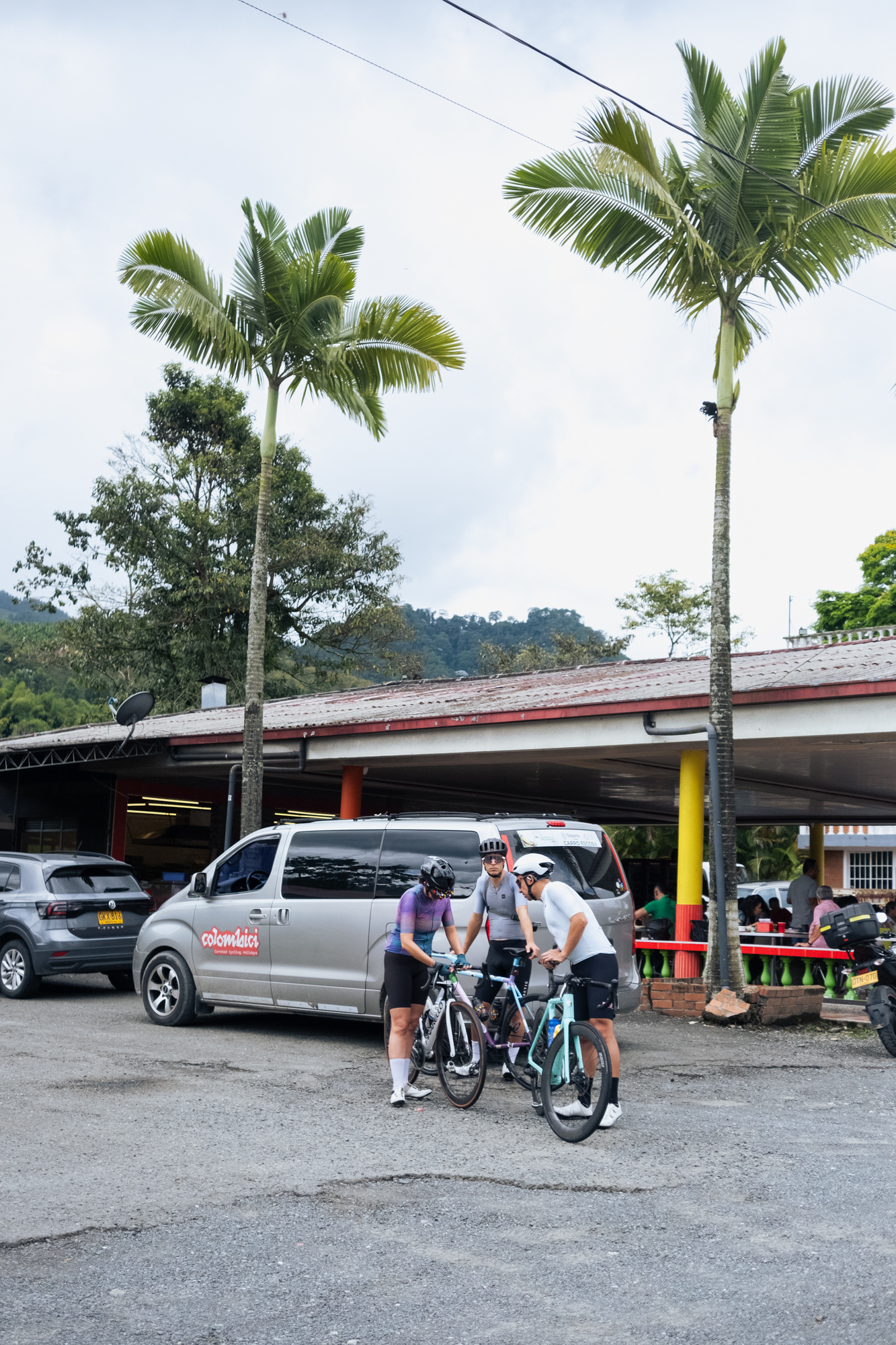
The day’s ride started at around 2:00 p.m. We agreed to go around Pereira instead of crossing its busy streets, but even so, traffic was present throughout the main road section of the route. After a long and flat ascent, we reached the detour to Filandia. Many people had told us good things about this picturesque town, but we would postpone the visit until the next day as dusk was upon us.
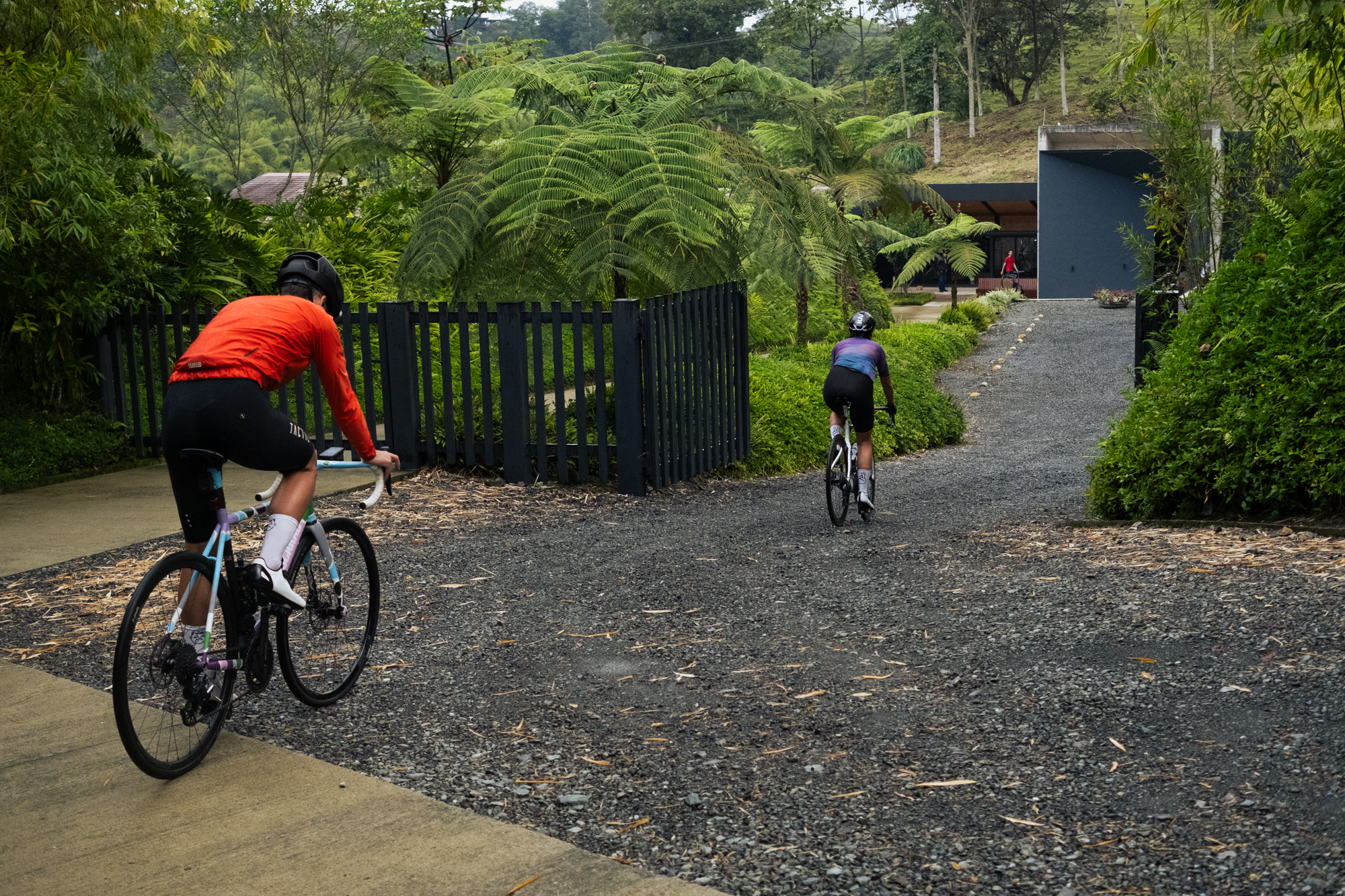
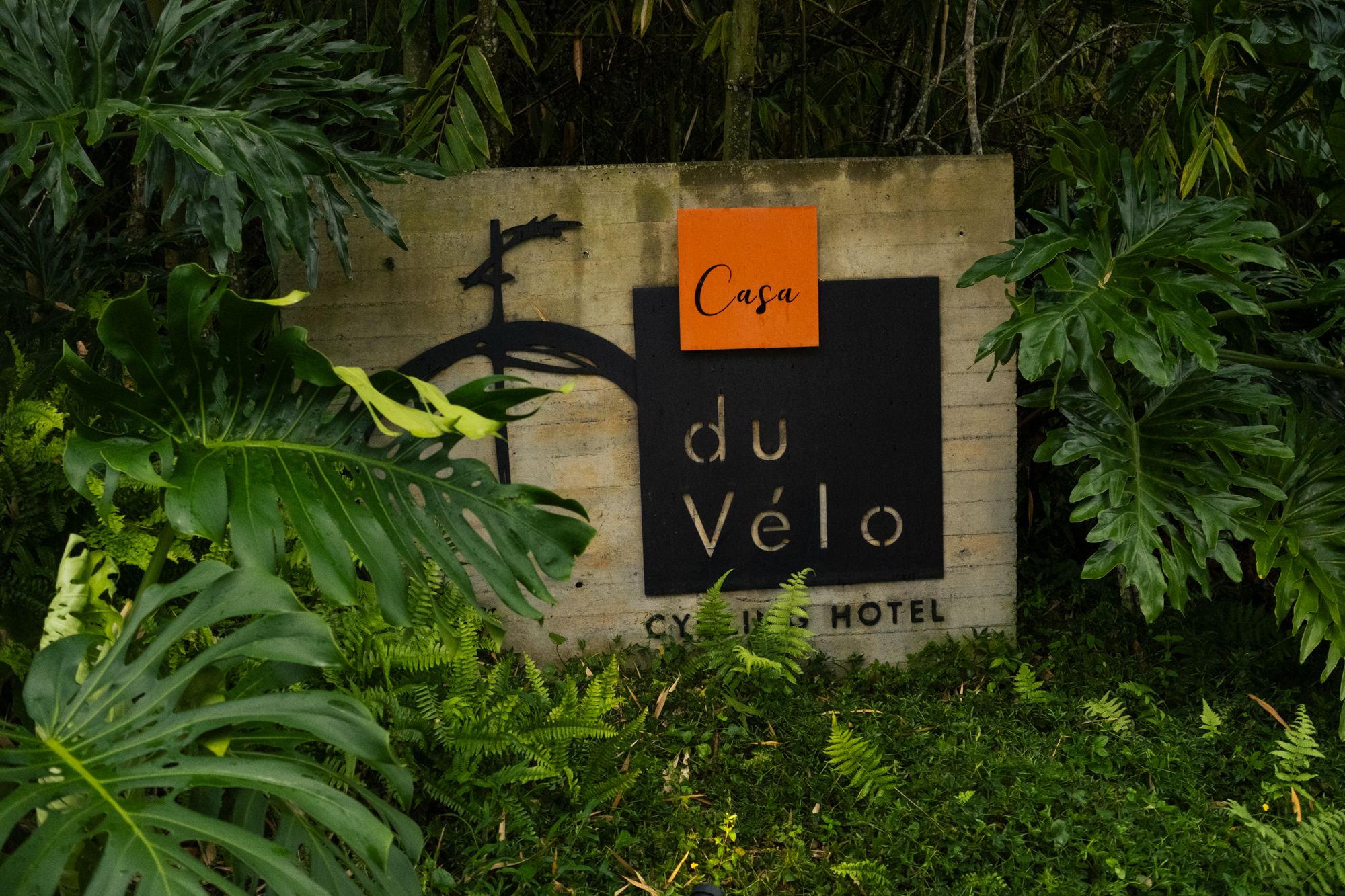
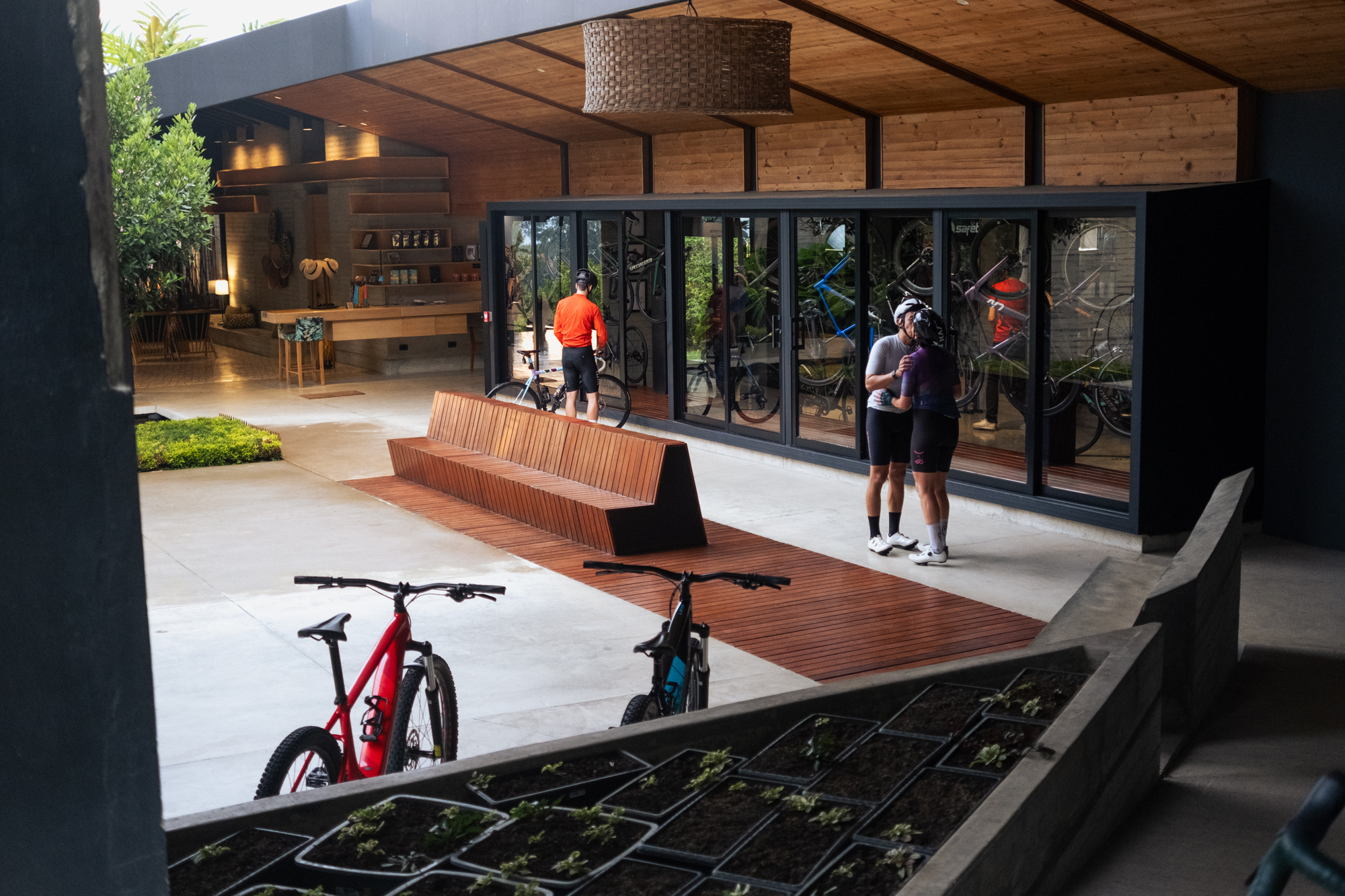
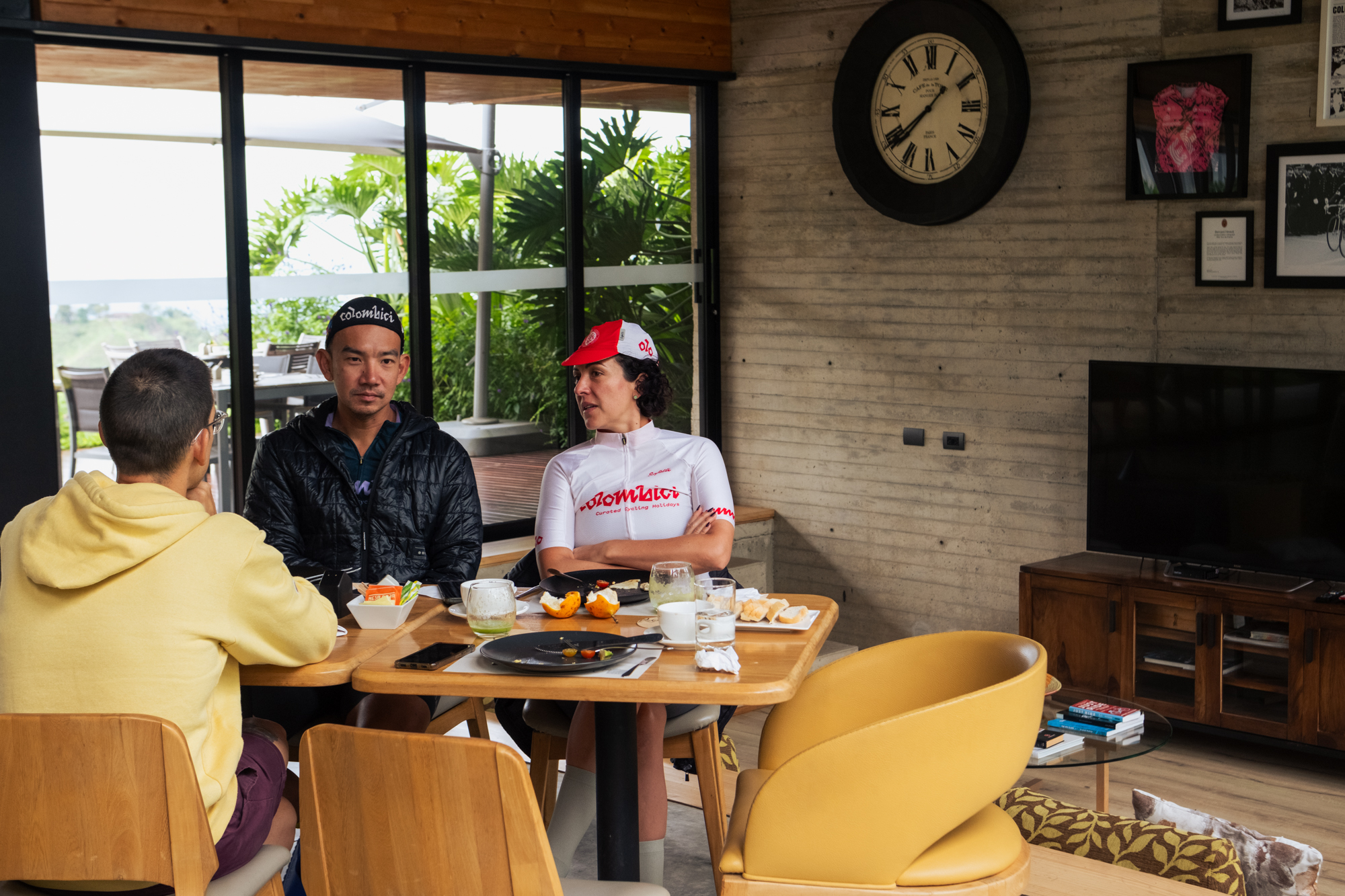
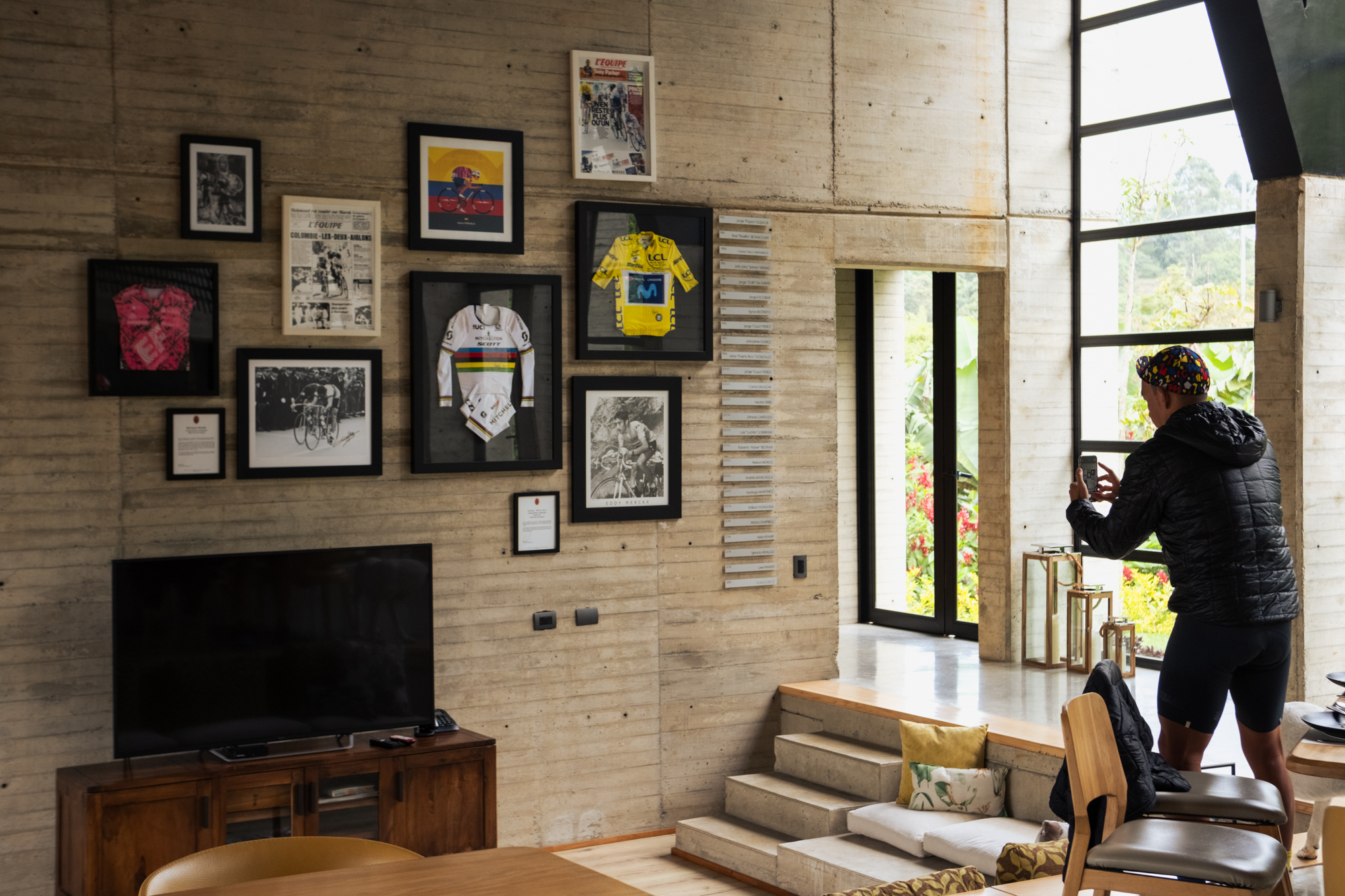
We arrived at Casa du Veló and went straight into its steam room to warm up. Later we had time to take a look at the rest of its facilities and the dazzling architecture of the complex. A true paradise for bike lovers.
Unfortunately, it was the last day of the route. The only good news was that we didn’t have to pack our bags as we were spending the night at Casa du Veló again. On this fifth stage, we made a loop within the department of Quindío where we passed through Filandia again, went down to Salento, and later headed to Cocora.
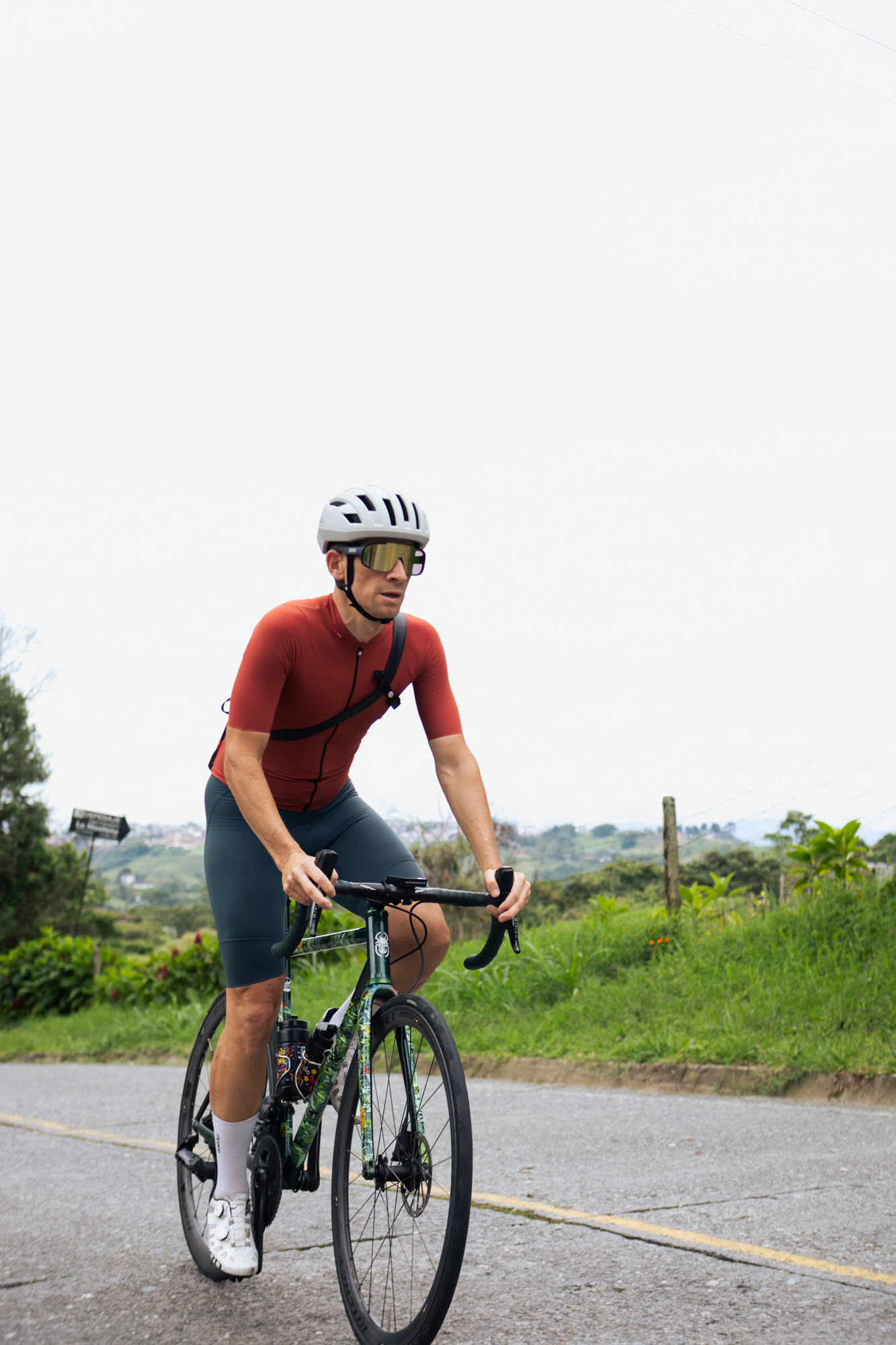
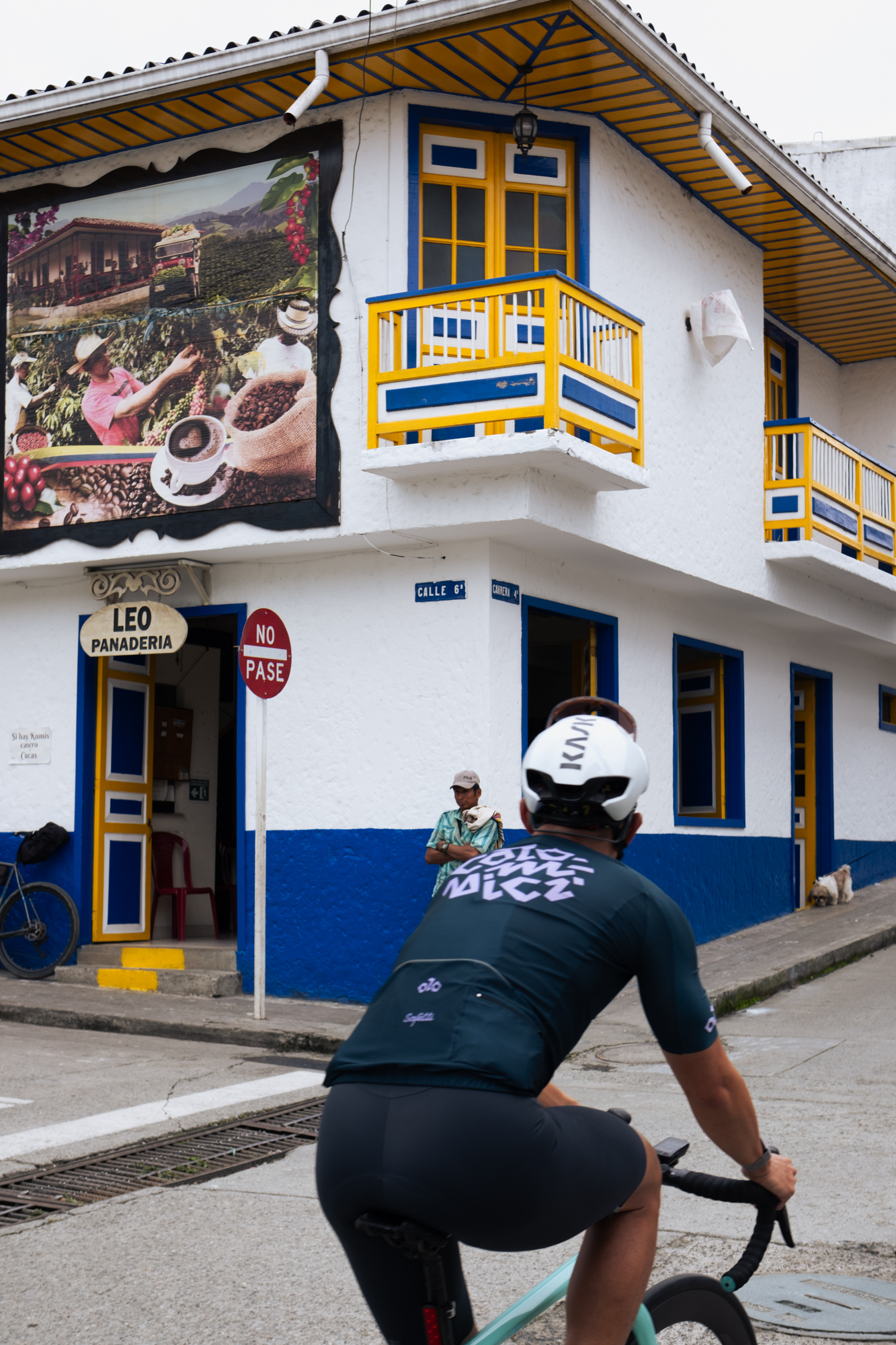
It was Sunday, and the next Monday was a bank holiday, so we came across a lot of cyclists. Inevitably there were also a lot of tourists in the area, as both Salento and Cocora are places worth visiting.
After a short descent on the main road, we tackled a really tough 4km to reach Salento. We passed by – we would return later to stop for lunch – and headed east to Cocora, a place known for its tall palm trees.
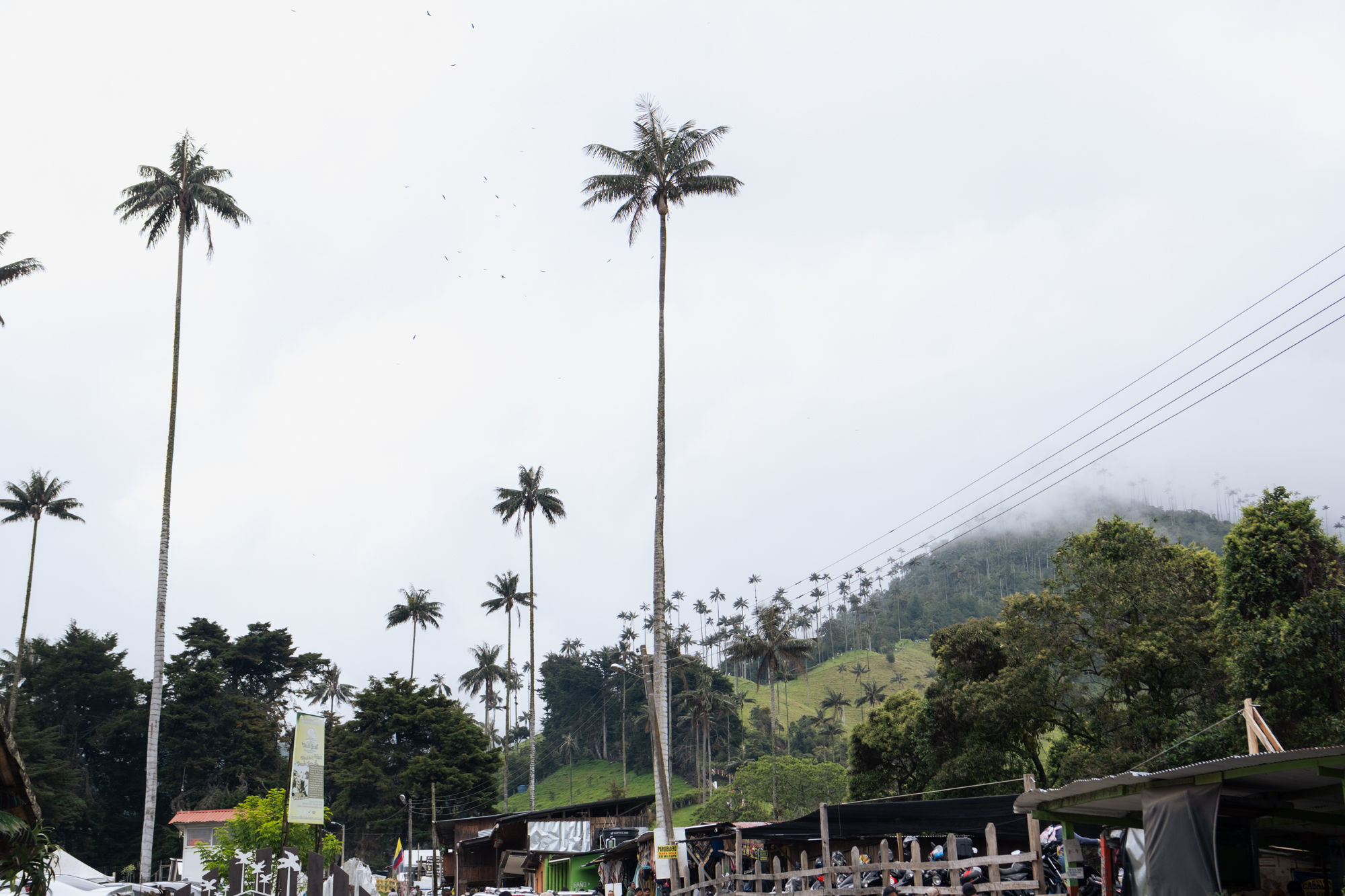
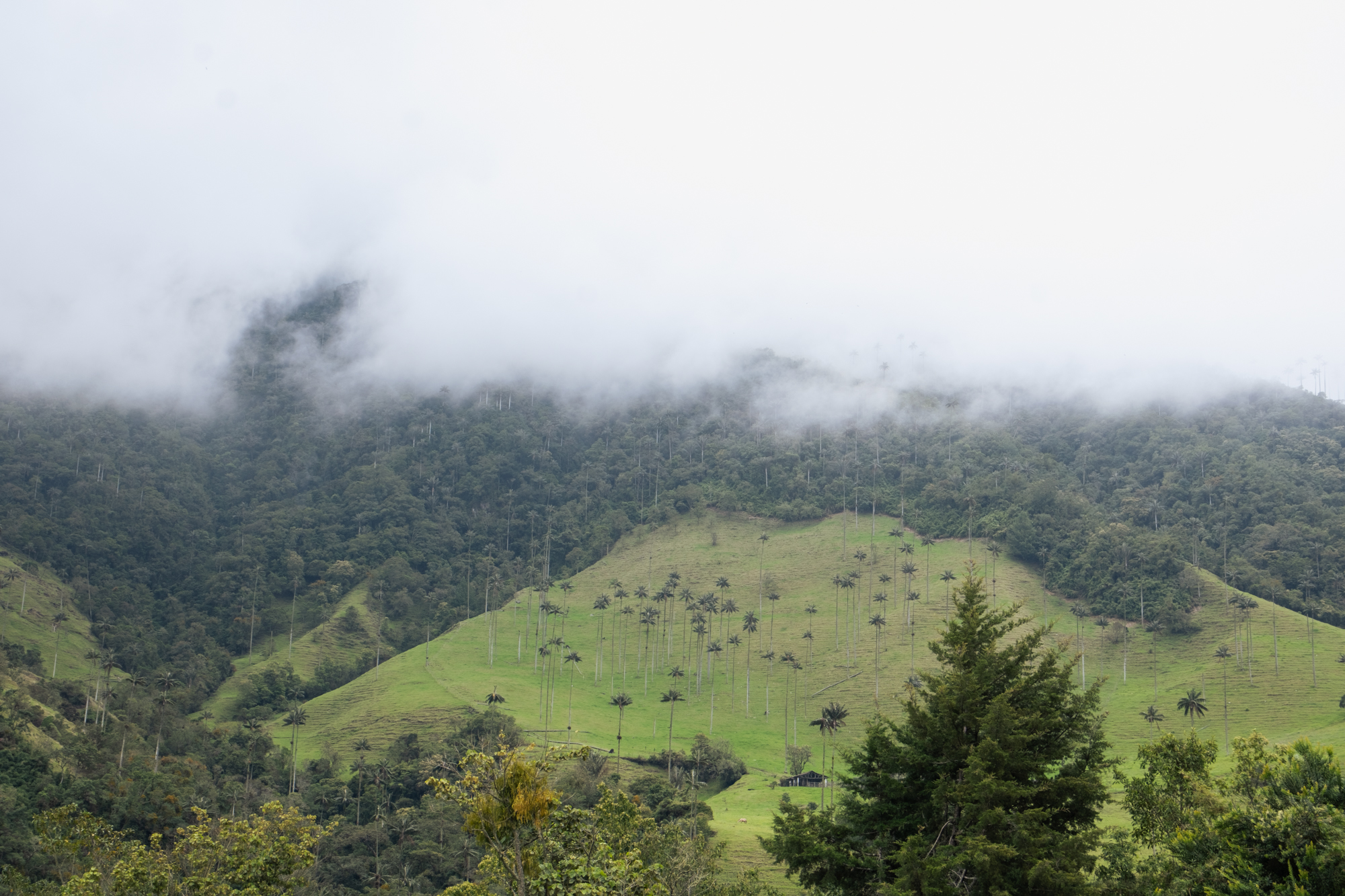
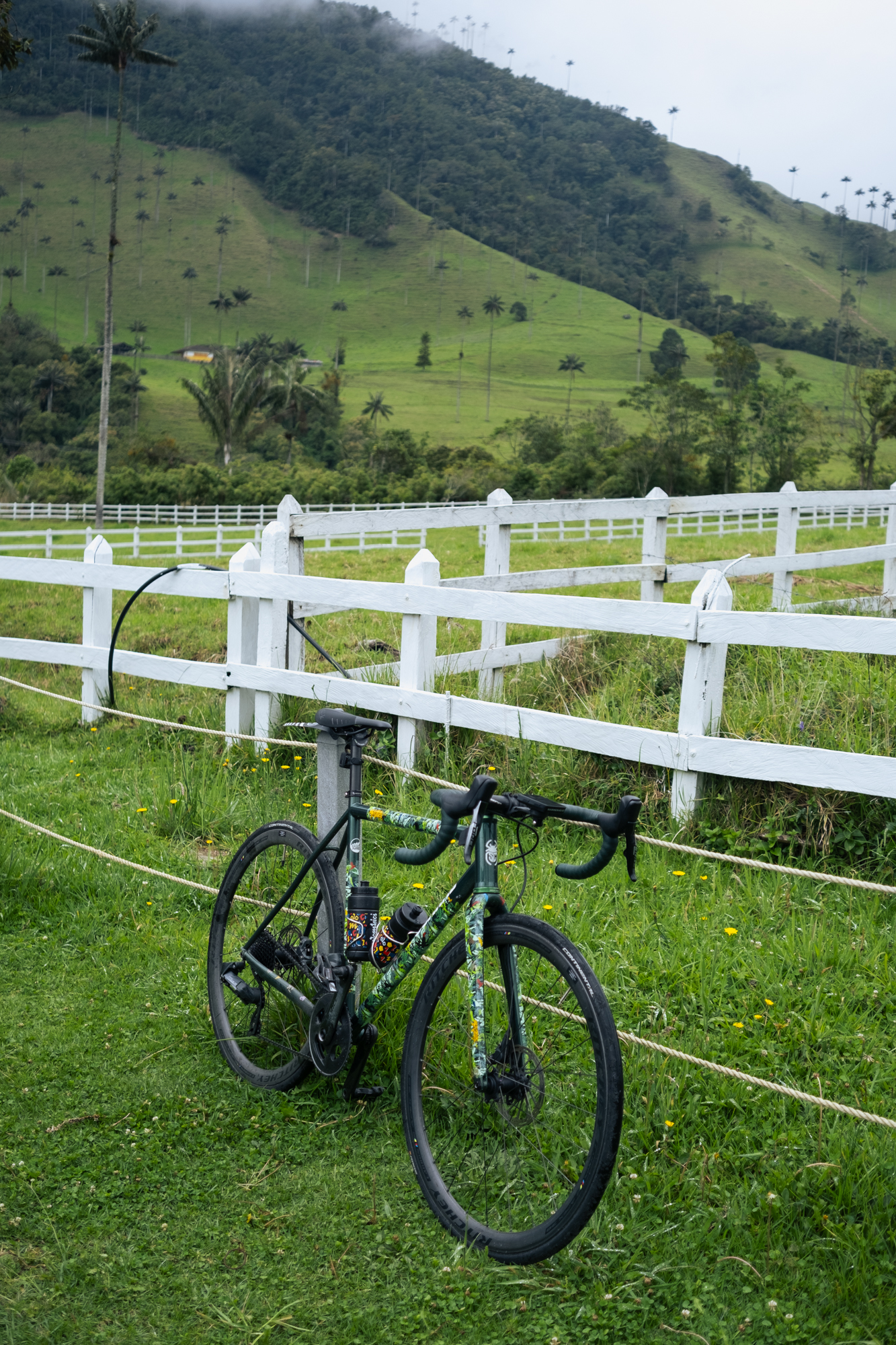
With our Scarab we could only reach a certain point, as from there we could only continue on foot or horseback. We regrouped there, and after a brief stop, we retraced our steps to descend back to Salento. We sat on a terrace in the main square to continue tasting the Colombian delicacies.
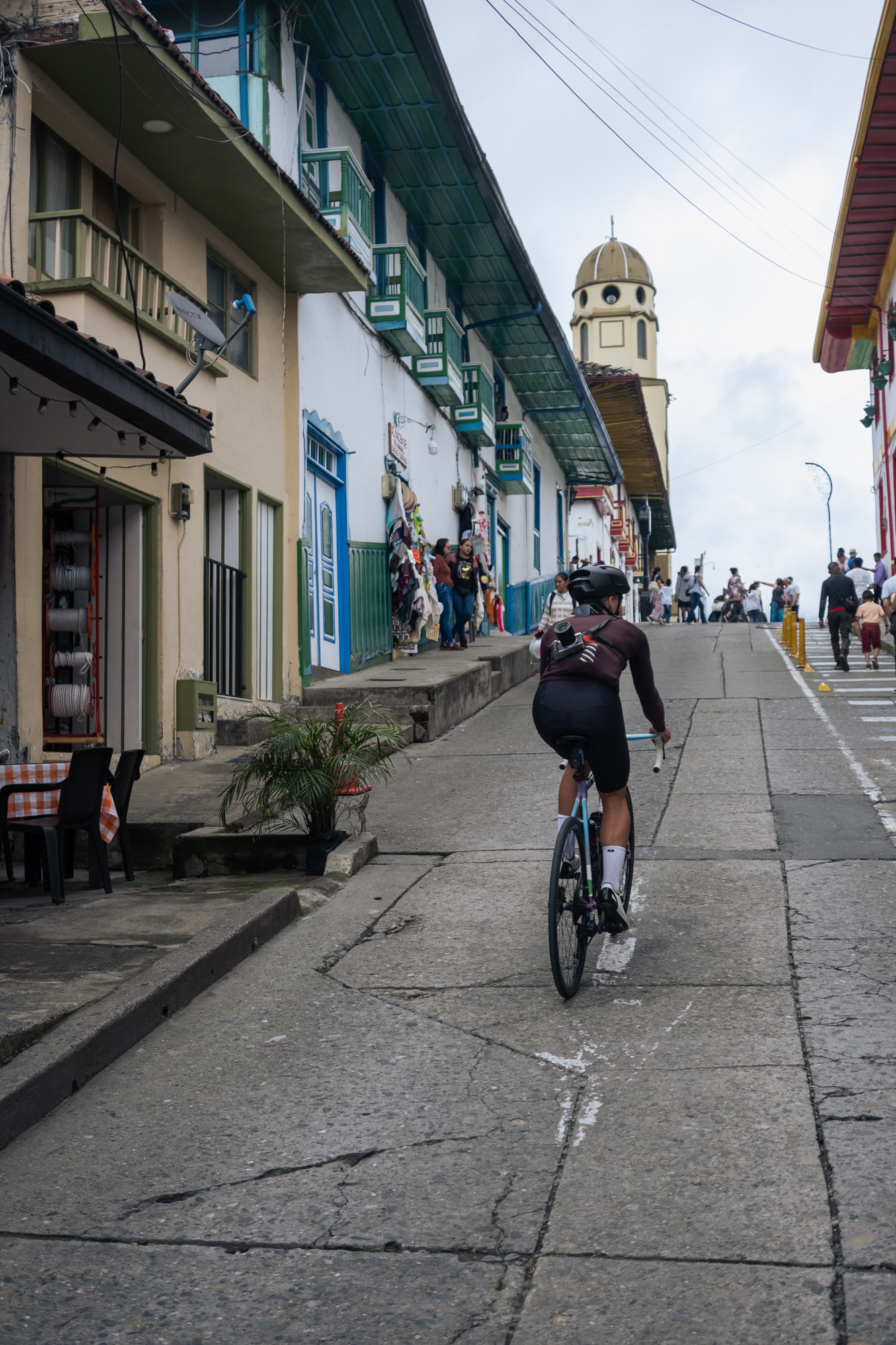
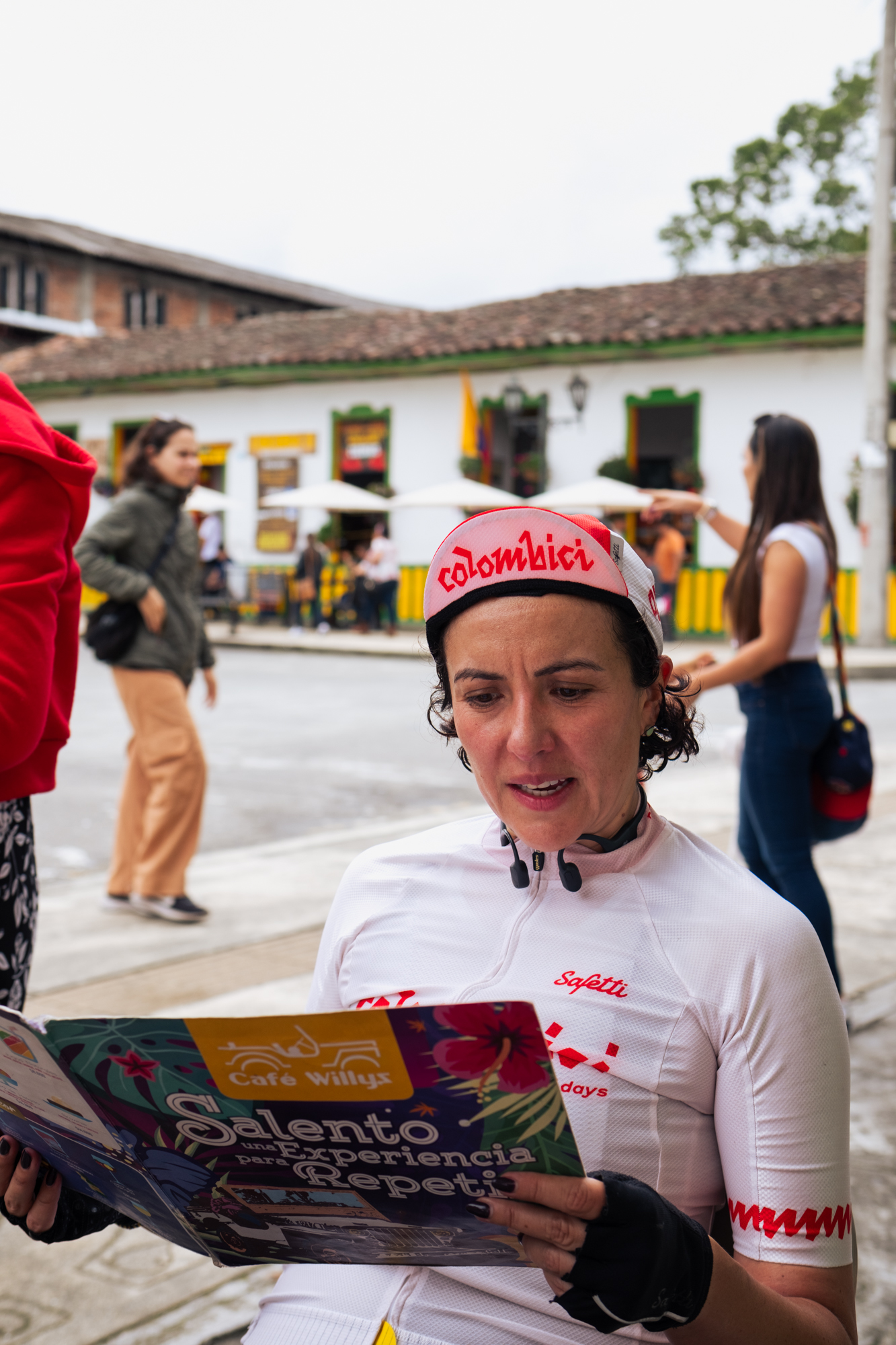
We had already done most of the climbing, so in the second third of the stage, we enjoyed a long descent in which we crossed Circasia, Montenegro and Quimbayá. In this last town, we began the last climb of our tour with Colombici, just when our legs were beginning to ask for mercy after the load accumulated in the previous days.
It was an entertaining climb, with changing gradients and banana trees at touching distance. However, to be honest, what we wanted most was to get to Casa du Veló. The last 700 meters at more than 15% made us arrive at the accommodation exhausted and starving.
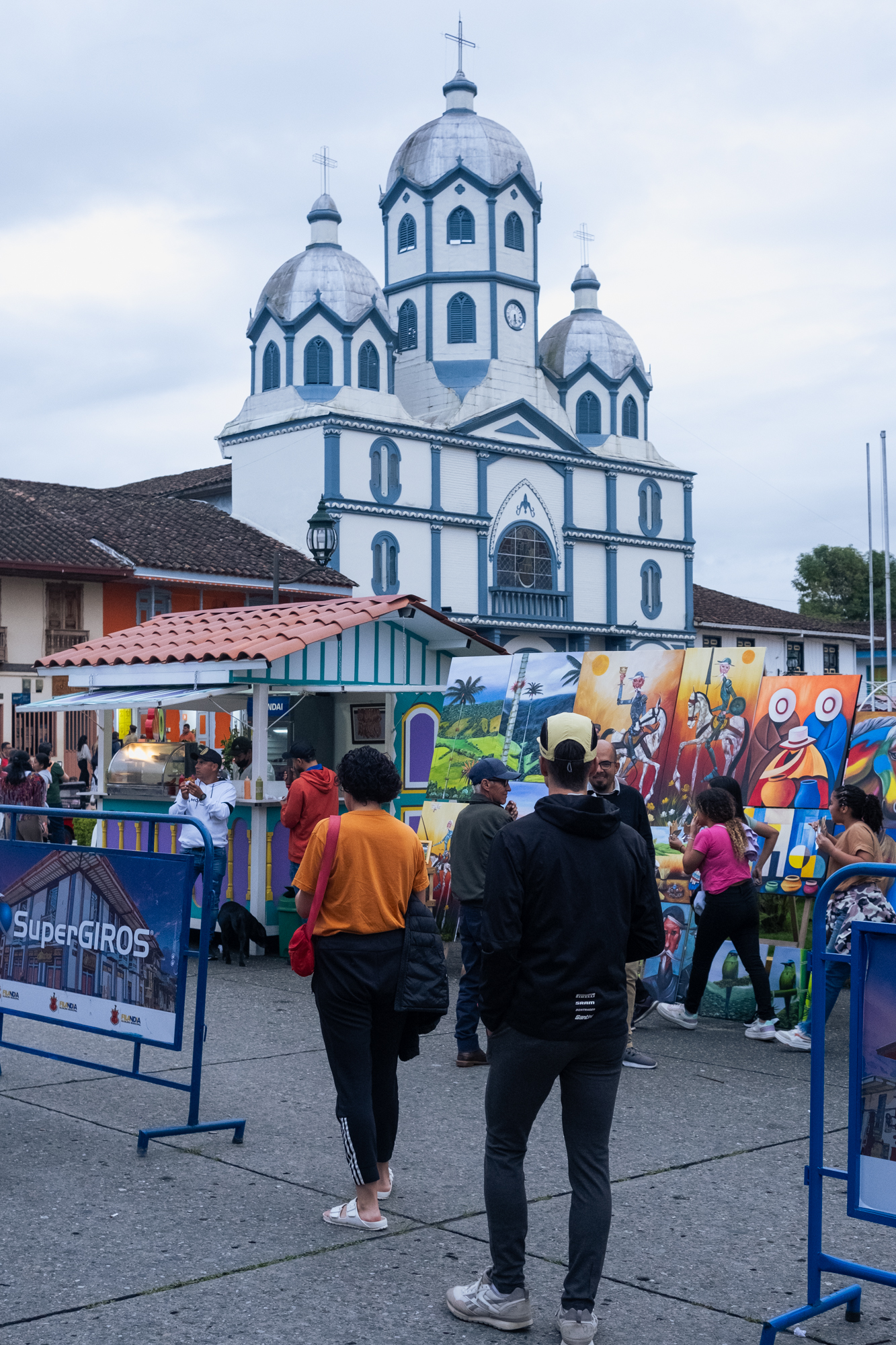
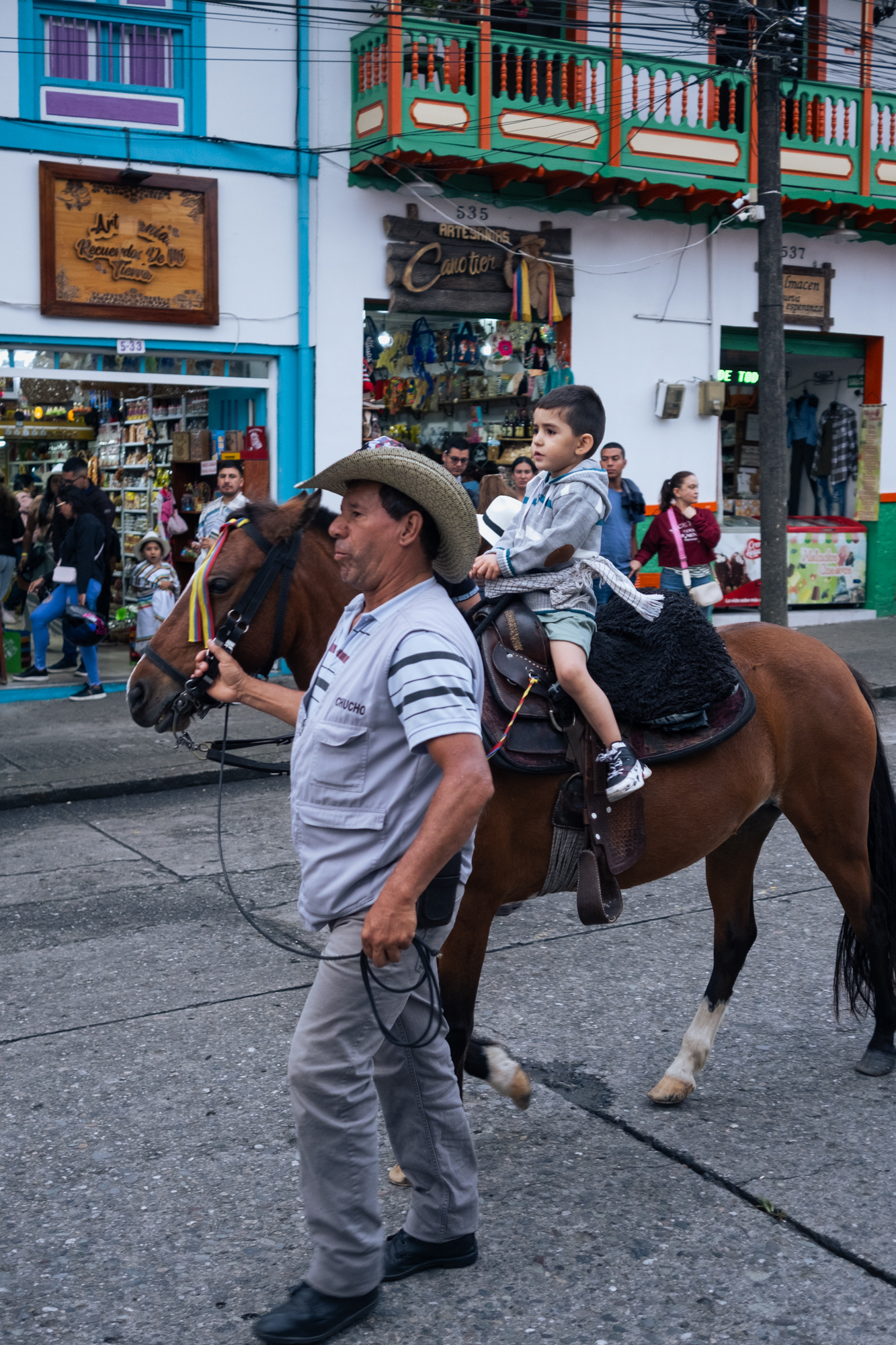
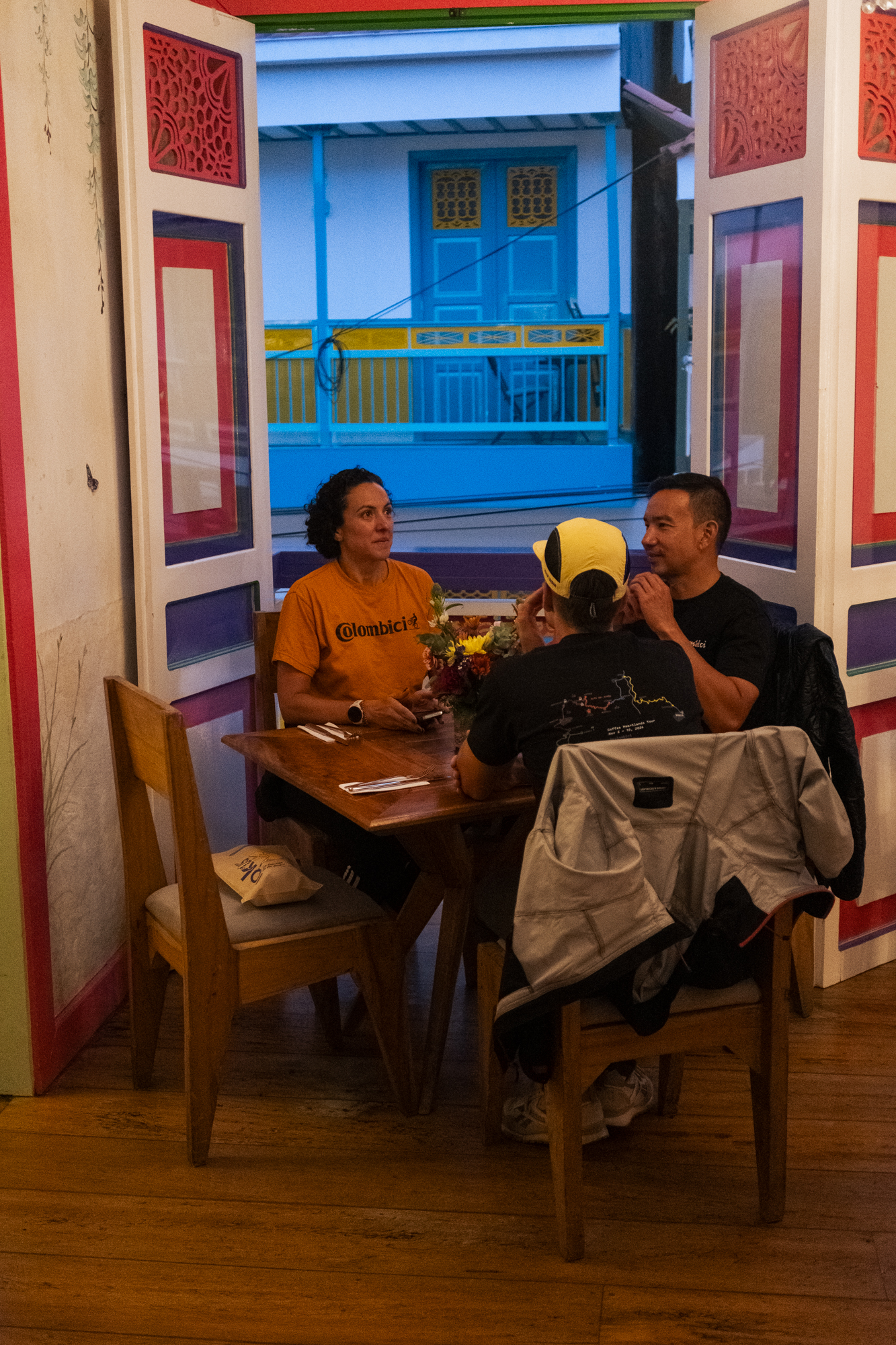
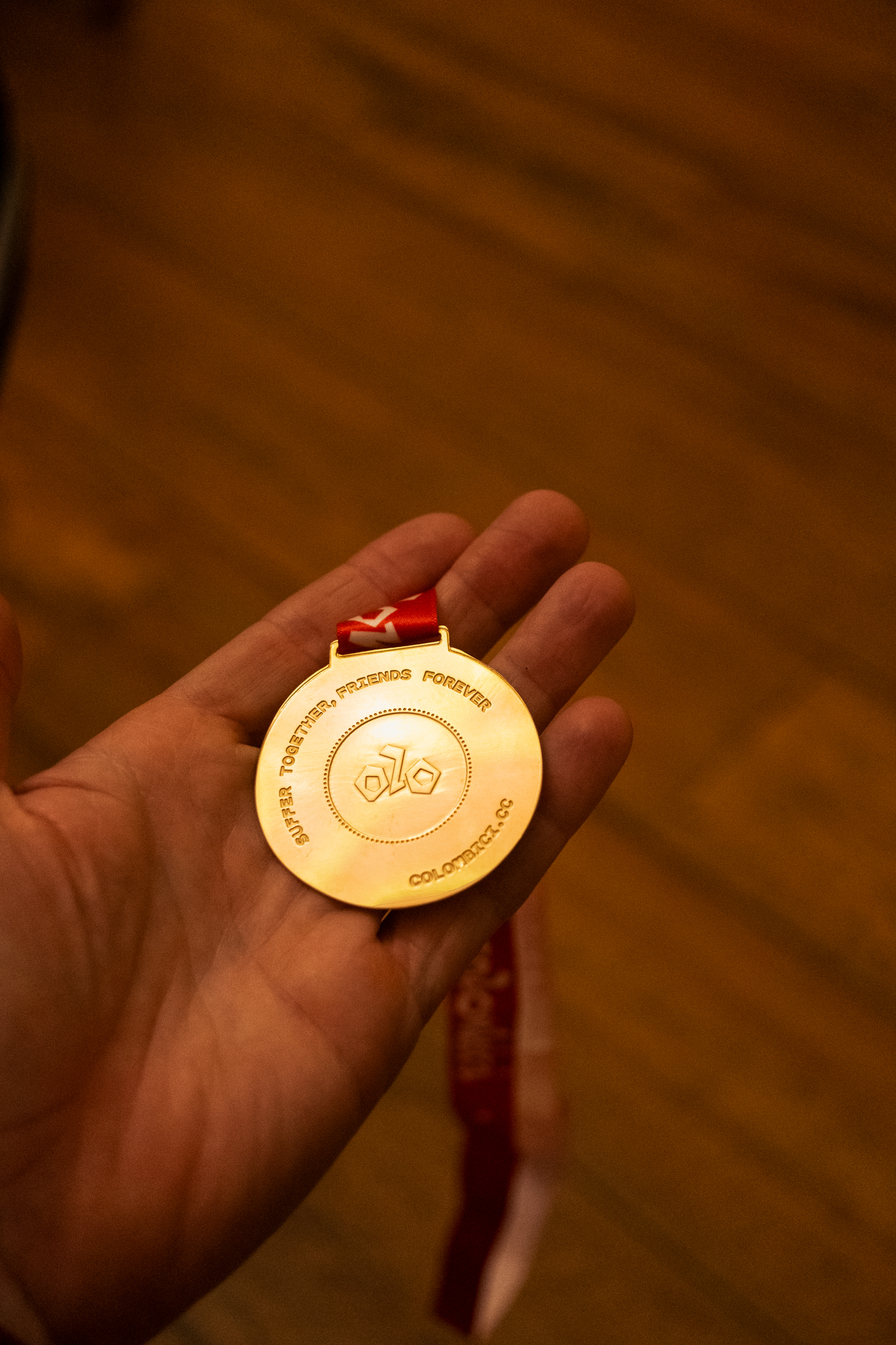
Once we were somewhat recovered, we went to Filanda to wander its colorful streets and soak up the good atmosphere. During our last dinner together, Maya and Pan gave us a medal that meant a lot to us. For everything we experienced thanks to them. Colombici convinced us to travel to Colombia, and now we are the ones encouraging you to explore this beautiful country with them.
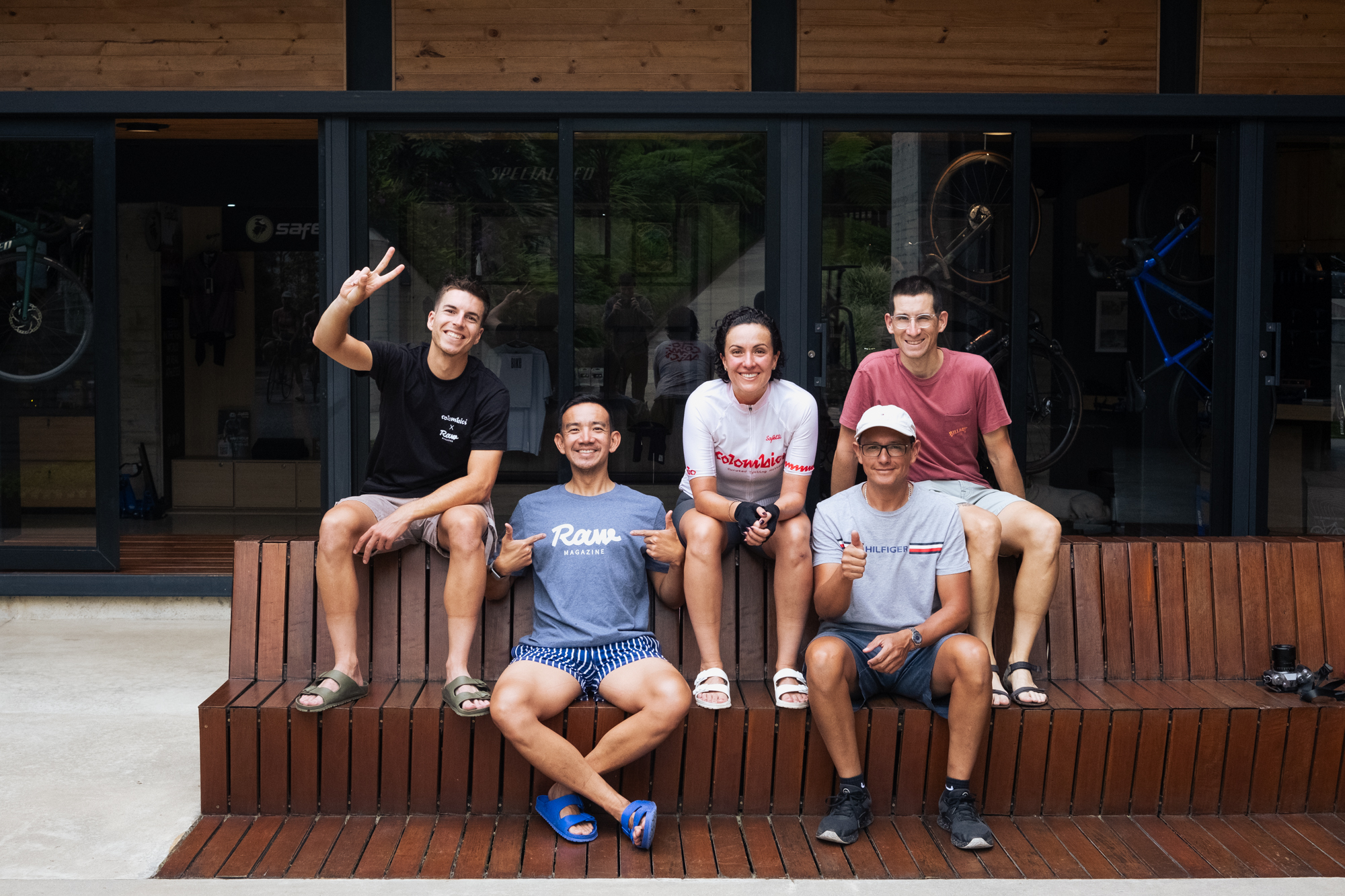

Javi es nuestro corresponsal en Bélgica, y trata de contrarrestar su obsesiva pasión por el análisis de datos con la relajante acción (o eso es lo que dice) de crear contenido para la revista. Javi is based in Belgium and tries to compensate for his obsessive passion for data analytics with the relaxing action (that's what he says) of creating content for the magazine. View all posts by Javi Angulo
 Javi Angulo
 Javi Angulo
 Javi Angulo
 Javi Angulo
 Javi Angulo
 Javi Angulo
 Javi Angulo

 Pol Sopeña
 Pol Sopeña
 Javi Angulo
 Javi Angulo
 Pol Sopeña
Ya tocaba visitar Colombia. Ese país en el que tenemos tantos conocidos y del que tan bien nos habían hablado. En otras ocasiones, nuestro espíritu aventurero nos hubiera llevado a organizar toda la estancia por nuestra cuenta. Sin embargo, debido a nuestro limitado conocimiento de la región y sus carreteras, delegar la planificación a Colombici fue clave para vivir la mejor experiencia posible.
Lo que para Maya y Pan empezó como viajes por su cuenta para descubrir Colombia – país en el que actualmente residen -, pasó a ser su principal ocupación. Mientras que ya existían operadores turísticos ofreciendo training camps que se basan en el principio “más horas en bici es mejor”, Colombici se centró desde el inicio en encontrar el balance perfecto entre el reto físico y la posterior recompensa. La opinión de todos los grupos de ciclistas que han optado por sus servicios, y la nuestra propia, avalan su posicionamiento.
Tras vivir en varios países, son conocedores de las necesidades y deseos de ciclistas internacionales en lo que a aventuras en bici se refiere. A todos nos llama la atención lo exótico, y Colombia es un país único en muchos sentidos. Hay paisajes, carreteras y estilos arquitectónicos que no se pueden encontrar en ningún otro lugar del mundo, y Colombici ha creado un portfolio de itinerarios que transitan por todos ellos.
De todas las opciones que nos pusieron sobre la mesa, nos decantamos por su tour Into Coffee Heartlands, que nos llevaría desde la capital del país, Bogotá, hasta el departamento de Quindío, donde se encuentras pueblos tan pintorescos como Filandia y Salento. El recorrido incluía también el Alto del Sifón, la actualmente subida asfaltada más larga del mundo, con una cima a 4.120 metros de altitud.
Fue una sensación extraña el no tener que planificar nada de nuestro viaje, ya que ellos se encargaron de todo. Las rutas parecían atractivas, y las actividades que nos propusieron eran de nuestro agrado. Solo quedaba ir descontando los días hasta viajar al sur de América y encontrarnos con ellos.
Aterrizamos en Bogotá, pero allí pasaríamos pocas horas ya que nuestra ruta comenzaba en las afueras, relativamente alejados del tráfico de la capital. Con jet lag e intentando encontrar el oxigeno a 2.600 metros de altitud, pusimos a punto las bicis de Scarab con las que íbamos a recorrer Colombia.
Toni montó el modelo all road Apüna de la marca de Medellín, hecha en acero y con un trabajo de pintura realmente particular, tal y como Scarab nos tiene acostumbrados. La bici de Javi era el modelo de carretera Santa Rosa en su versión con cableado integrado y mayor pase de rueda. También contaba con el nuevo Colibrí Damping System de la marca, el cual reemplaza la tradicional tija de acero por un tubo vertical de carbono. Además del claro aspecto estético, esta mejora ofreció un gran confort a lo largo del recorrido gracias a sus propiedades para absorber vibraciones.
Con una suave ascensión iniciamos nuestra ruta en Colombia. El tráfico era moderadamente denso, y nos sorprendió gratamente que los vehículos dejaran, en la mayoría de los casos, la separación deseada al adelantarnos. Carreteras anchas, líneas pintadas en amarillo en lugar de blanco… inconfundiblemente estábamos en América.
La tendencia de la primera etapa fue mayormente descendente, ya que acabábamos el día a apenas 500 metros sobre el nivel del mar. Fueron largas bajadas de pedalear, sin pendientes pronunciadas, en las que disfrutamos de las vistas a las montañas. Nos llamó la atención que, a diferencia de Europa, la vegetación estaba presente hasta en los picos más altos, alterando su silueta.
Paramos en Vianí. La cata de productos típicos colombianos comenzó. Empanadas y almojábanas saciaron el hambre, y los bocadillos de guayaba nos aportarían el azúcar necesario para el resto de la etapa.
El descenso prosiguió, y la carretera se volvió aun más serpenteante. Vislumbramos el río Magdalena, y fue en la Curva del Ángel donde se apreció en todo su esplendor. Este río cruza todos los principales departamentos de Colombia, antes de desembocar en el Caribe.
Un par de inesperados y breves aguaceros hicieron acto de presencia en el último tercio del día. Esto disminuyó la temperatura ambiental, lo que jugó a nuestro favor ya que en esa zona suele apretar mucho el sol. Pusimos punto y final a la primera etapa en Cambao, la frontera el departamento de Cundinamarca y Tolima.
Nos subimos al coche de Danilo, ciclista ex-profesional colombiano, quien nos asistiría durante todo nuestro tour. Desde ahí llegamos a Honda, donde dimos un breve paseo antes de ir a descansar al Hotel Posada Las Trampas.
Nuestro aproximamiento al Alto del Sifón continuó con una segunda etapa que tendría sus propios puntos destacados. Las primeras dos horas fueron totalmente llanas, siendo Mariquita y Armero los municipios más relevantes de esa primera parte del día. Mariquita es el lugar desde donde la mayoría de ciclistas inicia su ascenso al Alto de Letras, que se corona a 3.680 metros de altitud. Esa era hasta ahora la subida más mítica del país, pero el gobierno pavimentó hace un año y medio un camino que ha posibilitado el ascenso con bici de carretera hasta el Alto del Sifón a través de Armero.
El viento soplaba a nuestro favor mientras nos dirigíamos en dirección sur, y cubrimos todo el tramo hasta Armero rápidamente, con solo una parada en Guayabal Armero para hacernos una foto comiendo un bocadillo de guayaba. Era obligatorio.
No fue hasta ese mismo día que supimos de la tragedia de Armero. En 1985, la erupción del volcán Nevado del Ruiz provocó una avalancha ladera abajo que destruyó el municipio, acabando con la vida de más de 20.000 habitantes. Ver las ruinas en primera persona nos encogió el alma.
Apenas un par de kilómetros más adelante hicimos la última parada antes de iniciar la ascensión hasta Líbano. Hacía mucha calor para nosotros, pero es la temperatura habitual de la zona. Unas achiras y almojábanas fueron nuestra gasolina para los 30 km de subida que teníamos por delante.
No fue fácil, pero todo el desnivel que acumulamos ese día nos lo ahorramos para el día siguiente. Algunos ciclistas suben hasta el Alto del Sifón desde Armero, lo que implica 115 km de ascenso continuo. Nosotros dividimos la ascensión en dos tramos, durmiendo en Líbano, el último municipio de mediano tamaño antes de la cima.
Si el ascenso al Altos del Sifón ya es de por sí un reto mayúsculo, las condiciones meteorológicas iban a acentuar su dureza. Empezó a llover la tarde anterior, y aunque justo paró cuando empezamos nuestra ruta – a las 5:30 para intentar coronar temprano -, nos mojamos intermitentemente durante todo el día.
El primer tramo fue el más duro por sus pendientes. Llegamos a Murillo, un pequeño pueblo a 2.900 metros de altitud con mucho encanto. Desde la entrada se apreciaban a lo lejos las faldas del Nevado del Ruiz, algo que alzó nuestros ánimos. Lo que subió nuestra temperatura corporal fue el caldo que tomamos a cubierto en uno de los locales de la plaza.
Con 25 km de ascensión ya a nuestras espaldas, encaramos con confianza los 30 restantes. La falta de oxígeno ya era aparente, y llegó un momento que apenas podíamos pedalear. Había fuerzas, pero las piernas no respondían.
No había prisas; una vez mojados ya es indiferente que siga lloviendo o no, y estábamos en camino de coronar antes del mediodía. A ratos rodando en grupo, a ratos olvidándonos de los demás y siguiendo nuestro propio ritmo, fuimos descontando los kilómetros que nos separaban de la cumbre más alta de todo el viaje.
Sobre la cota de 3.800 la fauna desapareció, y el paisaje parecía de otro planeta. Es lo que se conoce como el páramo. En ese momento avistamos los primeros frailejones, una planta nativa con un grueso tronco y una roseta en la parte superior. Nos dijeron que apenas crecen 1 cm por año, por lo que al apreciar el tamaño de algunos de ellos imaginamos lo antiguos que son.
Primero llegamos al Alto de Ventana, bajamos unos tres kilómetros, y cinco kilómetros más allá, sin darnos cuenta porque no hay ningún tipo de señal que lo indique, coronamos el Alto del Sifón.
¿Acabó ahí la tercera etapa? No, queríamos conquistar también el famoso Alto de Letras, aunque no fuera por la vertiente típica. Desde el Sifón nos adentramos en el Parque Nacional Natural Los Nevados, y después iniciamos un descenso con fuerte lluvia y frío. Agracedimos el momento en el que alcanzamos el cruce para iniciar la gentil subida hasta Letras.
Estábamos extremadamente orgullosos del logro, pero no había tiempo para celebraciones. Nos subimos al coche y bajamos hasta Manizales, donde los baños termales del hotel Termales el Otoño nos esperaban.
Iniciamos el cuarto día de nuestro Coffee Heartlands tour con una visita a la Hacienda Venecia, donde nos enseñaron todo lo que hay detrás de una taza de café. Desde la recolección del fruto hasta su tueste, pasando por el proceso de pre secado y secado, nos volvimos unos eruditos del tema.
Dedicamos toda la mañana a ello, por lo que el tiempo se nos echó encima. Era una etapa de transición, rodeando Pereira para luego adentrarnos en el departamento de Quindío. Según los locales, la comida más típica en Colombia antes de salir a rodar es un buen caldo, por lo que seguimos sus consejos y lo complementamos además con una refrescante agua panela fría con limón.
Iniciamos el recorrido sobre las 14:00. Acordamos rodear Pereira en lugar de cruzar sus concurridas calles, pero aun así el tráfico estuvo presente durante toda la sección de carretera principal de la ruta. Tras una larga y tendida ascensión, llegamos hasta el desvío hacia Filandia. Habíamos escuchado muchas cosas buenas de este pintoresco municipio, pero aplazaríamos la visita en condiciones hasta el día siguiente ya que el atardecer nos acechaba.
Llegamos a Casa du Veló y nos metimos directamente en su sala de vapor para entrar en calor. Más tarde tuvimos tiempo de echar un vistazo al resto de sus instalaciones y la deslumbrante arquitectura del complejo. Un verdadero paraíso para el amante de la bicicleta.
Desgraciadamente era el último día de ruta. La única buena noticia era que no teníamos que hacer las maletas ya que volvíamos a pasar noche en Casa du Veló. En esta quinta etapa realizamos una vuelta dentro del departamento de Quindío en la que volvimos a pasar por Filandia, bajamos a Salento y fuimos hasta Cocora.
Era domingo, y el siguiente lunes era festivo, por lo que nos cruzamos con una gran cantidad de ciclistas. Inevitablemente también había mucho turista por la zona, y es que tanto Salento como Cocora son sitios que merece la pena visitar.
Tras un breve descenso por carretera principal, nos enfrentamos a 4 km realmente duros para llegar a Salento. Pasamos de largo – volveríamos más tarde para parar a comer – y fuimos en dirección este y ascendente hasta Cocora, lugar conocido por su belleza y sus altas palmeras.
A lomos de nuestras Scarab pudimos llegar hasta un determinado punto de la ruta, ya que a partir de ahí solo se podía seguir avanzando a pie o a caballo. Nos reagrupamos ahí arriba, y tras una breve parada deshicimos nuestros pasos para descender de vuelta a Salento. Nos sentamos en una terraza de la plaza principal para seguir catando los manjares colombianos.
Ya habíamos realizado la mayor parte del desnivel, por lo que en el segundo tercio de la etapa disfrutamos de un largo descenso en el que cruzamos Circasia, Montenegro y Quimbayá. Es en este último pueblo iniciamos la última ascensión de nuestro tour con Colombici, justo cuando nuestras piernas nos empezaban a pedir clemencia tras la carga acumulada los anteriores días.
Fue una subida entretenida, con pendientes cambiantes y vistas a las plantaciones de plátanos. Sin embargo, siendo honestos, lo que más deseábamos era llegar a Casa du Veló. Los últimos 700 metros a más del 15% hicieron que llegáramos al alojamiento agotados y caninos.
Una vez medianamente recuperados, nos acercamos a Finlandia para pasear por sus coloridas calles y contagiarnos por el buen ambiente que se respiraba. En nuestra última cena juntos, Maya y Pan nos entregaron unas medallas que significaron mucho para nosotros. Por todo lo vivido gracias a ellos. Colombici nos convenció para viajar a Colombia, y ahora somos nosotros los que os recomendamos encarecidamente a que exploréis el país con ellos.
Javi es nuestro corresponsal en Bélgica, y trata de contrarrestar su obsesiva pasión por el análisis de datos con la relajante acción (o eso es lo que dice) de crear contenido para la revista. Javi is based in Belgium and tries to compensate for his obsessive passion for data analytics with the relaxing action (that's what he says) of creating content for the magazine. View all posts by Javi Angulo
Receive our monthly selection of the best articles, news, exclusive content and giveaways only for subscribers, subscribe to OUR NEWSLETTER
Receive our monthly selection of the best articles, news, exclusive content and giveaways only for subscribers, subscribe to OUR NEWSLETTER
Receive our monthly selection of the best articles, news, exclusive content and giveaways only for subscribers, subscribe to OUR NEWSLETTER
Receive our monthly selection of the best articles, news, exclusive content and giveaways only for subscribers, subscribe to OUR NEWSLETTER