- News
- Reviews
- Travel & Adventure
- Interviews
- Inside Industry Players
- Community
Bikes
Reviews
Components
Reviews
Cycling
Apparel


[raw_mobile_menu]
[wpml_language_switcher_down]


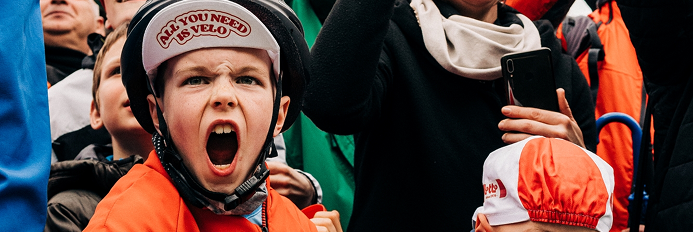
If there is an event that can perfectly exemplify how cycling is seamlessly integrated into the Flemish culture, it is the Six Days of Ghent. This year marked the 100th anniversary of the first edition, and the spectators that attended the packed velodrome for six consecutive evenings enjoyed some high-level cycling with a good dose of entertainment.
The Six Days concept originated at Madison Square Garden in New York in the late 1800s. Back then this track cycling competition by pairs was literally six full days of racing, with one rider racing while the other rested. For some time there were dozens of Six Days events organized per year, but as of now only the ones in Rotterdam and Ghent remain.


The Six Days of Ghent, locally known as zesdaagse, took place for the first time in 1922 in the Feestpaleis of the Citadelpark. In 2022 the event celebrated its 100th anniversary, but not its centenary edition, It became a yearly event only after World War II, and a fire tragedy in 1962 also put the event on hold for some years as the entire venue had to be built from scratch.
In November 1965 the velodrome, named Kuipke, was reinstated with the same dimensions as the previous one. Unlike the standard velodromes, it has a length of 166,66 meters and a max gradient of 52%, making it a unique, fast track to ride on.
The first edition after the fire tragedy was won by Patrick Sercu and Eddy Merckx. The latter is undoubtedly the greatest cyclist of all time, but no one has dominated the Six Days scene as much as Patrick Sercu did during the 60s and 70s, with 88 wins in total, 11 of them in Ghent.


The Six Days of Ghent have run flawlessly since then, with the exception of the tragic accident that occurred in 2006. The Spanish pair Joan Llaneras and Isaac Galvez were racing with the rainbow jersey after their win in the Madison race of the Track World Championships. The latter had just got married but decided to exchange his honeymoon with a good dose of racing in the Kuipke.
In one of the countless occasions in which someone attacked and the rest followed, the trajectories of Isaac Galvez and Dimitri De Fauw collided, with a fatal outcome for one of them. Galvez hit the fences with his chest, breaking several ribs and unfortunately one of them perforated his heart The 31-year-old rider lost his life in that tragedy.
There are of course similarities with a regular UCI Track Cycling World Cup, but any person that has ever attended the Six Days will tell you that this event goes beyond what is pure competition, and the racing itself also has its peculiarities. Entertainment and sport coming together.


The Six Days of Ghent are raced in pairs, and within the event there are different disciplines: madison, derny race, elimination, time trial, points race, and super sprint. Some require both members to be riding at the same time while others allow one of the two riders to rest a bit, but one way or another they end up riding over 100 kilometers per evening full gas.
In line with the complexity of cycling as a sport in general, one has to familiarize himself with how the ranking works before really understanding what is happening on the track, but do not worry if you don’t get it, as there is a lot of people that go there mainly to get caught in the party atmosphere and not to follow the race.
There was a lot of expectation as the tickets were sold one week before the start, but we could see many empty seats in the stands. It didn’t take long until we realized that the reason was that, while some watched the racing unfold, others spent most of the evening in the catacombs of the Kuipke eating and singing.


Not only there, but in the middle of the track there was also a party going on. Same as in a club at 5 AM, by the end of the evening the floor of the ‘middenplein’ was super sticky due to all the beers that had been spilled. It was also funny to start coughing as soon as we got close to the smoking area, which was the only alternative for smokers. ‘Geen terugkeer’ was hanged in every door, meaning that there was no return if we stepped out. Another proof that we were privileged to be there.
Each day at around 22:30 there was a short pause that allowed the riders to catch a breath or get in the party mood as it was the moment in which local singers stepped into the track to amuse the spectators.


We honestly thought that the level of effort would be low and that riders would be there more as entertainers than cyclists, but we were clearly wrong. It was not like in the post-Tour criteriums, which are organized as a cycling parade. Having the chance to watch the race so close to the protagonists, one could tell by looking at their faces that they really gave it all, with two historical track records as proof.


How fast do you think you could do a lap around the 166,66 meters of the Kuipke? Lindsay De Vylder, supported by the lead out of Robbe Ghys, beat the previous record on two consecutive days, setting 8”332 as the new best time. Tuur Dens did a similar thing in the 500 m time trial, lowering the previous record twice and setting the bar at 26”464.
One of the side events was the Fiberklaar Ladies Cup on Friday and Saturday, which made sure that women also had their deserved time to shine. Lotte Kopecky, who earlier in the season won the Strade Bianche and Ronde van Vlaanderen, received a standing ovation and won three of the four races that they contested.
The week of racing finished with a one-hour-long madison, and with three teams still in contention for the overall victory, that final race was a pure spectacle in which they relentlessly tried to lap the others to secure the win.


In the end, it was the duo formed by Lindsay De Vylder and Robbe Ghys who finished on the highest step of the podium. For the latter it was the third consecutive win in a row, showing that he can dominate the Six Days scene in the same ways that Kenny De Ketele and Iljo Keisse did in recent years.
Another reason why this was a special edition is that Iljo Keisse, de Keizer van ‘t Kuipke, retired from professional cycling this week. He has raced the Six Days of Ghent on 18 different occasions and won seven times with different teammates. Additionally, one has to take into account the success he had as a road cyclist as part of the Quick-Step team.
It was impossible not to get emotional with his farewell speech, as throughout the week we checked how important is his figure in the race. He is a local from Ghent, so he received overwhelming support day after day, which paid off as he finished third overall together with Jasper De Buyst.


Half of the men elite were Belgian, but although several pairs were fully national, some local riders teamed up with international stars. Current world champions like Yoeri Havik and Ethan Hayter were part of this edition, and one can say that they amused themselves by looking at how they sang along to some of the tunes that banged at the velodrome day after day. Most of them also embraced some of the traditions like tucking their jersey into their bib shorts, the same as it was done in the past when the clothing was too baggy.
Riders, spectators and organizers must be now looking back at the recently finished event with a smile on their face, as it was a successful edition after two years disrupted by the pandemic. People in Flanders love cycling, and cyclists love racing in Flanders.

Javi es nuestro corresponsal en Bélgica, y trata de contrarrestar su obsesiva pasión por el análisis de datos con la relajante acción (o eso es lo que dice) de crear contenido para la revista. Javi is based in Belgium and tries to compensate for his obsessive passion for data analytics with the relaxing action (that's what he says) of creating content for the magazine. View all posts by Javi Angulo
 Javi Angulo
 Javi Angulo
 Javi Angulo
 Javi Angulo

 Pol Sopeña
 Javi Angulo
 Javi Angulo
 Javi Angulo
 Javi Angulo
 Javi Angulo
 Javi Angulo
 Javi Angulo
Si hay un evento que puede ejemplificar perfectamente cómo el ciclismo se integra a la perfección en la cultura flamenca, son los Seis Días de Gante. Este año se cumplieron 100 años de la primera edición, y los espectadores que asistieron al abarrotado velódromo durante seis noches consecutivas disfrutaron de un ciclismo de alto nivel con una buena dosis de entretenimiento.
El concepto Six Days se originó en el Madison Square Garden de Nueva York a finales del siglo XIX. En aquel entonces, esta competición de ciclismo en pista por parejas era literalmente seis días completos de carrera, con un corredor compitiendo mientras el otro descansaba. Durante algún tiempo se organizaron decenas de eventos de los Seis Días al año, pero hoy en día solo quedan los de Róterdam y Gante.
Los Seis Días de Gante, conocidos localmente como zesdaagse, tuvieron lugar por primera vez en 1922 en el Feestpaleis del Citadelpark. En 2022 el evento ha celebrado su 100 aniversario, pero no su edición número 100. Pasó a ser un evento anual solo después de la Segunda Guerra Mundial, y un incendio ocurrido en 1962 también detuvo la competición durante algunos años ya que todo el recinto tuvo que ser construido de nuevo.
En noviembre de 1965 se restableció el velódromo, bautizado como Kuipke, con las mismas dimensiones que el anterior. A diferencia de los velódromos estándar, tiene una longitud de 166,66 metros y una pendiente máxima del 52%, lo que la convierte en una pista única y rápida en la que competir.
La primera edición tras la tragedia del incendio la ganaron Patrick Sercu y Eddy Merckx. Este último es sin duda el mejor ciclista de todos los tiempos, pero nadie ha dominado tanto la escena de los Six Days como lo hizo Patrick Sercu durante los años 60 y 70, con 88 victorias en total, 11 de ellas en Gante.
Los Seis Días de Gante se han desarrollado sin problemas desde entonces, con la excepción del trágico accidente que ocurrió en 2006. La pareja española Joan Llaneras e Isaac Galvez competía con el maillot arcoíris tras su victoria en la carrera de Madison del Campeonato del Mundo de pista. Este último acababa de casarse pero decidió cambiar su luna de miel por una buena dosis de competición en el Kuipke.
En una de las innumerables ocasiones en la que alguien atacó y el resto siguió, las trayectorias de Isaac Galvez y Dimitri De Fauw chocaron, con fatal desenlace para uno de ellos. Gálvez golpeó las vallas con el pecho, rompiéndose varias costillas y lamentablemente una de ellas le perforó el corazón. El ciclista de 31 años perdió la vida en esa tragedia.
Por supuesto que hay similitudes con la típica Copa del Mundo UCI de ciclismo en pista, pero cualquier persona que haya asistido alguna vez a los Seis Días te dirá que este evento va más allá de lo puramente competitivo, y el formato de carrera en sí también tiene sus peculiaridades.
Los Seis Días de Gante se corren por parejas, y dentro del evento hay diferentes disciplinas: madison, carrera con derny, eliminación, contrarreloj, carrera por puntos y super sprint. Algunas requieren que ambos miembros estén en la pista al mismo tiempo, mientras que otros permiten que uno de los dos ciclistas descanse un poco, aunque de una forma u otra terminan recorriendo más de 100 kilómetros por noche a alta intensidad.
En línea con la complejidad del ciclismo en general, uno tiene que familiarizarse con el funcionamiento de la clasificación antes de entender realmente lo que está pasando en la pista, pero no te preocupes si no lo entiendes, ya que hay mucha gente que va allí principalmente para quedar atrapados en el ambiente de fiesta y no para seguir la carrera.
Había mucha expectación ya que las entradas se agotaron una semana antes del inicio, pero pudimos ver muchos asientos vacíos en las gradas. No pasó mucho tiempo hasta que nos dimos cuenta de que la razón era que, mientras algunos miraban cómo se desarrollaba la carrera, otros pasaron la mayor parte de la noche en las ‘catacumbas’ del velódromo comiendo, bebiendo y cantando.
No solo allí, sino que en medio de la pista también había una fiesta. Al igual que en una discoteca a las 5:00, al final de la tarde el suelo de la ‘middenplein’ estaba súper pegajoso debido a todas las cervezas que se habían derramado. También fue divertido empezar a toser tan pronto como nos acercamos a la zona de fumadores, que era la única alternativa para los fumadores. ‘Geen terugkeer’ estaba colgado en cada puerta, lo que significa que no había retorno si salíamos. Otra prueba más de que éramos unos privilegiados al estar ahí dentro.
Cada día alrededor de las 10:30 PM había una pequeña pausa que permitía a los corredores tomar un respiro o entrar en ambiente de fiesta ya que era el momento en el que los cantantes locales saltaban a la pista para divertir a los espectadores.
Honestamente, pensamos que el nivel de esfuerzo sería bajo y que los ciclistas estarían allí más como animadores que como deportistas, pero claramente estábamos equivocados. No fue como en los criterios posteriores al Tour, que se organizan a modo de desfile ciclista. Al tener la oportunidad de ver la carrera tan cerca de los protagonistas, al mirarlos a la cara uno podía ver que realmente lo daban todo, con dos récords históricos como prueba.
¿Qué tan rápido crees que podrías dar una vuelta alrededor de los 166,66 metros del Kuipke? Lindsay De Vylder, apoyado por el lanzamiento de Robbe Ghys, batió el récord anterior en dos días consecutivos, estableciendo en 8”332 el nuevo mejor tiempo. Tuur Dens hizo algo similar en la contrarreloj de 500 m, bajando dos veces el récord anterior y poniendo el listón en 26”464.
Uno de los eventos organizado en paralelo fue la Fiberklaar Ladies Cup del viernes y el sábado, que garantizó que las mujeres también tuvieran su merecido tiempo para brillar. Lotte Kopecky, quien a principios de temporada ganó la Strade Bianche y la Ronde van Vlaanderen, recibió una merecida ovación y ganó tres de las cuatro carreras que disputaron.
La semana de carreras terminó con un madison de una hora de duración, y con tres equipos aún compitiendo por la victoria general, esa carrera final fue un puro espectáculo en el que intentaron incansablemente dar vueltas a los demás para asegurar la victoria.
Al final, fue el dúo formado por Lindsay De Vylder y Robbe Ghys quien terminó en lo más alto del podio. Para este último fue la tercera victoria consecutiva, lo que demuestra que puede dominar la escena de Six Days de la misma manera que lo hicieron Kenny De Ketele e Iljo Keisse en los últimos años.
Otra razón por la que esta fue una edición especial es que Iljo Keisse, de Keizer van ‘t Kuipke, se retiró del ciclismo tras este evento. Ha corrido los Seis Días de Gante en 18 ocasiones y ganó siete veces con diferentes compañeros de equipo. Además, hay que tener en cuenta el éxito que ha tenido como ciclista de carretera formando parte del equipo Quick-Step.
Fue imposible no emocionarse con su discurso de despedida, ya que a lo largo de la semana comprobamos lo importante que es su figura en la carrera. Él es local de Gante, por lo que recibió un apoyo abrumador día tras día, lo que valió la pena ya que terminó tercero en la general junto con Jasper De Buyst.
La mitad de los hombres élite eran belgas, pero varias estrellas internacionales se unieron a la fiesta. Actuales campeones del mundo como Yoeri Havik y Ethan Hayter formaron parte de esta edición, y se puede decir que se divirtieron viendo cómo entonaban algunos de los temas que sonaban día tras día en el velódromo. La mayoría de ellos también adoptaron algunas de las tradiciones como la de meter el maillot dentro del culotte, como se hacía en el pasado cuando la ropa era demasiado holgada.
Ciclistas, espectadores y organizadores deben ahora echar la mirada hacia atrás con una sonrisa en la cara, ya que fue una edición exitosa después de dos años interrumpidos por la pandemia. La gente de Flandes ama el ciclismo, y a todo ciclista le encanta correr en Flandes.
Javi es nuestro corresponsal en Bélgica, y trata de contrarrestar su obsesiva pasión por el análisis de datos con la relajante acción (o eso es lo que dice) de crear contenido para la revista. Javi is based in Belgium and tries to compensate for his obsessive passion for data analytics with the relaxing action (that's what he says) of creating content for the magazine. View all posts by Javi Angulo
Receive our monthly selection of the best articles, news, exclusive content and giveaways only for subscribers, subscribe to OUR NEWSLETTER
Receive our monthly selection of the best articles, news, exclusive content and giveaways only for subscribers, subscribe to OUR NEWSLETTER
Receive our monthly selection of the best articles, news, exclusive content and giveaways only for subscribers, subscribe to OUR NEWSLETTER
Receive our monthly selection of the best articles, news, exclusive content and giveaways only for subscribers, subscribe to OUR NEWSLETTER