- News
- Reviews
- Travel & Adventure
- Interviews
- Inside Industry Players
- Community
Bikes
Reviews
Components
Reviews
Cycling
Apparel





[raw_mobile_menu]
[wpml_language_switcher_down]


The world of cycling is dominated by three materials: steel, aluminum, and carbon fiber, which feature unique properties that make them excel in their specific applications. However, by thinking out of the box there could be other materials that feature enhanced performance, as was the case of ceramics for reduced-friction bearings.

In this quest to exploit different materials, while at the Chemnitz University of Technology, Ingo Berbig started thinking in 2013 about using textile materials like polymers as an alternative to common steel/carbon spokes. With this, he intended to provide a new product based on technological benefits that would lead to improved functionality, from weight to riding feeling, for cycling wheels.
This is how a new concept of spokes made of VECTRAN™ fibers was put into practice and PI ROPE was created in 2017. Not long after, thanks to the cooperation with Newmen Components and a dedicated process of constant self-improvement, they finally commercially launched their first products in 2018. Nowadays, the brand offers a selection of different spokes, hubs, and full wheelsets for different cycling disciplines including road, gravel, and MTB. These represent featherweight wheels with self-damping capacity and similar properties in terms of stiffness, braking load, resilience, aerodynamics, and wear to the commonly used steel.


The science behind the PI ROPE spokes is relatively straightforward. These consist of high-modulus-high-tenacity (HMHT) fibers made out of VECTRAN™, a high-strength polyester fiber used as reinforcement fabric in medicine or space travel applications. On their own, these fibers have similar strengths to steel. However, it is when you braid them that their properties in terms of tension and flexibility are improved, making them excellent candidates as spokes.


The most remarkable property of the spokes is their reduced weight compared to steel ones, with only 2.2 g. This results in a wheel that can be easily accelerated and is ideal for climbing without sacrificing the functionality of the impeller once the wheel is turning.
The next remark is the spokes look, as they are completely flexible like ropes when not under tension. They are braids of polymer fibers with high flexibility in the transversal direction but a high longitudinal tensile modulus. This results in a spoke that can be certainly put under pressure with reduced elongation and high strength. However, at the same time, the transversal elasticity helps dampen the vibrations transmitted from the ground and provides a smoother riding style.

In terms of wear and exposure to the elements, their properties have been improved to have a long-lasting life. First of all, the fibers do not absorb water and, therefore, no dirt is easily attached. Although these polymers can be easily damaged by the Sun’s UV light, they are covered with a protective coating. Either the dark-colored spokes or the light ones, where fibers can be seen, have 100% protection. There is also no reason to worry about temperature fluctuations, which do not influence the spokes properties of VECTRAN™ in normal riding conditions. Even if you think of them as ropes, they are cut and shatterproof and the external coating avoids wear, tear and creep. Besides, in case of breaking, they can be easily substituted by any experienced wheel builder.
The only downside of the PI ROPE Rope spokes is something they have really thought through. The spokes have relatively larger nipples on both sides, which are used to be attached to both rim and hub. Since the designers did not want to compromise the properties and provide an excellent product, the spokes can only be matched with specific rims and hubs with large holes that do not suit commercial standards. These were produced from the partnership with Newmen Components, developing suitable hubs and rims for the spokes, proving light and extremely reliable in various tests.


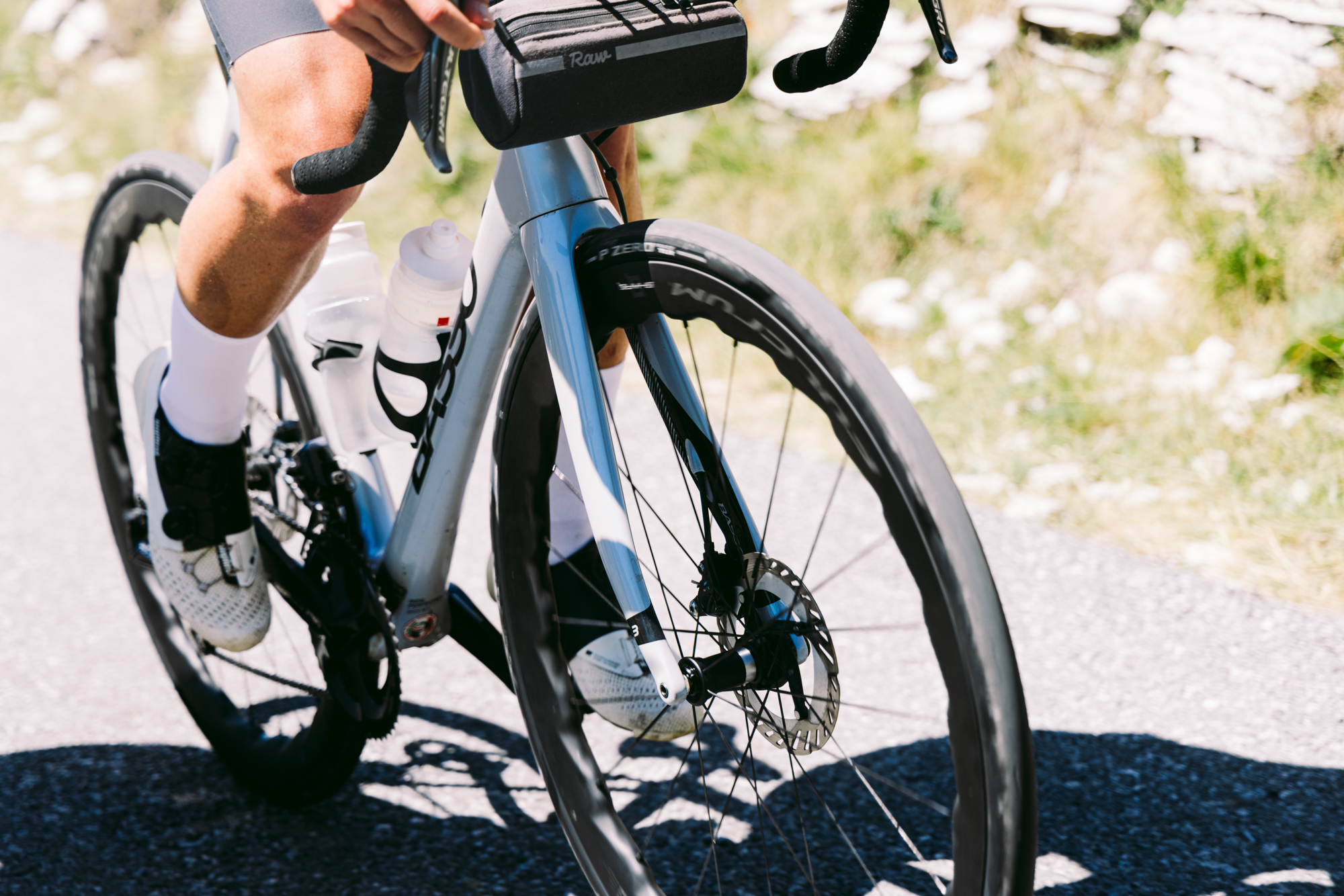
We had the opportunity to test the R.38 gravel-specific wheelset. Out of the box, we already noticed how light it was. The set is only 1,120 g, achieved thanks to the VECTRAN™ spokes and carbon rims, which have a good balance between deepness and lightness. Then we mounted the discs (centerlock) and tires and went straight to the woods to test them.
After riding on various surfaces (tarmac, dirt, loose gravel) we were surprised by how stiff they were, which was noticeable when doing a small acceleration transmitting all the force with only a small effort. The hub, unlike other brands, was very quiet, which makes you unnoticeable when you are outside.


Finally, regarding the spokes, we could see the braiding of the fibers, since the wheels came with the clear version of the spokes. This is a matter of personal opinion, you may or may not like to give your bike a color touch, but we would have preferred the black ones. Speaking of these, it’s great to always have a spoke on hand, whether in your handlebar bag or jersey pocket, as it takes up very little space and it is easy to replace in the unlikely case of unexpected rupture (although it is really rare).

Apasionado de la bici y de la competición, Pol, siempre está preparado para una nueva aventura. Le encanta la sensación de ponerse un dorsal y es un auténtico adicto al ciclocros. Passionate about bikes and racing, Pol is always ready for a new adventure. He loves the feeling of pinning a number and he is truly addicted to cyclocross. View all posts by Pol Sopeña
 Javi Angulo

 Pavel Novotný
 Pol Sopeña
 Javi Angulo
 Pol Sopeña
 Javi Angulo
 Pol Sopeña
 Pol Sopeña
 Javi Angulo
 Pol Sopeña
 Pol Sopeña
 Pol Sopeña
El mundo del ciclismo está dominado por tres materiales: acero, aluminio y fibra de carbono, que cuentan con propiedades concretas que los hacen destacar en determinadas aplicaciones. Sin embargo, pensando más allá, podría haber otros materiales que presenten un mayor rendimiento, como por ejemplo fue el caso de la cerámica para rodamientos con baja fricción.
En esta búsqueda para usar diferentes materiales, mientras estaba en la Universidad Tecnológica de Chemnitz en 2013, Ingo Berbig comenzó a pensar sobre el uso de materiales textiles, como polímeros, como alternativa a los radios de acero/carbono comunes. Con esto, pretendía brindar un nuevo producto basado en beneficios tecnológicos que llevaría a mejorar la funcionalidad, desde el peso hasta la sensación de maniobrabilidad, de las ruedas de bicicleta.
Así fue como se puso en práctica un nuevo concepto de radios hechos de fibras VECTRAN™ y se creó PI ROPE en 2017. No mucho después, gracias a la cooperación con Newmen Components y un proceso dedicado de investigación constante, finalmente lanzaron comercialmente sus primeros productos en 2018. Hoy en día, la marca ofrece una selección de diferentes radios, bujes y juegos de ruedas para diferentes disciplinas ciclistas, incluidas carretera, gravel y MTB. Estos representan ruedas con peso pluma y capacidad de amortiguación, ofreciendo propiedades similares en términos de rigidez, carga de rotura, resiliencia, aerodinámica y desgaste al acero que se usa tradicionalmente.
La ciencia detrás de los radios PI ROPE es relativamente sencilla. Estos consisten en fibras de alto módulo y tenacidad (HMHT) hechas de VECTRAN™, una fibra de poliéster de alta resistencia que se utiliza como tejido de refuerzo en neumáticos, navegación o medicina y con aplicaciones en viajes espaciales. Por sí solas, estas fibras tienen una resistencia similar a la del acero. Sin embargo, es al trenzarlas cuando se mejoran sus propiedades en cuanto a tensión y flexibilidad, lo que los convierte en excelentes candidatos como radios.
La propiedad más destacable de los radios es su reducido peso respecto a los de acero, con tan solo 2.2 g. Esto da como resultado una rueda con la que se puede acelerar fácilmente y es ideal para escalar sin sacrificar la funcionalidad del aro de inercia una vez la rueda está en movimiento.
El siguiente punto destacable es el aspecto de los radios, ya que son completamente flexibles como cuerdas cuando no están bajo tensión. Estos son trenzas de fibras poliméricas de alta flexibilidad en la dirección transversal pero un alto módulo de tracción longitudinal. Esto da como resultado un radio que sin duda puede someterse a presión con un alargamiento reducido y una gran resistencia. Asimismo, la flexibilidad transversal ayuda a amortiguar las vibraciones transmitidas desde el suelo y proporciona un estilo de conducción más suave.
En cuanto al desgaste y exposición a la intemperie, sus propiedades han sido mejoradas para tener una larga vida útil. En primer lugar, las fibras no absorben agua y, por lo tanto, la suciedad no se adhiere fácilmente. Aunque estos polímeros pueden dañarse fácilmente con la luz ultravioleta del sol, los radios están cubiertos con una capa protectora. Tanto los radios de color oscuro como los claros, donde se ven las fibras fácilmente, tienen una protección del 100%. Tampoco hay que temer por las fluctuaciones de temperatura, las cuales no influyen en las propiedades de los radios de VECTRAN™ en condiciones normales. Incluso si se piensa en ellos como cuerdas, estos son resistentes a cortes y el revestimiento externo evita el desgaste y las roturas. Además, pueden ser fácilmente sustituidas por cualquier constructor de ruedas con experiencia.
El único inconveniente de los radios PI ROPE es algo en lo que realmente la marca ha pensado. Los radios tienen cabecillas relativamente más grandes de lo normal en ambos lados, que se utilizan para fijar tanto a la llanta como al buje. Al no querer comprometer las propiedades y ofrecer un producto excelente, los radios solo pueden combinarse con llantas y bujes específicos con agujeros más grandes que no se ajustan a los estándares comerciales. Estos fueron producidos a partir de la colaboración con Newmen Components, desarrollando bujes y llantas adecuados para los radios, demostrando ser livianos y extremadamente confiables en varias pruebas.
Tuvimos la oportunidad de testear el juego de ruedas específico para gravel R.38. Al sacarlas de la caja ya notamos lo ligeras que eran, pesando 1.120 g el par, cosa que consiguen gracias a los radios de VECTRAN™ y los aros de carbono, los cuales tienen un buen compromiso entre perfil y ligereza. Luego montamos los discos (centerlock) y los neumáticos y fuimos directos al bosque a probarlas.
Después de rodar sobre varias superficies (asfalto, tierra, gravilla suelta) nos quedamos sorprendidos por la rigidez que tenían, la cual se notaba al hacer una pequeña aceleración transmitiendo toda la fuerza con solo un pequeño esfuerzo. El buje, a diferencia de otras marcas, era bastante silencioso, cosa que te hace pasar desapercibido cuando estás en el exterior.
Finalmente, referente a los radios, pudimos ver el trenzado de las fibras, ya que las ruedas venían con la versión clara de los radios. Esto es cuestión de opinión personal, te puede gustar o no darle un punto de color a tu bici, pero nosotros hubieramos preferido los de color negro. Referente a estos, es genial poder tener siempre un radio a mano, ya sea en la bolsa de manillar o en el bolsillo del maillot, ya que ocupa muy poco y es fácil de reemplazar en el improbable caso de rotura.
Apasionado de la bici y de la competición, Pol, siempre está preparado para una nueva aventura. Le encanta la sensación de ponerse un dorsal y es un auténtico adicto al ciclocros. Passionate about bikes and racing, Pol is always ready for a new adventure. He loves the feeling of pinning a number and he is truly addicted to cyclocross. View all posts by Pol Sopeña
Receive our monthly selection of the best articles, news, exclusive content and giveaways only for subscribers, subscribe to OUR NEWSLETTER
Receive our monthly selection of the best articles, news, exclusive content and giveaways only for subscribers, subscribe to OUR NEWSLETTER
Receive our monthly selection of the best articles, news, exclusive content and giveaways only for subscribers, subscribe to OUR NEWSLETTER
Receive our monthly selection of the best articles, news, exclusive content and giveaways only for subscribers, subscribe to OUR NEWSLETTER