- News
- Reviews
- Travel & Adventure
- Interviews
- Inside Industry Players
- Community
Bikes
Reviews
Components
Reviews
Cycling
Apparel


[raw_mobile_menu]
[wpml_language_switcher_down]


With the spring, the great cycling classics come, these races of one or two days which indicate the season start and warm-up the great professional cyclist tours.
They are races known for their hardness, distance, difficulties and above all, for the great emotion that they bring to the spectator. Each of these races has their peculiarities in terms of path and field, which allow riders who, in stage races work for others, to have the opportunity to stand out and make history.
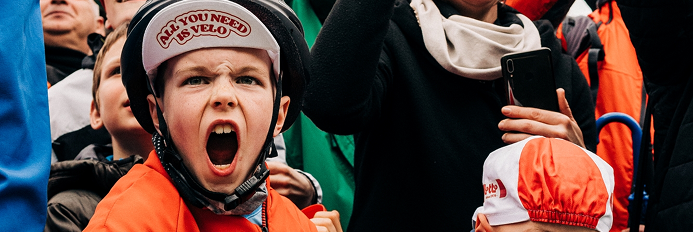
The Ronde Van Vlaanderen or, better known as the Tour of Flanders, is undoubtedly one of the star races of the season. It takes place in one of the areas of Belgium where historically has had (and still have) a great prominence and where it’s not only followed by fans of this great sport, if not also, by people who, despite not practicing it, see this event as a great regional festival in which entire families go out to the streets to cheer, the roads and villages are decorated from top to bottom, and you find celebrations for all in order to encourage the riders and enjoy sporting spectacle.
Although Belgium is known for being rather a flat field, the most outstanding feature of the Tour of Flanders is that, part of the route passes through an area of small hills that some sections are cobblestone roads with steep slopes and which are known as walls (Muur), these cause a peak of intensity and effort to push any cyclist to the limit.
As in the majority of classics, there is a cycle-tourist version of the race in which amateur cyclists have the opportunity to live the experience of participation in a race like this.

In our case, we really wanted to come to Flanders to enjoy a great weekend full of cycling and, as we did a couple of years ago at the Paris Roubaix, we decided to take part of the Ronde Van Vlaanderen Cyclo and know first-hand the harness that these “walls” hide.
The longest version of this race is 229km, in which we find several sections of authentic Belgian cobblestone, and 16 walls including some famous as the Kapelmuur, the Oude Kwaremont or the Paterbert, where we could live great moment of cycling.
We started from the center of Antwerp, the first hours pass quickly you drive on flat roads without circulation, so you can reach a good pace. Up to km 70 start some gradient and before reaching km 100 you have already tried the first pavé segment. At this point, the first amazement faces came among the participants due to the hardness of the path. A few kilometers later you start with the first walls but the real race starts at km 170, 60km before finish line, when it starts the most demanding part and the toughest sections of the route, although the euphoria and the spirits of people pass on you and make you forget the pain and fatigue and surpass one by one each meter without looking back. It was an authentic experience.


Finally, highlight the organization behind these cycle-tourist races, the great job they do and they are always at the top level, facilitating all kinds of services to the riders and with great participation (in this edition we were, nothing more and no less than 16000 people).
Even with the tiredness hangover on our legs from the day before, we woke up one more day and headed to one of the star areas of the race and one of the most awaited walls by the spectators, the famous Kwaremont.


Despite a large number of spectators, we could find some space to enjoy the first pass through this point (in the race they pass more than once for this same section before finishing the race). As happened to us in Paris Roubaix a couple of years ago, we were puzzled to see how they climb the walls and still keep forces to launch continuous attacks with the intention of breaking the bunch and face to the final of the race.
After the first pass to this area, we decided to change the location and try our luck with Paterberg, the last wall before the finish line and through which they would also pass, at least once more.

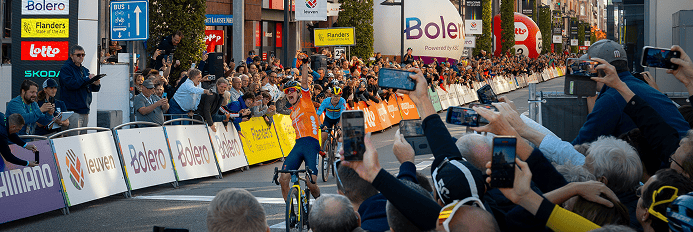
We had great luck and we got a good place just at the beginning of the wall, where we could enjoy all the show that, both men and women, gave us in that harsh area with slopes of up to 20%. Of course, we saw first of all Alberto Bettiol, of Education First, fighting against his head and the pain of his legs, climbing that though segment as if there were no tomorrow. Speechless.


There is no doubt that every cycling race is exciting but the great classics have that special magic that joins amazing fans, the hardness of each race and the uncertainty of not having clear favorites, it’s a classic, so everything can happen.

Es el motor y el combustible de todos los proyectos que crea, desarrolla y finaliza. Toni es cofundador del magazine, y es metódico y trabajador como ninguno, parece tener una extraña adicción a implicarse en proyectos ciclistas. He is the engine and the fuel of each of the projects he creates, develops, and completes. Toni is the co-founder of the magazine, he is methodical and worker as few, and he seems to have a strange addiction to being involved in cycling projects. View all posts by Toni de la Torre
 Pavel Novotný
 Javi Angulo
 Toni de la Torre
 Juliana Reis
 Pol Sopeña
 Javi Angulo
 Pol Sopeña
 Toni de la Torre
 Toni de la Torre

 Carlos Serra
 Pol Sopeña
 Pavel Novotný
Con la llegada de la primavera, llegan las grandes clásicas del ciclismo, esas carreras de uno o dos días que dan pie al inicio de la temporada, y teloneras de las grandes vueltas del ciclismo profesional.
Son carreras reconocidas por su dureza, distancia, dificultad y, sobre todo, por la gran emoción que aportan al espectador. Cada una de estas pruebas tiene sus peculiaridades en cuanto a recorrido y terreno, lo que permite a corredores que, en carreras por etapas trabajan para otros, tener la oportunidad de brillar y hacer historia.
La Ronde Van Vlaanderen o, más conocida como el Tour de Flandes, es sin duda una de las carreras estrella de la temporada. Se lleva a cabo en una de las zonas de Bélgica donde históricamente el ciclismo ha tenido (y tiene) un gran protagonismo y donde no solo es seguido por aficionados a este gran deporte, si no también, por gente que, a pesar de no practicarlo, ve esta prueba como una gran fiesta regional en la que familias enteras salen a la calle a animar, las carreteras y los pueblos se decoran de arriba a abajo, y encuentras celebraciones por todas partes con el fin de animar a los corredores y gozar de un gran espectáculo deportivo.
A pesar de que Bélgica es conocida por ser un terreno más bien llano y rodador, la característica más destacada del Tour de Flandes es que, parte del recorrido, transcurre por una zona de pequeñas colinas que conservan algunos tramos de carretera adoquinadas con grandes pendientes y que son conocidas como muros (Muur), los cuales provocan un pico de intensidad y esfuerzo que ponen al límite a cualquier ciclista.
Como ocurre en la mayoría de clásicas, existe una versión cicloturista de la carrera en la que ciclistas amateurs tienen la oportunidad de experimentar y vivir en primera persona la experiencia que supone correr una prueba como esta.
En nuestro caso, teníamos muchas ganas de venir a Flandes a disfrutar de un gran fin de semana repleto de ciclismo y, como ya hicimos hace un par de años en la Paris-Roubaix, decidimos tomar parte de la Ronde Van Vlaanderen Cyclo y conocer de buena mano, la dureza que esconden los “muros”.
La versión más larga de esta prueba es de 229 km, en la que encontramos varios tramos de auténtico adoquín belga, y 16 muros, incluyendo algunos tan famosos como el Kapelmuur, el Oude Kwaremont o el Paterberg en los cuales se han vivido grandes momentos del ciclismo.
Salíamos desde el centro de Antwerp y las primeras horas pasan rápido, circulas por carreteras sin circulación y al ser llano se puede ir a un buen ritmo. A partir del kilómetro 70 ya empieza a aparecer un poco de desnivel y antes de llegar al 100 ya has probado el primer segmento de pavé. En este punto las primeras caras de asombro por la dureza de este terreno ya empiezan a aparecer entre los participantes. Unos kilómetros más tarde ya empiezas a encontrarte con los primeros muros pero la verdadera carrera empieza en el 170, a falta de 60 kilómetros es cuando se pone la cosa seria y viene la parte más exigente y los tramos más duros de todo el recorrido, aunque la euforia y los ánimos de la gente te contagian y te hacen olvidar el dolor y el cansancio y superas uno a uno cada metro sin mirar atrás. Una auténtica experiencia.
Por último, destacar la organización que hay detrás de estas pruebas cicloturistas, el gran trabajo que realizan y que siempre están a un nivel altísimo, facilitando todo tipo de servicios a los corredores y con una gran participación (en esta edición éramos, nada más y nada menos que 16.000 personas).
Aún con la resaca de cansancio en nuestras piernas del día de antes, madrugamos un día más y nos dirigimos a una de las zonas estrella de la carrera y uno de los muros más esperados por los espectadores, el famoso Kwaremont.
A pesar de la gran cantidad de público, pudimos encontrar algún hueco para poder disfrutar de la primera pasada por este punto (en carrera pasan más de una vez por este mismo tramo antes de finalizar la carrera). Tal y como nos pasó en París Roubaix hace un par de años, nos quedamos perplejos de ver cómo escalan los muros y aún guardan fuerzas para lanzar continuos ataques con la intención de romper el pelotón y conseguir abrir hueco de cara al tramo final de la prueba.
Después del primer paso por esta zona, decidimos cambiar de localización y probar suerte con Paterberg, el último muro antes de meta y por el cual también pasarían, al menos, una vez más.
Tuvimos una gran suerte y conseguimos un buen sitio justo al inicio del muro, donde pudimos disfrutar de todo el espectáculo que, tanto chicos como las chicas, nos brindaron en esa durísima zona con pendientes de hasta el 20%. Por supuesto, vimos de primera a Alberto Bettiol, del Education First, luchando contra su cabeza y el dolor de piernas, subiendo aquel durísimo segmento como si no hubiese un mañana. Sin palabras.
No cabe duda que toda carrera de ciclismo es emocionante pero las grandes clásicas tienen esa magia tan especial en la que se une una afición alucinante, la dureza de cada carrera y la incertidumbre de no haber claros favoritos, es un clásica, todo puede pasar.
Es el motor y el combustible de todos los proyectos que crea, desarrolla y finaliza. Toni es cofundador del magazine, y es metódico y trabajador como ninguno, parece tener una extraña adicción a implicarse en proyectos ciclistas. He is the engine and the fuel of each of the projects he creates, develops, and completes. Toni is the co-founder of the magazine, he is methodical and worker as few, and he seems to have a strange addiction to being involved in cycling projects. View all posts by Toni de la Torre
Receive our monthly selection of the best articles, news, exclusive content and giveaways only for subscribers, subscribe to OUR NEWSLETTER
Receive our monthly selection of the best articles, news, exclusive content and giveaways only for subscribers, subscribe to OUR NEWSLETTER
Receive our monthly selection of the best articles, news, exclusive content and giveaways only for subscribers, subscribe to OUR NEWSLETTER
Receive our monthly selection of the best articles, news, exclusive content and giveaways only for subscribers, subscribe to OUR NEWSLETTER